Fred Hutchinson Cancer Research Center, Vaccine and Infectious Disease Division, Seattle, Washington, United States of America.
The Scripps Research Institute, IAVI Neutralizing Antibody Center, La Jolla, California, United States of America.
PLoS Pathog. 2021 Sep 24;17(9):e1009543. doi: 10.1371/journal.ppat.1009543. eCollection 2021 Sep.
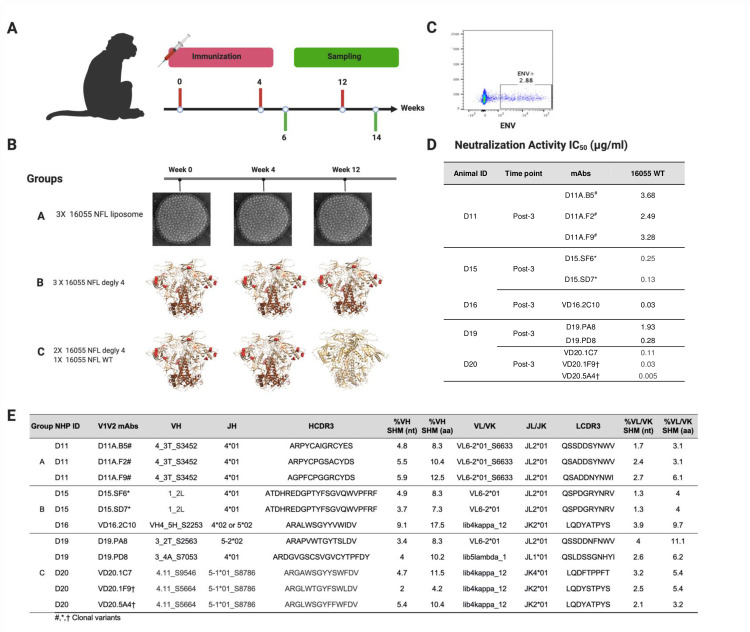
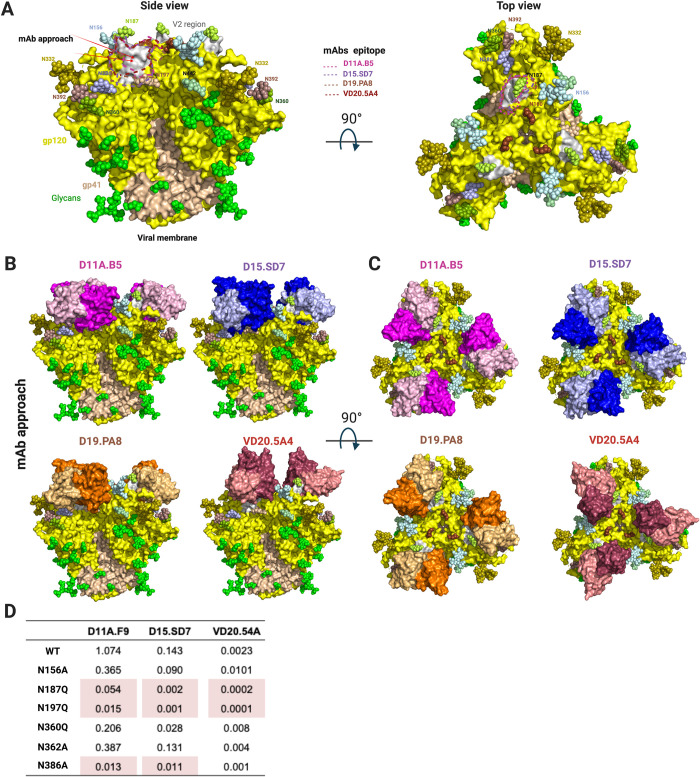
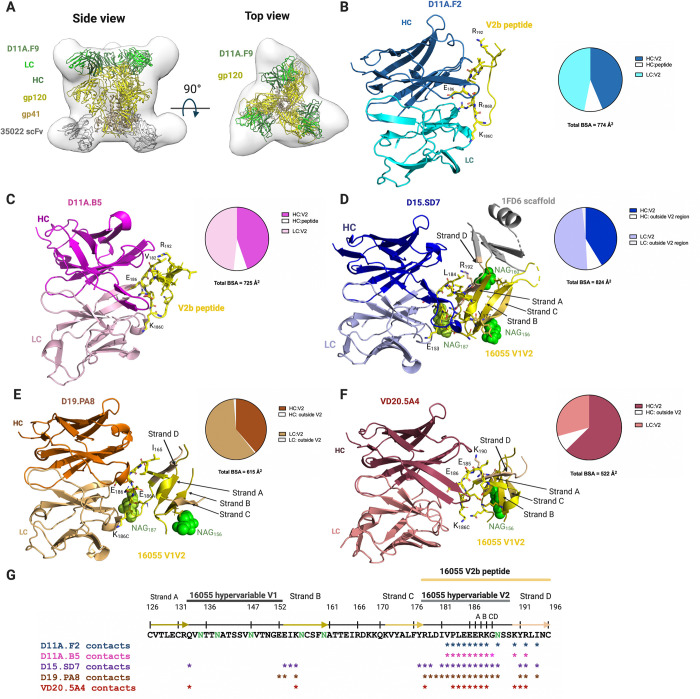
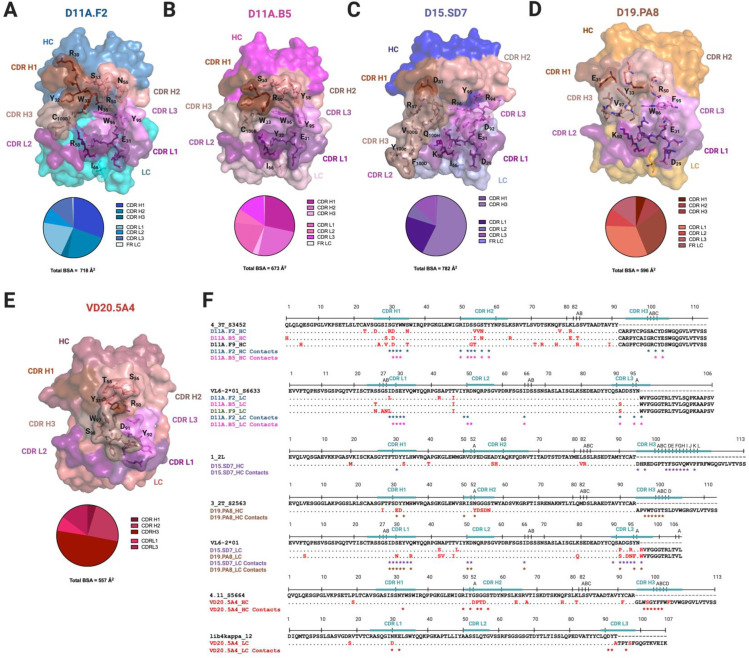
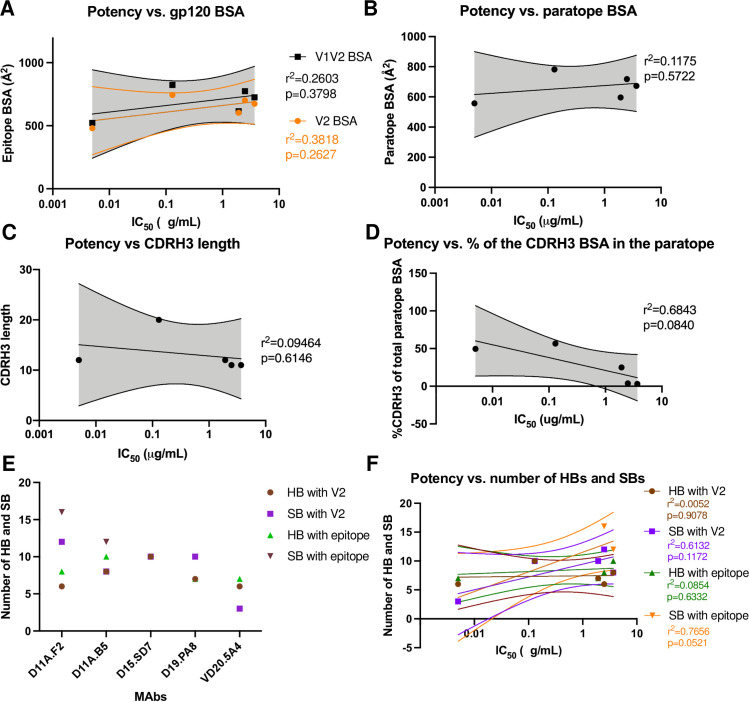
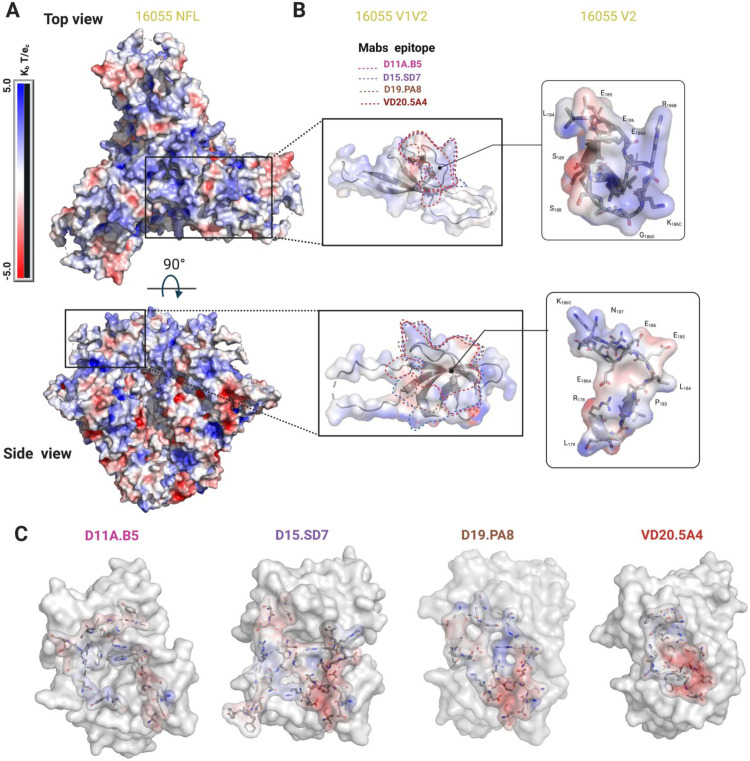
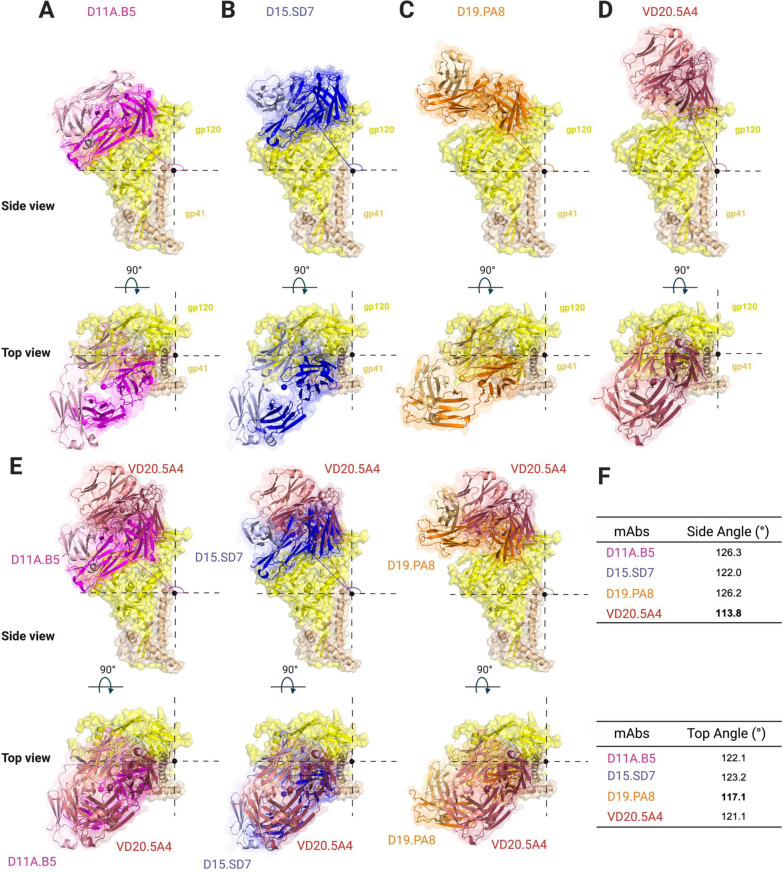
Understanding the molecular mechanisms by which antibodies target and neutralize the HIV-1 envelope glycoprotein (Env) is critical in guiding immunogen design and vaccine development aimed at eliciting cross-reactive neutralizing antibodies (NAbs). Here, we analyzed monoclonal antibodies (mAbs) isolated from non-human primates (NHPs) immunized with variants of a native flexibly linked (NFL) HIV-1 Env stabilized trimer derived from the tier 2 clade C 16055 strain. The antibodies displayed neutralizing activity against the autologous virus with potencies ranging from 0.005 to 3.68 μg/ml (IC50). Structural characterization using negative-stain EM and X-ray crystallography identified the variable region 2 (V2) of the 16055 NFL trimer to be the common epitope for these antibodies. The crystal structures revealed that the V2 segment adopts a β-hairpin motif identical to that observed in the 16055 NFL crystal structure. These results depict how vaccine-induced antibodies derived from different clonal lineages penetrate through the glycan shield to recognize a hypervariable region within V2 (residues 184-186) that is unique to the 16055 strain. They also provide potential explanations for the potent autologous neutralization of these antibodies, confirming the immunodominance of this site and revealing that multiple angles of approach are permissible for affinity/avidity that results in potent neutralizing capacity. The structural analysis reveals that the most negatively charged paratope correlated with the potency of the mAbs. The atomic level information is of interest to both define the means of autologous neutralization elicited by different tier 2-based immunogens and facilitate trimer redesign to better target more conserved regions of V2 to potentially elicit cross-neutralizing HIV-1 antibodies.
了解抗体靶向和中和 HIV-1 包膜糖蛋白 (Env) 的分子机制对于指导免疫原设计和疫苗开发至关重要,这些免疫原旨在诱导产生交叉反应性中和抗体 (NAb)。在这里,我们分析了用源自 tier 2 分支 C 16055 株的天然灵活连接 (NFL) HIV-1 Env 稳定三聚体变体免疫的非人类灵长类动物 (NHP) 中分离出的单克隆抗体 (mAb)。这些抗体对同源病毒具有中和活性,效价范围为 0.005 至 3.68μg/ml(IC50)。使用负染 EM 和 X 射线晶体学进行结构表征,确定了这些抗体的共同表位是 16055 NFL 三聚体的可变区 2 (V2)。晶体结构显示,V2 段采用与在 16055 NFL 晶体结构中观察到的相同的 β-发夹基序。这些结果描绘了来自不同克隆谱系的疫苗诱导抗体如何穿透聚糖屏蔽来识别 V2 内的一个高变区(残基 184-186),该区域是 16055 株特有的。它们还为这些抗体的强效同源中和提供了潜在的解释,证实了该位点的免疫显性,并揭示了多种亲和力/亲合力的方法是允许的,从而导致强大的中和能力。结构分析表明,最带负电荷的互补决定区与 mAb 的效力相关。原子水平的信息对于定义不同 tier 2 免疫原诱导的同源中和的手段以及促进三聚体重新设计以更好地针对 V2 更保守的区域以潜在地诱导交叉中和 HIV-1 抗体都很有意义。