Faculty of Chemistry and Chemical Engineering, University of Maribor, Smetanova ulica 17, SI-2000 Maribor, Slovenia.
Faculty of Mathematics, Natural Sciences and Information Technologies, University of Primorska, Glagoljaška ulica 8, SI-6000 Koper, Slovenia.
Molecules. 2023 Oct 12;28(20):7046. doi: 10.3390/molecules28207046.
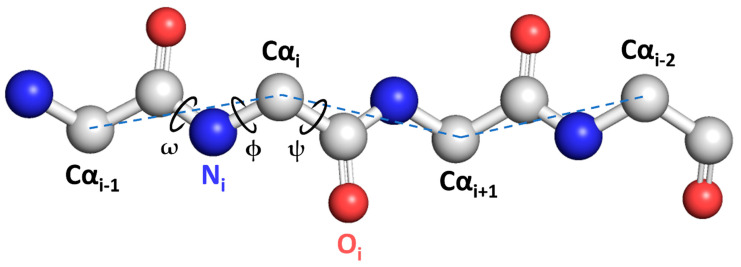
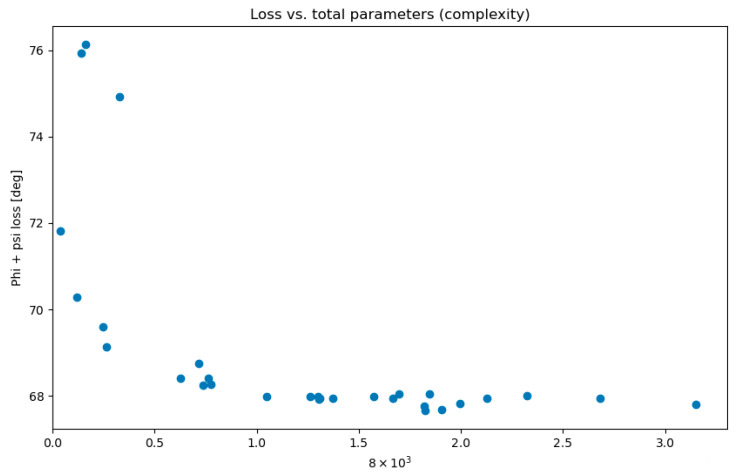
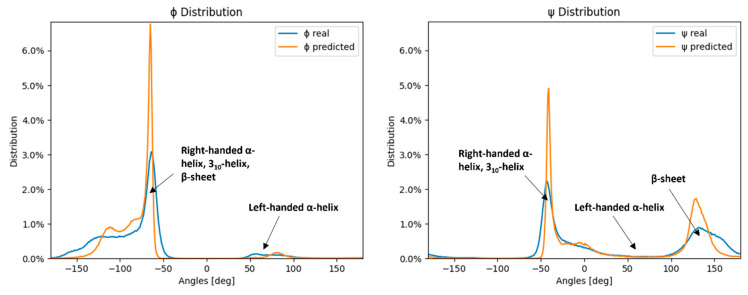
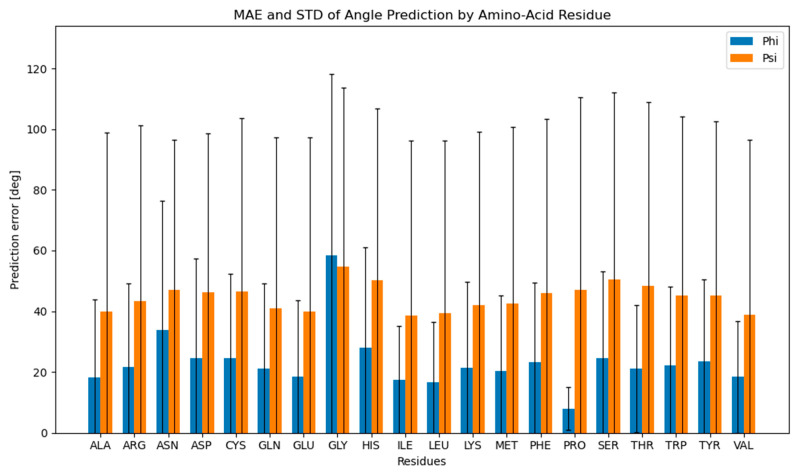
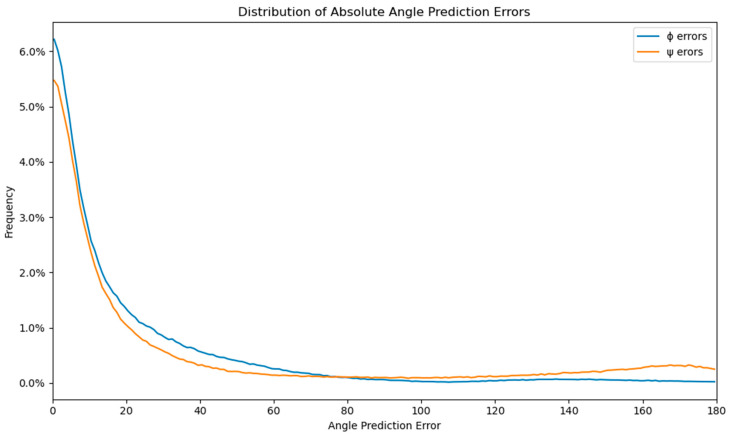
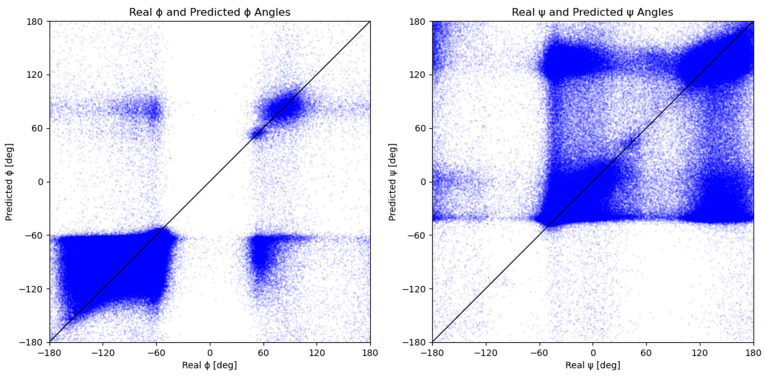
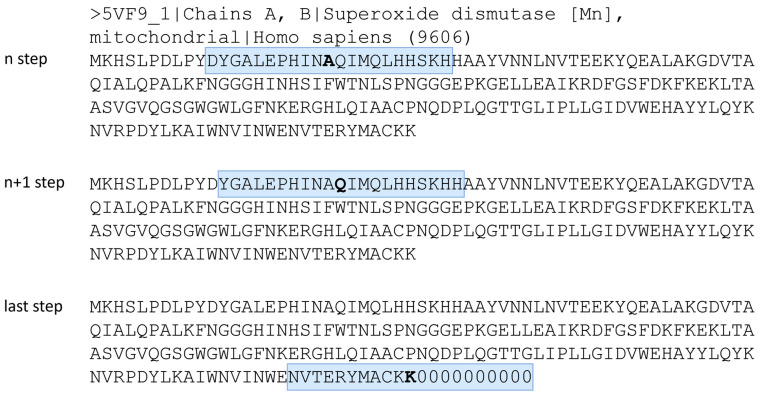
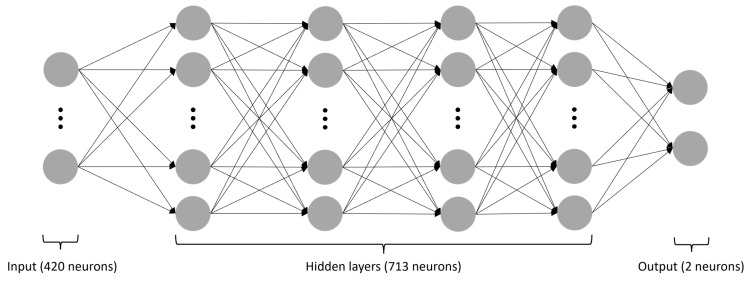
Protein structure prediction represents a significant challenge in the field of bioinformatics, with the prediction of protein structures using backbone dihedral angles recently achieving significant progress due to the rise of deep neural network research. However, there is a trend in protein structure prediction research to employ increasingly complex neural networks and contributions from multiple models. This study, on the other hand, explores how a single model transparently behaves using sequence data only and what can be expected from the predicted angles. To this end, the current paper presents data acquisition, deep learning model definition, and training toward the final protein backbone angle prediction. The method applies a simple fully connected neural network (FCNN) model that takes only the primary structure of the protein with a sliding window of size 21 as input to predict protein backbone ϕ and ψ dihedral angles. Despite its simplicity, the model shows surprising accuracy for the ϕ angle prediction and somewhat lower accuracy for the ψ angle prediction. Moreover, this study demonstrates that protein secondary structure prediction is also possible with simple neural networks that take in only the protein amino-acid residue sequence, but more complex models are required for higher accuracies.
蛋白质结构预测是生物信息学领域的一个重大挑战,由于深度学习研究的兴起,最近使用主链二面角预测蛋白质结构取得了重大进展。然而,蛋白质结构预测研究有一个趋势,即使用越来越复杂的神经网络和来自多个模型的贡献。另一方面,这项研究探讨了单个模型仅使用序列数据时是如何透明地表现的,以及可以从预测角度中得到什么。为此,本文提出了数据采集、深度学习模型定义和最终的蛋白质骨架角度预测训练。该方法采用了一个简单的全连接神经网络(FCNN)模型,该模型仅以 21 个大小的滑动窗口作为输入,预测蛋白质骨架 ϕ 和 ψ 二面角。尽管模型很简单,但它在预测 ϕ 角时表现出惊人的准确性,而在预测 ψ 角时准确性稍低。此外,本研究表明,仅使用蛋白质氨基酸残基序列的简单神经网络也可以进行蛋白质二级结构预测,但需要更复杂的模型才能获得更高的准确性。