Medizinische Klinik für Gastroenterologie, Infektiologie und Rheumatologie, Campus Benjamin Franklin, Charité-Universitätsmedizin Berlin, Hindenburgdamm 30, 12200, Berlin, Germany.
Medizinische Klinik für Rheumatologie und Klinische Immunologie, Campus Mitte, Charité-Universitätsmedizin Berlin, Berlin, Germany.
Arthritis Res Ther. 2021 Sep 24;23(1):246. doi: 10.1186/s13075-021-02623-7.
In patients with axial spondyloarthritis (axSpA), monocytes show a pre-activated phenotype. Gut inflammation is a trigger of monocyte activation and may also affect their development in the bone marrow (BM). As gut inflammation is commonly observed in axSpA patients, we performed a detailed analysis of monocyte transcriptomes of axSpA patients in two cohorts and searched for signs of activation and developmental adaptations as putative imprints of gut inflammation.
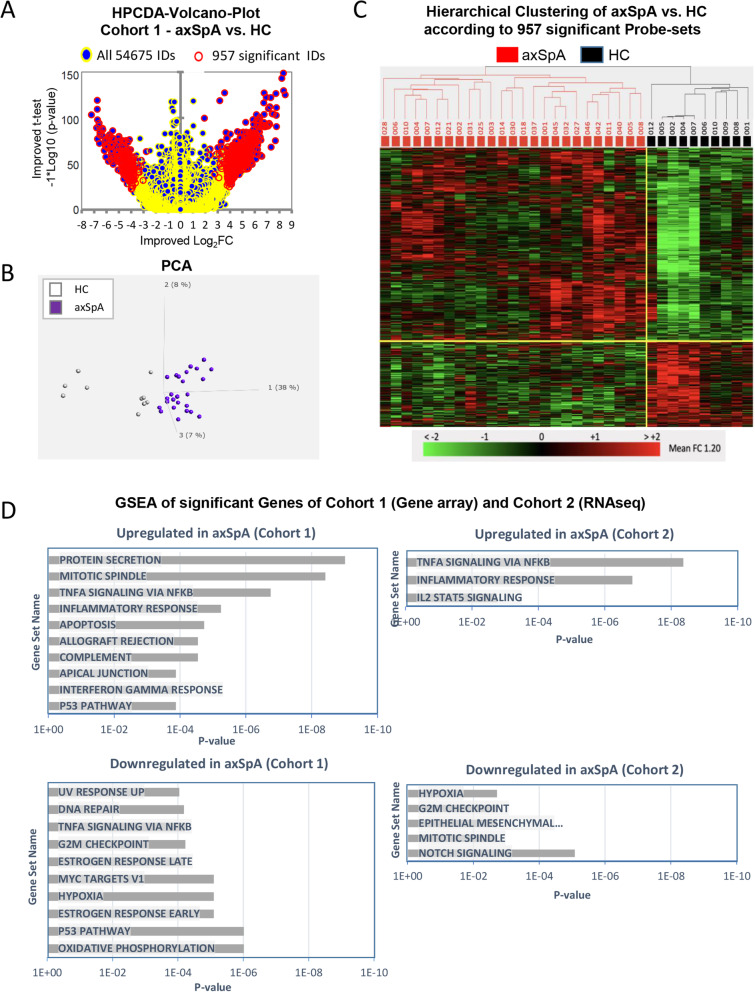
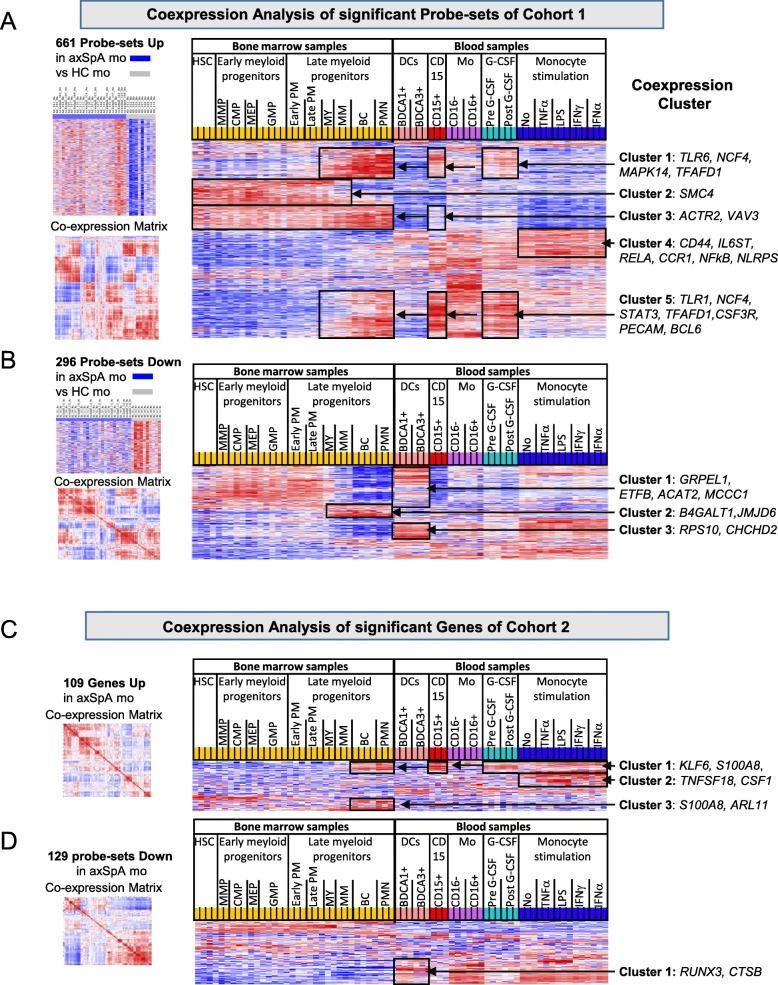
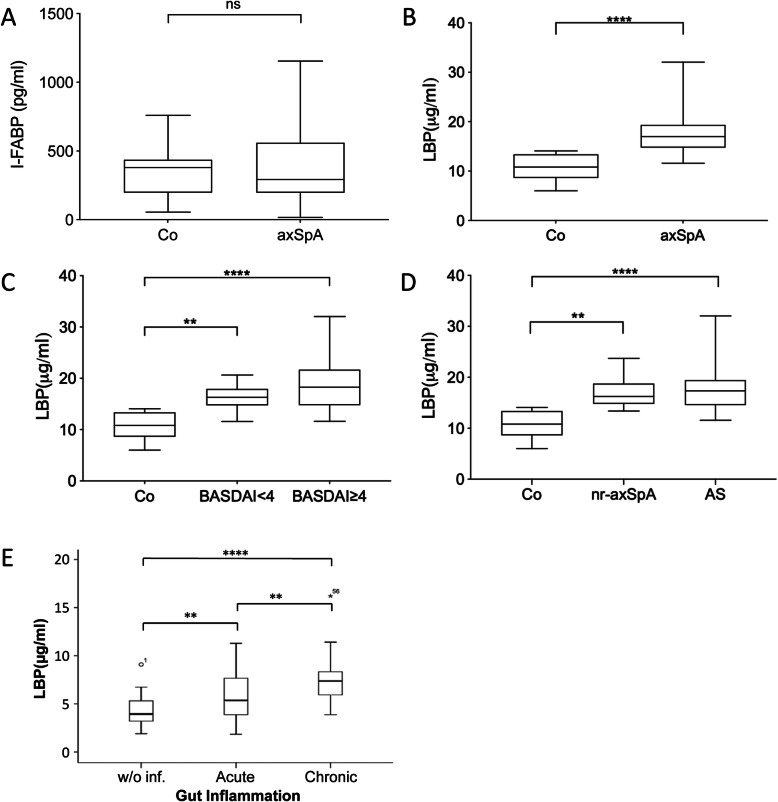
Transcriptomes of blood CD14 monocytes of HLA-B27+ axSpA patients and healthy controls (HC) were generated by microarrays from cohort 1 and by RNA-sequencing from cohort 2. Differentially expressed genes from both analyses were subjected to gene set enrichment analysis (GSEA) and to co-expression analysis in reference transcriptomes from BM cells, blood cells and activated monocytes. As serological markers of translocation, 1,3 beta-glycan, intestinal fatty acid binding protein, and lipopolysaccharide binding protein (LBP) were determined by LAL and ELISA.
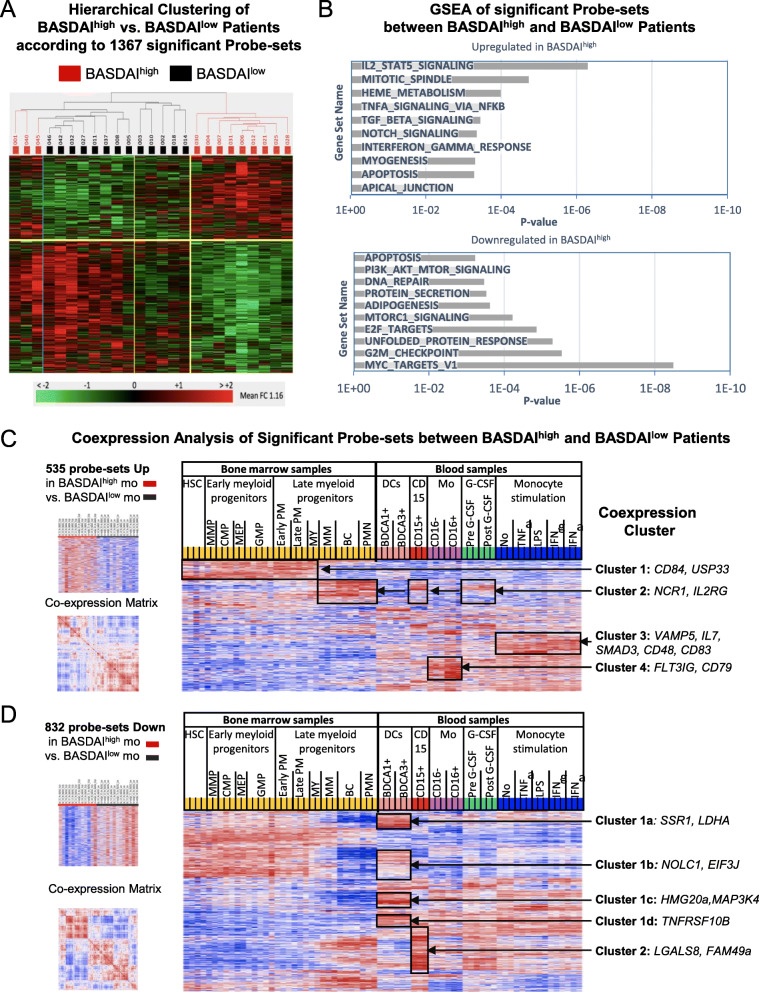
Transcriptome analysis identified axSpA-specific monocyte signatures showing an imprint of LPS/cytokine-activated monocytes, late granulopoietic BM cells, blood neutrophils, and G-CSF-mobilized blood cells, which suggests LPS/TNF activation and more prominent BM adaptation promoting a neutrophil-like phenotype. GSEA mapped axSpA upregulated genes to inflammatory responses and TNFα signaling and downregulated probe-sets to metabolic pathways. Among translocation markers, LBP levels were significantly increased in axSpA patients vs. HC (p < 0.001). Stratified analysis by disease activity and stage identified an "active disease signature" (BASDAI ≥ 4) with an imprint of LPS/cytokine-activated monocytes and CD16 monocyte subsets. The "AS signature" (vs. non-radiographic axSpA) showed a reinforced neutrophil-like phenotype due to deprivation of dendritic cell transcripts.
The neutrophil-like phenotype of axSpA monocytes points towards a biased monocytopoiesis from granulocyte-monocyte progenitors. This shift in monocytopoiesis and the LPS/cytokine imprint as well as the elevated LBP levels are indicators of systemic inflammation, which may result from bacterial translocation. The BM adaptation is most prominent in AS patients while disease activity appears to be linked to activation and trafficking of monocytes.
在患有中轴型脊柱关节炎(axSpA)的患者中,单核细胞表现出预先激活的表型。肠道炎症是单核细胞激活的触发因素,也可能影响其在骨髓(BM)中的发育。由于 axSpA 患者中常见肠道炎症,我们对两个队列中的 axSpA 患者的单核细胞转录组进行了详细分析,并寻找激活和发育适应的迹象,作为肠道炎症的潜在印记。
通过微阵列从队列 1和 RNA 测序从队列 2生成 HLA-B27+ axSpA 患者和健康对照(HC)的血液 CD14 单核细胞转录组。对来自两个分析的差异表达基因进行基因集富集分析(GSEA)和 BM 细胞、血液细胞和激活单核细胞参考转录组中的共表达分析。作为易位的血清学标志物,通过 LAL 和 ELISA 测定 1,3β-葡聚糖、肠脂肪酸结合蛋白和脂多糖结合蛋白(LBP)。
转录组分析鉴定出 axSpA 特异性单核细胞特征,显示 LPS/细胞因子激活单核细胞、晚期粒系 BM 细胞、血液中性粒细胞和 G-CSF 动员血液细胞的印记,这表明 LPS/TNF 激活和更突出的 BM 适应促进了类似于中性粒细胞的表型。GSEA 将 axSpA 上调基因映射到炎症反应和 TNFα 信号传导,下调探针集到代谢途径。在易位标志物中,LBP 水平在 axSpA 患者与 HC 相比显着增加(p <0.001)。根据疾病活动度和阶段进行分层分析,发现了一种具有 LPS/细胞因子激活单核细胞和 CD16 单核细胞亚群印记的“活动疾病特征”(BASDAI≥4)。与非放射性 axSpA 相比,“AS 特征”显示由于树突状细胞转录物的剥夺,类似于中性粒细胞的表型得到加强。
axSpA 单核细胞的中性粒细胞样表型表明粒单系祖细胞中存在偏向性单核细胞生成。单核细胞生成和 LPS/细胞因子印记的这种转变以及升高的 LBP 水平是全身性炎症的指标,这可能是由细菌易位引起的。BM 适应在 AS 患者中最为明显,而疾病活动度似乎与单核细胞的激活和迁移有关。