Department of Chemistry, Graduate School of Integrated Sciences for Life, Hiroshima University, Hiroshima, Japan.
Department of Basic Science, Graduate School of Arts and Sciences, The University of Tokyo, Komaba, Meguro, Tokyo, Japan.
Nat Commun. 2021 Sep 24;12(1):5487. doi: 10.1038/s41467-021-25530-6.
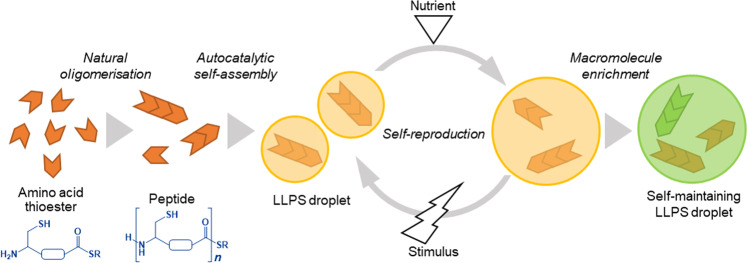
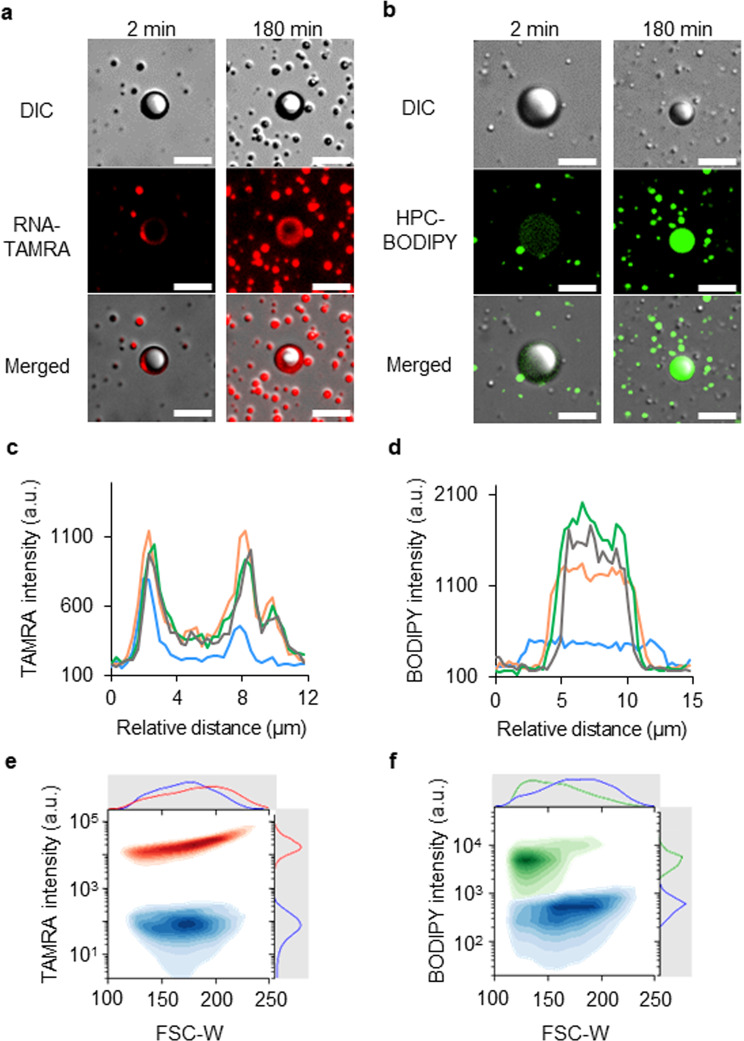
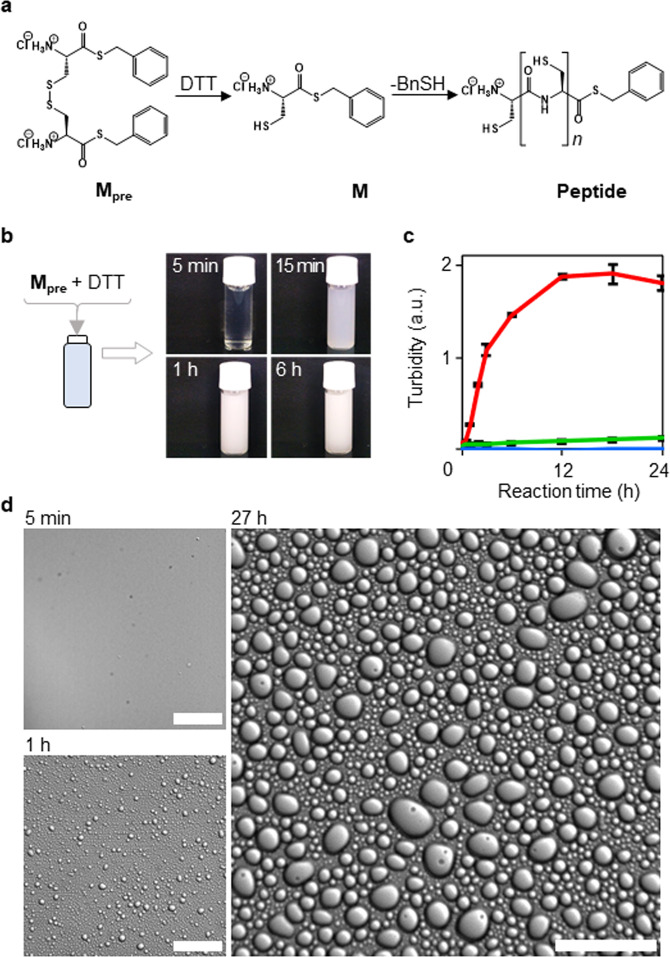
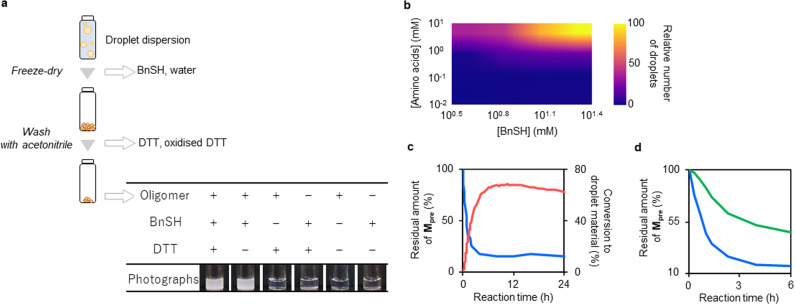
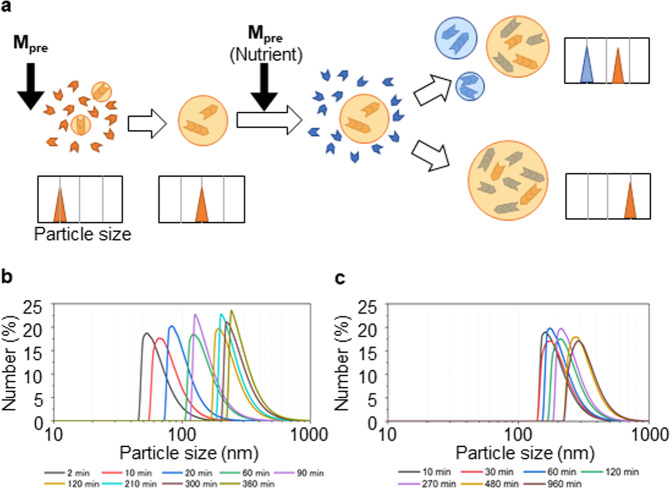
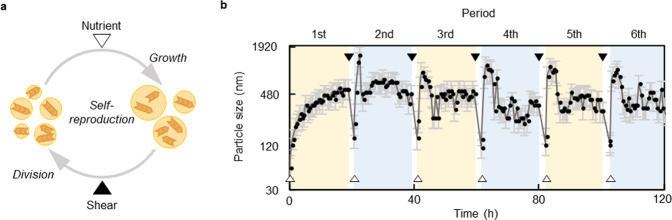
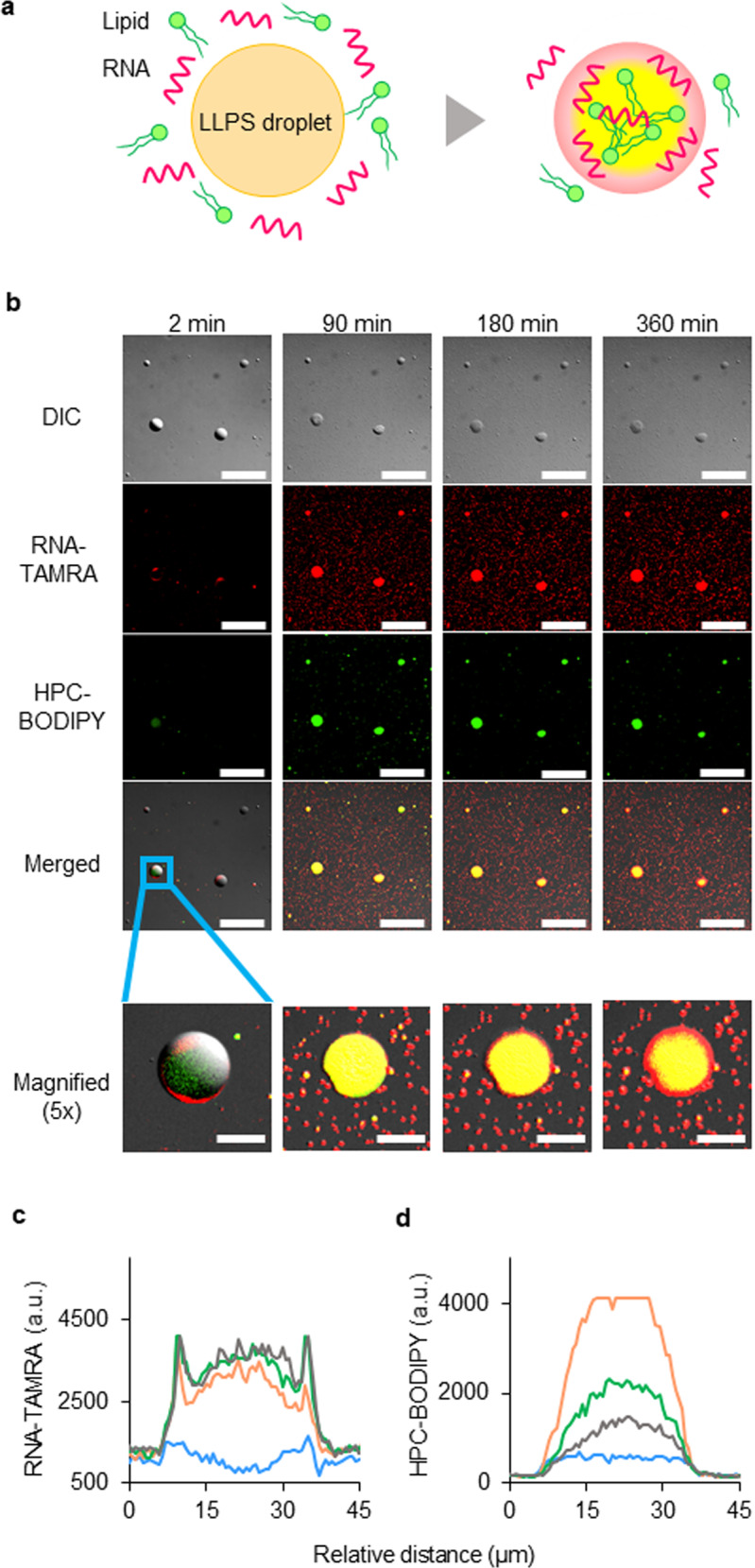
The hypothesis that prebiotic molecules were transformed into polymers that evolved into proliferating molecular assemblages and eventually a primitive cell was first proposed about 100 years ago. To the best of our knowledge, however, no model of a proliferating prebiotic system has yet been realised because different conditions are required for polymer generation and self-assembly. In this study, we identify conditions suitable for concurrent peptide generation and self-assembly, and we show how a proliferating peptide-based droplet could be created by using synthesised amino acid thioesters as prebiotic monomers. Oligopeptides generated from the monomers spontaneously formed droplets through liquid-liquid phase separation in water. The droplets underwent a steady growth-division cycle by periodic addition of monomers through autocatalytic self-reproduction. Heterogeneous enrichment of RNA and lipids within droplets enabled RNA to protect the droplet from dissolution by lipids. These results provide experimental constructs for origins-of-life research and open up directions in the development of peptide-based materials.
大约 100 年前,人们首次提出了前生物分子转化为聚合物,进而演变成增殖分子聚集体,最终形成原始细胞的假说。然而,据我们所知,还没有实现增殖前生物系统的模型,因为聚合物生成和自组装需要不同的条件。在这项研究中,我们确定了适合同时进行肽生成和自组装的条件,并展示了如何通过使用合成的氨基酸硫酯作为前生物单体来创建增殖肽基液滴。单体生成的寡肽通过在水中的液-液相分离自发形成液滴。通过自动催化的自我繁殖,通过周期性添加单体,液滴经历了稳定的生长-分裂周期。RNA 和脂质在液滴内的不均匀富集使 RNA 能够保护液滴不被脂质溶解。这些结果为生命起源研究提供了实验构建体,并为基于肽的材料的开发开辟了方向。