Laboratory of Renal Physiology, Department of Physiology and Biophysics, Institute of Biomedical Sciences, University of Sao Paulo, São Paulo, SP, 05508-900, Brazil.
Sci Rep. 2021 Sep 24;11(1):19028. doi: 10.1038/s41598-021-97839-7.
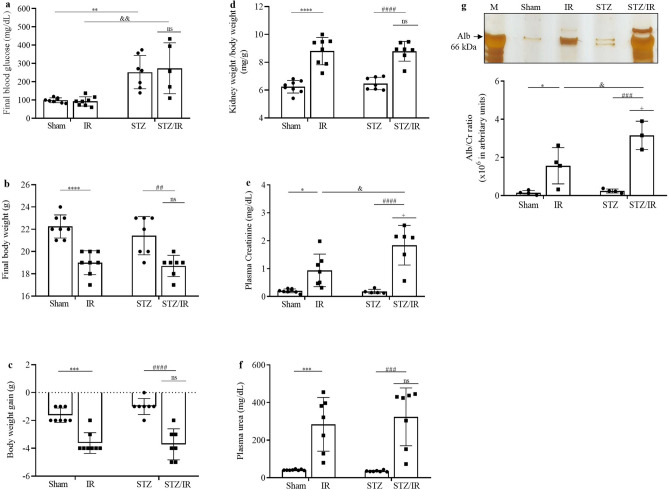
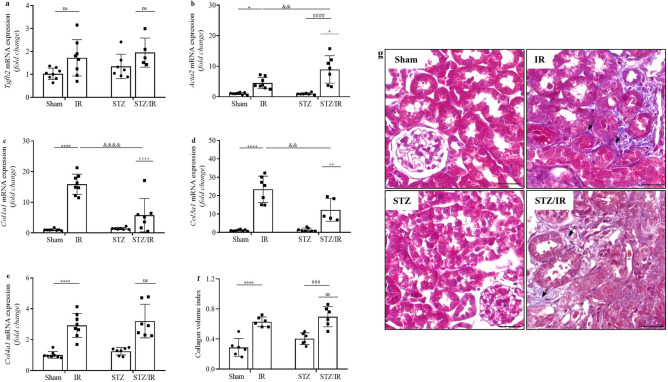
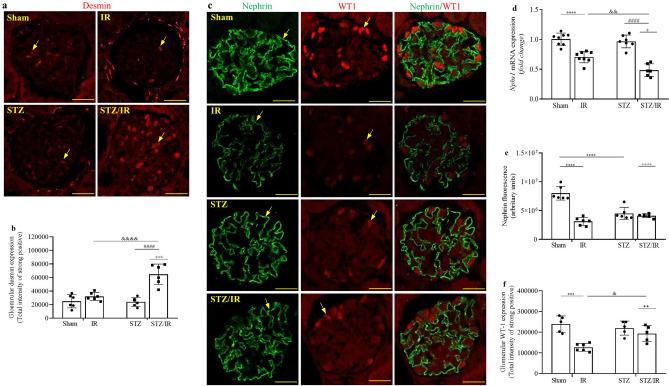
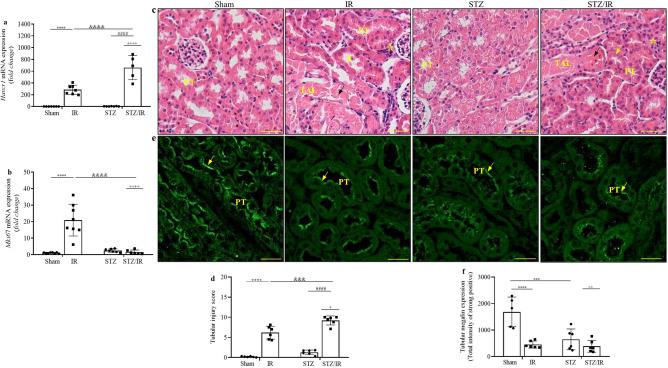
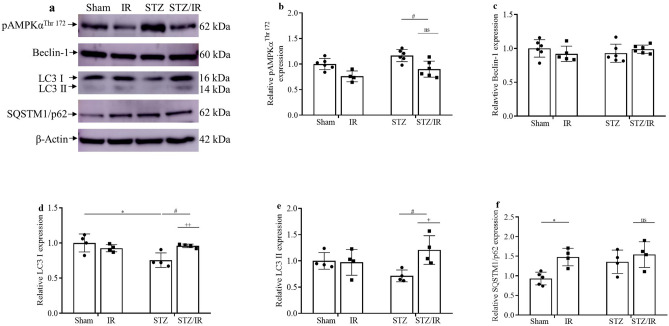
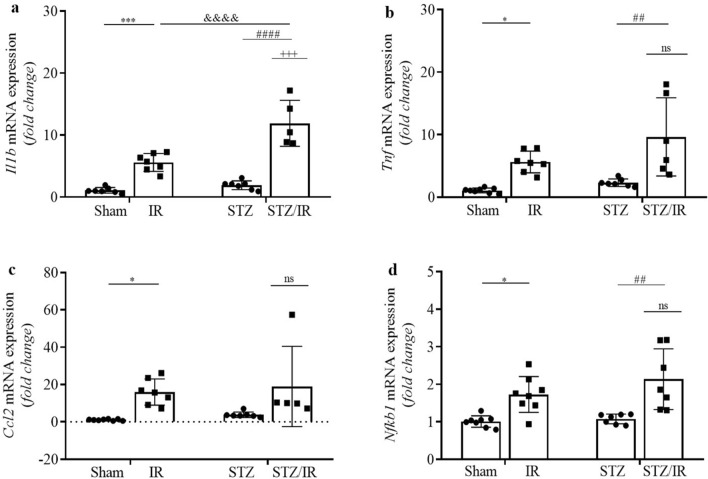
The present study aimed to investigate the interaction between early diabetes and renal IR-induced AKI and to clarify the mechanisms involved. C57BL/6J mice were assigned to the following groups: (1) sham-operated; (2) renal IR; (3) streptozotocin (STZ-55 mg/kg/day) and sham operation; and (4) STZ and renal IR. On the 12th day after treatments, the animals were subjected to bilateral IR for 30 min followed by reperfusion for 48 h, at which time the animals were euthanized. Renal function was assessed by plasma creatinine and urea levels, as well urinary protein contents. Kidney morphology and gene and protein expression were also evaluated. Compared to the sham group, renal IR increased plasma creatinine, urea and albuminuria levels and decreased Nphs1 mRNA expression and nephrin and WT1 protein staining. Tubular injury was observed with increased Havcr1 and Mki67 mRNA expression accompanied by reduced megalin staining. Renal IR also resulted in increased SQSTM1 protein expression and increased proinflammatory and profibrotic factors mRNA expression. Although STZ treatment resulted in hyperglycemia, it did not induce significant changes in renal function. On the other hand, STZ treatment aggravated renal IR-induced AKI by exacerbating renal dysfunction, glomerular and tubular injury, inflammation, and profibrotic responses. Thus, early diabetes constitutes a relevant risk factor for renal IR-induced AKI.
本研究旨在探讨早期糖尿病与肾脏缺血再灌注(IR)诱导的急性肾损伤(AKI)之间的相互作用,并阐明相关机制。C57BL/6J 小鼠被分为以下几组:(1)假手术组;(2)肾脏 IR 组;(3)链脲佐菌素(STZ,55mg/kg/天)+假手术组;(4)STZ+肾脏 IR 组。治疗 12 天后,对动物进行双侧 IR 处理 30min,然后再灌注 48h,此时处死动物。通过血浆肌酐和尿素水平以及尿蛋白含量评估肾功能。还评估了肾脏形态以及基因和蛋白表达。与假手术组相比,肾脏 IR 增加了血浆肌酐、尿素和白蛋白尿水平,降低了 Nphs1mRNA 表达和足细胞裂孔隔膜蛋白(nephrin)和 WT1 蛋白染色。Havcr1 和 Mki67mRNA 表达增加,同时 megalin 染色减少,观察到肾小管损伤。肾脏 IR 还导致 SQSTM1 蛋白表达增加以及促炎和促纤维化因子 mRNA 表达增加。尽管 STZ 处理导致高血糖,但并未引起肾功能的显著变化。另一方面,STZ 处理通过加重肾功能障碍、肾小球和肾小管损伤、炎症和促纤维化反应,加重了肾脏 IR 诱导的 AKI。因此,早期糖尿病是肾脏 IR 诱导的 AKI 的一个相关危险因素。