College of Veterinary Medicine, Harrogate, USA.
Center for Infectious, Zoonotic and Vector-borne diseases, Harrogate, USA.
BMC Vet Res. 2021 Sep 25;17(1):313. doi: 10.1186/s12917-021-03025-2.
Antimicrobial resistance and presence of zoonotic enteropathogens in shelter dogs pose a public health risk to shelter workers and potential adopters alike. In this study we investigated the prevalence of zoonotic bacterial pathogens and cephalosporin resistant (Cef) enteric bacteria in the feces of apparently healthy shelter dogs in the Cumberland Gap Region (CGR) in the US states of Kentucky, Tennessee and Virginia.
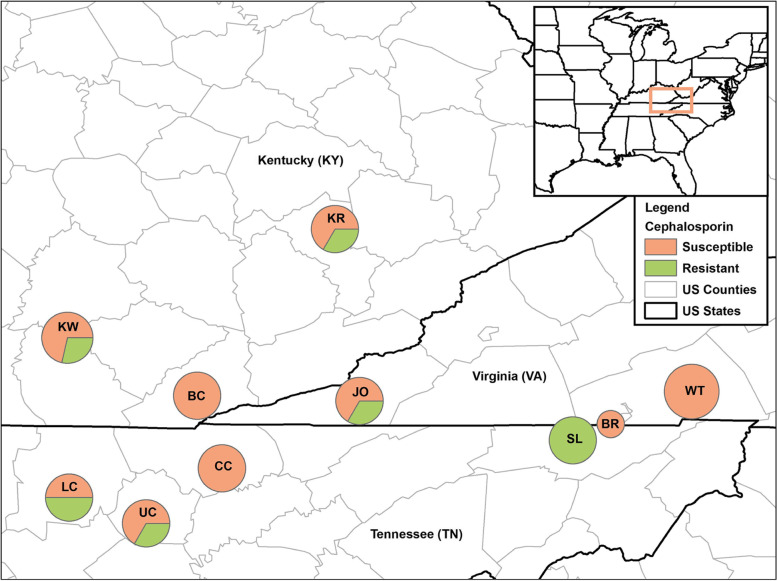
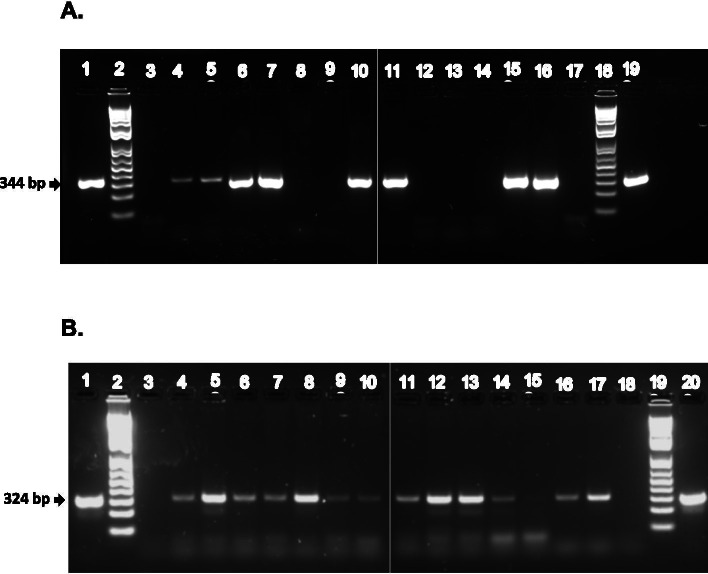
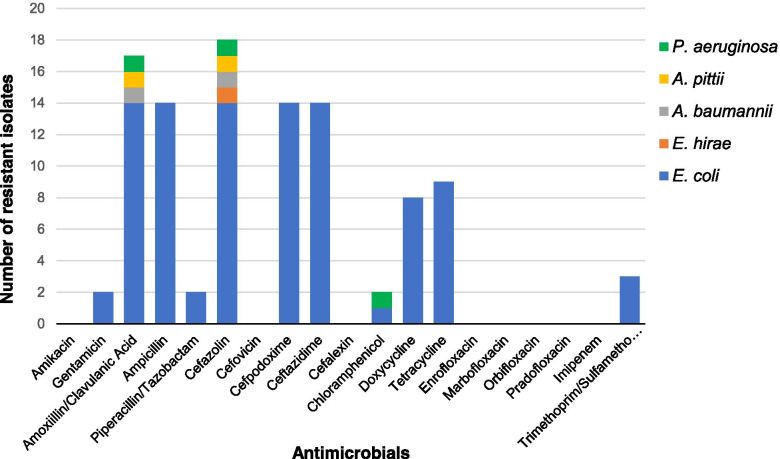
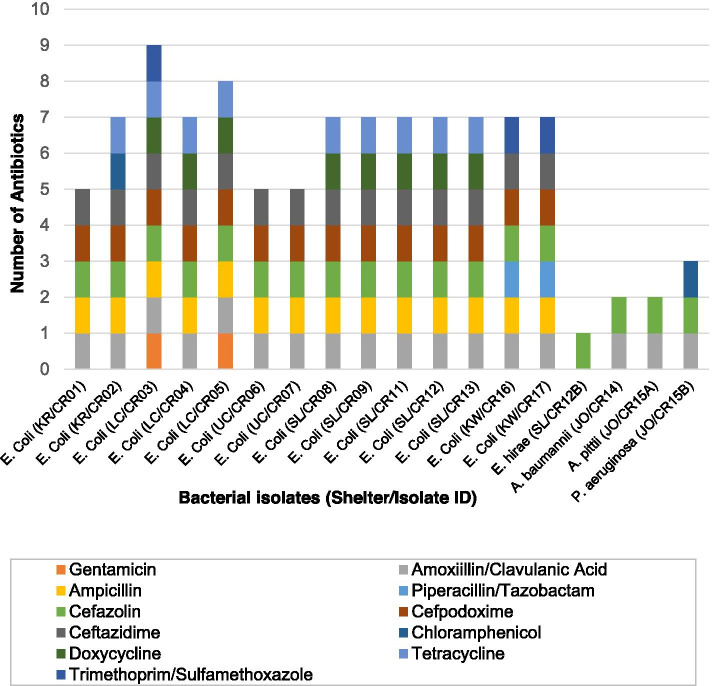
Fecal samples of 59 dogs from 10 shelters in the CGR of Central and South-Central Appalachia were screened for the presence of Campylobacter jejuni, Clostridium perfringens, Salmonella and Cef enteric bacteria. C. jejuni, C. perfringens were detected by PCR based assays. Culture and PCR were used for Salmonella detection. Of 59 dogs, fecal samples from 14 (23.7%) and 8 (13.6%) dogs tested positive for cpa and hipO genes of C. perfringens and C. jejuni, respectively. Salmonella was not detected in any of the tested samples by PCR or culture. Cef enteric bacteria were isolated on MacConkey agar supplemented with ceftiofur followed by identification using MALDI-TOF. Fecal samples from 16 dogs (27.1%) yielded a total of 18 Cef enteric bacteria. Majority of Cef isolates (14/18, 77.8%) were E. coli followed by, one isolate each of Enterococcus hirae, Acinetobacter baumannii, Acinetobacter pittii, and Pseudomonas aeruginosa. Cef enteric bacteria were tested for resistance against 19- or 24-antibiotic panels using broth microdilution method. Seventeen (94.4%) Cef bacteria were resistant to more than one antimicrobial agent, and 14 (77.8%) displayed multidrug resistance (MDR).
This study shows that shelter dogs within the CGR not only carry zoonotic bacterial pathogens, but also shed multidrug resistant enteric bacteria in their feces that may pose public health risks.
在收容所中,抗生素耐药性和动物源性肠道病原体的存在对收容所工作人员和潜在的收养者构成了公共卫生风险。在这项研究中,我们调查了美国肯塔基州、田纳西州和弗吉尼亚州中南部阿巴拉契亚山脉坎伯兰峡地区(CGR)的健康收容犬粪便中动物源性细菌病原体和头孢菌素耐药(Cef)肠道细菌的流行情况。
对来自 CGR 中 10 个收容所的 59 只狗的粪便样本进行了检测,以确定是否存在空肠弯曲菌、产气荚膜梭菌、沙门氏菌和 Cef 肠道细菌。通过基于 PCR 的检测方法检测空肠弯曲菌和产气荚膜梭菌。使用培养和 PCR 检测沙门氏菌。在 59 只狗中,14 只(23.7%)和 8 只(13.6%)狗的粪便样本分别对产气荚膜梭菌和空肠弯曲菌的 cpa 和 hipO 基因呈阳性。PCR 或培养均未检测到任何样本中存在沙门氏菌。Cef 肠道细菌在麦康凯琼脂上生长,并用头孢噻肟进行补充,然后使用 MALDI-TOF 进行鉴定。16 只狗(27.1%)的粪便样本共分离出 18 株 Cef 肠道细菌。大多数 Cef 分离株(14/18,77.8%)为大肠杆菌,其次是 1 株屎肠球菌、1 株鲍曼不动杆菌、1 株鲍曼不动杆菌和 1 株铜绿假单胞菌。使用肉汤微量稀释法对 Cef 肠道细菌进行了 19 种或 24 种抗生素药敏板检测。17 株(94.4%)Cef 细菌对一种以上的抗菌药物具有耐药性,14 株(77.8%)显示出多药耐药性(MDR)。
本研究表明,CGR 中的收容犬不仅携带动物源性细菌病原体,而且还在粪便中排出多种耐药的肠道细菌,可能对公共卫生构成威胁。