Tissue Optics and Microcirculation Imaging facility,School of Physics, National University of Ireland, Galway, University Road, Galway, Ireland.
The Regenerative Medicine Institute, National University of Ireland, Galway, University Road, Galway, Ireland.
Stem Cell Res Ther. 2021 Sep 25;12(1):511. doi: 10.1186/s13287-021-02576-3.
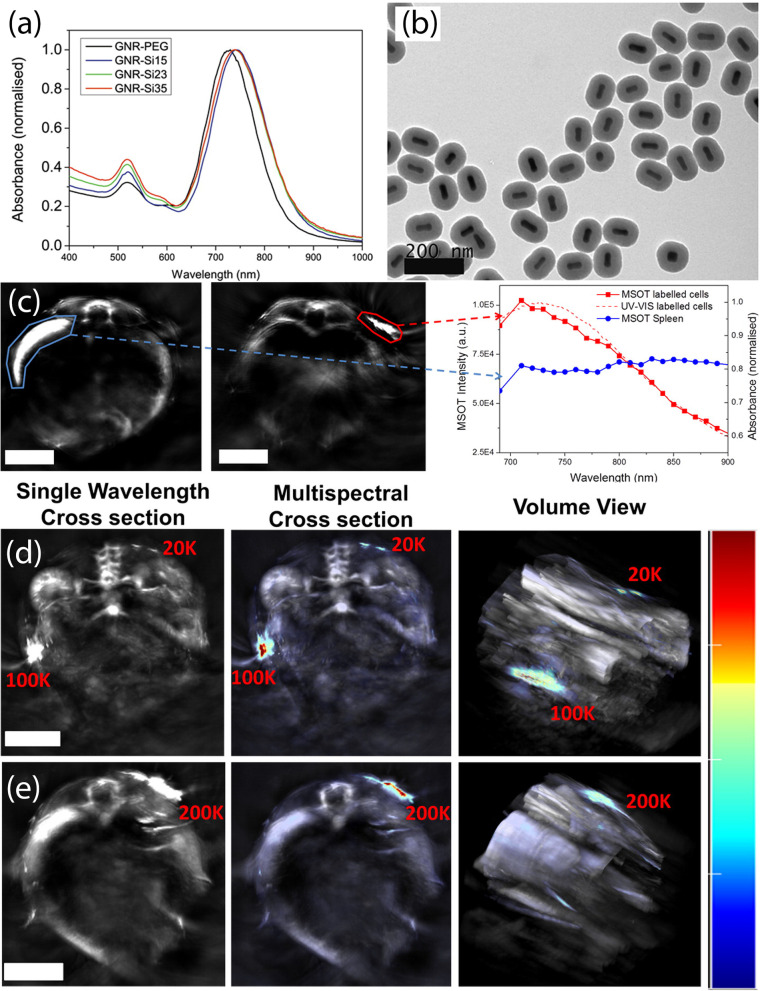
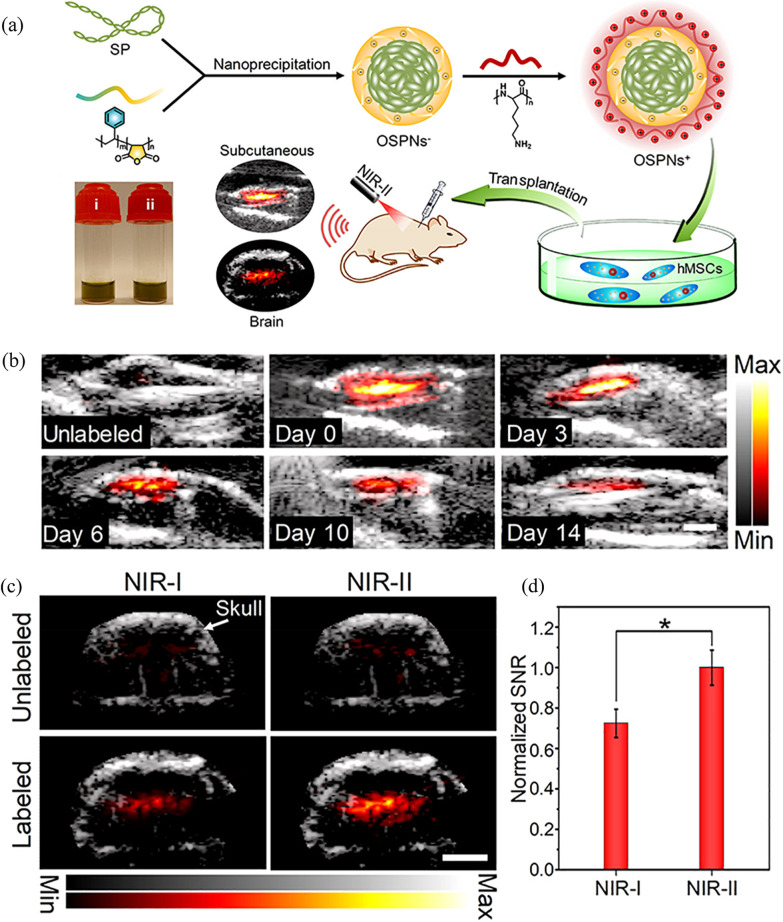
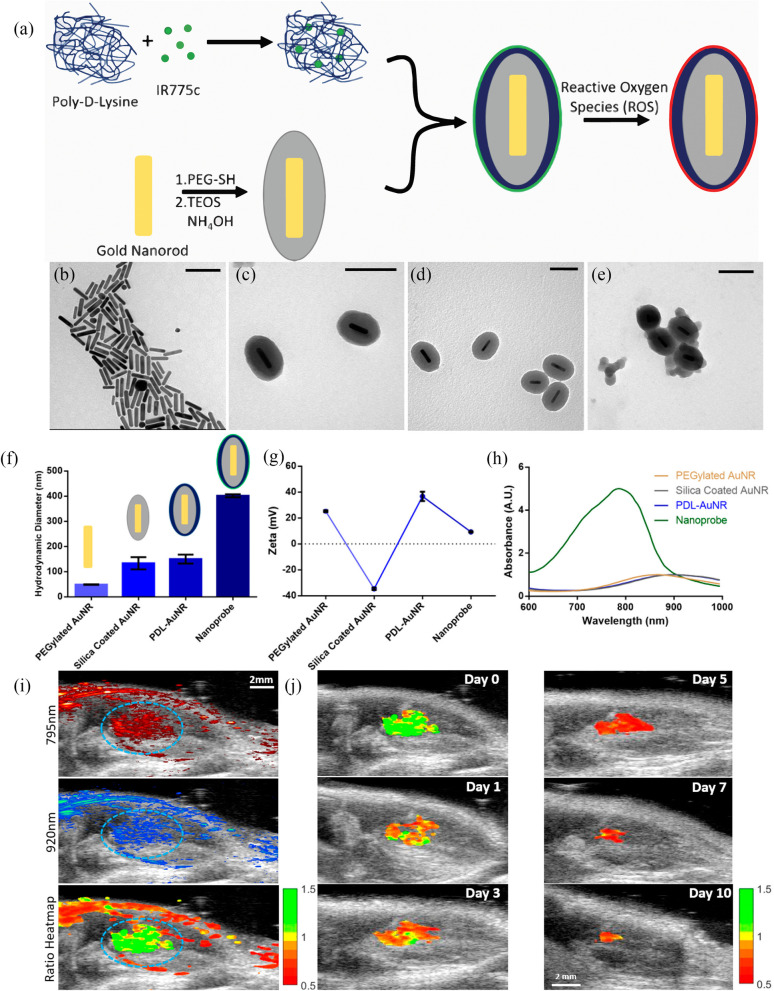
With the advent of stem cell therapy for spinal cord injuries, stroke, burns, macular degeneration, heart diseases, diabetes, rheumatoid arthritis and osteoarthritis; the need to track the survival, migration pathways, spatial destination and differentiation of transplanted stem cells in a clinical setting has gained increased relevance. Indeed, getting regulatory approval to use these therapies in the clinic depends on biodistribution studies. Although optoacoustic imaging (OAI) or photoacoustic imaging can detect functional information of cell activities in real-time, the selection and application of suitable contrast agents is essential to achieve optimal sensitivity and contrast for sensing at clinically relevant depths and can even provide information about molecular activity. This review explores OAI methodologies in conjunction with the specific application of exogenous contrast agents in comparison to other imaging modalities and describes the properties of exogenous contrast agents for quantitative and qualitative monitoring of stem cells. Specific characteristics such as biocompatibility, the absorption coefficient, and surface functionalization are compared and how the labelling efficiency translates to both short and long-term visualization of mesenchymal stem cells is explored. An overview of novel properties of recently developed optoacoustic contrast agents and their capability to detect disease and recovery progression in clinical settings is provided which includes newly developed exogenous contrast agents to monitor stem cells in real-time for multimodal sensing.
随着干细胞疗法在脊髓损伤、中风、烧伤、黄斑变性、心脏病、糖尿病、类风湿性关节炎和骨关节炎等领域的出现,在临床环境中追踪移植干细胞的存活、迁移途径、空间去向和分化的需求变得越来越重要。事实上,获得监管部门批准将这些疗法用于临床取决于生物分布研究。尽管光声成像(OAI)或光声成像可以实时检测细胞活动的功能信息,但选择和应用合适的对比剂对于在临床相关深度实现最佳灵敏度和对比度至关重要,甚至可以提供关于分子活性的信息。本综述探讨了 OAI 方法学,以及与其他成像方式相比,外源性对比剂在特定应用中的作用,并描述了外源性对比剂用于定量和定性监测干细胞的特性。比较了生物相容性、吸收系数和表面功能化等特定特性,以及标记效率如何转化为间充质干细胞的短期和长期可视化,并探讨了其用于实时监测干细胞的多模态传感的能力。还提供了最近开发的光声对比剂的新特性及其在临床环境中检测疾病和恢复进展的能力的概述,包括新开发的外源性对比剂,用于实时监测干细胞以进行多模态传感。