• 文献检索
  • 文档翻译
  • 深度研究
  • 学术资讯
  • Suppr Zotero 插件Zotero 插件
  • 邀请有礼
  • 套餐&价格
  • 历史记录
应用&插件
Suppr Zotero 插件Zotero 插件浏览器插件Mac 客户端Windows 客户端微信小程序
定价
高级版会员购买积分包购买API积分包
服务
文献检索文档翻译深度研究API 文档MCP 服务
关于我们
关于 Suppr公司介绍联系我们用户协议隐私条款
关注我们

Suppr 超能文献

核心技术专利:CN118964589B侵权必究
粤ICP备2023148730 号-1Suppr @ 2026

文献检索

告别复杂PubMed语法,用中文像聊天一样搜索,搜遍4000万医学文献。AI智能推荐,让科研检索更轻松。

立即免费搜索

文件翻译

保留排版,准确专业,支持PDF/Word/PPT等文件格式,支持 12+语言互译。

免费翻译文档

深度研究

AI帮你快速写综述,25分钟生成高质量综述,智能提取关键信息,辅助科研写作。

立即免费体验

使用阴道内释放孕酮装置导致与长效孕酮相似的妊娠率和损失率,以同步无周期胚胎受体母马。

Use of Intravaginal Progesterone-Releasing Device Results in Similar Pregnancy Rates and Losses to Long-Acting Progesterone to Synchronize Acyclic Embryo Recipient Mares.

作者信息

Segabinazzi Lorenzo G T M, Andrade Luiz R P, Alvarenga Marco A, Dell'Aqua Jose A, Canisso Igor F

机构信息

Department of Veterinary Surgery and Animal Reproduction, School of Veterinary Medicine and Animal Science, São Paulo State University, UNESP, Botucatu 18618-681, Brazil.

Department of Veterinary Clinical Medicine, College of Veterinary Medicine, University of Illinois, 1008 W Hazelwood Drive, Urbana, IL 61802, USA.

出版信息

Vet Sci. 2021 Sep 10;8(9):190. doi: 10.3390/vetsci8090190.

DOI:10.3390/vetsci8090190
PMID:34564584
原文链接:https://pmc.ncbi.nlm.nih.gov/articles/PMC8472191/
Abstract

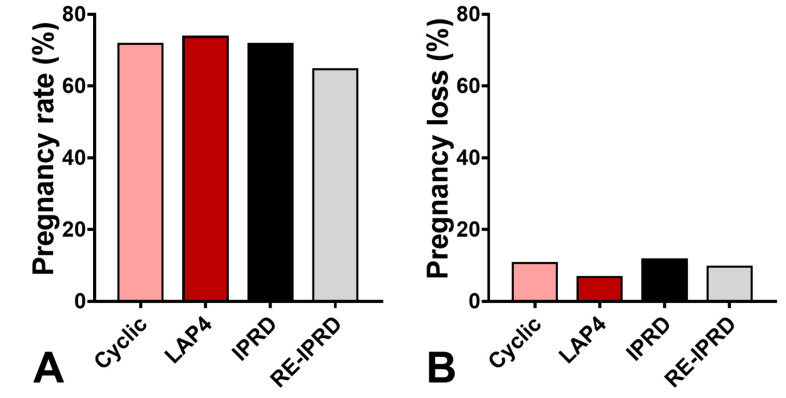
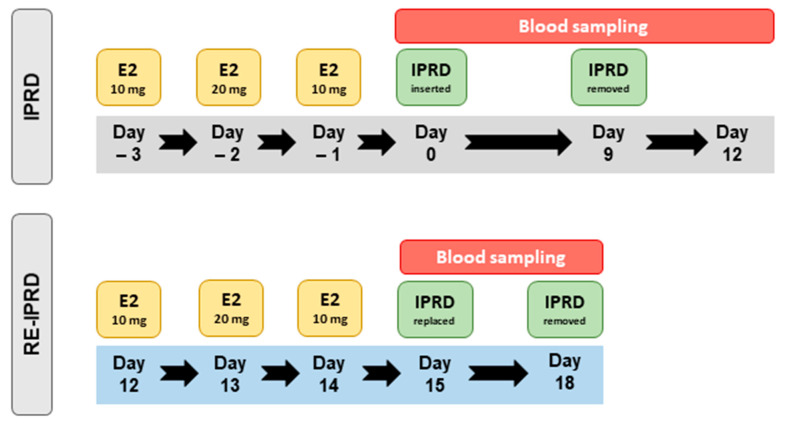
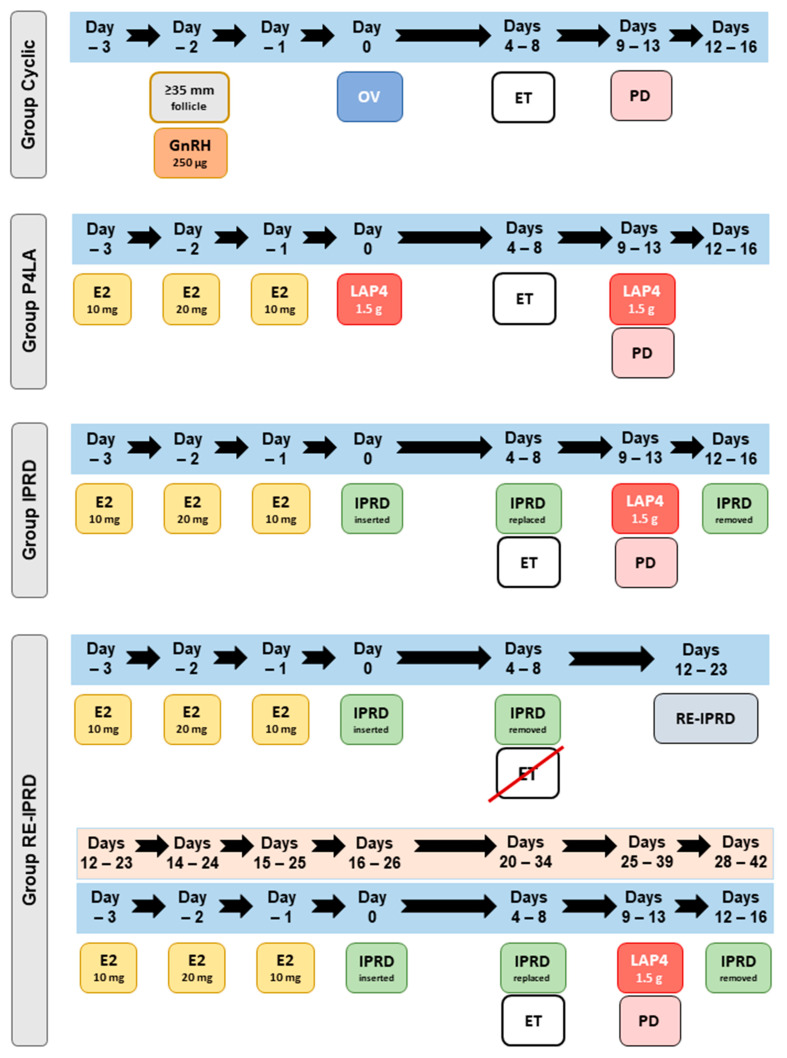
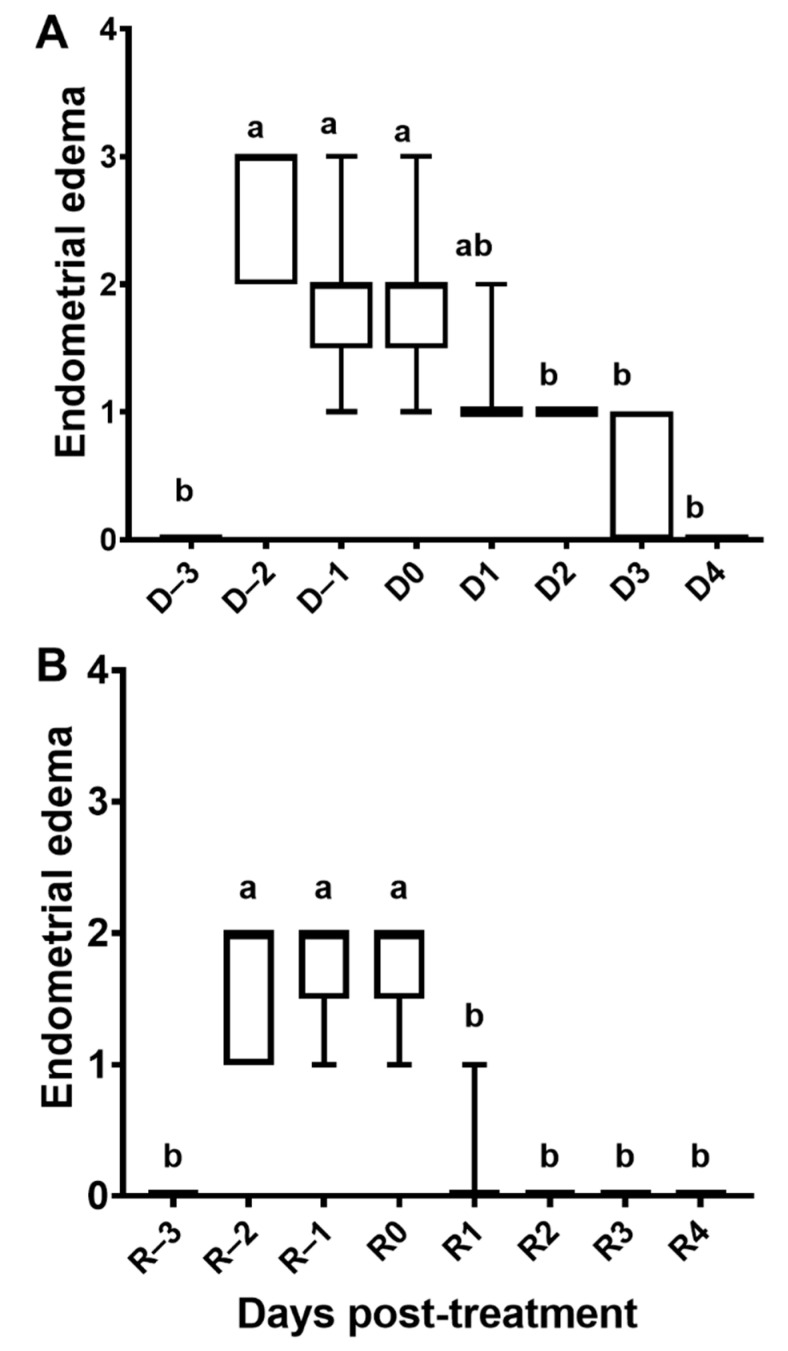
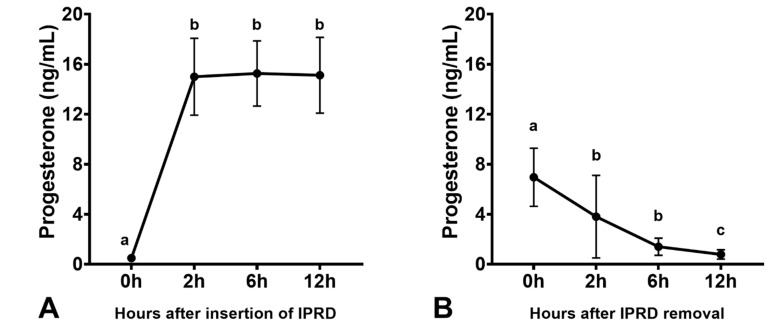
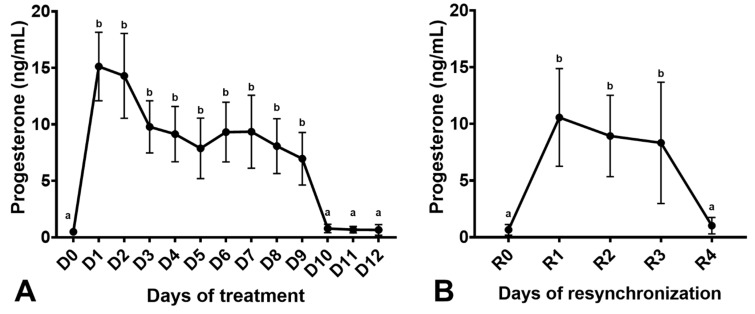
The objectives of this study were: (1) to assess uterine features and serum progesterone concentrations of acyclic mares synchronized and resynchronized with intravaginal progesterone release device (IPRD), and (2) to compare pregnancy rates and losses of cyclic and acyclic embryo recipient mares treated with different synchronization protocols. In Experiment 1, mares (n = 12) received estradiol for 3 days (E2-3d), and then 24 h after the last injection, an IPRD was inserted and kept in place for 9 days. Three days after IPRD removal, mares were treated with E2-3d, and then a new IPRD was inserted and maintained for three days. Serum progesterone concentrations were assessed 2, 6, and 12 h after insertion and removal of IPRD, and then daily from the insertion of the first IPRD to one day after removal of the second IPRD. Experiment 2 was conducted with embryo recipient mares randomly assigned to four groups: (1) Cyclic: mares (n = 75) had ovulation confirmed after receiving a single dose of histrelin when a periovulatory follicle was first detected, (2) LAP4: acyclic mares (n = 92) were treated with E2-3d and then administered a single dose of LAP4 24 h after the last estradiol injection, (3) IPRD: acyclic mares (n = 130) were treated with E2-3d and an IPRD for 4-8 days, and (4) RE-IPRD: acyclic mares (n = 32) were synchronized as in the IPRD group but not used for embryo transfer (ET), then 8 to 15 days later, the mares were resynchronized with E2-3d and an IPRD for 4-8 days. In vivo-produced Day-8 embryos were collected and transferred 4-8 days after ovulation or progesterone treatments. Mares in IPRD and RE-IPRD groups had the intravaginal device removed immediately before ET, and then a new IPRD was inserted right after ET. Pregnancy diagnosis was performed at 5, 30, and 60 days after ET. Once pregnancy was confirmed, mares in the three acyclic groups received weekly injections of LAP4 (1.5 g) until 120 days of pregnancy. Mares in IPRD and RE-IPRD groups had the device removed three days after the first pregnancy diagnosis. In Experiment 1, progesterone concentrations increased rapidly starting 2 h after insertion of IPRD ( < 0.05); then, concentrations plateaued well above pregnancy maintenance until removal on days 9 and 3, respectively. Progesterone concentrations were reduced to baseline 24 h after IPRD removal ( < 0.05). For experiment 2, there was no difference in pregnancy rates across groups (65-74%) or pregnancy losses by 60 days of gestation (7-12%) ( > 0.05). In conclusion, the IPRD used herein resulted in a rapid increase and a sharp decline in progesterone concentrations upon its insertion and removal, respectively. Finally, our results demonstrated that IPRD could be a compatible alternative to LAP4 to synchronize and resynchronize acyclic embryo recipient mares.

摘要

本研究的目的是

(1)评估经阴道孕酮释放装置(IPRD)同步和重新同步的非周期性母马的子宫特征和血清孕酮浓度,以及(2)比较采用不同同步方案处理的周期性和非周期性胚胎受体母马的妊娠率和妊娠损失。在实验1中,母马(n = 12)接受3天的雌二醇治疗(E2 - 3d),然后在最后一次注射后24小时,插入一个IPRD并放置9天。去除IPRD三天后,母马接受E2 - 3d治疗,然后插入一个新的IPRD并维持三天。在插入和去除IPRD后2、6和12小时评估血清孕酮浓度,然后从插入第一个IPRD到去除第二个IPRD后一天每天进行评估。实验2对胚胎受体母马进行,随机分为四组:(1)周期性组:母马(n = 75)在首次检测到排卵前卵泡时接受单剂量组氨瑞林后确认排卵,(2)LAP4组:非周期性母马(n = 92)接受E2 - 3d治疗,然后在最后一次雌二醇注射后24小时给予单剂量LAP4,(3)IPRD组:非周期性母马(n = 130)接受E2 - 3d和IPRD治疗4 - 8天,(4)RE - IPRD组:非周期性母马(n = 32)与IPRD组同步但不用于胚胎移植(ET),然后在8至15天后,母马用E2 - 3d和IPRD重新同步4 - 8天。收集体内产生的第8天胚胎,并在排卵或孕酮治疗后4 - 8天进行移植。IPRD组和RE - IPRD组的母马在胚胎移植前立即取出阴道内装置,然后在胚胎移植后立即插入一个新的IPRD。在胚胎移植后5、30和60天进行妊娠诊断。一旦确认妊娠,三个非周期性组的母马每周注射LAP4(1.5 g),直至妊娠120天。IPRD组和RE - IPRD组的母马在首次妊娠诊断后三天取出装置。在实验1中,孕酮浓度在插入IPRD后2小时开始迅速升高(<0.05);然后,浓度在远高于维持妊娠的水平上达到平稳,分别直至第9天和第3天取出时。IPRD去除后24小时孕酮浓度降至基线(<0.05)。对于实验2,各组之间的妊娠率(65 - 74%)或妊娠60天时的妊娠损失(7 - 12%)没有差异(>0.05)。总之,本文使用的IPRD在插入和取出时分别导致孕酮浓度迅速升高和急剧下降。最后,我们的结果表明,IPRD可以作为LAP4的一种合适替代方法,用于同步和重新同步非周期性胚胎受体母马。
https://cdn.ncbi.nlm.nih.gov/pmc/blobs/e05b/8472191/02dc1cdcf2a2/vetsci-08-00190-g007.jpg
https://cdn.ncbi.nlm.nih.gov/pmc/blobs/e05b/8472191/26747f34621f/vetsci-08-00190-g001.jpg
https://cdn.ncbi.nlm.nih.gov/pmc/blobs/e05b/8472191/078e2b5c27ec/vetsci-08-00190-g002.jpg
https://cdn.ncbi.nlm.nih.gov/pmc/blobs/e05b/8472191/ac78125342de/vetsci-08-00190-g003.jpg
https://cdn.ncbi.nlm.nih.gov/pmc/blobs/e05b/8472191/311411409239/vetsci-08-00190-g004.jpg
https://cdn.ncbi.nlm.nih.gov/pmc/blobs/e05b/8472191/21c0067c6acb/vetsci-08-00190-g005.jpg
https://cdn.ncbi.nlm.nih.gov/pmc/blobs/e05b/8472191/9dd5b120d125/vetsci-08-00190-g006.jpg
https://cdn.ncbi.nlm.nih.gov/pmc/blobs/e05b/8472191/02dc1cdcf2a2/vetsci-08-00190-g007.jpg
https://cdn.ncbi.nlm.nih.gov/pmc/blobs/e05b/8472191/26747f34621f/vetsci-08-00190-g001.jpg
https://cdn.ncbi.nlm.nih.gov/pmc/blobs/e05b/8472191/078e2b5c27ec/vetsci-08-00190-g002.jpg
https://cdn.ncbi.nlm.nih.gov/pmc/blobs/e05b/8472191/ac78125342de/vetsci-08-00190-g003.jpg
https://cdn.ncbi.nlm.nih.gov/pmc/blobs/e05b/8472191/311411409239/vetsci-08-00190-g004.jpg
https://cdn.ncbi.nlm.nih.gov/pmc/blobs/e05b/8472191/21c0067c6acb/vetsci-08-00190-g005.jpg
https://cdn.ncbi.nlm.nih.gov/pmc/blobs/e05b/8472191/9dd5b120d125/vetsci-08-00190-g006.jpg
https://cdn.ncbi.nlm.nih.gov/pmc/blobs/e05b/8472191/02dc1cdcf2a2/vetsci-08-00190-g007.jpg

相似文献

1
Use of Intravaginal Progesterone-Releasing Device Results in Similar Pregnancy Rates and Losses to Long-Acting Progesterone to Synchronize Acyclic Embryo Recipient Mares.使用阴道内释放孕酮装置导致与长效孕酮相似的妊娠率和损失率,以同步无周期胚胎受体母马。
Vet Sci. 2021 Sep 10;8(9):190. doi: 10.3390/vetsci8090190.
2
Serum Progesterone and Conception Rates in Acyclic Embryo Recipient Mares Using a Bovine Progesterone-Releasing Intravaginal Device.使用牛用孕酮释放阴道栓的乏情胚胎受体内分泌孕酮与受胎率
J Equine Vet Sci. 2021 Feb;97:103325. doi: 10.1016/j.jevs.2020.103325. Epub 2020 Nov 21.
3
Synchronization of cyclic and acyclic embryo recipient mares with donor mares.使周期性和非周期性胚胎受体母马与供体母马同步。
Anim Reprod Sci. 2018 Mar;190:1-9. doi: 10.1016/j.anireprosci.2017.12.016. Epub 2017 Dec 23.
4
Animal-level factors affecting ovarian function in Bos indicus heifers treated to synchronize ovulation with intravaginal progesterone-releasing devices and oestradiol benzoate.影响采用阴道内孕酮释放装置和苯甲酸雌二醇处理以同步排卵的印度瘤牛小母牛卵巢功能的动物水平因素。
Reprod Domest Anim. 2012 Jun;47(3):463-71. doi: 10.1111/j.1439-0531.2011.01905.x. Epub 2011 Oct 3.
5
Ovarian responses in Bos indicus heifers treated to synchronise ovulation with intravaginal progesterone releasing devices, oestradiol benzoate, prostaglandin F(2α) and equine chorionic gonadotrophin.用阴道内释放孕酮的装置、苯甲酸雌二醇、前列腺素 F(2α)和马绒毛膜促性腺激素处理同期发情的印度野牛小母牛的卵巢反应。
Anim Reprod Sci. 2011 Dec;129(3-4):118-26. doi: 10.1016/j.anireprosci.2011.11.001. Epub 2011 Nov 15.
6
Impact of a progesterone-releasing intravaginal device and inflammatory reaction on ovarian activity in embryo-recipient anestrus mares.释放孕酮的阴道内装置及炎症反应对胚胎受体乏情母马卵巢活动的影响
Theriogenology. 2017 Mar 1;90:175-184. doi: 10.1016/j.theriogenology.2016.11.005. Epub 2016 Nov 12.
7
Ovarian dynamics in response to two modified intravaginal progesterone releasing device and oestradiol benzoate based ovulation synchronisation protocols designed for use in Brahman heifers.针对两种专为婆罗门小母牛设计的、基于改良型阴道内孕酮释放装置和苯甲酸雌二醇的排卵同步方案,卵巢的动态变化。
Anim Reprod Sci. 2014 Jul;148(1-2):18-25. doi: 10.1016/j.anireprosci.2014.05.005. Epub 2014 May 16.
8
Hormone supplementation protocol using estradiol benzoate and long-acting progesterone is efficient in maintaining pregnancy of anovulatory recipient mares during autumn transitional phase.在秋季过渡期,使用苯甲酸雌二醇和长效孕酮的激素补充方案对于维持无排卵受体母马的妊娠是有效的。
Anim Reprod Sci. 2015 Feb;153:39-43. doi: 10.1016/j.anireprosci.2014.12.014. Epub 2015 Jan 3.
9
Effect of short-term artificial light and transvaginal progesterone device on first ovulation in late transitional mares.短期人工光照和经阴道孕酮装置对接近过渡期母马首次排卵的影响。
J Equine Sci. 2022 Apr;33(1):1-6. doi: 10.1294/jes.33.1. Epub 2022 Apr 19.
10
Embryo transfer into anestrous recipient mares prepared using clomiphene citrate and short-acting progesterone.将胚胎移植到使用枸橼酸氯米芬和短效孕酮制备的乏情受体母马体内。
J Equine Vet Sci. 2024 Feb;133:105006. doi: 10.1016/j.jevs.2024.105006. Epub 2024 Jan 16.

引用本文的文献

1
Assisted Reproductive Technologies (ARTs) in Domestic Mammals.家畜的辅助生殖技术
Vet Sci. 2023 Apr 11;10(4):287. doi: 10.3390/vetsci10040287.

本文引用的文献

1
Artificial Long Estrus Protocols Administered Prior to Progesterone Increase Endometrial Uterocalin Expression in Anestrous Mares.人工长发情方案可在乏情母马孕酮增加前增加子宫内膜尿促孕素表达。
J Equine Vet Sci. 2021 Aug;103:103669. doi: 10.1016/j.jevs.2021.103669. Epub 2021 Jun 6.
2
Serum Progesterone and Conception Rates in Acyclic Embryo Recipient Mares Using a Bovine Progesterone-Releasing Intravaginal Device.使用牛用孕酮释放阴道栓的乏情胚胎受体内分泌孕酮与受胎率
J Equine Vet Sci. 2021 Feb;97:103325. doi: 10.1016/j.jevs.2020.103325. Epub 2020 Nov 21.
3
Effect of the duration of estradiol priming prior to progesterone administration on endometrial gene expression in anestrous mares.
在孕酮给药前雌二醇预处理持续时间对乏情母马子宫内膜基因表达的影响。
Theriogenology. 2019 Jun;131:96-105. doi: 10.1016/j.theriogenology.2019.03.025. Epub 2019 Mar 28.
4
Early luteal phase progestin concentration influences endometrial function in pregnant mares.黄体期早期孕激素浓度影响怀孕母马的子宫内膜功能。
Theriogenology. 2019 Feb;125:236-241. doi: 10.1016/j.theriogenology.2018.11.018. Epub 2018 Nov 19.
5
Synchronization of cyclic and acyclic embryo recipient mares with donor mares.使周期性和非周期性胚胎受体母马与供体母马同步。
Anim Reprod Sci. 2018 Mar;190:1-9. doi: 10.1016/j.anireprosci.2017.12.016. Epub 2017 Dec 23.
6
Likelihood of pregnancy after embryo transfer is reduced in recipient mares with a short preceding oestrus.在发情前期较短的受体母马中,胚胎移植后怀孕的可能性会降低。
Equine Vet J. 2018 May;50(3):386-390. doi: 10.1111/evj.12739. Epub 2017 Sep 1.
7
Administration of 2.5 mg of estradiol followed by 1,500 mg of progesterone to anovulatory mares promote similar uterine morphology, hormone concentrations and molecular dynamics to those observed in cyclic mares.对无排卵母马注射2.5毫克雌二醇,随后注射1500毫克孕酮,可使其子宫形态、激素浓度和分子动态与发情周期母马相似。
Theriogenology. 2017 Jul 15;97:159-169. doi: 10.1016/j.theriogenology.2017.04.031. Epub 2017 Apr 23.
8
Impact of a progesterone-releasing intravaginal device and inflammatory reaction on ovarian activity in embryo-recipient anestrus mares.释放孕酮的阴道内装置及炎症反应对胚胎受体乏情母马卵巢活动的影响
Theriogenology. 2017 Mar 1;90:175-184. doi: 10.1016/j.theriogenology.2016.11.005. Epub 2016 Nov 12.
9
Comparison of different regimens of estradiol benzoate treatments followed by long-acting progesterone to prepare noncycling mares as embryo recipients.比较苯甲酸雌二醇不同给药方案后联合长效孕酮处理以制备非周期性母马作为胚胎受体的效果。
Theriogenology. 2016 Oct 15;86(7):1749-56. doi: 10.1016/j.theriogenology.2016.05.041. Epub 2016 Jul 5.
10
The period of the follicular phase during which the uterus of mares shows estrus-like echotexture influences the subsequent pregnancy rate.母马子宫呈现发情样回声纹理的卵泡期会影响随后的妊娠率。
Theriogenology. 2016 Oct 1;86(6):1506-1515. doi: 10.1016/j.theriogenology.2016.05.009. Epub 2016 May 20.