Laboratory of Computer Science, Massachusetts General Hospital, Boston, MA, 02114, USA.
Department of Medicine, Massachusetts General Hospital, Boston, MA, 02114, USA.
BMC Med. 2021 Sep 27;19(1):249. doi: 10.1186/s12916-021-02115-0.
For some SARS-CoV-2 survivors, recovery from the acute phase of the infection has been grueling with lingering effects. Many of the symptoms characterized as the post-acute sequelae of COVID-19 (PASC) could have multiple causes or are similarly seen in non-COVID patients. Accurate identification of PASC phenotypes will be important to guide future research and help the healthcare system focus its efforts and resources on adequately controlled age- and gender-specific sequelae of a COVID-19 infection.
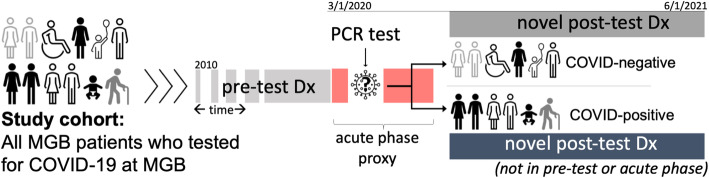
In this retrospective electronic health record (EHR) cohort study, we applied a computational framework for knowledge discovery from clinical data, MLHO, to identify phenotypes that positively associate with a past positive reverse transcription-polymerase chain reaction (RT-PCR) test for COVID-19. We evaluated the post-test phenotypes in two temporal windows at 3-6 and 6-9 months after the test and by age and gender. Data from longitudinal diagnosis records stored in EHRs from Mass General Brigham in the Boston Metropolitan Area was used for the analyses. Statistical analyses were performed on data from March 2020 to June 2021. Study participants included over 96 thousand patients who had tested positive or negative for COVID-19 and were not hospitalized.
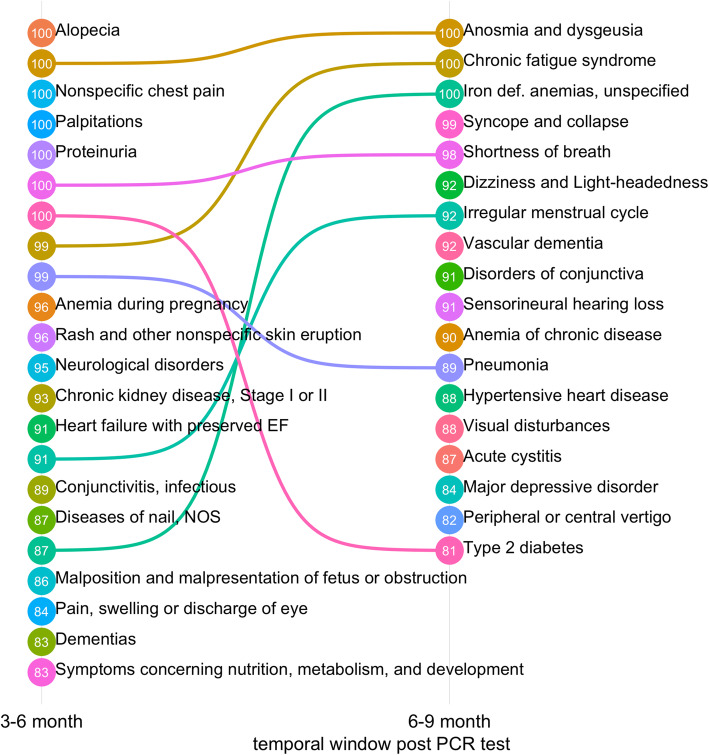
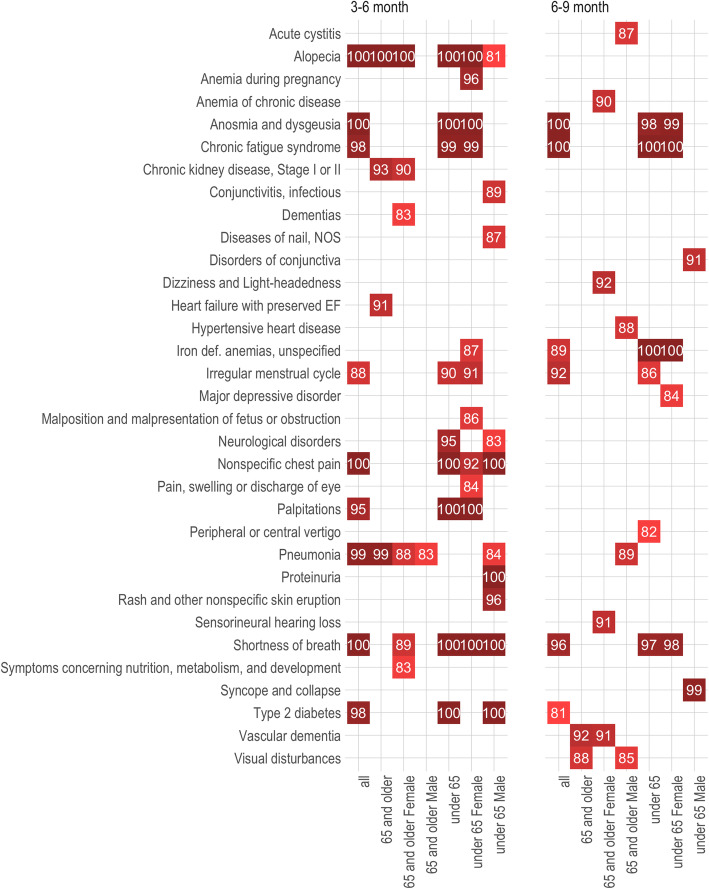
We identified 33 phenotypes among different age/gender cohorts or time windows that were positively associated with past SARS-CoV-2 infection. All identified phenotypes were newly recorded in patients' medical records 2 months or longer after a COVID-19 RT-PCR test in non-hospitalized patients regardless of the test result. Among these phenotypes, a new diagnosis record for anosmia and dysgeusia (OR 2.60, 95% CI [1.94-3.46]), alopecia (OR 3.09, 95% CI [2.53-3.76]), chest pain (OR 1.27, 95% CI [1.09-1.48]), chronic fatigue syndrome (OR 2.60, 95% CI [1.22-2.10]), shortness of breath (OR 1.41, 95% CI [1.22-1.64]), pneumonia (OR 1.66, 95% CI [1.28-2.16]), and type 2 diabetes mellitus (OR 1.41, 95% CI [1.22-1.64]) is one of the most significant indicators of a past COVID-19 infection. Additionally, more new phenotypes were found with increased confidence among the cohorts who were younger than 65.
The findings of this study confirm many of the post-COVID-19 symptoms and suggest that a variety of new diagnoses, including new diabetes mellitus and neurological disorder diagnoses, are more common among those with a history of COVID-19 than those without the infection. Additionally, more than 63% of PASC phenotypes were observed in patients under 65 years of age, pointing out the importance of vaccination to minimize the risk of debilitating post-acute sequelae of COVID-19 among younger adults.
对于一些 SARS-CoV-2 幸存者来说,从感染的急性期恢复过来是很艰难的,而且还会留下一些挥之不去的影响。许多被认为是 COVID-19 后急性后遗症(PASC)的症状可能有多种原因,或者在非 COVID 患者中也有类似的症状。准确识别 PASC 表型对于指导未来的研究和帮助医疗保健系统将其努力和资源集中在 COVID-19 感染的年龄和性别特异性后遗症的充分控制上非常重要。
在这项回顾性电子健康记录(EHR)队列研究中,我们应用了一种从临床数据中发现知识的计算框架,即 MLHO,以识别与过去 COVID-19 逆转录-聚合酶链反应(RT-PCR)检测呈阳性结果呈正相关的表型。我们在测试后 3-6 个月和 6-9 个月以及按年龄和性别两个时间窗口评估了测试后的表型。使用来自波士顿都会区马萨诸塞州综合医院 EHR 中存储的纵向诊断记录进行分析。数据分析于 2020 年 3 月至 2021 年 6 月进行。研究参与者包括超过 96000 名 COVID-19 检测呈阳性或阴性且未住院的患者。
我们在不同年龄/性别队列或时间窗口中确定了 33 种与过去 SARS-CoV-2 感染呈正相关的表型。在非住院患者中,所有确定的表型都是在 COVID-19 RT-PCR 检测后 2 个月或更长时间在患者的病历中首次记录的,无论检测结果如何。在这些表型中,新诊断的嗅觉丧失和味觉障碍(OR 2.60,95%CI [1.94-3.46])、脱发(OR 3.09,95%CI [2.53-3.76])、胸痛(OR 1.27,95%CI [1.09-1.48])、慢性疲劳综合征(OR 2.60,95%CI [1.22-2.10])、呼吸急促(OR 1.41,95%CI [1.22-1.64])、肺炎(OR 1.66,95%CI [1.28-2.16])和 2 型糖尿病(OR 1.41,95%CI [1.22-1.64])是过去 COVID-19 感染的最显著指标之一。此外,在年龄小于 65 岁的队列中,随着置信度的提高,发现了更多新的表型。
本研究的结果证实了许多 COVID-19 后的症状,并表明包括新的糖尿病和神经紊乱在内的多种新诊断在有 COVID-19 病史的患者中比没有感染的患者更为常见。此外,在 65 岁以下的患者中观察到超过 63%的 PASC 表型,这表明接种疫苗对于减轻 COVID-19 后急性后遗症对年轻成年人的致残风险非常重要。