Totani Licia, Amore Concetta, Piccoli Antonio, Dell'Elba Giuseppe, Di Santo Angelo, Plebani Roberto, Pecce Romina, Martelli Nicola, Rossi Alice, Ranucci Serena, De Fino Ida, Moretti Paolo, Bragonzi Alessandra, Romano Mario, Evangelista Virgilio
Laboratory of Vascular Biology and Pharmacology, Fondazione Mario Negri Sud, Santa Maria Imbaro (CH), Mozzagrogna, Italy.
Laboratory of Molecular Medicine, Centre for Advanced Studies and Technology (CAST), Department of Medical Oral and Biotechnological Sciences, G. D'Annunzio University of Chieti-Pescara, Chieti, Italy.
Front Pharmacol. 2021 Sep 8;12:702677. doi: 10.3389/fphar.2021.702677. eCollection 2021.
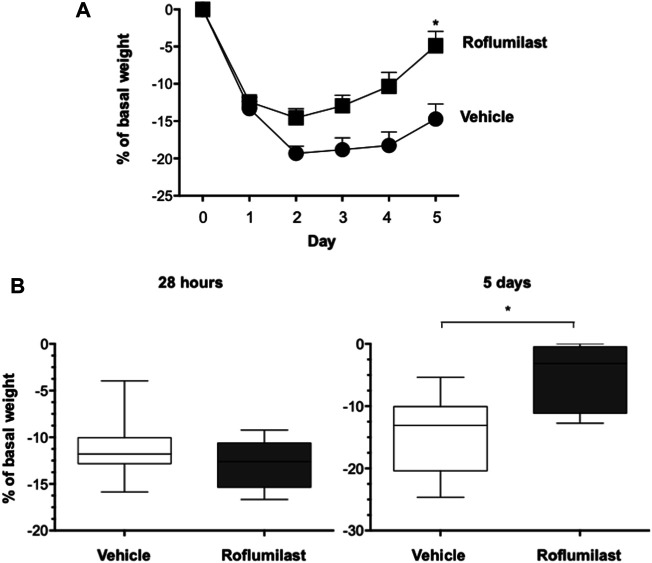
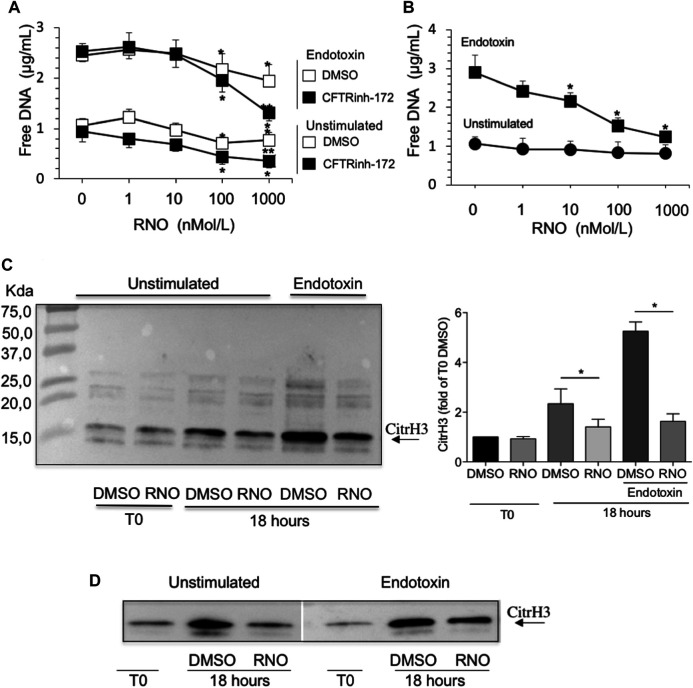
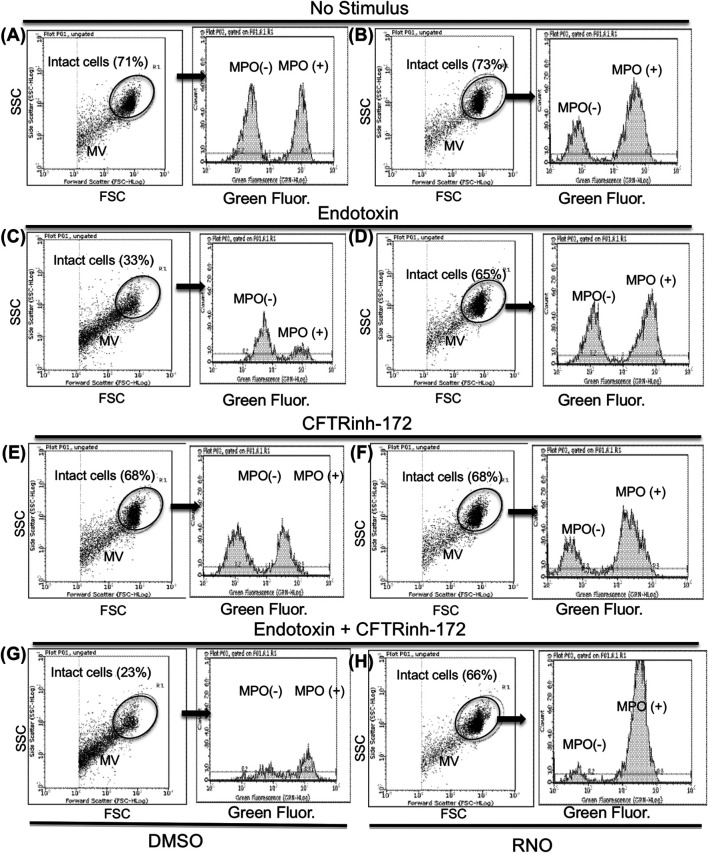
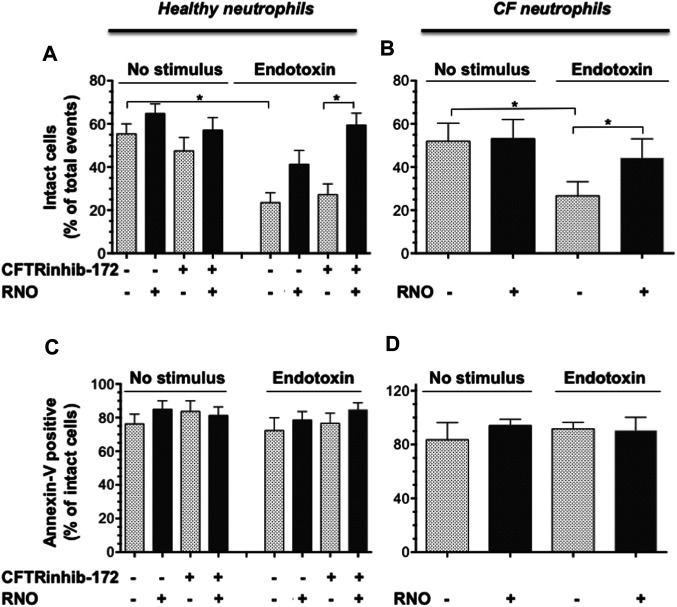
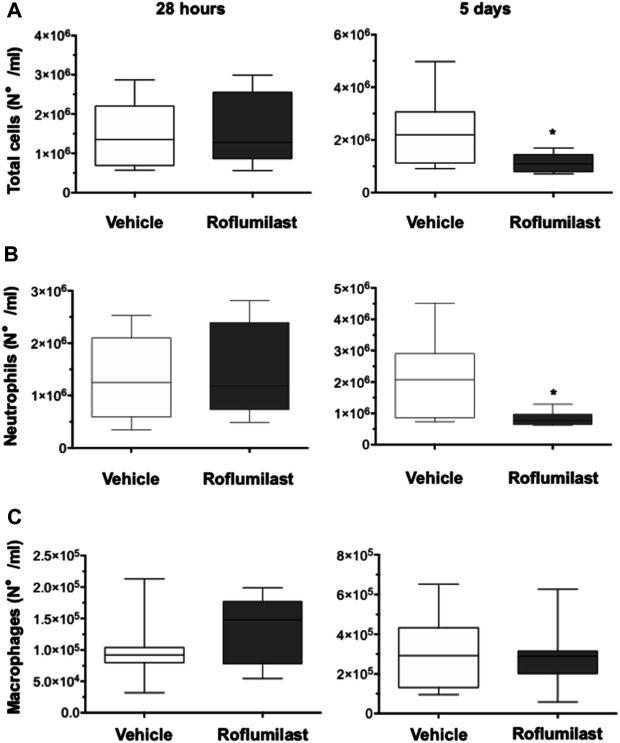
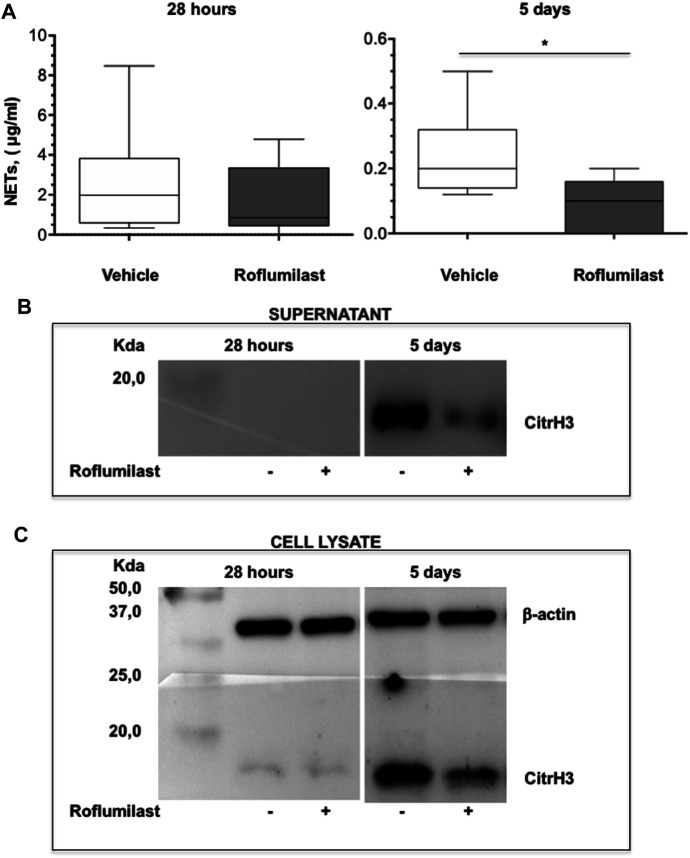
Neutrophilic inflammation is a key determinant of cystic fibrosis (CF) lung disease. Neutrophil-derived free DNA, released in the form of extracellular traps (NETs), significantly correlates with impaired lung function in patients with CF, underlying their pathogenetic role in CF lung disease. Thus, specific approaches to control NETosis of neutrophils migrated into the lungs may be clinically relevant in CF. We investigated the efficacy of phosphodiesterase (PDE) type-4 inhibitors, , on NET release by neutrophils from healthy volunteers and individuals with CF, and , on NET accumulation and lung inflammation in mice infected with . PDE4 blockade curbed endotoxin-induced NET production and preserved cellular integrity and apoptosis in neutrophils, from healthy subjects and patients with CF, challenged with endotoxin, . The pharmacological effects of PDE4 inhibitors were significantly more evident on CF neutrophils. In a mouse model of chronic infection, aerosol treatment with roflumilast, a selective PDE4 inhibitor, gave a significant reduction in free DNA in the BALF. This was accompanied by reduced citrullination of histone H3 in neutrophils migrated into the airways. Roflumilast-treated mice showed a significant improvement in weight recovery. Our study provides the first evidence that PDE4 blockade controls NETosis and , in CF-relevant models. Since selective PDE4 inhibitors have been recently approved for the treatment of COPD and psoriasis, our present results encourage clinical trials to test the efficacy of this class of drugs in CF.
中性粒细胞炎症是囊性纤维化(CF)肺部疾病的关键决定因素。以细胞外陷阱(NETs)形式释放的中性粒细胞衍生游离DNA与CF患者的肺功能受损显著相关,这表明其在CF肺部疾病中具有致病作用。因此,控制迁移到肺部的中性粒细胞的NETosis的特定方法在CF中可能具有临床相关性。我们研究了4型磷酸二酯酶(PDE)抑制剂对健康志愿者和CF患者中性粒细胞释放NET的影响,以及对感染的小鼠NET积累和肺部炎症的影响。PDE4阻断抑制了内毒素诱导的NET产生,并在受到内毒素攻击的健康受试者和CF患者的中性粒细胞中保持了细胞完整性和凋亡。PDE4抑制剂的药理作用在CF中性粒细胞上更为明显。在慢性感染的小鼠模型中,用选择性PDE4抑制剂罗氟司特进行气溶胶治疗可显著降低支气管肺泡灌洗液(BALF)中的游离DNA。这伴随着迁移到气道中的中性粒细胞中组蛋白H3瓜氨酸化的减少。罗氟司特治疗的小鼠在体重恢复方面有显著改善。我们的研究提供了首个证据,即在CF相关模型中,PDE4阻断可控制NETosis。由于选择性PDE4抑制剂最近已被批准用于治疗慢性阻塞性肺疾病(COPD)和银屑病,我们目前的结果鼓励进行临床试验,以测试这类药物在CF中的疗效。