Immunology, Microenvironment and Metastasis Program, The Wistar Institute, Philadelphia, Pennsylvania.
Bristol-Myers Squibb, Lawrenceville, New Jersey.
Mol Cancer Ther. 2020 Jul;19(7):1530-1538. doi: 10.1158/1535-7163.MCT-19-1020. Epub 2020 May 5.
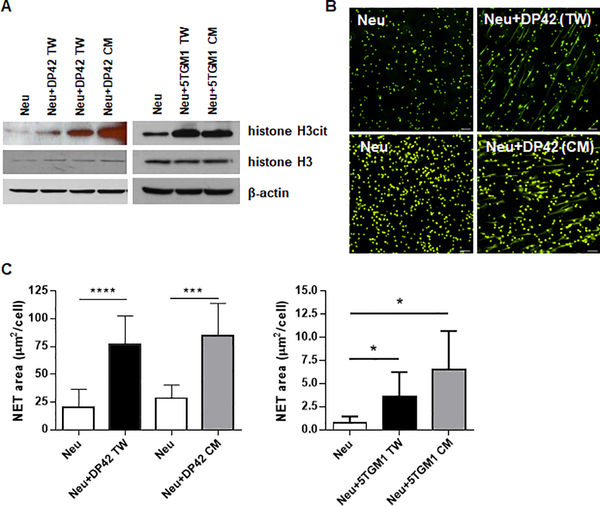
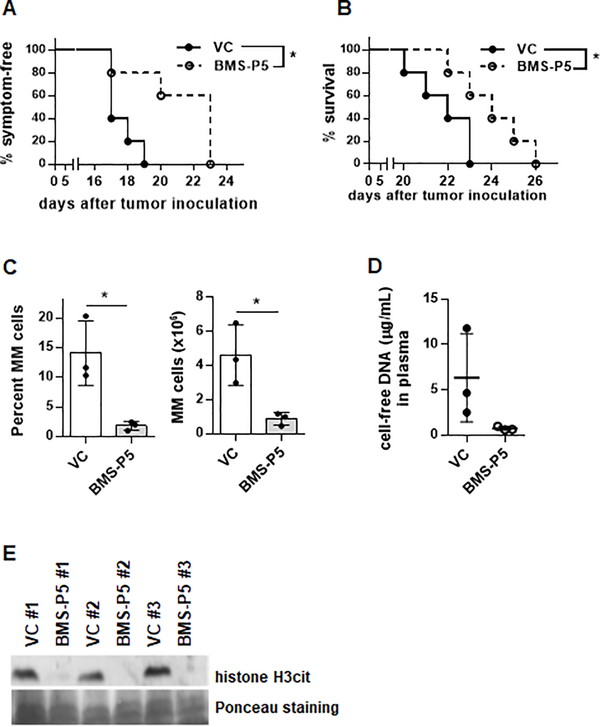
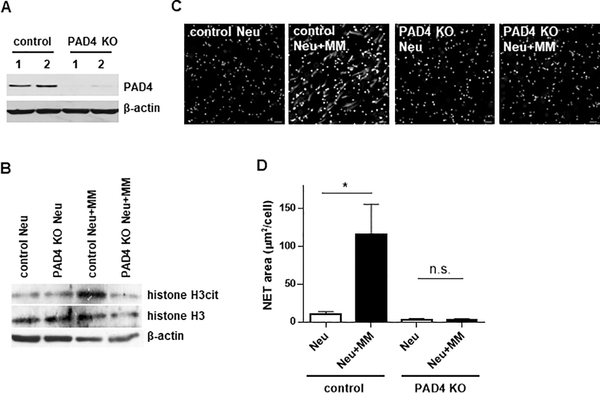
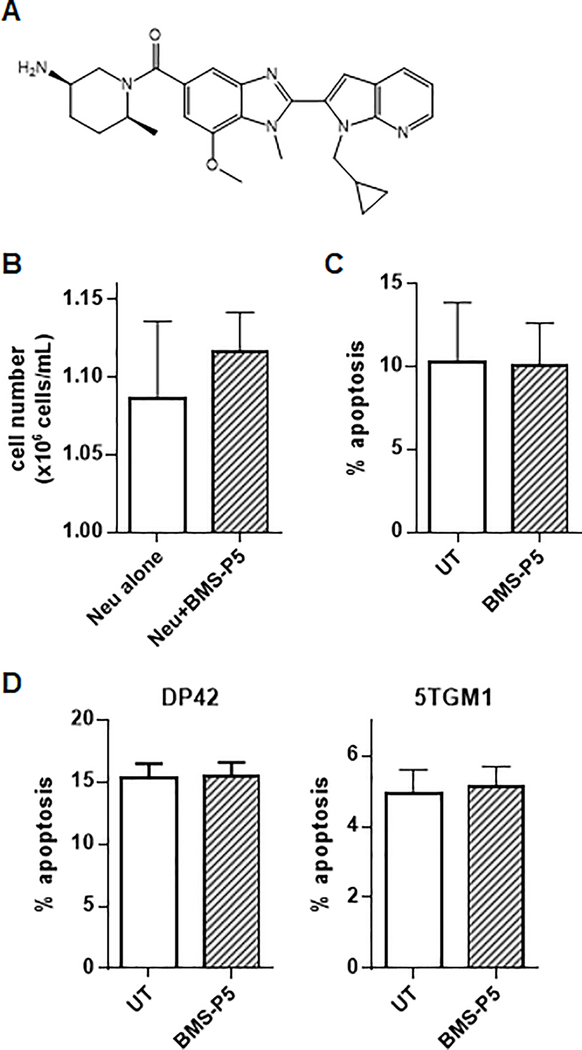
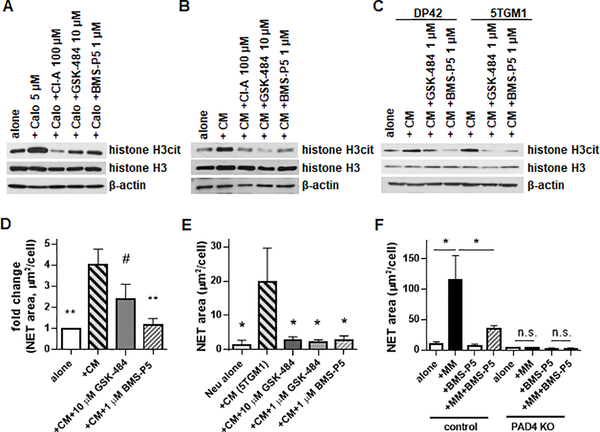
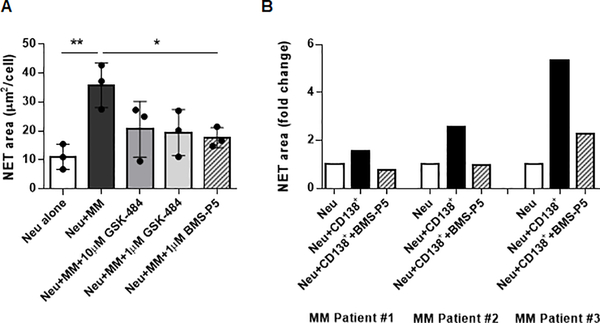
Multiple myeloma is a plasma cell malignancy, which grows in the bone marrow (BM). The major population of cells in the BM is represented by neutrophils and they can form neutrophil extracellular traps (NET). Here, we investigated whether multiple myeloma cells induce NET formation and whether targeting this process would delay multiple myeloma progression. We demonstrated that murine and human multiple myeloma cells stimulate citrullination of histone H3 and NET formation by neutrophils and that this process is abrogated by pharmacological targeting of peptidylarginine deiminase 4 (PAD4) with a novel-specific small molecule inhibitor BMS-P5. Administration of BMS-P5 to multiple myeloma-bearing mice delays appearance of symptoms and disease progression. Taken together, our data demonstrate that targeting PAD4 may be beneficial for treatment of multiple myeloma.
多发性骨髓瘤是一种浆细胞恶性肿瘤,在骨髓(BM)中生长。BM 中的主要细胞群体是中性粒细胞,它们可以形成中性粒细胞胞外诱捕网(NET)。在这里,我们研究了多发性骨髓瘤细胞是否诱导 NET 的形成,以及是否靶向该过程会延迟多发性骨髓瘤的进展。我们证明,鼠和人多发性骨髓瘤细胞刺激中性粒细胞的组蛋白 H3 的瓜氨酸化和 NET 的形成,并且该过程被新型特异性小分子抑制剂 BMS-P5 对肽基精氨酸脱亚氨酶 4(PAD4)的药理学靶向所阻断。向多发性骨髓瘤荷瘤小鼠给予 BMS-P5 可延迟症状出现和疾病进展。总之,我们的数据表明,靶向 PAD4 可能有益于多发性骨髓瘤的治疗。