Liu Manman, Zhang Yani, Xu Qiqi, Liu Guirong, Sun Na, Che Huilian, He Tao
Key Laboratory of Precision Nutrition and Food Quality, Key Laboratory of Functional Dairy, Ministry of Education, College of Food Science and Nutritional Engineering, China Agricultural University, Beijing, China.
National Engineering Research Center of Seafood, School of Food Science and Technology, Dalian Polytechnic University, Dalian, China.
Front Oncol. 2021 Sep 8;11:682917. doi: 10.3389/fonc.2021.682917. eCollection 2021.
Apigenin (APG), a natural flavonoid, can affect the development of a variety of tumors, but its role in ovarian cancer remains unclear. There has been an increasing amount of evidence supporting the vital role played by mast cells and the bioactive mediators they release, as components of the tumor microenvironment, in the progression of ovarian cancer (OC); however, the mechanism warrants further exploration.
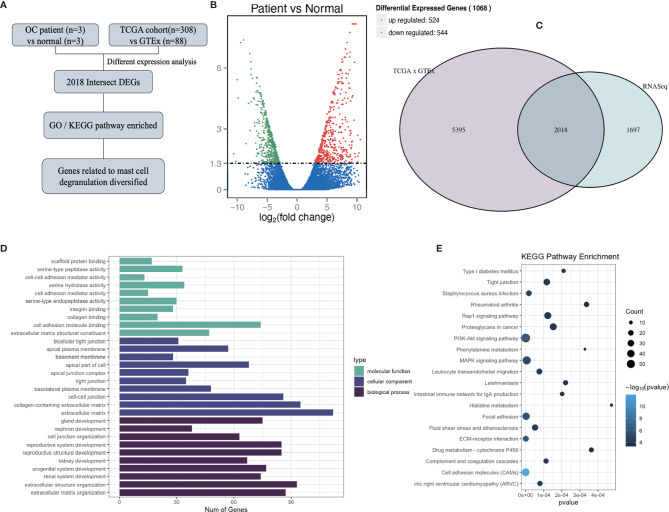
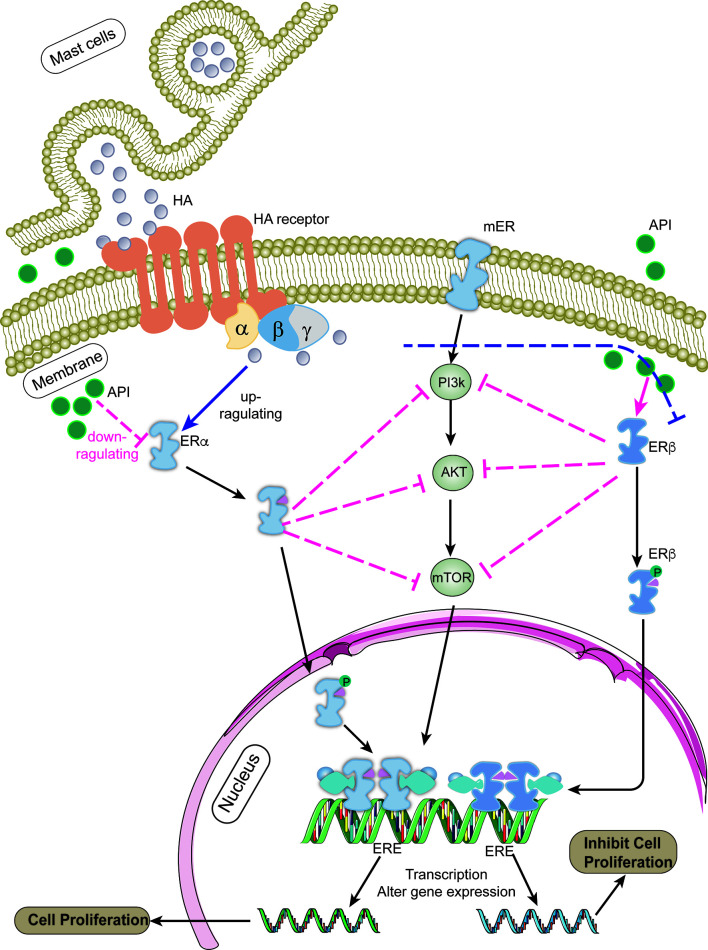
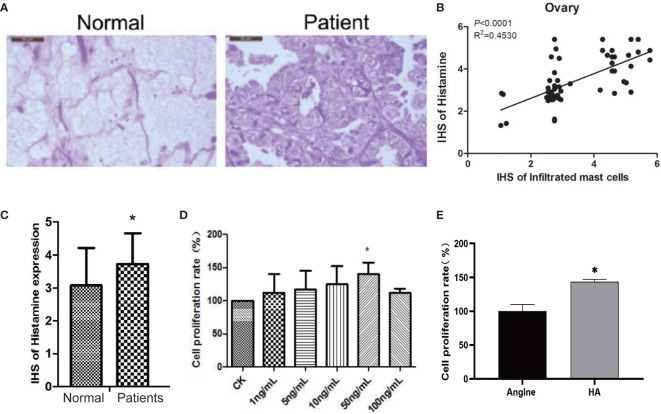
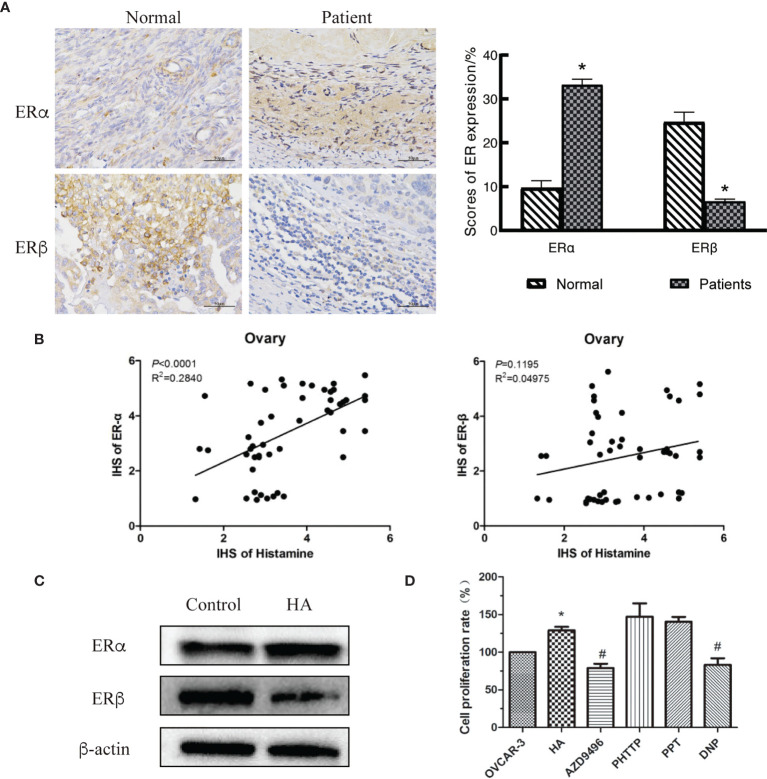
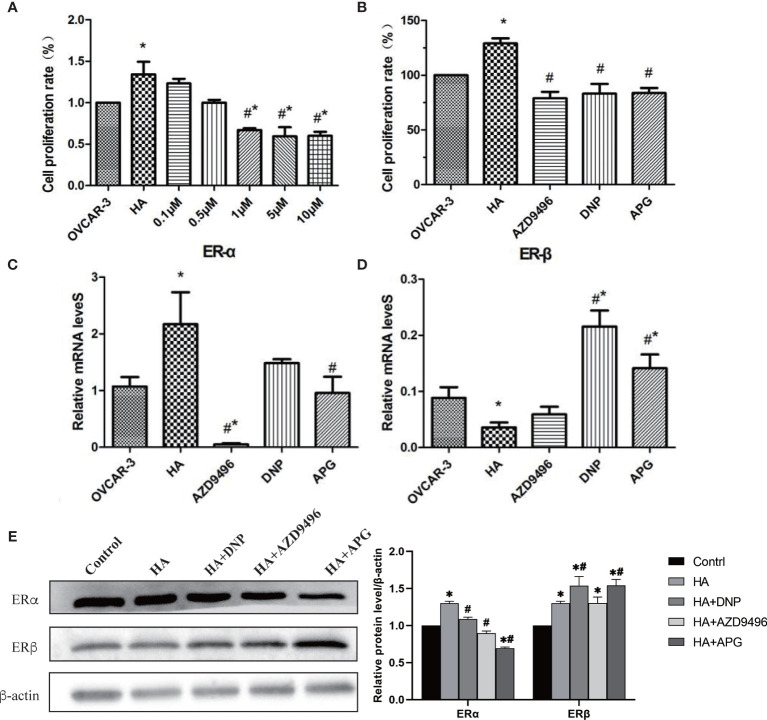
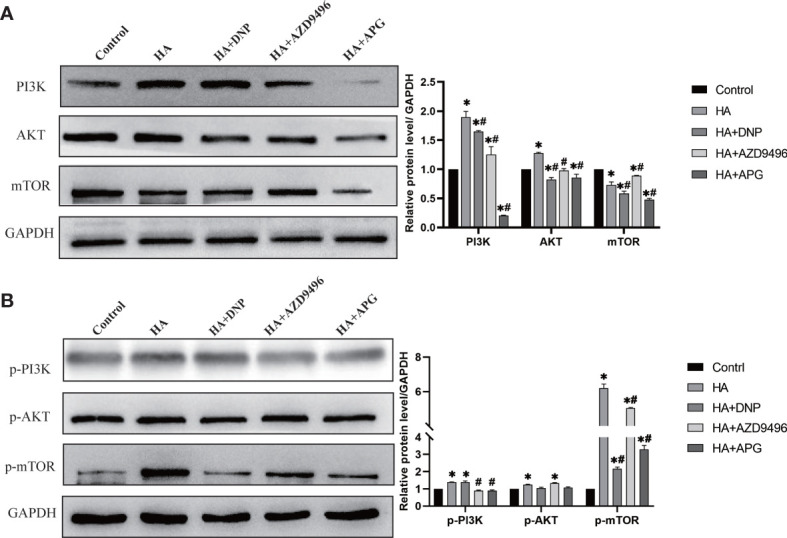
In this study, a combination of transcriptomics analysis and application of TCGA database was performed, and we found that the expression of genes related to mast cell degranulation in ovarian cancer tissues changed remarkably. We then explored whether histamine, a major constituent of mast cell degranulation, could affect the development of ovarian cancer through immunohistochemistry analysis and cell proliferation assays. The results showed that a certain concentration of histamine promoted the proliferation of ovarian cancer cells by upregulating the expression of estrogen receptor α (ERα)/estrogen receptor β (ERβ). Additionally, we found that the inhibition of ERα or the activation of ERβ could inhibit the proliferation of ovarian cancer cells induced by histamine through real-time PCR and western blot assays. Finally, we demonstrated the attenuation effect imparted by apigenin in histamine-mediated ovarian cancer the PI3K/AKT/mTOR signaling pathway.
Our research revealed that apigenin decelerated ovarian cancer development by downregulating ER-mediated PI3K/AKT/mTOR expression, thus providing evidence of its applicability as a potentially effective therapeutic agent for ovarian cancer treatment.
芹菜素(APG)是一种天然黄酮类化合物,可影响多种肿瘤的发展,但其在卵巢癌中的作用仍不清楚。越来越多的证据支持肥大细胞及其释放的生物活性介质作为肿瘤微环境的组成部分在卵巢癌(OC)进展中发挥的重要作用;然而,其机制值得进一步探索。
在本研究中,我们结合转录组学分析和TCGA数据库的应用,发现卵巢癌组织中与肥大细胞脱颗粒相关的基因表达发生了显著变化。然后,我们通过免疫组织化学分析和细胞增殖试验探讨肥大细胞脱颗粒的主要成分组胺是否会影响卵巢癌的发展。结果表明,一定浓度的组胺通过上调雌激素受体α(ERα)/雌激素受体β(ERβ)的表达促进卵巢癌细胞的增殖。此外,我们通过实时PCR和蛋白质印迹分析发现,抑制ERα或激活ERβ可抑制组胺诱导的卵巢癌细胞增殖。最后,我们证明了芹菜素在组胺介导的卵巢癌中对PI3K/AKT/mTOR信号通路的减弱作用。
我们的研究表明,芹菜素通过下调ER介导的PI3K/AKT/mTOR表达来减缓卵巢癌的发展,从而为其作为卵巢癌治疗的潜在有效治疗药物的适用性提供了证据。