Norris Sarah, Belcher Andrea, Howard Kirsten, Ward Robyn L
Menzies Centre for Health Policy and Economics and School of Public Health, Faculty of Medicine and Health, University of Sydney, Sydney, NSW, Australia.
Australian Genomics, Melbourne, VIC, 3052, Australia.
J Community Genet. 2022 Oct;13(5):503-522. doi: 10.1007/s12687-021-00551-2. Epub 2021 Sep 27.
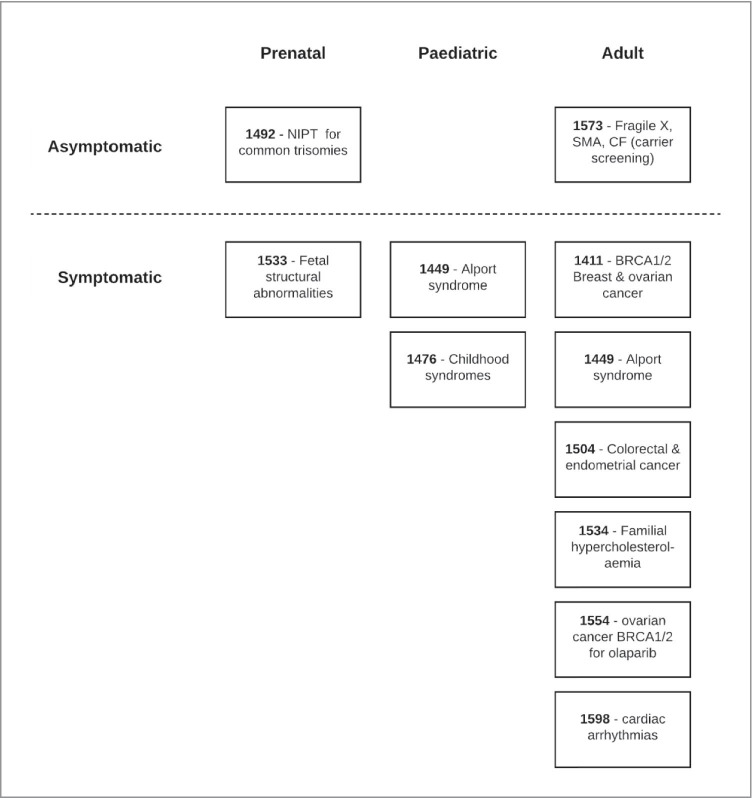
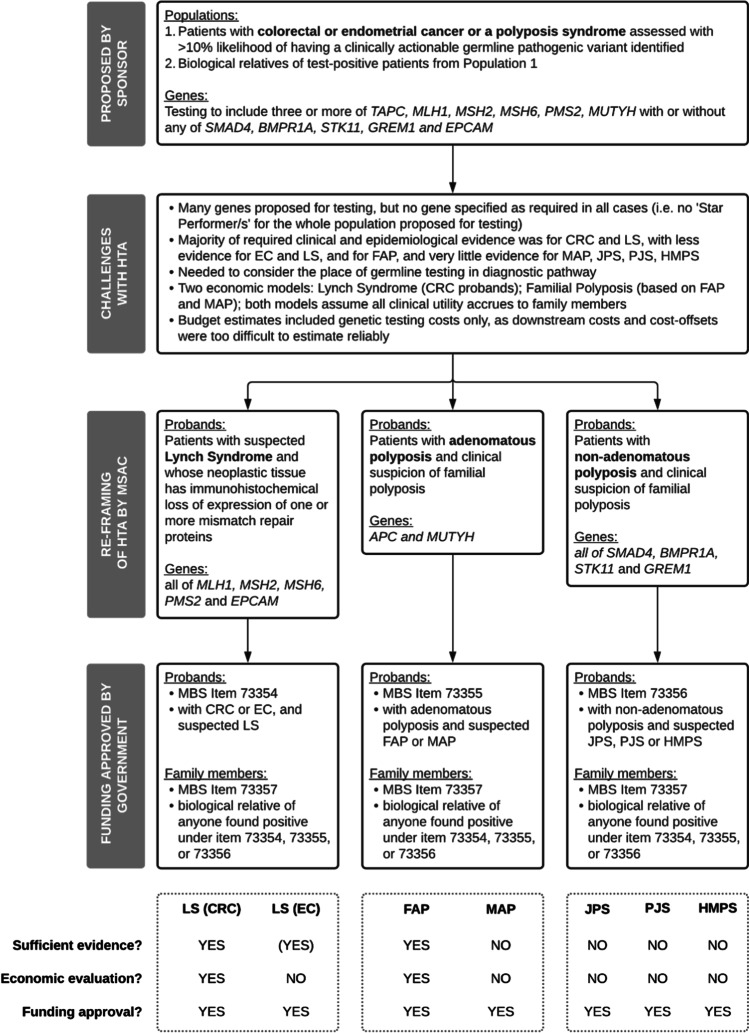
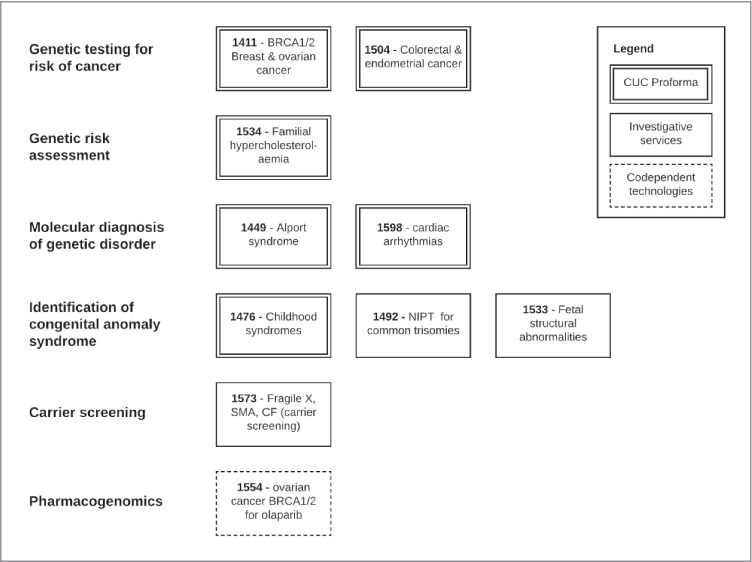
The Medical Services Advisory Committee (MSAC) is an independent non-statutory committee established by the Australian government to provide recommendations on public reimbursement of technologies and services, other than pharmaceuticals. MSAC has established approaches for undertaking health technology assessment (HTA) of investigative services and codependent technologies. In 2016, MSAC published its clinical utility card (CUC) Proforma, an additional tool to guide assessments of genetic testing for heritable conditions. We undertook a review and narrative synthesis of information extracted from all MSAC assessments of genetic testing for heritable conditions completed since 2016, regardless of the HTA approach taken. Ten assessments met our inclusion criteria, covering a range of testing methods (from gene panels to whole-exome sequencing) and purposes (including molecular diagnosis, genetic risk assessment, identification of congenital anomaly syndromes, and carrier screening). This analysis identified a range of methodological and policy challenges such as how to incorporate patient and societal preferences for the health and non-health outcomes of genomic testing, how best to capture the concept of co-production of utility, and how to engage clinicians as referrers for genomics tests whilst at the same time ensuring equity of access to a geographically dispersed population. A further challenge related to how qualitative assessments of patient and community needs influenced the evidence thresholds against which decisions were made. These concepts should be considered for incorporation within the value assessment frameworks used by HTA agencies around the world.
医疗服务咨询委员会(MSAC)是澳大利亚政府设立的一个独立的非法定委员会,旨在就除药品以外的技术和服务的公共报销提供建议。MSAC已经制定了对调查性服务和相互依存技术进行卫生技术评估(HTA)的方法。2016年,MSAC发布了其临床效用卡(CUC)模板,这是一种指导遗传性疾病基因检测评估的额外工具。我们对自2016年以来完成的所有MSAC遗传性疾病基因检测评估中提取的信息进行了综述和叙述性综合,无论采用何种HTA方法。十项评估符合我们的纳入标准,涵盖了一系列检测方法(从基因检测板到全外显子测序)和目的(包括分子诊断、遗传风险评估、先天性异常综合征的识别以及携带者筛查)。该分析确定了一系列方法和政策挑战,例如如何将患者和社会对基因组检测的健康和非健康结果的偏好纳入其中,如何最好地体现效用共同生产的概念,以及如何让临床医生作为基因组检测的推荐者参与其中,同时确保地理上分散的人群能够公平获得检测。另一个挑战涉及患者和社区需求的定性评估如何影响做出决策所依据的证据阈值。世界各地的HTA机构在其使用的价值评估框架中应考虑纳入这些概念。