Hasan Hayder, Faris Moez Al-Islam E, Mohamad Maysm N, Al Dhaheri Ayesha S, Hashim Mona, Stojanovska Lily, Al Daour Rameez, Rashid Malak, El-Farra Lena, Alsuwaidi Azza, Altawfiq Heba, Erwa Zainab, Cheikh Ismail Leila
Department of Clinical Nutrition and Dietetics, College of Health Sciences, University of Sharjah, Sharjah 27272, United Arab Emirates.
Department of Nutrition and Health, College of Medicine and Health Sciences, United Arab Emirates University, Al Ain 15551, United Arab Emirates.
Foods. 2021 Sep 8;10(9):2122. doi: 10.3390/foods10092122.
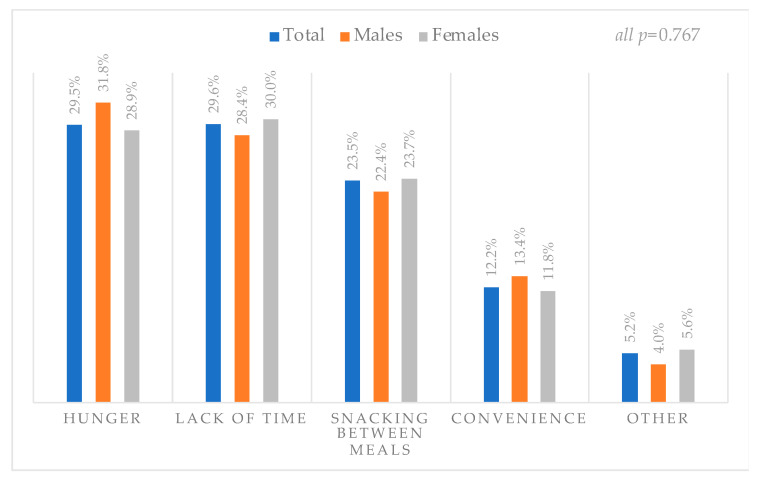
Vending machines (VMs) have been identified as an obesogenic factor, offering mainly energy-dense and nutrient-poor foods, with limited healthy options available. This cross-sectional study aimed to assess consumption trends and attitude toward vending machine (VM) foods in a university setting. A web-based survey was conducted among 1250 students and staff. Most participants reported weight gain (43.4%) and poorer food choices (53.4%) since joining the university. Participants described VM foods as expensive (53.7%) and lacking variety (34.3%). Over 81% demanded the availability of healthier options. About 75% of participants were VMs users. The most frequently purchased VM items were water, chocolate, and chips. Males reported consuming nuts, soda, iced tea, and energy drinks more frequently than females ( < 0.005). The main reasons for using the VM were hunger and lack of time. Over 40% nominated fresh fruits, baked chips, sandwiches, and dry roasted nuts to be provided in the VMs as healthier food options. Males and those responsible for buying their own food were more likely to select healthier options ( = 0.001). Findings can be used to inform stakeholders of current vending behaviors and to plan tailored interventions to improve the nutritional quality of vended items and promote healthier food choices.
自动售货机已被认定为一种致肥胖因素,主要提供能量密集型且营养匮乏的食品,健康食品选择有限。这项横断面研究旨在评估大学环境中自动售货机食品的消费趋势及人们对其的态度。对1250名学生和教职员工进行了一项基于网络的调查。大多数参与者表示自进入大学以来体重增加(43.4%)且食物选择变差(53.4%)。参与者称自动售货机食品价格昂贵(53.7%)且种类单一(34.3%)。超过81%的人要求提供更健康的食品选择。约75%的参与者是自动售货机的使用者。最常购买的自动售货机商品是水、巧克力和薯片。男性报告食用坚果、苏打水、冰茶和能量饮料的频率高于女性(<0.005)。使用自动售货机的主要原因是饥饿和没时间。超过40%的人提名在自动售货机中提供新鲜水果、烘焙薯片、三明治和干烤坚果作为更健康的食品选择。男性以及负责自己购买食物的人更有可能选择更健康的食品(=0.001)。研究结果可用于告知利益相关者当前的自动售货行为,并规划针对性的干预措施,以提高自动售货商品的营养质量,促进更健康的食物选择。