Diaz-Martínez María Del Carmen, Bernabeu Andrea, Lledó Belén, Carratalá-Munuera Concepción, Quesada Jose A, Lozano Francisca M, Ruiz Vicente, Morales Ruth, Llácer Joaquín, Ten Jorge, Castillo Juan Carlos, Rodríguez Adoración, Nouni-García Rauf, López-Pineda Adriana, Moliner Belén, Bernabeu Rafael
Instituto Bernabeu Reproductive Medicine, 03016 Alicante, Spain.
Molecular Laboratory, Instituto Bernabeu Biotech, 03016 Alicante, Spain.
J Clin Med. 2021 Sep 8;10(18):4063. doi: 10.3390/jcm10184063.
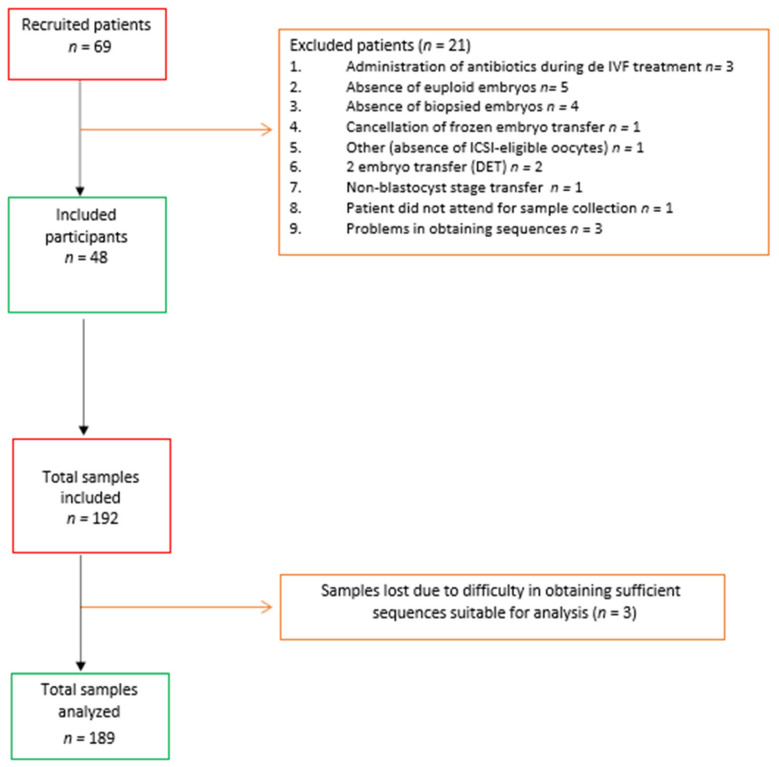
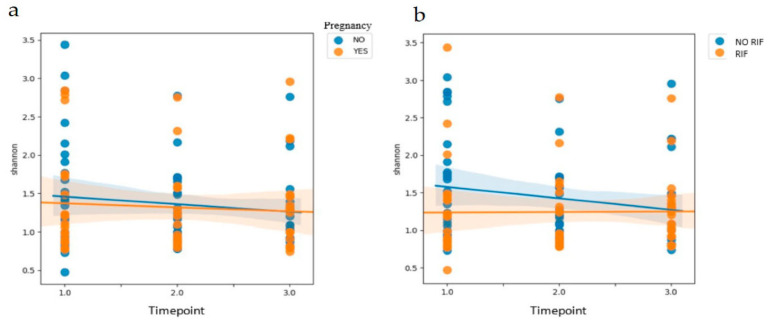
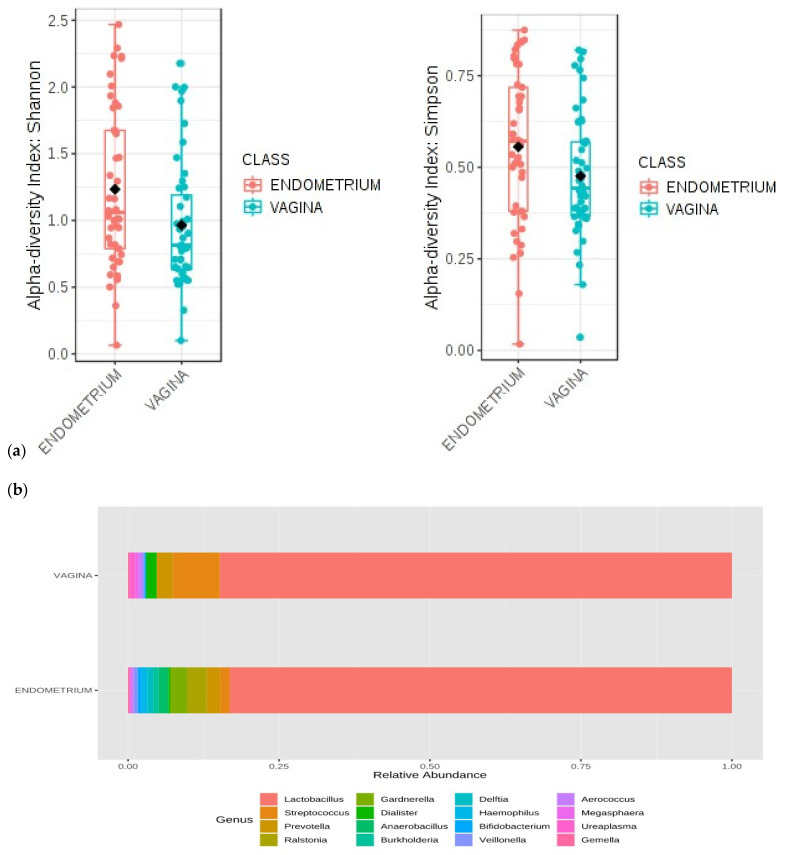
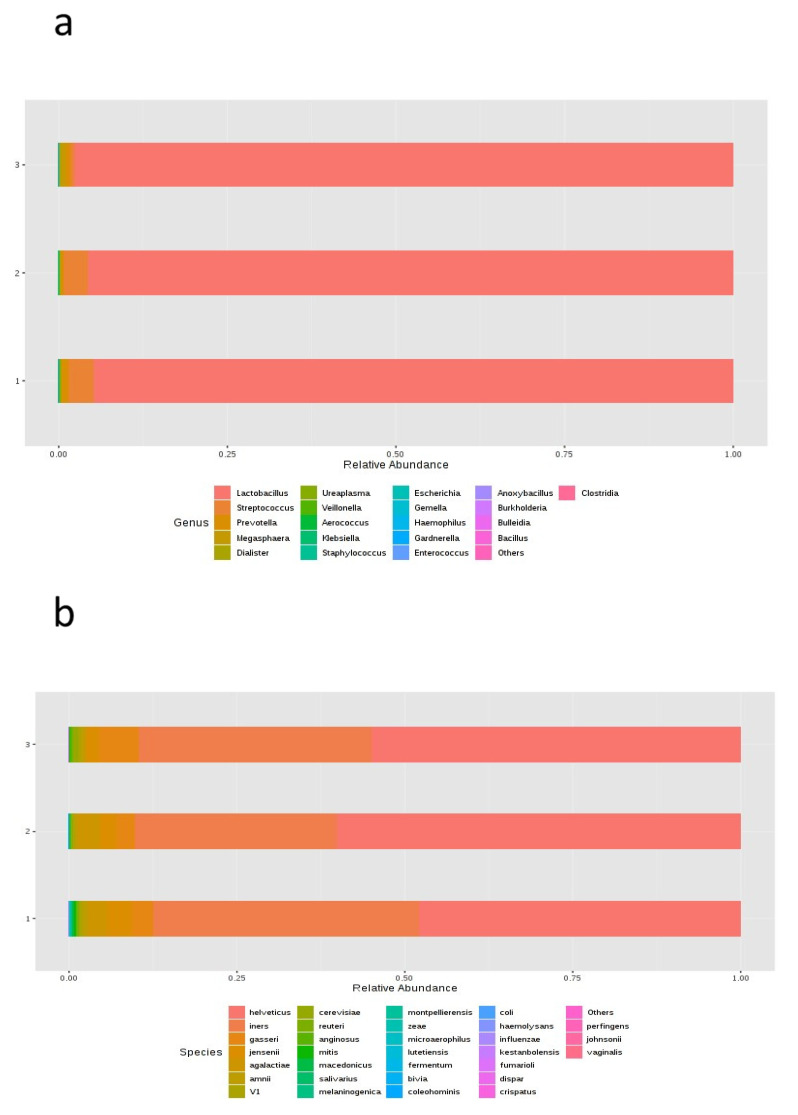
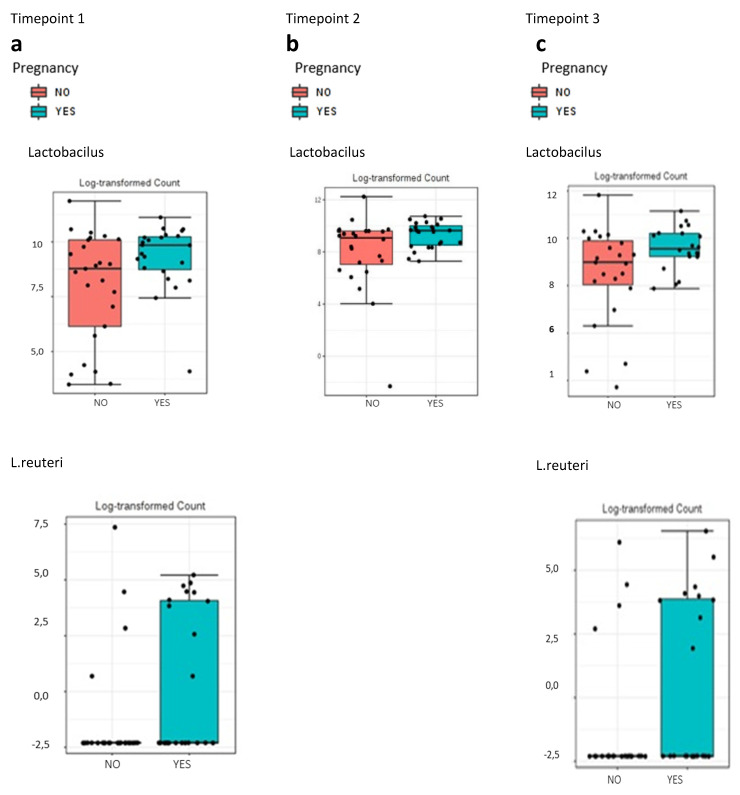
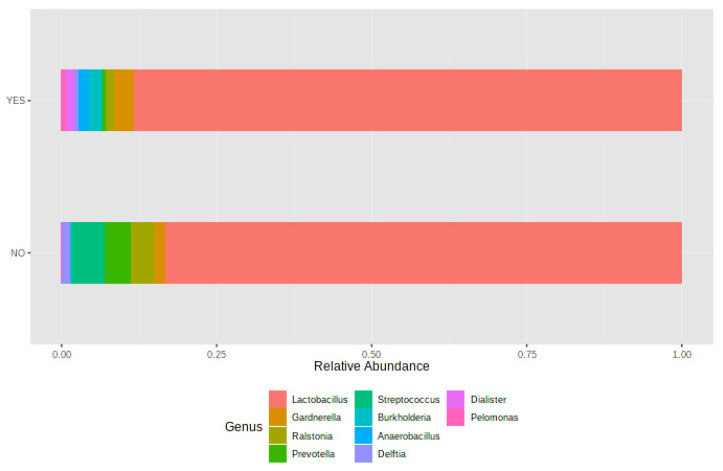
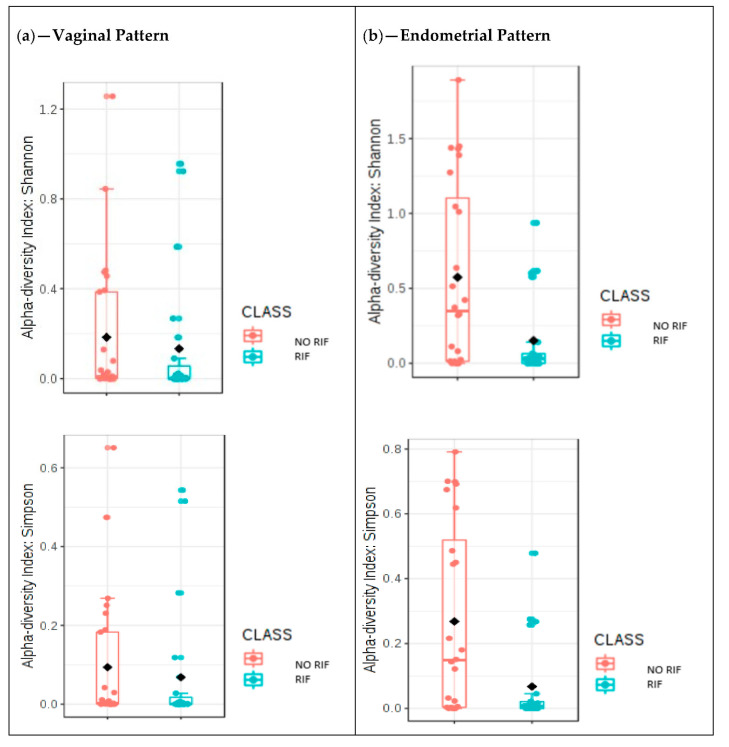
Uterine microbiota may be involved in reproductive health and disease. This study aims to describe and compare the vaginal and endometrial microbiome patterns between women who became pregnant and women who did not after in vitro fertilization. We also compared the vaginal and endometrial microbiome patterns between women with and without a history of repeated implantation failures (RIF). This pilot prospective cohort study included 48 women presenting to the fertility clinic for IVF from May 2017 to May 2019. Women who achieved clinical pregnancy presented a greater relative abundance of spp. in their vaginal samples than those who did not (97.69% versus 94.63%; = 0.027. The alpha and beta diversity of vaginal and endometrial samples were not statistically different between pregnant and non-pregnant women. The Faith alpha diversity index in vaginal samples was lower in women with RIF than those without RIF ( = 0.027). The alpha diversity of the endometrial microbiome was significantly higher in women without RIF ( = 0.021). There were no significant differences in the vaginal and endometrial microbiomes between pregnant and non-pregnant women. The relative abundance of the genera in women with RIF was different from those without RIF. Statistically significant differences in the endometrial microbiome were found between women with and without RIF.
子宫微生物群可能与生殖健康和疾病有关。本研究旨在描述和比较体外受精后怀孕和未怀孕女性的阴道和子宫内膜微生物组模式。我们还比较了有和没有反复种植失败(RIF)病史的女性之间的阴道和子宫内膜微生物组模式。这项前瞻性队列研究纳入了2017年5月至2019年5月到生育诊所进行体外受精的48名女性。临床妊娠的女性阴道样本中 属的相对丰度高于未妊娠女性(97.69%对94.63%; = 0.027)。怀孕和未怀孕女性的阴道和子宫内膜样本的α和β多样性无统计学差异。有RIF的女性阴道样本中的费思α多样性指数低于无RIF的女性( = 0.027)。无RIF的女性子宫内膜微生物组的α多样性显著更高( = 0.021)。怀孕和未怀孕女性的阴道和子宫内膜微生物组无显著差异。有RIF和无RIF的女性中该属的相对丰度不同。有和没有RIF的女性之间子宫内膜微生物组存在统计学显著差异。