Department of Medicine, Surgery and Dentistry "Scuola Medica Salernitana", University of Salerno, 84081 Baronissi, Italy.
Department of Precision Medicine, University of Campania "Luigi Vanvitelli", 80138 Naples, Italy.
Int J Mol Sci. 2021 Sep 7;22(18):9666. doi: 10.3390/ijms22189666.
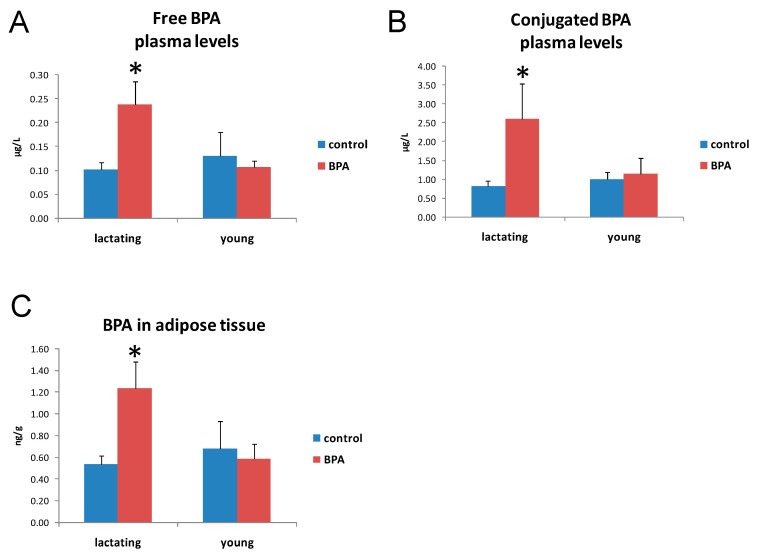
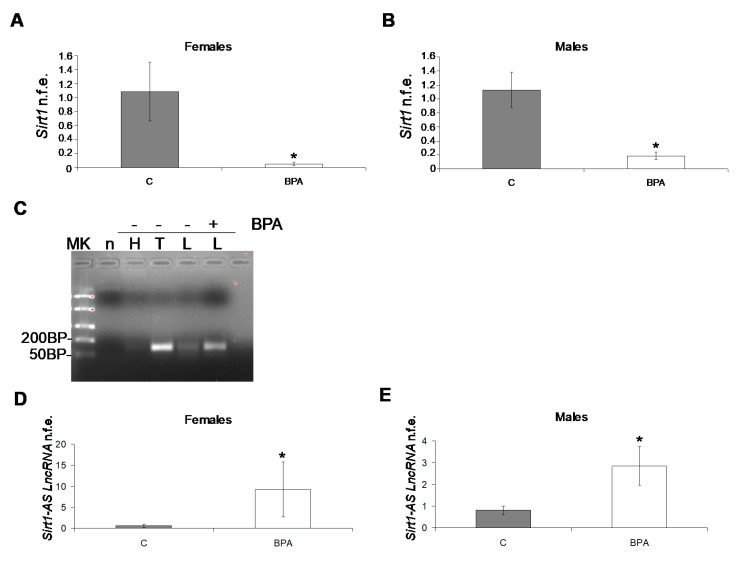
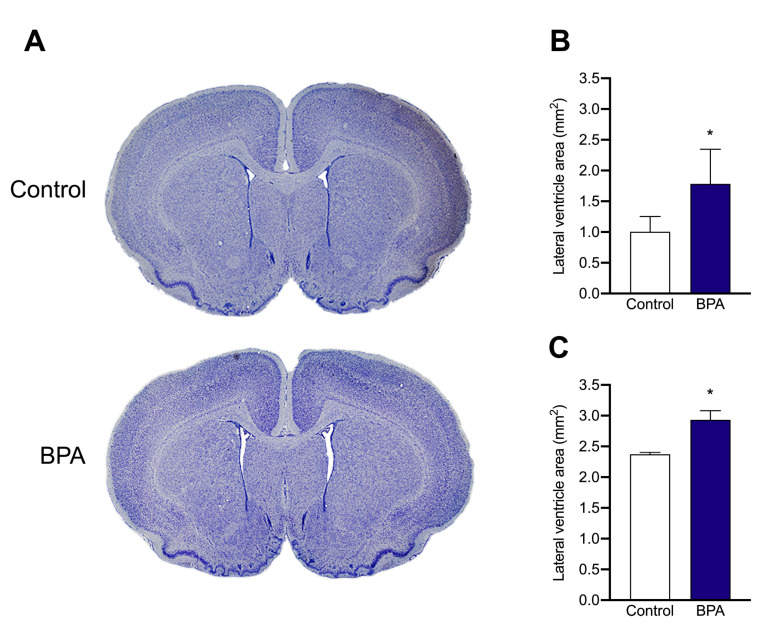
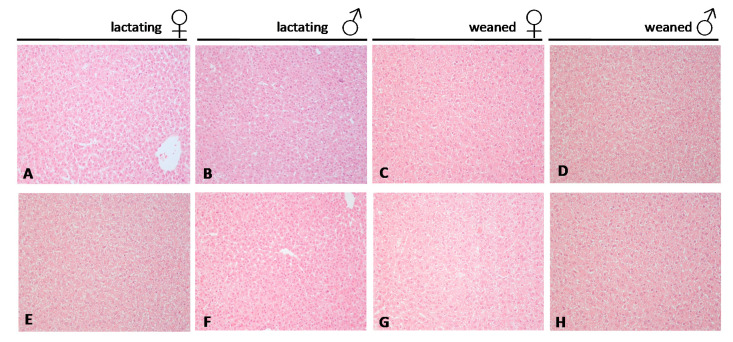
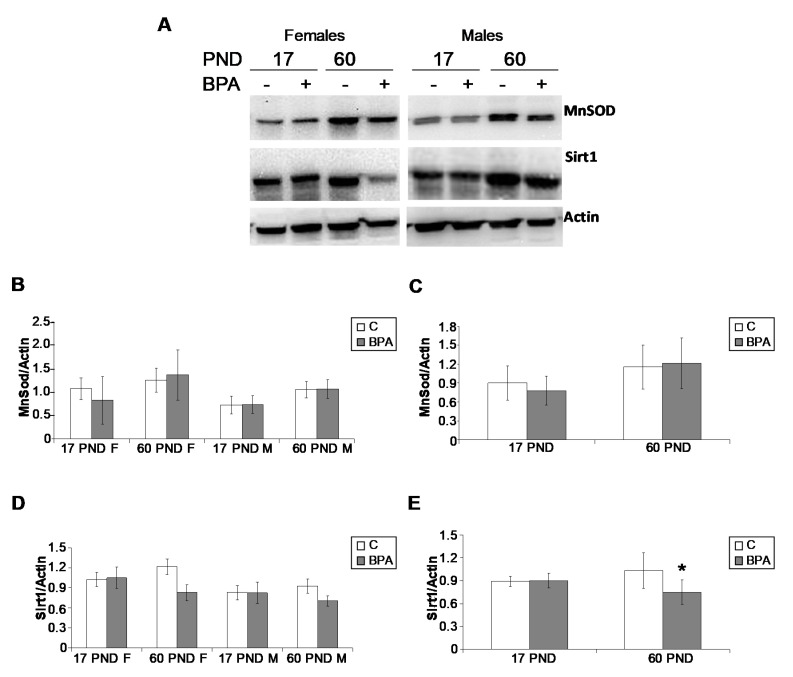
Bisphenol A (BPA) is largely used as a monomer in some types of plastics. It accumulates in tissues and fluids and is able to bypass the placental barrier, affecting various organs and systems. Due to huge developmental processes, children, foetuses, and neonates could be more sensitive to BPA-induced toxicity. To investigate the multi-systemic effects of chronic exposure to a low BPA dose (100 μg/L), pregnant Wistar rats were exposed to BPA in drinking water during gestation and lactation. At weaning, newborn rats received the same treatments as dams until sex maturation. Free and conjugated BPA levels were measured in plasma and adipose tissue; the size of cerebral ventricles was analysed in the brain; morpho-functional and molecular analyses were carried out in the liver with a focus on the expression of inflammatory cytokines and Sirtuin 1 (Sirt1). Higher BPA levels were found in plasma and adipose tissue from BPA treated pups (17 PND) but not in weaned animals. Lateral cerebral ventricles were significantly enlarged in lactating and weaned BPA-exposed animals. In addition, apart from microvesicular steatosis, liver morphology did not exhibit any statistically significant difference for morphological signs of inflammation, hypertrophy, or macrovesicular steatosis, but the expression of inflammatory cytokines, Sirt1, its natural antisense long non-coding RNA () and histone deacetylase 1 (Hdac1) were affected in exposed animals. In conclusion, chronic exposure to a low BPA dose could increase the risk for disease in adult life as a consequence of higher BPA circulating levels and accumulation in adipose tissue during the neonatal period.
双酚 A(BPA)广泛用作某些类型塑料的单体。它在组织和液体中积累,并能够绕过胎盘屏障,影响各种器官和系统。由于巨大的发育过程,儿童、胎儿和新生儿可能对 BPA 诱导的毒性更敏感。为了研究慢性低剂量 BPA(100μg/L)暴露对多系统的影响,妊娠 Wistar 大鼠在妊娠期和哺乳期通过饮用水暴露于 BPA。在断奶时,新生大鼠接受与母体相同的处理,直到性成熟。测量血浆和脂肪组织中的游离和结合 BPA 水平;分析大脑中的脑室大小;对肝脏进行形态功能和分子分析,重点研究炎症细胞因子和 Sirtuin 1(Sirt1)的表达。在接受 BPA 处理的幼鼠(17 日龄)的血浆和脂肪组织中发现了更高的 BPA 水平,但在断奶动物中没有发现。哺乳期和断奶期暴露于 BPA 的动物的侧脑室明显增大。此外,除了微泡性脂肪变性外,肝脏形态学没有显示出任何炎症、肥大或大泡性脂肪变性的形态学迹象的统计学差异,但暴露动物的炎症细胞因子、Sirt1、其天然反义长非编码 RNA()和组蛋白去乙酰化酶 1(Hdac1)的表达受到影响。总之,慢性低剂量 BPA 暴露可能会增加成年期患病的风险,这是由于新生儿期循环 BPA 水平升高和脂肪组织积累所致。