Department of Anatomy, Inha University School of Medicine, Incheon 22212, Korea.
Int J Mol Sci. 2021 Sep 16;22(18):9999. doi: 10.3390/ijms22189999.
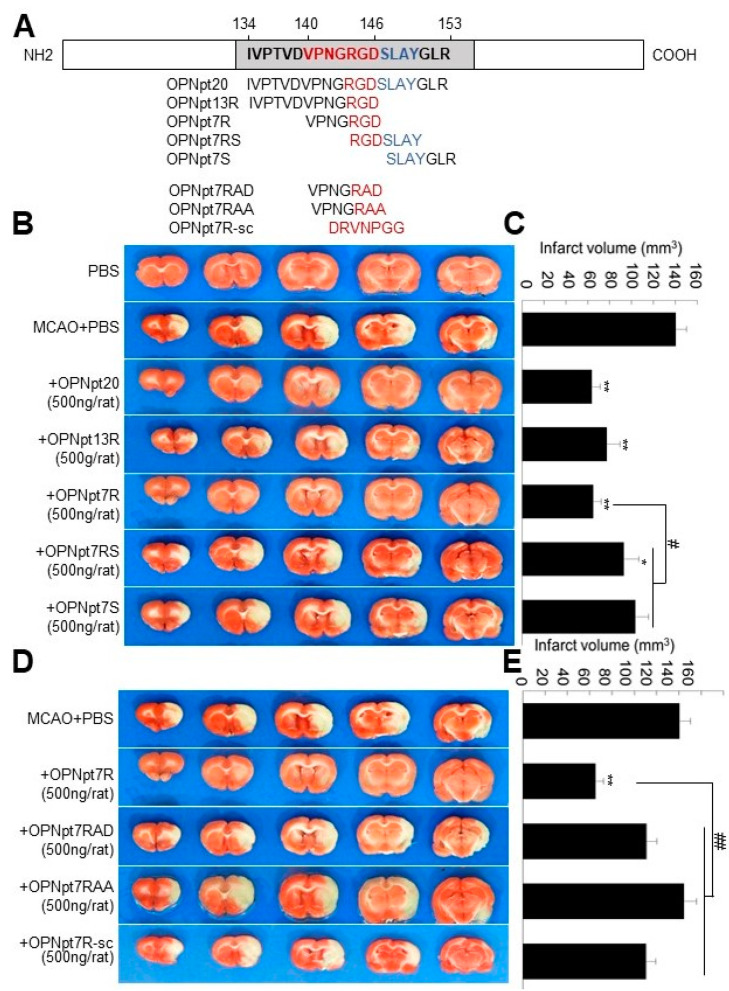
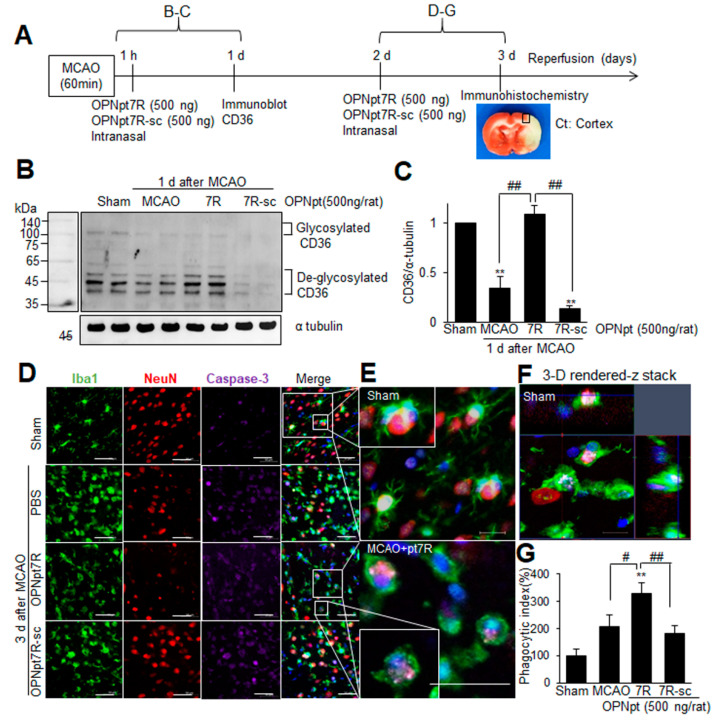
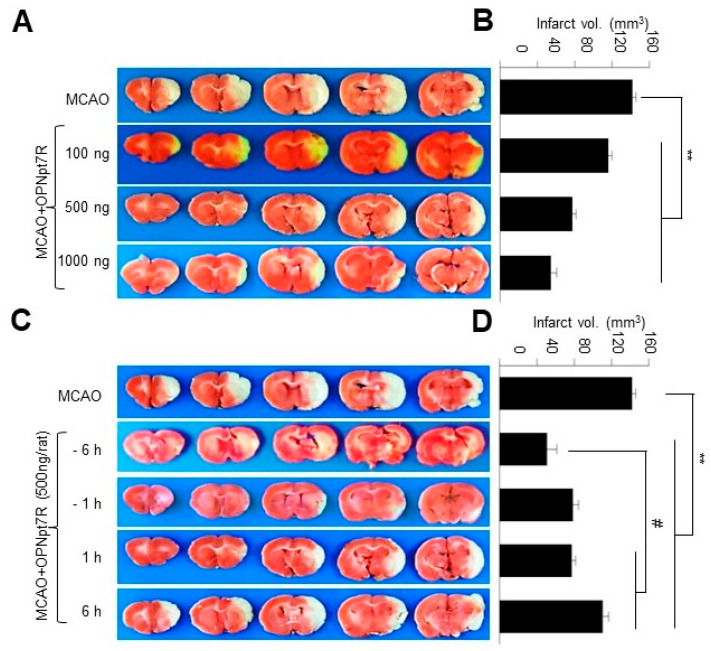
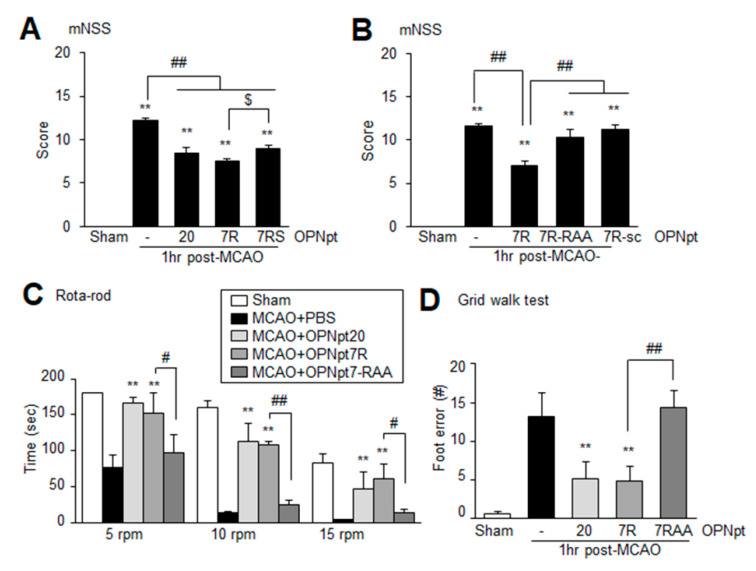
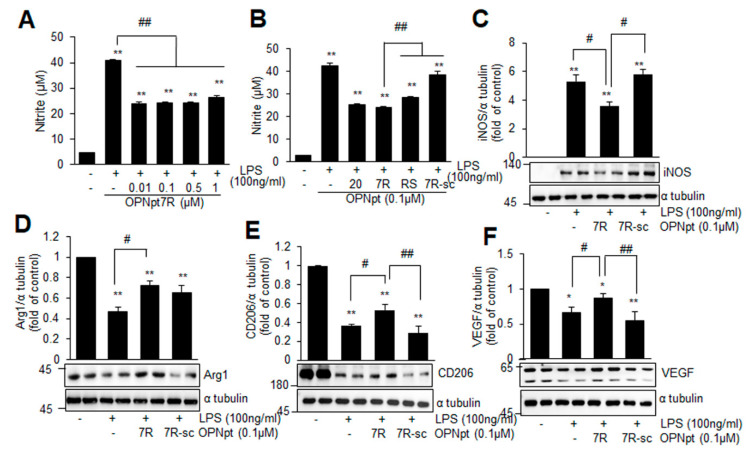
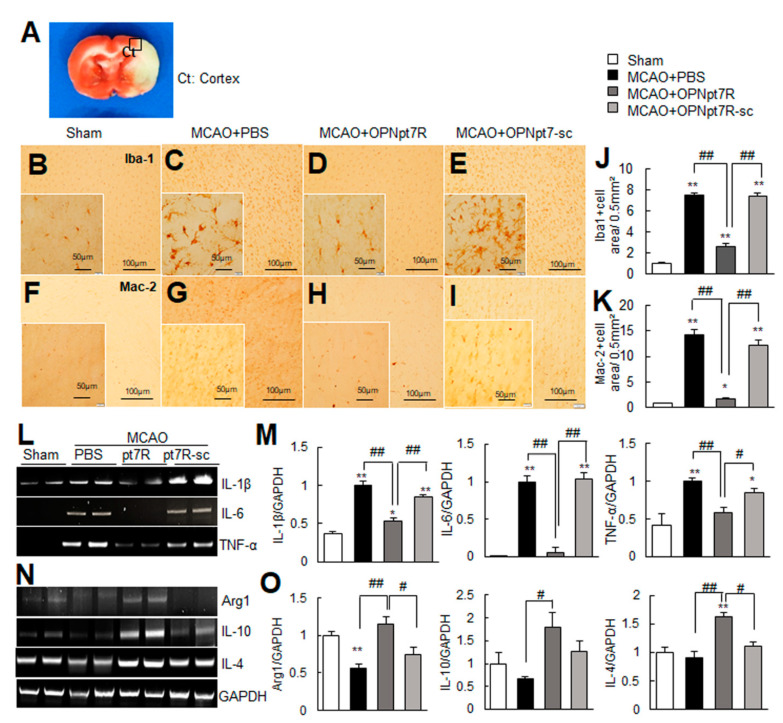
Osteopontin (OPN), a phosphorylated glycoprotein, is induced in response to tissue damage and inflammation in various organs, including the brain. In our previous studies, we reported the robust neuroprotective effects of the icosamer OPN peptide OPNpt20, containing arginine-glycine-aspartic acid (RGD) and serine-leucine-alanine-tyrosine (SLAY) motifs, in an animal model of transient focal ischemia and demonstrated that its anti-inflammatory, pro-angiogenic, and phagocytosis inducing functions are responsible for the neuroprotective effects. In the present study, we truncated OPNpt20 to 13 or 7 amino acid peptides containing RGD (R) and/or SLAY (S) motifs (OPNpt13RS, OPNpt7R, OPNpt7RS, and OPNpt7S), and their neuroprotective efficacy was examined in a rat middle cerebral artery occlusion (MCAO) model. Intranasal administration of all four peptides significantly reduced infarct volume; OPNpt7R (VPNGRGD), the 7-amino-acid peptide containing an RGD motif, was determined to be the most potent, with efficacy comparable to that of OPNpt20. Additionally, sensory-motor functional deficits of OPNpt7R-administered MCAO animals were significantly improved, as indicated by the modified neurological severity scores and rotarod test. Notably, the expression of M1 markers was suppressed, whereas that of M2 markers (Arginase 1, CD206, and VEGF) was significantly enhanced in OPNpt7R-treated primary microglia cultures. Inflammation resolution by OPNpt7R was further confirmed in MCAO animals, in which upregulation of anti-inflammatory cytokines (Arg1, IL-10, IL-4, and CD36) and enhanced efferocytosis were detected. Moreover, studies using three mutant peptides (OPNpt7R-RAA or OPNpt7R-RAD, where RGD was replaced with RAA or RAD, respectively, and OPNpt7R-sc containing scrambled sequences) revealed that the RGD motif plays a vital role in conferring neuroprotection. In conclusion, the RGD-containing OPN heptamer OPNpt7R exhibits neuroprotective effects in the post-ischemic brain by suppressing M1 markers and augmenting M2 polarization of microglia and the RGD motif plays a critical role in these activities.
骨桥蛋白(OPN)是一种磷酸化糖蛋白,在各种器官(包括大脑)的组织损伤和炎症反应中被诱导产生。在我们之前的研究中,我们报道了含有精氨酸-甘氨酸-天冬氨酸(RGD)和丝氨酸-亮氨酸-丙氨酸-酪氨酸(SLAY)基序的 20 个氨基酸的 OPN 肽 OPNpt20 在短暂性局灶性缺血动物模型中的强大神经保护作用,并证明其抗炎、促血管生成和吞噬诱导功能是其神经保护作用的原因。在本研究中,我们将 OPNpt20 截断为含有 RGD(R)和/或 SLAY(S)基序的 13 或 7 个氨基酸肽(OPNpt13RS、OPNpt7R、OPNpt7RS 和 OPNpt7S),并在大鼠大脑中动脉闭塞(MCAO)模型中检查了它们的神经保护功效。鼻内给予所有四种肽均可显著减少梗死体积;含有 RGD 基序的 7 个氨基酸肽 OPNpt7R(VPNGRGD)被确定为最有效,其功效可与 OPNpt20 相媲美。此外,OPNpt7R 给药的 MCAO 动物的感觉运动功能缺陷明显改善,改良神经功能缺损评分和旋转棒试验表明这一点。值得注意的是,在 OPNpt7R 处理的原代小胶质细胞培养物中,M1 标志物的表达受到抑制,而 M2 标志物(精氨酸酶 1、CD206 和 VEGF)的表达显著增强。在 MCAO 动物中进一步证实了 OPNpt7R 引起的炎症消退,其中检测到抗炎细胞因子(Arg1、IL-10、IL-4 和 CD36)的上调和增强的吞噬作用。此外,使用三个突变肽(OPNpt7R-RAA 或 OPNpt7R-RAD,其中 RGD 分别被 RAA 或 RAD 取代,以及含有乱序序列的 OPNpt7R-sc)的研究表明,RGD 基序在赋予神经保护作用方面起着至关重要的作用。总之,含有 RGD 的 OPN 七聚体 OPNpt7R 通过抑制 M1 标志物和增强小胶质细胞的 M2 极化来发挥其在缺血后大脑中的神经保护作用,而 RGD 基序在这些活性中起着关键作用。