Murariu Marius, Galluzzi Armando, Paint Yoann, Murariu Oltea, Raquez Jean-Marie, Polichetti Massimiliano, Dubois Philippe
Laboratory of Polymeric and Composite Materials, Materia Nova Materials R&D Center & UMons Innovation Center, 3 Avenue Copernic, 7000 Mons, Belgium.
Department of Physics E.R. Caianiello, University of Salerno, and CNR-SPIN (Salerno), via Giovanni Paolo II, 84084 Fisciano, Italy.
Materials (Basel). 2021 Sep 8;14(18):5154. doi: 10.3390/ma14185154.
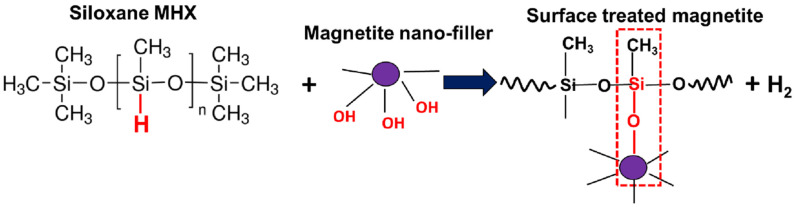
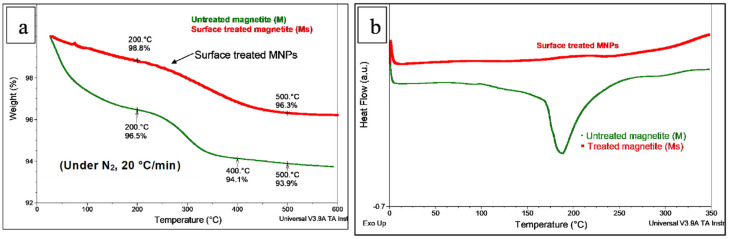
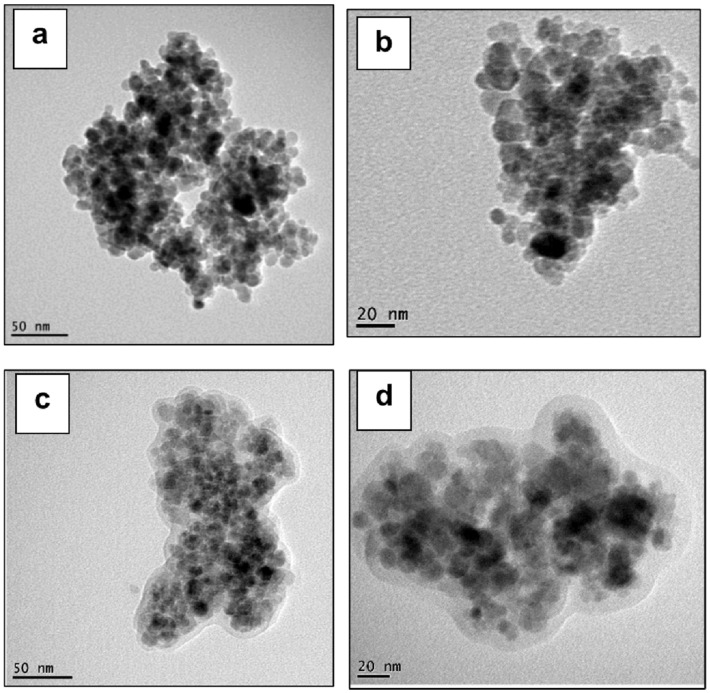
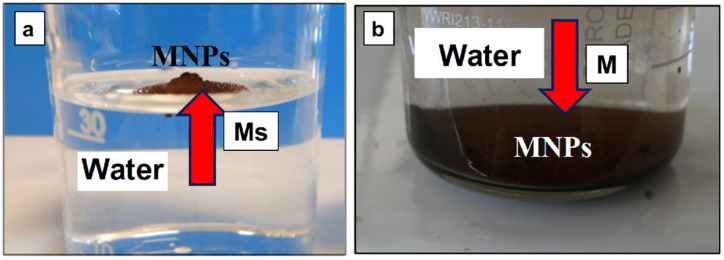
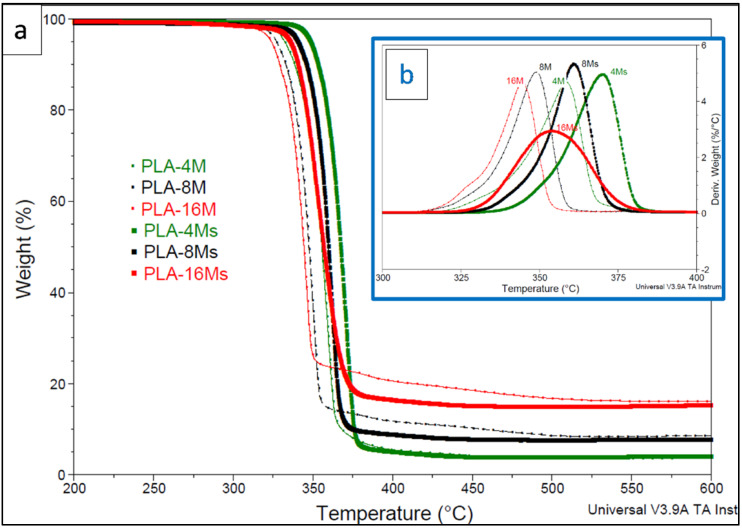
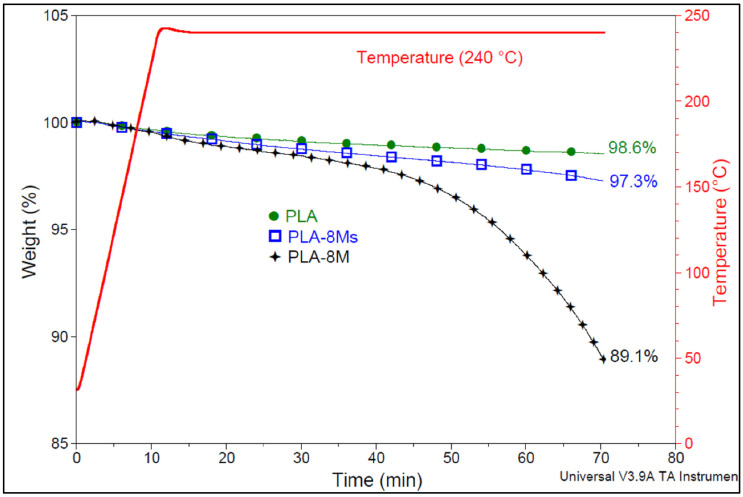
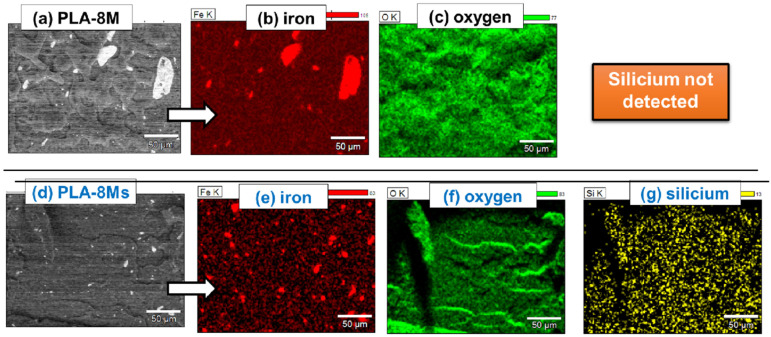
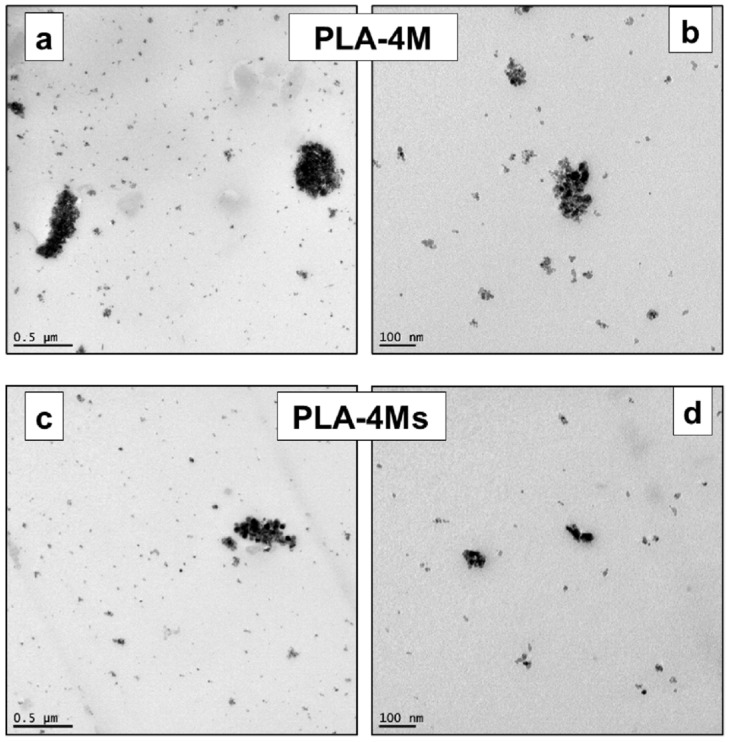
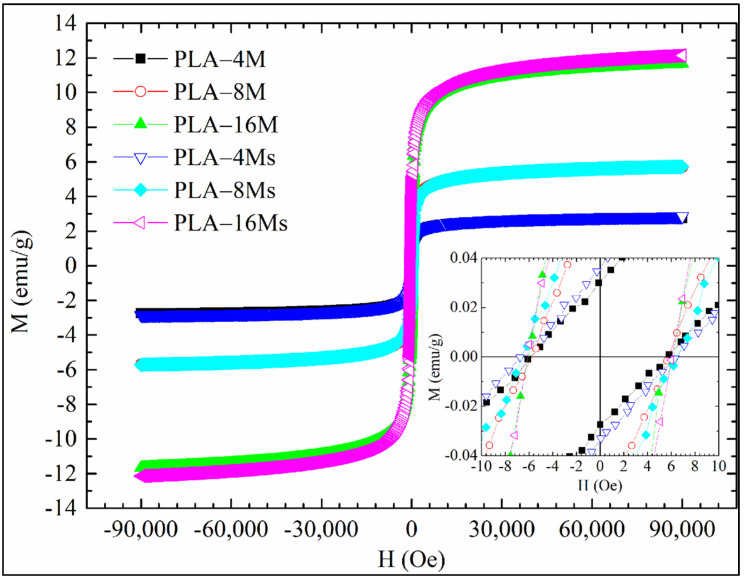
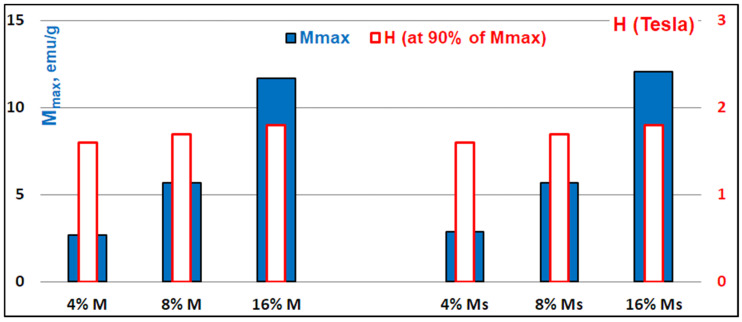
In the category of biopolymers, polylactide or polylactic acid (PLA) is one of the most promising candidates considered for future developments, as it is not only biodegradable under industrial composting conditions, but it is produced from renewable natural resources. The modification of PLA through the addition of nanofillers is considered as a modern approach to improve its main characteristic features (mechanical, thermal, barrier, etc.) and to obtain specific end-use properties. Iron oxide nanoparticles (NPs) of low dimension (10-20 nm) such as magnetite (FeO), exhibit strong magnetization in magnetic field, are biocompatible and show low toxicity, and can be considered in the production of polymer nanocomposites requiring superparamagnetic properties. Accordingly, PLA was mixed by melt-compounding with 4-16 wt.% magnetite NPs. Surface treatment of NPs with a reactive polymethylhydrogensiloxane (MHX) was investigated to render the nanofiller water repellent, less sensitive to moisture and to reduce the catalytic effects at high temperature of iron (from magnetite) on PLA macromolecular chains. The characterization of nanocomposites was focused on the differences of the rheology and morphology, modification, and improvements in the thermal properties using surface treated NPs, while the superparamagnetic behavior was confirmed by VSM (vibrating sample magnetometer) measurements. The PLA-magnetite nanocomposites had strong magnetization properties at low magnetic field (values close to 70% of M at H = 0.2 T), while the maximum magnetic signal (M) was mainly determined by the loading of the nanofiller, without any significant differences linked to the surface treatment of MNPs. These bionanocomposites showing superparamagnetic properties, close to zero magnetic remanence, and coercivity, can be further produced at a larger scale by melt-compounding and can be designed for special end-use applications, going from biomedical to technical areas.
在生物聚合物类别中,聚丙交酯或聚乳酸(PLA)是未来发展中最具潜力的候选材料之一,因为它不仅在工业堆肥条件下可生物降解,而且由可再生自然资源制成。通过添加纳米填料对PLA进行改性被认为是一种现代方法,可改善其主要特性(机械、热、阻隔等)并获得特定的最终使用性能。低尺寸(10 - 20纳米)的氧化铁纳米颗粒(NPs),如磁铁矿(FeO),在磁场中表现出强磁化,具有生物相容性且毒性低,可用于生产需要超顺磁性的聚合物纳米复合材料。因此,通过熔融共混将PLA与4 - 16重量%的磁铁矿纳米颗粒混合。研究了用反应性聚甲基氢硅氧烷(MHX)对纳米颗粒进行表面处理,以使纳米填料具有疏水性,对水分不太敏感,并减少铁(来自磁铁矿)在高温下对PLA大分子链的催化作用。纳米复合材料的表征重点在于流变学和形态学的差异、改性以及使用表面处理的纳米颗粒对热性能的改善,同时通过振动样品磁强计(VSM)测量确认超顺磁行为。PLA - 磁铁矿纳米复合材料在低磁场下具有强磁化性能(在H = 0.2 T时的值接近M的70%),而最大磁信号(M)主要由纳米填料的负载量决定,与MNPs的表面处理没有任何显著差异。这些具有超顺磁性能、接近零剩磁和矫顽力的生物纳米复合材料可通过熔融共混进一步大规模生产,并可设计用于从生物医学到技术领域的特殊最终用途应用。