Division of Signaling in Cancer and Immunology, Institute for Genetic Medicine, Hokkaido University, Sapporo 060-0815, Japan.
Molecular Medical Biochemistry Unit, Biological Chemistry and Engineering Course, Graduate School of Chemical Sciences and Engineering, Hokkaido University, Sapporo 060-0815, Japan.
Viruses. 2021 Aug 24;13(9):1674. doi: 10.3390/v13091674.
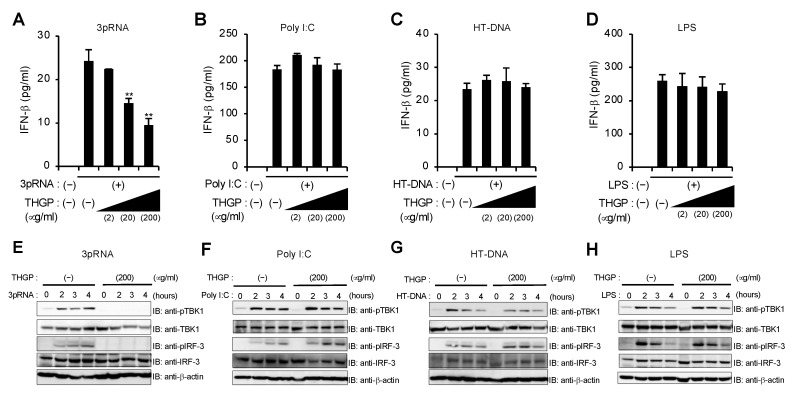
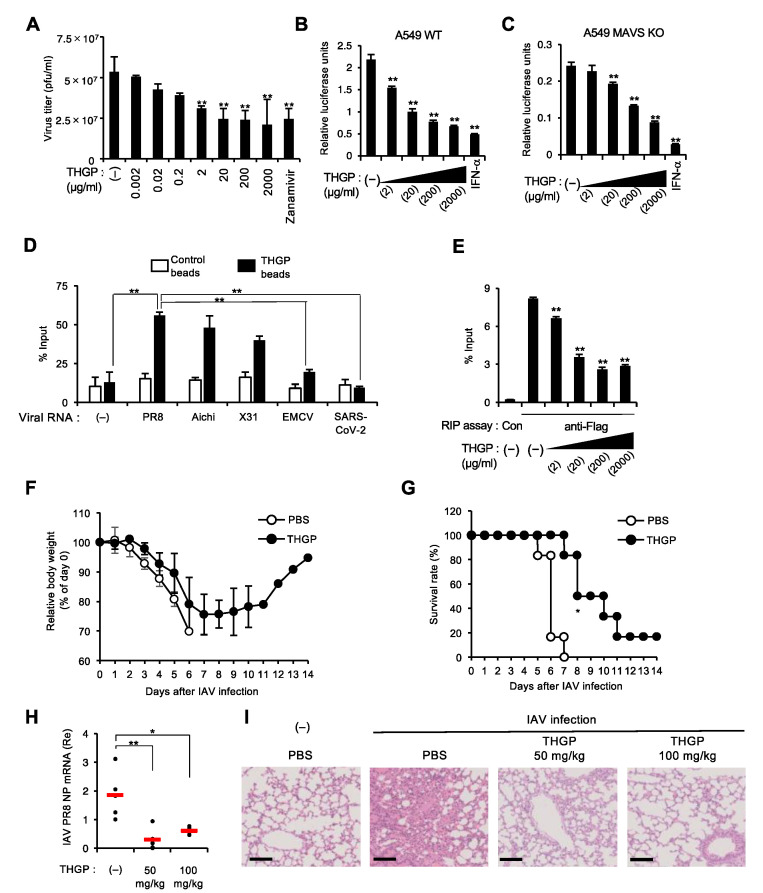
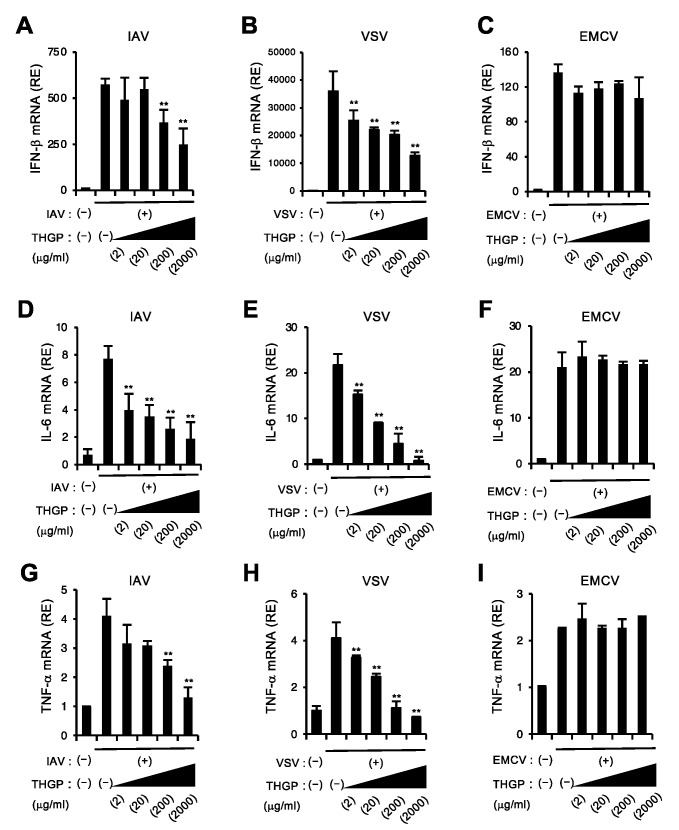
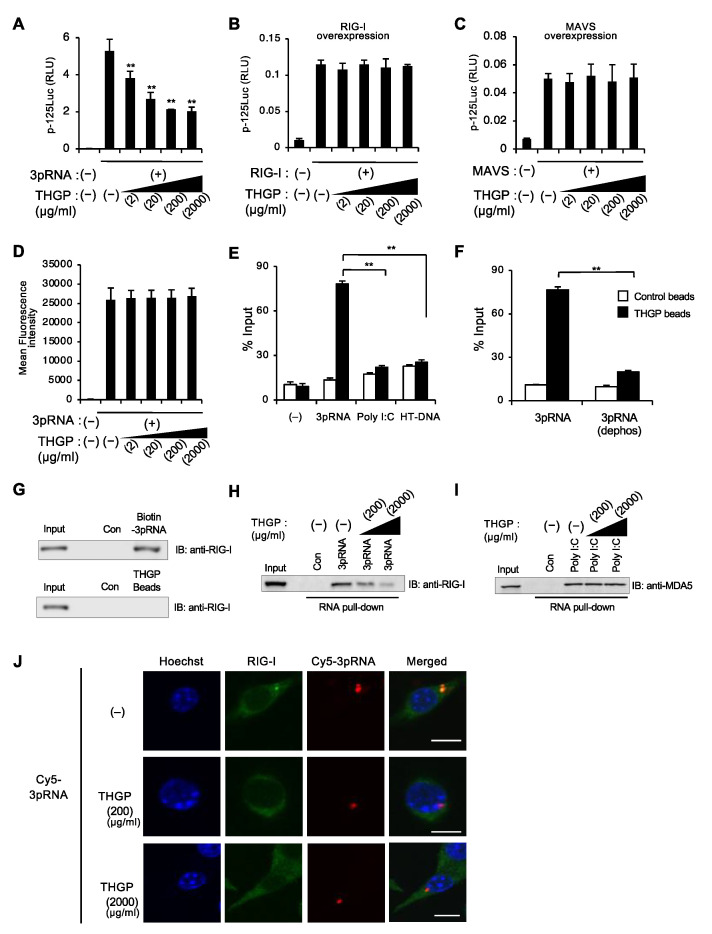
The interaction of viral nucleic acid with protein factors is a crucial process for initiating viral polymerase-mediated viral genome replication while activating pattern recognition receptor (PRR)-mediated innate immune responses. It has previously been reported that a hydrolysate of Ge-132, 3-(trihydroxygermyl) propanoic acid (THGP), shows a modulatory effect on microbial infections, inflammation, and immune responses. However, the detailed mechanism by which THGP can modify these processes during viral infections remained unknown. Here, we show that THGP can specifically downregulate type I interferon (IFN) production in response to stimulation with a cytosolic RNA sensor RIG-I ligand 5'-triphosphate RNA (3pRNA) but not double-stranded RNA, DNA, or lipopolysaccharide. Consistently, treatment with THGP resulted in the dose-dependent suppression of type I IFN induction upon infections with influenza virus (IAV) and vesicular stomatitis virus, which are known to be mainly sensed by RIG-I. Mechanistically, THGP directly binds to the 5'-triphosphate moiety of viral RNA and competes with RIG-I-mediated recognition. Furthermore, we found that THGP can directly counteract the replication of IAV but not EMCV (encephalitismyocarditis virus), by inhibiting the interaction of viral polymerase with RNA genome. Finally, IAV RNA levels were significantly reduced in the lung tissues of THGP-treated mice when compared with untreated mice. These results suggest a possible therapeutic implication of THGP and show direct antiviral action, together with the suppressive activity of innate inflammation.
病毒核酸与蛋白因子的相互作用是启动病毒聚合酶介导的病毒基因组复制,同时激活模式识别受体(PRR)介导的固有免疫反应的关键过程。先前有报道称,Ge-132 的一种水解产物,即 3-(三羟基锗基)丙酸(THGP),对微生物感染、炎症和免疫反应具有调节作用。然而,THGP 在病毒感染期间调节这些过程的详细机制尚不清楚。在这里,我们表明 THGP 可以特异性地下调细胞溶质 RNA 传感器 RIG-I 配体 5'-三磷酸 RNA(3pRNA)刺激后 I 型干扰素(IFN)的产生,但不能下调双链 RNA、DNA 或脂多糖的产生。一致地,用 THGP 处理会导致感染流感病毒(IAV)和水疱性口炎病毒(VSV)时 I 型 IFN 诱导的剂量依赖性抑制,这两种病毒主要被 RIG-I 识别。从机制上讲,THGP 直接与病毒 RNA 的 5'-三磷酸部分结合,并与 RIG-I 介导的识别竞争。此外,我们发现 THGP 可以通过抑制病毒聚合酶与 RNA 基因组的相互作用,直接抑制 IAV 的复制,但不抑制 EMCV(脑炎心肌炎病毒)的复制。最后,与未处理的小鼠相比,用 THGP 处理的小鼠肺部的 IAV RNA 水平显著降低。这些结果表明 THGP 可能具有治疗意义,并显示出直接的抗病毒作用,以及先天炎症的抑制活性。