IRTA, Centre de Recerca en Sanitat Animal (IRTA-CReSA), Campus de la Universitat Autonoma de Barcelona, 08193 Bellaterra, Spain.
USDA Plum Island Animal Disease Center, Agricultural Research Service, United States Department of Agriculture, Greenport, NY 11944, USA.
Viruses. 2021 Aug 25;13(9):1678. doi: 10.3390/v13091678.
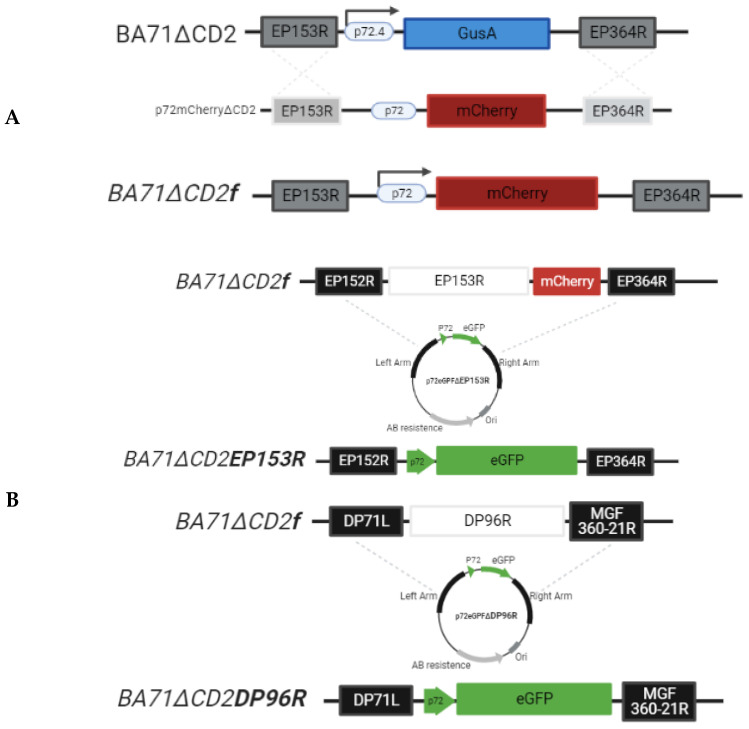
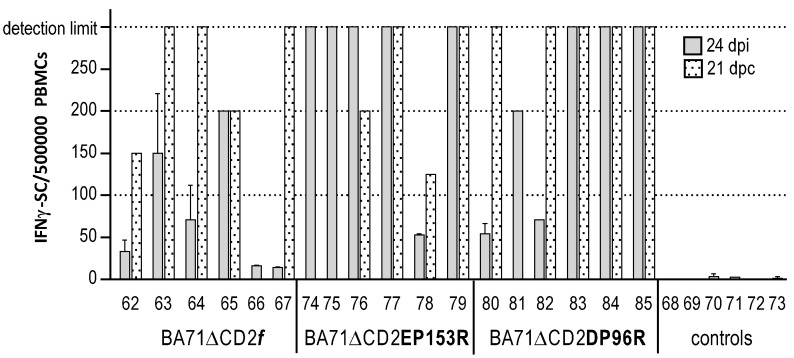
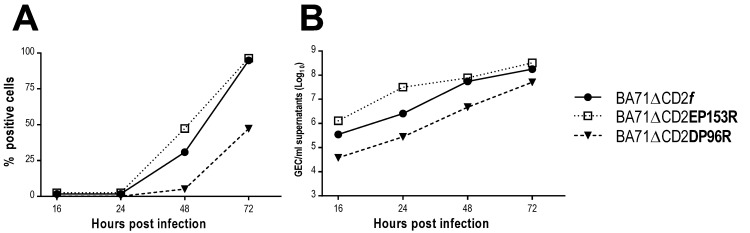
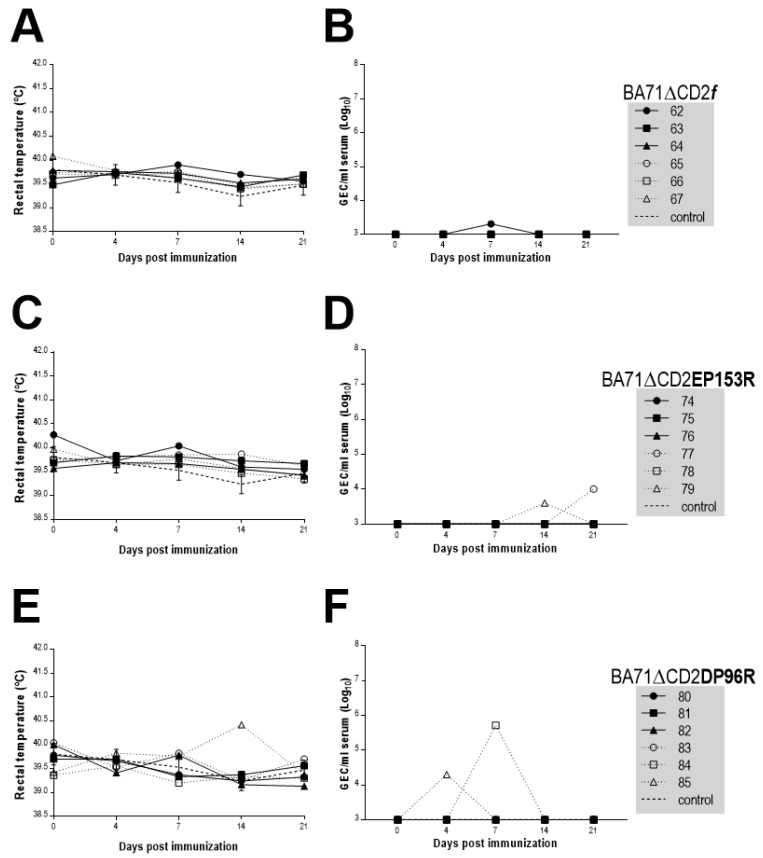
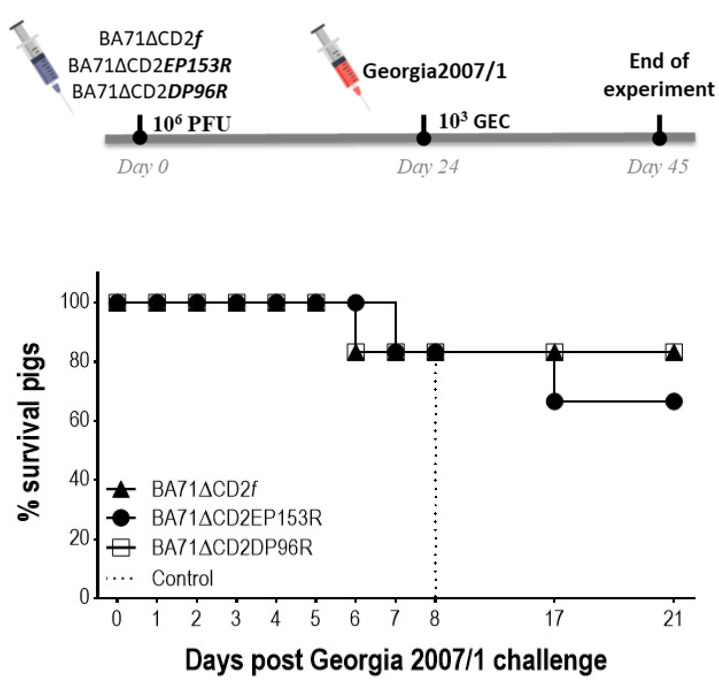
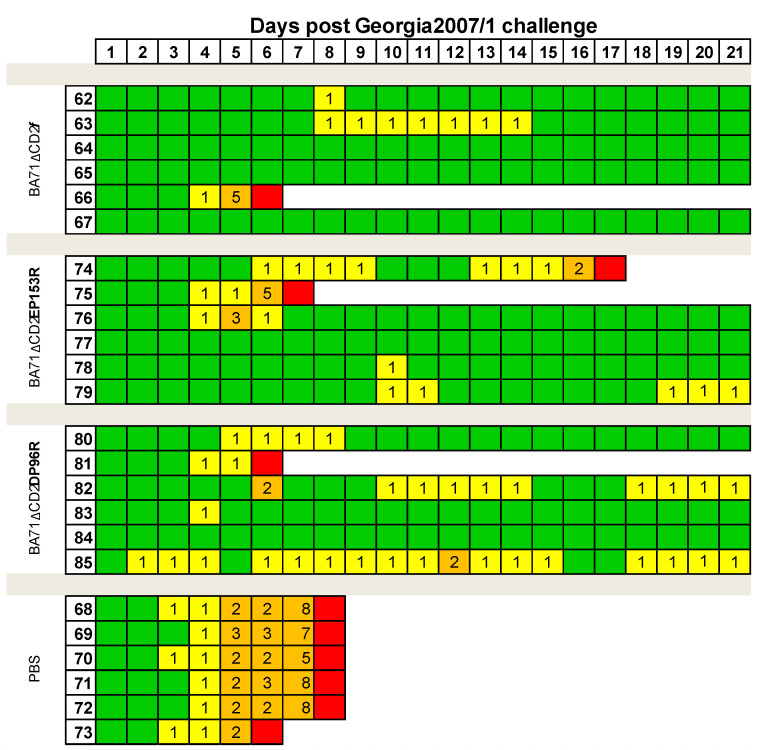
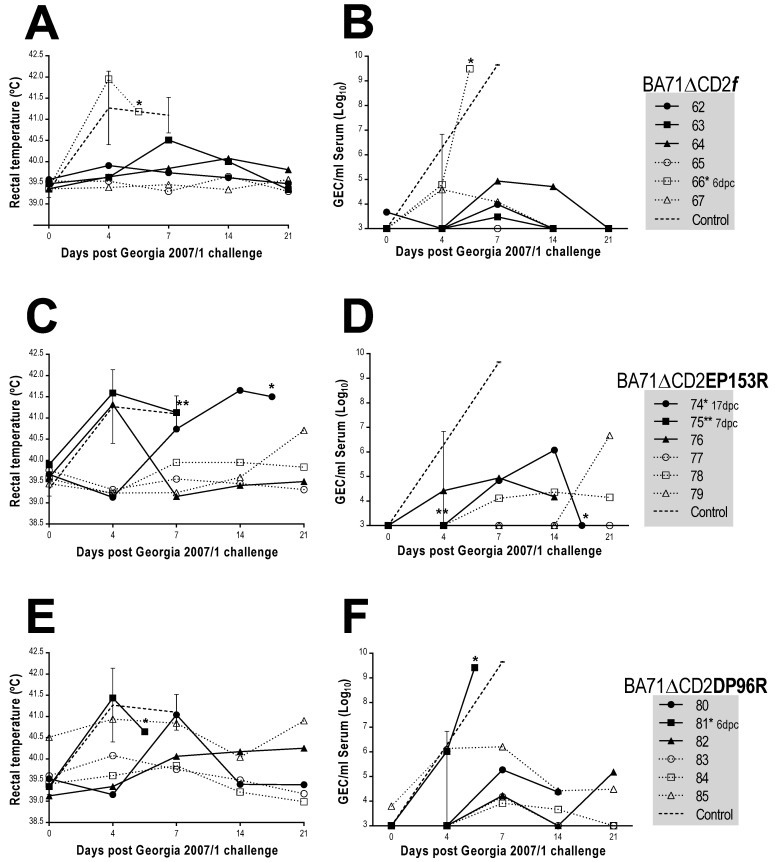
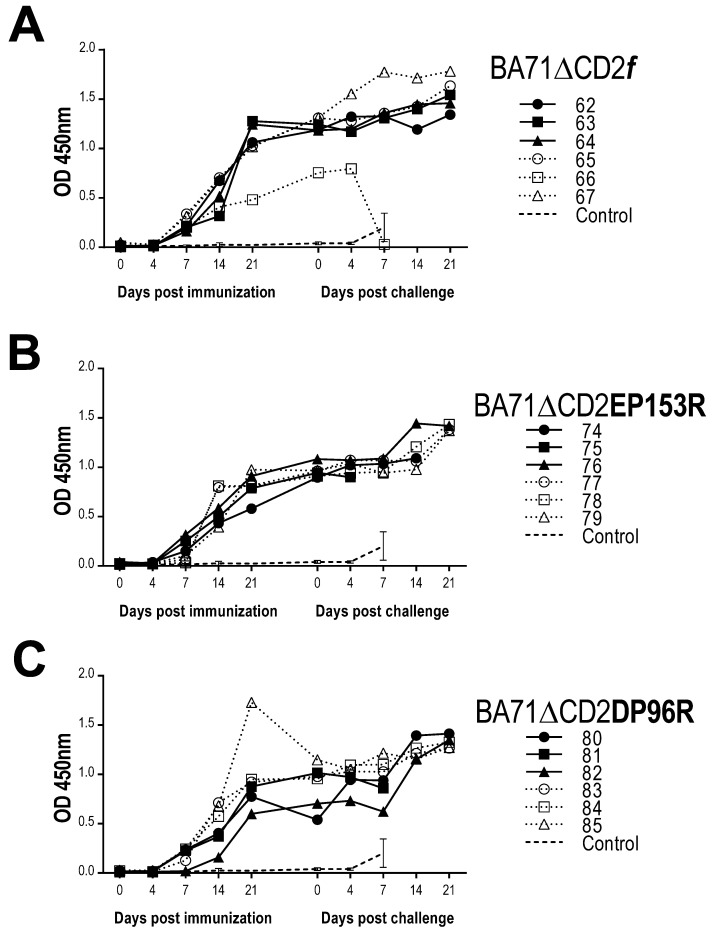
African swine fever (ASF) has become the major threat to the global swine industry. Lack of available commercial vaccines complicates the implementation of global control strategies. So far, only live attenuated ASF viruses (ASFV) have demonstrated solid protection efficacy at the experimental level. The implementation of molecular techniques has allowed the generation of a collection of deletion mutants lacking ASFV-specific virulence factors, some of them with promising potential as vaccine candidates against the pandemic genotype II ASFV strain currently circulating in Africa, Europe, Asia and Oceania. Despite promising results, there is room for improvement, mainly from the biosafety point of view. Aiming to improve the safety of BA71∆CD2, a cross-protective recombinant live attenuated virus (LAV) lacking the ASFV CD2v gene (encoding β-glucuronidase as a reporter gene) available in our laboratory, three new recombinants were generated using BA71∆CD2 as a template: the single mutant BA71∆CD2, this time containing the fluorescent mCherry reporter gene instead of CD2v, and two double recombinants lacking CD2v and either the lectin gene (EP153R) or the uridine kinase (UK) gene (DP96R). Comparative in vivo experiments using BA71∆CD2, BA71∆CD2DP96R and BA71∆CD2EP153R recombinant viruses as immunogens, demonstrated that deletion of either DP96R or EP153R from BA71∆CD2 decreases vaccine efficacy and does not improve safety. Our results additionally confirm ASFV challenge as the only available method today to evaluate the protective efficacy of any experimental vaccine. We believe that understanding the fine equilibrium between attenuation and inducing protection in vivo deserves further study and might contribute to more rational vaccine designs in the future.
非洲猪瘟(ASF)已成为全球养猪业的主要威胁。缺乏可用的商业疫苗使得全球控制策略的实施变得复杂。到目前为止,只有活的减毒 ASF 病毒(ASFV)在实验水平上表现出了坚实的保护效力。分子技术的实施使得生成了一系列缺乏 ASFV 特定毒力因子的缺失突变体,其中一些在预防目前在非洲、欧洲、亚洲和大洋洲流行的基因型 II ASFV 株方面具有有前途的潜力。尽管取得了有希望的结果,但仍有改进的空间,主要是从生物安全的角度来看。为了提高 BA71∆CD2 的安全性,BA71∆CD2 是我们实验室中缺失 ASFV CD2v 基因(编码 β-葡糖苷酸酶作为报告基因)的一种交叉保护重组活减毒病毒(LAV),使用 BA71∆CD2 作为模板生成了三个新的重组体:单一突变体 BA71∆CD2,这次包含荧光 mCherry 报告基因而不是 CD2v,以及两个缺失 CD2v 和凝集素基因(EP153R)或尿苷激酶(UK)基因(DP96R)的双重组体。使用 BA71∆CD2、BA71∆CD2DP96R 和 BA71∆CD2EP153R 重组病毒作为免疫原进行的体内比较实验表明,从 BA71∆CD2 中缺失 DP96R 或 EP153R 会降低疫苗效力,并且不能提高安全性。我们的结果还证实了 ASFV 挑战是评估任何实验性疫苗保护效力的唯一可用方法。我们认为,了解体内减毒和诱导保护之间的细微平衡值得进一步研究,并可能有助于未来更合理的疫苗设计。