Li Zhiqi, Xie Qian, Yan Jiahui, Chen Jianqing, Chen Qingxi
College of Horticulture, Fujian Agriculture and Forestry University, Fuzhou 350002, China.
Horticultural Plant Biology and Metabolomices Center, Haixia Institute of Science and Technology, Fujian Agriculture and Forestry University, Fuzhou 350002, China.
Plants (Basel). 2021 Sep 15;10(9):1916. doi: 10.3390/plants10091916.
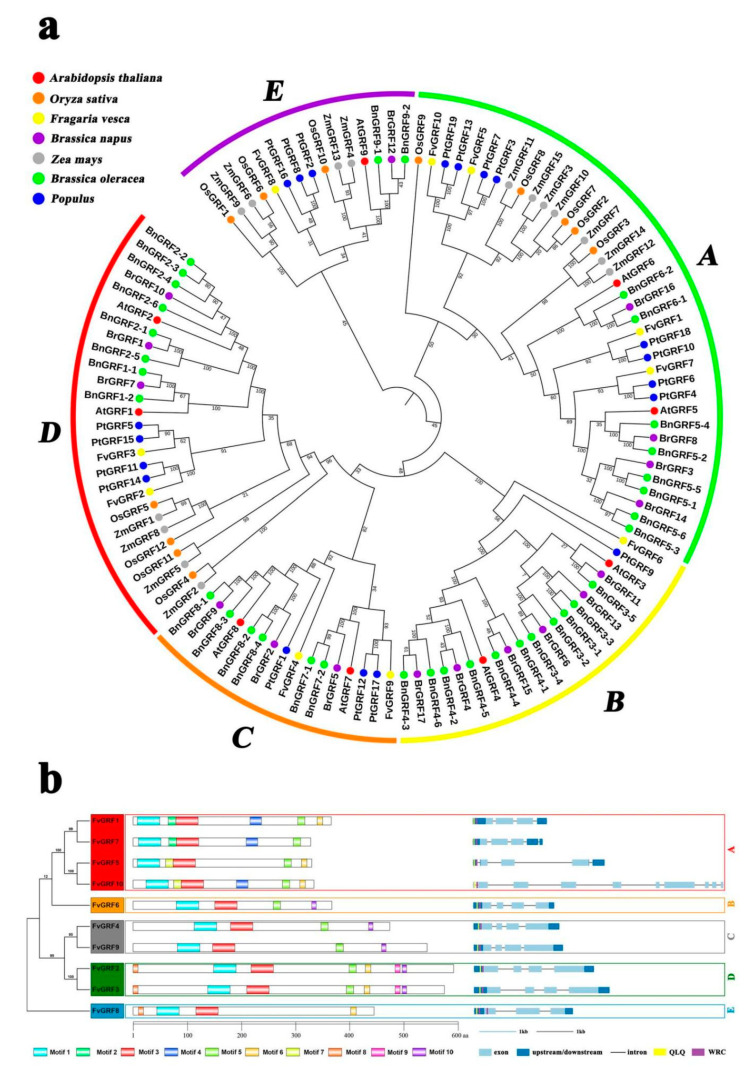
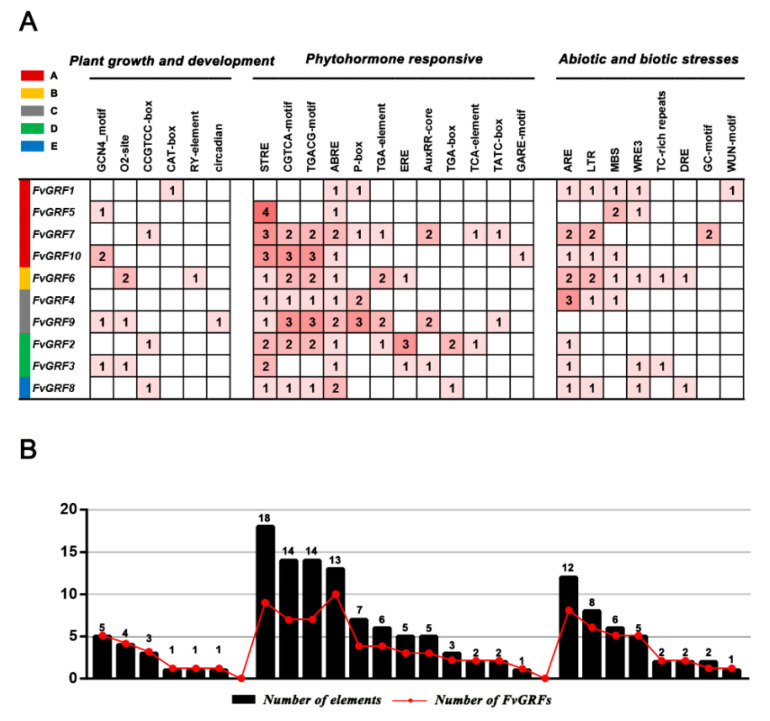
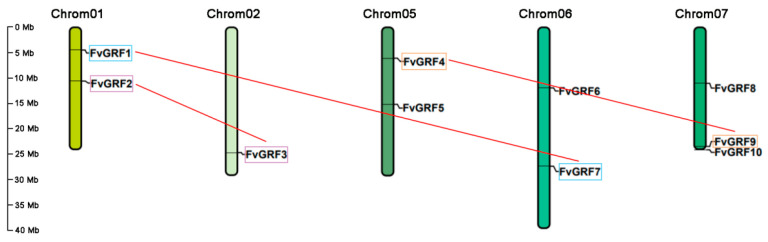
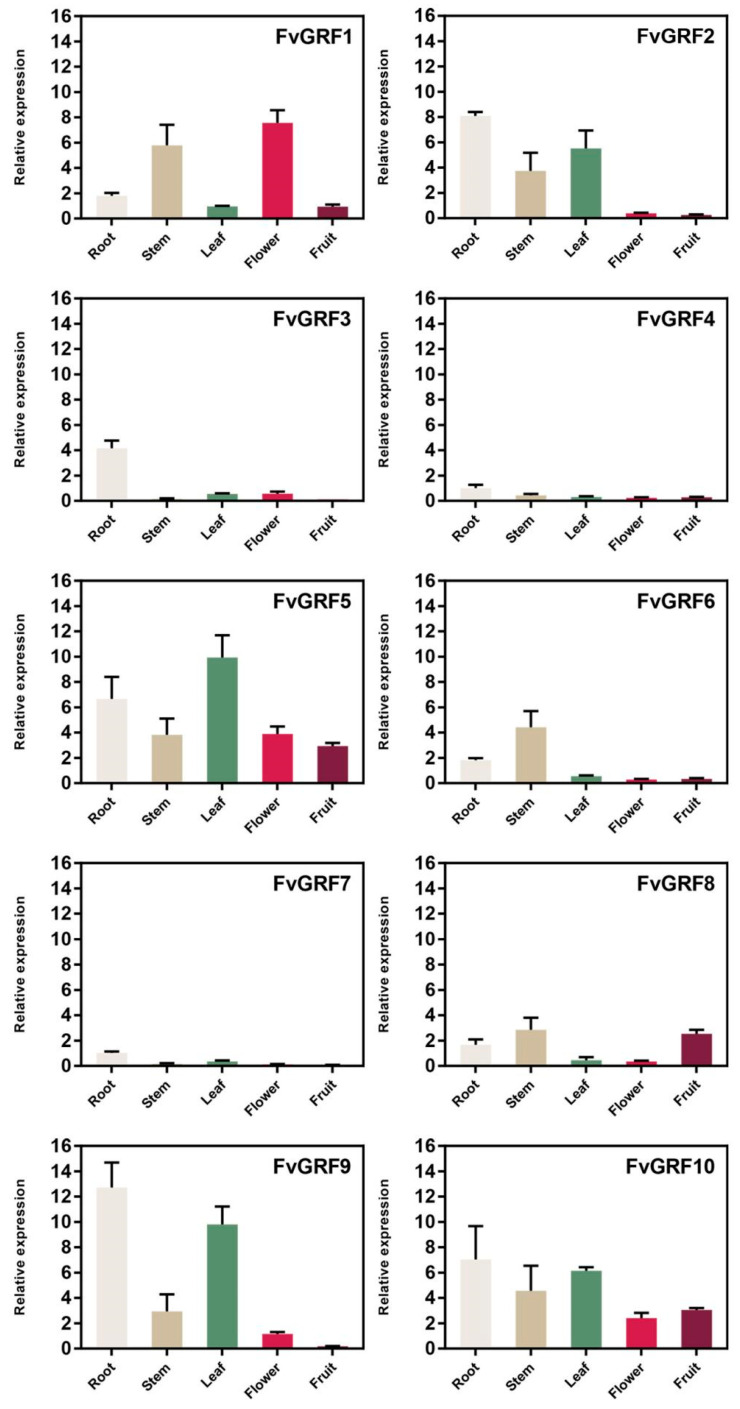
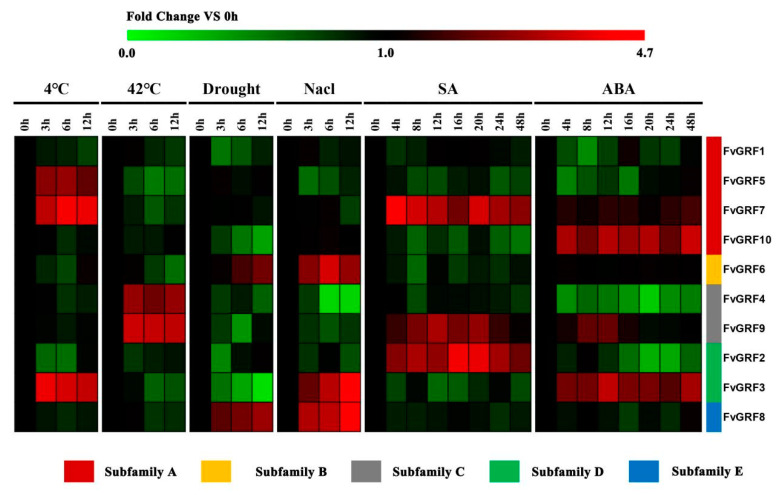
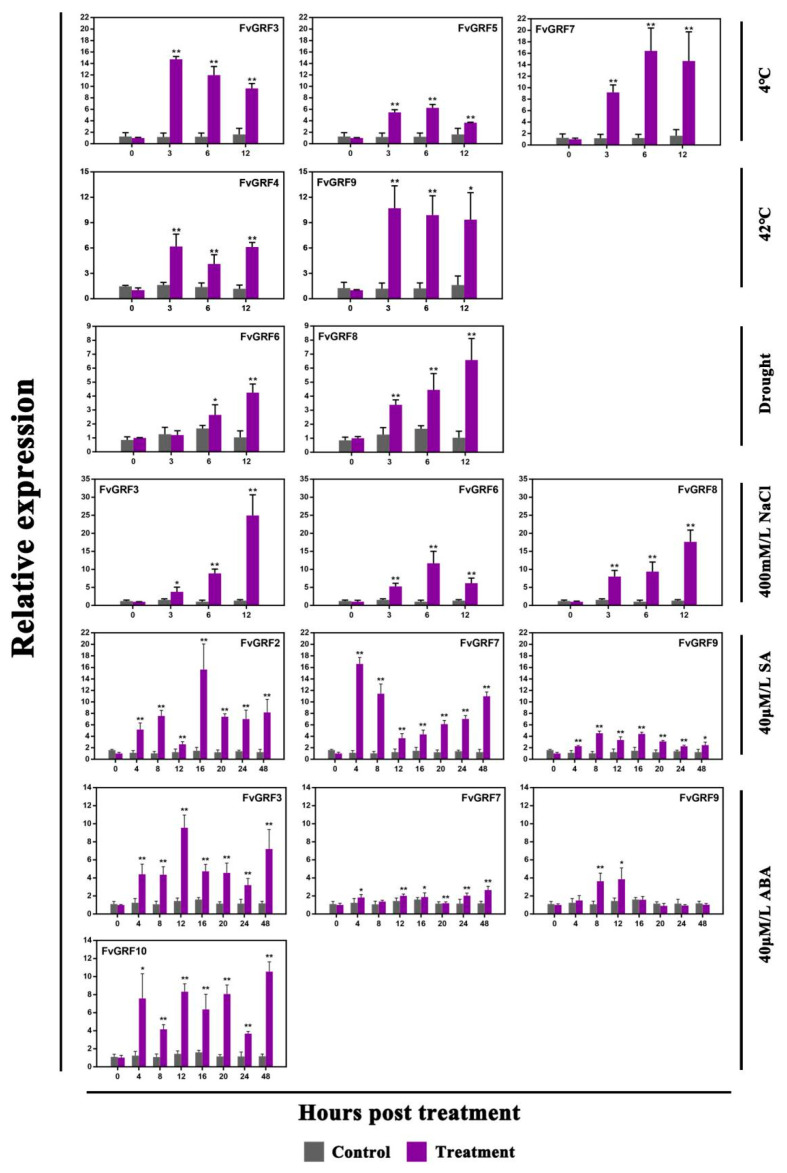
Growth regulatory factors (GRF) are plant-specific transcription factors that play an important role in plant resistance to stress. This gene family in strawberry has not been investigated previously. In this study, 10 genes were identified in the genome of the diploid woodland strawberry ( ). Chromosome analysis showed that the 10 genes were unevenly distributed on five chromosomes. Phylogenetic analysis resolved the FvGRF proteins into five groups. Genes of similar structure were placed in the same group, which was indicative of functional redundance. Whole-genome duplication/segmental duplication and dispersed duplication events effectively promoted expansion of the strawberry gene family. Quantitative reverse transcription-PCR analysis suggested that genes played potential roles in the growth and development of vegetative organs. Expression profile analysis revealed that , , and were up-regulated under low-temperature stress, and were up-regulated under high-temperature stress, and were up-regulated under drought stress, , , and were up-regulated under salt stress, , , and were up-regulated under salicylic acid treatment, and , , , and were up-regulated under abscisic acid treatment. Promoter analysis indicated that genes were involved in plant growth and development and stress response. These results provide a theoretical and empirical foundation for the elucidation of the mechanisms of abiotic stress responses in strawberry.
生长调控因子(GRF)是植物特有的转录因子,在植物抗逆性中发挥重要作用。此前尚未对草莓中的这个基因家族进行过研究。在本研究中,在二倍体森林草莓( )的基因组中鉴定出了10个基因。染色体分析表明,这10个基因在五条染色体上分布不均。系统发育分析将FvGRF蛋白分为五组。结构相似的基因被归为同一组,这表明存在功能冗余。全基因组复制/片段重复和分散重复事件有效地促进了草莓 基因家族的扩张。定量逆转录 - PCR分析表明, 基因在营养器官的生长发育中发挥潜在作用。表达谱分析显示, 、 和 在低温胁迫下上调, 和 在高温胁迫下上调, 和 在干旱胁迫下上调, 、 和 在盐胁迫下上调, 、 和 在水杨酸处理下上调, 、 、 和 在脱落酸处理下上调。启动子分析表明, 基因参与植物生长发育和胁迫响应。这些结果为阐明草莓非生物胁迫响应机制提供了理论和实证基础。