Department of Epidemiology and Quantitative Methods in health. National School of Public Health, Oswaldo Cruz Foundation, 1480, Manguinhos, Rio de Janeiro, RJ, 21041-210, Brazil.
Clinical Epidemiology Laboratory, Evandro Chagas National Institute of Infectious Diseases (INI), Oswaldo Cruz Foundation, Rio de Janeiro, Brazil.
BMC Public Health. 2021 Sep 27;21(1):1761. doi: 10.1186/s12889-021-11760-2.
Self-rated health (SRH) - one of the most common health indicators used to verify health conditions - can be influenced by several types of socioeconomic conditions, thereby reflecting health inequalities. This study aimed to evaluate the participant profiles regarding the association between self-rated health and social and occupational characteristics of the Brazilian Longitudinal Study of Adult Health (ELSA-Brasil).
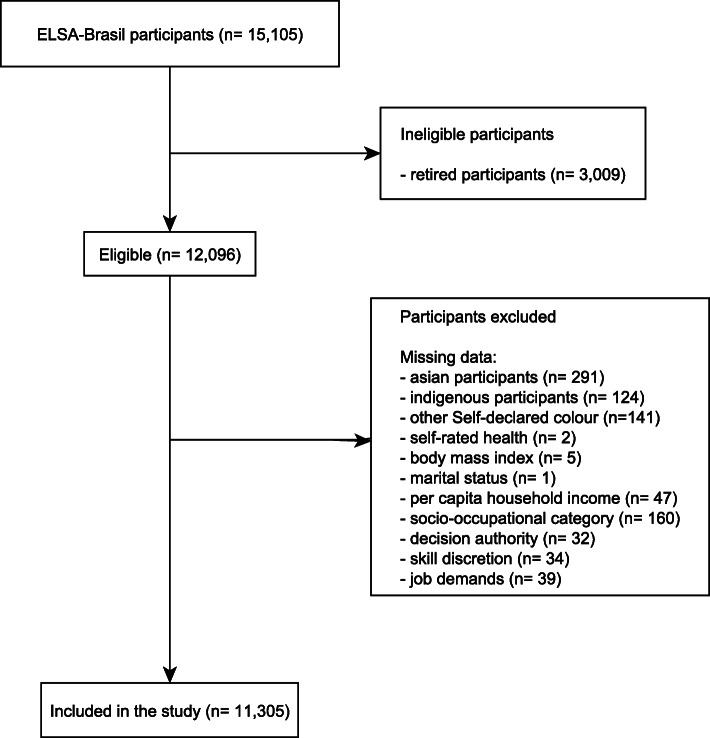
Cross-sectional design, including 11,305 individuals. Self-rated health was categorized as good, fair, and poor. The relationship between socio-demographic, psychosocial work environment, health-related variables, and self-rated health was analyzed by multiple correspondence analysis (stratified by age: up to 49 years old and 50 years old or more).
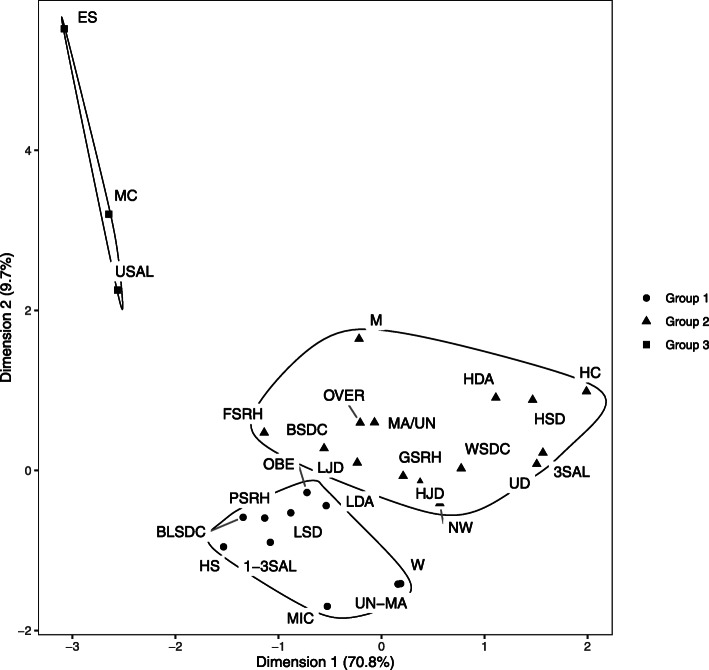
For both age strata, group composition was influenced by socioeconomic conditions. Poor SRH was related to lower socioeconomic conditions, being women, black self-declared race/ethnicity, being non-married/non-united, low decision authority, low skill discretion, and obesity.
To promote health, interventions should focus on reducing existing socioeconomic, race, and gender inequalities in Brazil.
自感健康(SRH)是用于验证健康状况的最常用健康指标之一,它可能受到多种社会经济条件的影响,从而反映健康不平等现象。本研究旨在评估巴西老龄化纵向研究(ELSA-Brasil)参与者的自感健康与社会和职业特征之间关联的特征。
本研究采用横断面设计,共纳入 11305 名参与者。自感健康状况分为良好、一般和较差。采用多元对应分析(按年龄分层:49 岁及以下和 50 岁及以上)分析社会人口统计学、心理社会工作环境、与健康相关的变量与自感健康之间的关系。
对于两个年龄组,群体构成均受到社会经济条件的影响。较差的 SRH 与较低的社会经济条件、女性、黑人自我认定的种族/民族、未婚/未结合、决策权低、技能裁量权低和肥胖有关。
为了促进健康,干预措施应重点关注减少巴西当前存在的社会经济、种族和性别不平等现象。