Institute of Biochemistry and Molecular Biology, National Yang Ming Chiao Tung University, Taipei, 112, Taiwan.
Department of Life Sciences and Institute of Genome Sciences, National Yang Ming Chiao Tung University, Taipei, 112, Taiwan.
Cell Death Dis. 2021 Sep 27;12(10):880. doi: 10.1038/s41419-021-04176-8.
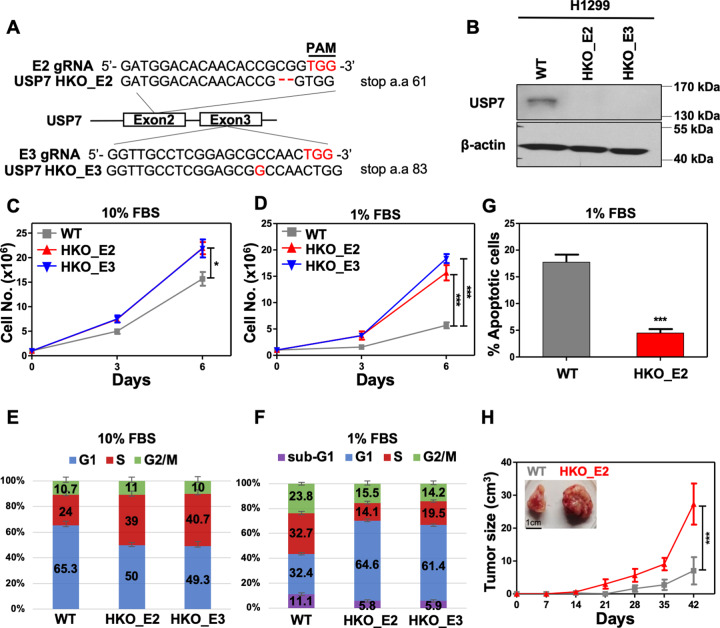
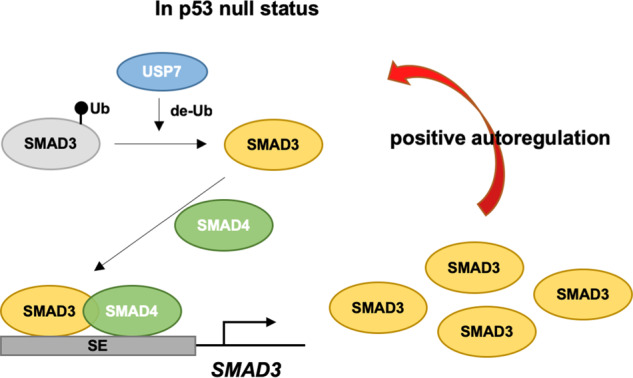
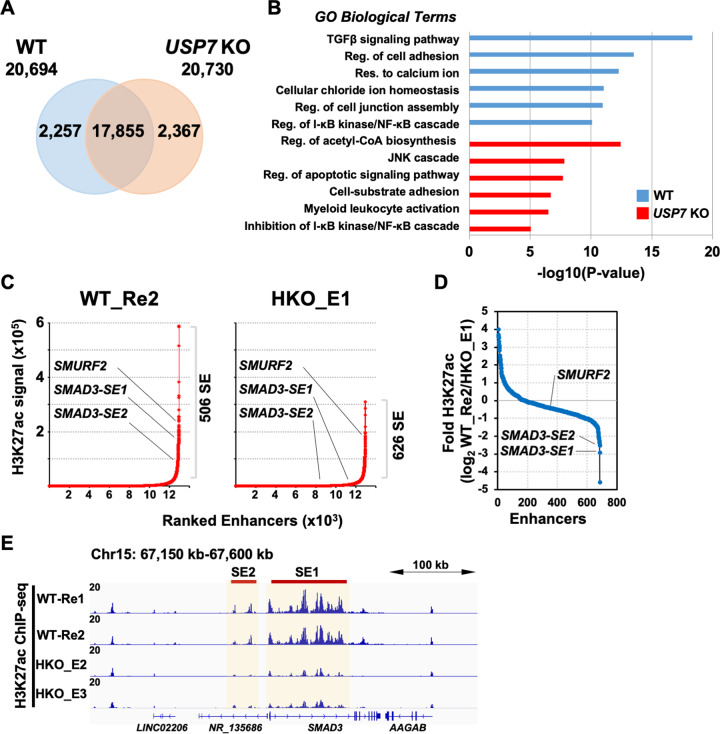
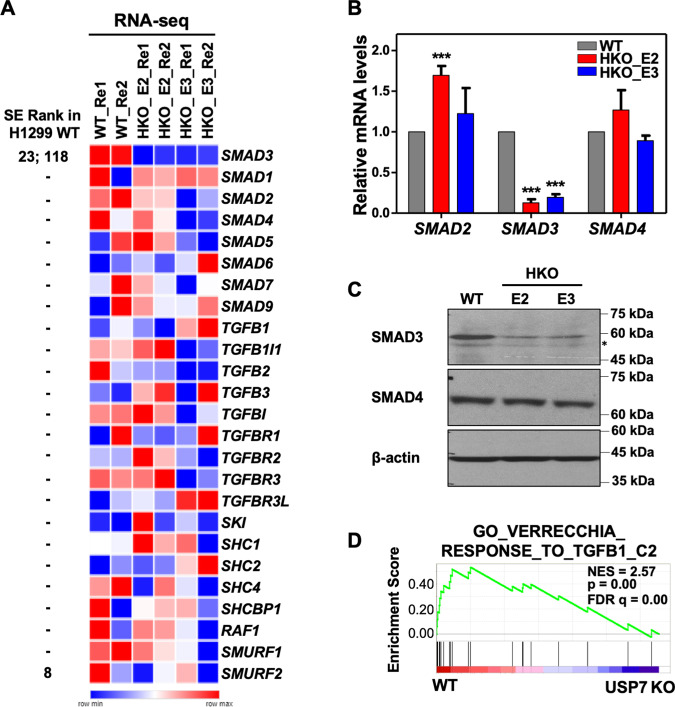
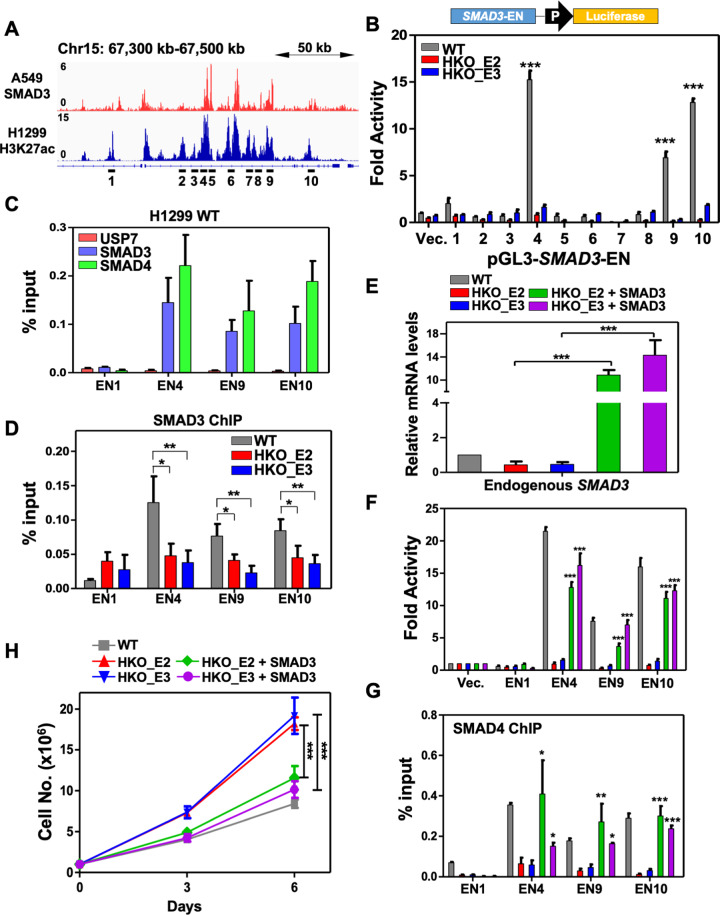
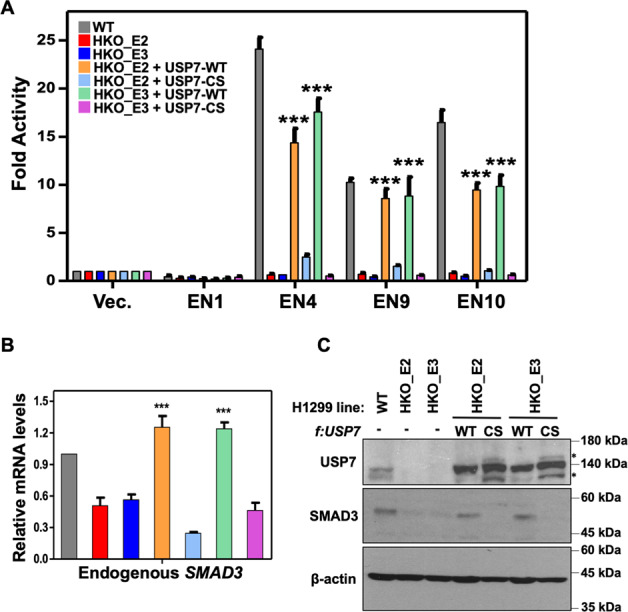
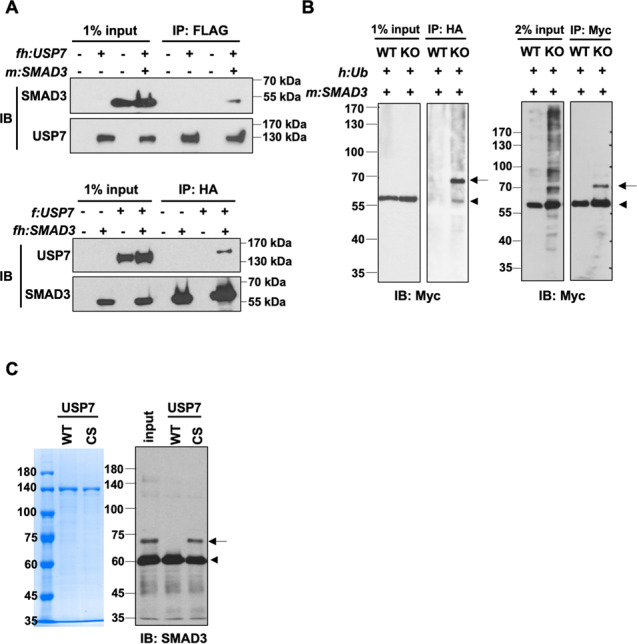
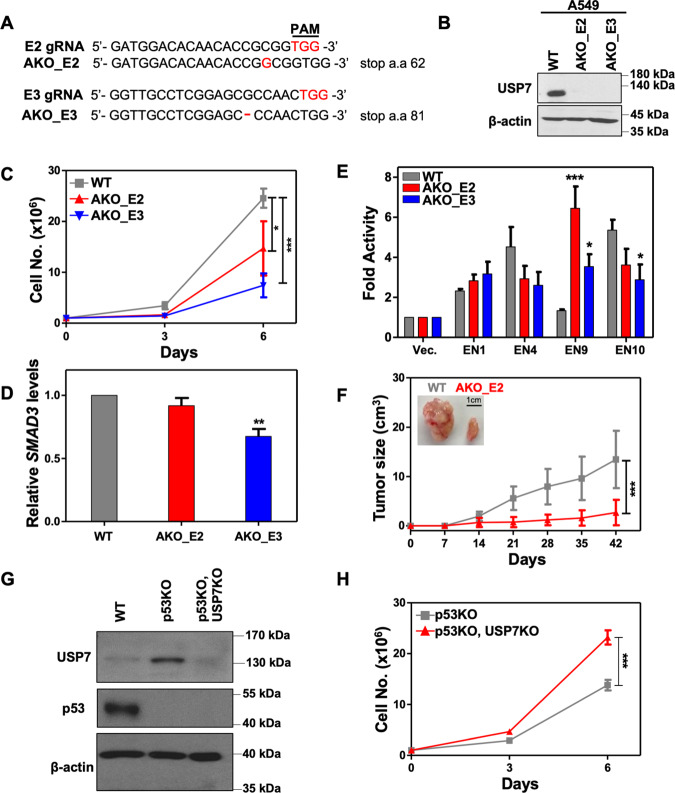
USP7, one of the most abundant ubiquitin-specific proteases (USP), plays multifaceted roles in many cellular events, including oncogenic pathways. Accumulated studies have suggested that USP7, through modulating the MDM2/MDMX-p53 pathway, is a promising target for cancer treatment; however, little is known about the function of USP7 in p53-deficient tumors. Here we report that USP7 regulates the autoregulation of SMAD3, a key regulator of transforming growth factor β (TGFβ) signaling, that represses the cell progression of p53-deficient lung cancer. CRISPR/Cas9-mediated inactivation of USP7 in p53-deficient lung cancer H1299 line resulted in advanced cell proliferation in vitro and in xenograft tumor in vivo. Genome-wide analyses (ChIP-seq and RNA-seq) of USP7 KO H1299 cells reveal a dramatic reduction of SMAD3 autoregulation, including decreased gene expression and blunted function of associated super-enhancer (SE). Furthermore, biochemical assays show that SMAD3 is conjugated by mono-ubiquitin, which negatively regulates the DNA-binding function of SMAD3, in USP7 KO cells. In addition, cell-free and cell-based analyses further demonstrate that the deubiquitinase activity of USP7 mediates the removal of mono-ubiquitin from SMAD3 and facilitates the DNA-binding of SMAD3-SMAD4 dimer at SMAD3 locus, and thus enhance the autoregulation of SMAD3. Collectively, our study identified a novel mechanism by which USP7, through catalyzing the SMAD3 de-monoubiquitination, facilitates the positive autoregulation of SMAD3, and represses the cancer progression of p53-deficient lung cancer.
USP7 是丰度最高的泛素特异性蛋白酶 (USP) 之一,在许多细胞事件中发挥着多方面的作用,包括致癌途径。大量研究表明,USP7 通过调节 MDM2/MDMX-p53 途径,是癌症治疗的一个很有前途的靶点;然而,USP7 在 p53 缺失肿瘤中的功能知之甚少。在这里,我们报告 USP7 调节 SMAD3 的自身调控,SMAD3 是转化生长因子 β (TGFβ) 信号的关键调节剂,抑制 p53 缺失的肺癌细胞的进展。CRISPR/Cas9 介导的 USP7 在 p53 缺失的肺癌 H1299 系中的失活导致体外细胞增殖和体内异种移植肿瘤的进展。USP7 KO H1299 细胞的全基因组分析(ChIP-seq 和 RNA-seq)显示 SMAD3 自身调控的显著减少,包括基因表达的降低和相关超级增强子(SE)功能的减弱。此外,生化分析表明,SMAD3 被单泛素化修饰,这会负调控 SMAD3 的 DNA 结合功能,在 USP7 KO 细胞中。此外,无细胞和基于细胞的分析进一步表明,USP7 的去泛素酶活性介导了 SMAD3 上单泛素的去除,并促进了 SMAD3-SMAD4 二聚体在 SMAD3 基因座上的 DNA 结合,从而增强了 SMAD3 的自身调控。总之,我们的研究确定了一种新的机制,即 USP7 通过催化 SMAD3 的去单泛素化,促进 SMAD3 的正向自身调控,从而抑制 p53 缺失的肺癌的癌症进展。