Division of Nephrology, Zhongshan Hospital, Fudan University, Shanghai, PR China.
Shanghai Medical Center of Kidney, Shanghai, PR China.
Cell Death Dis. 2021 Sep 27;12(10):881. doi: 10.1038/s41419-021-04156-y.
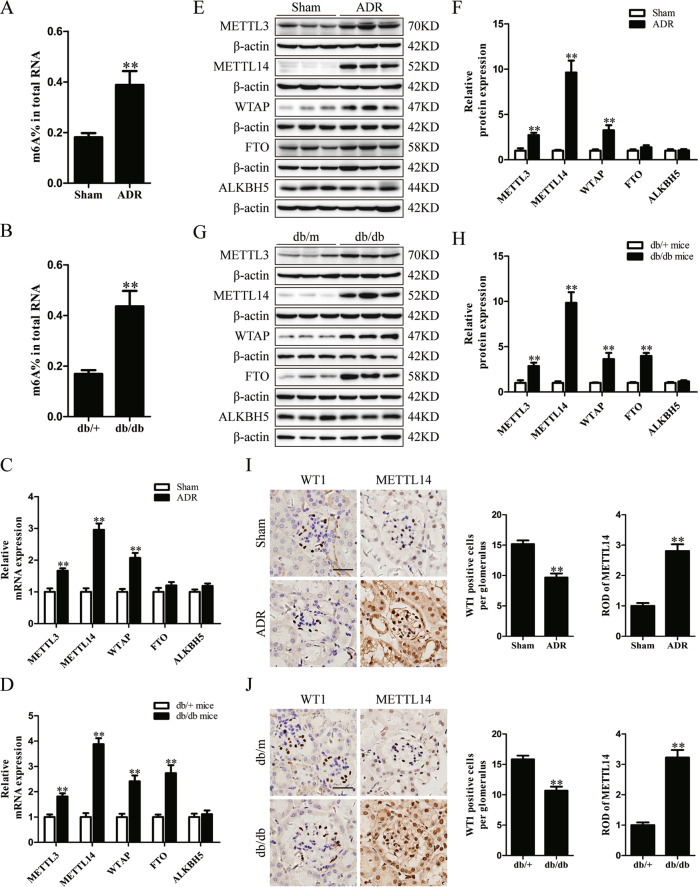
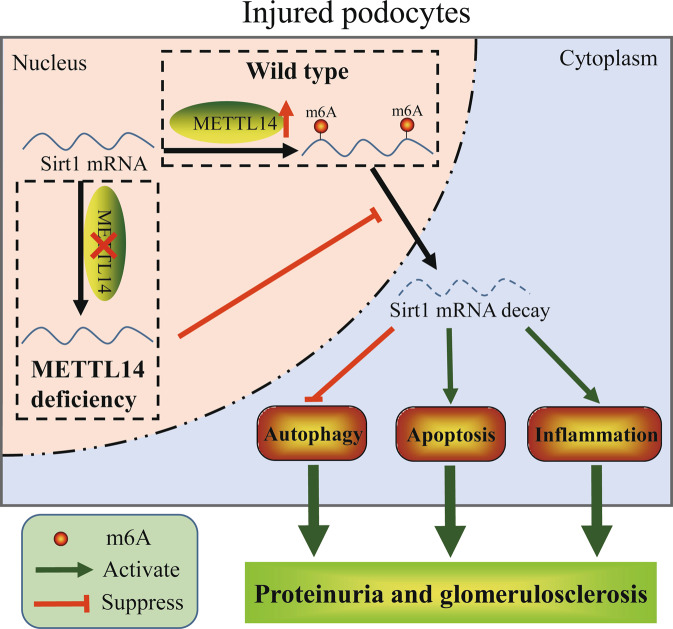
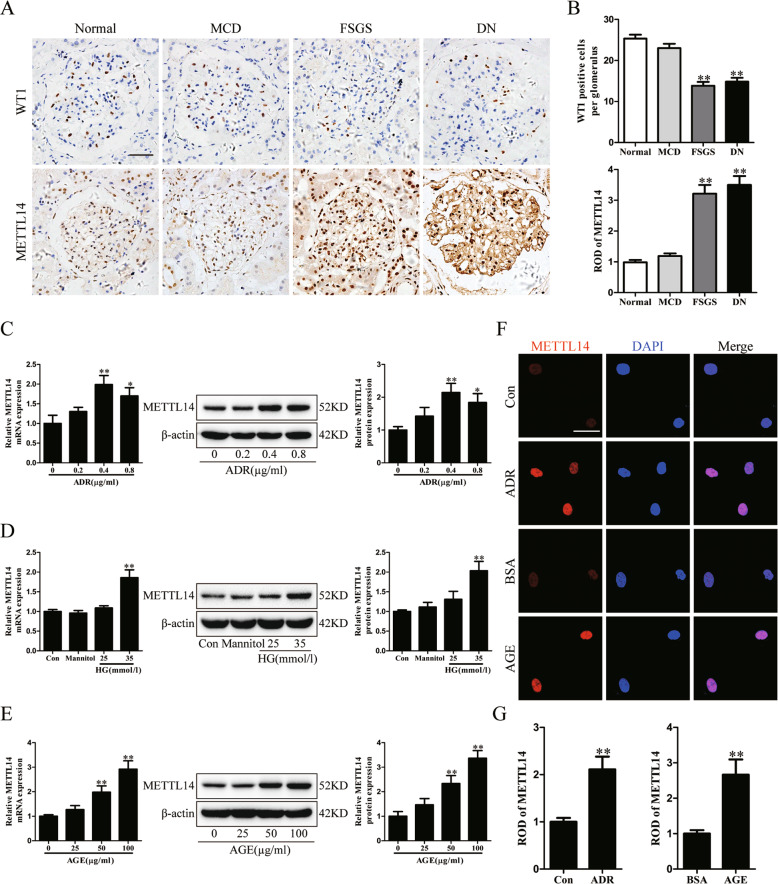
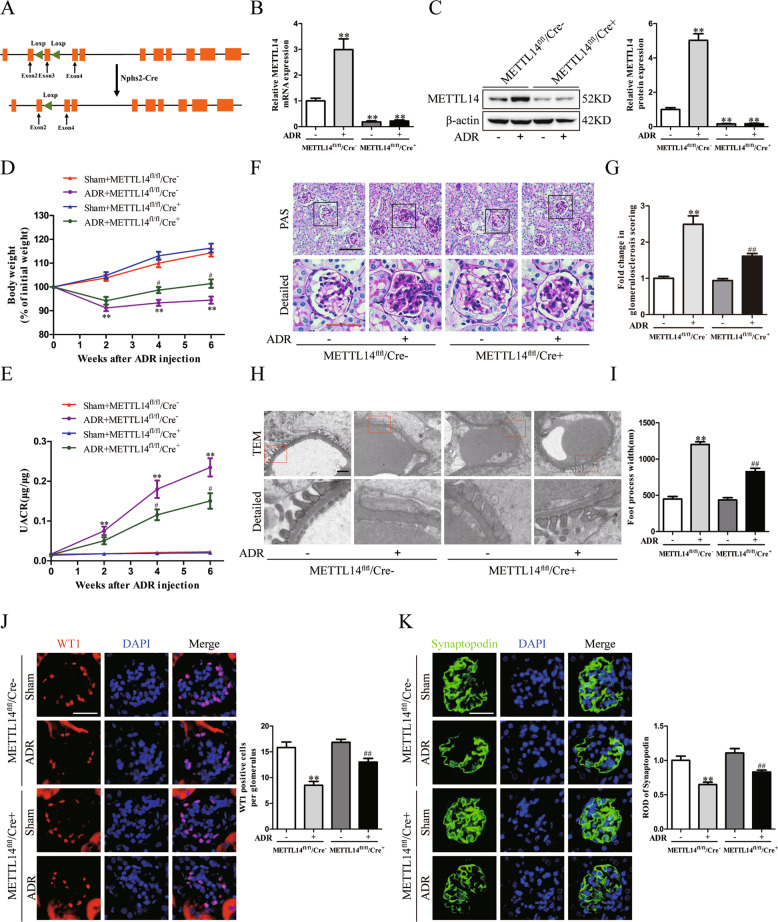
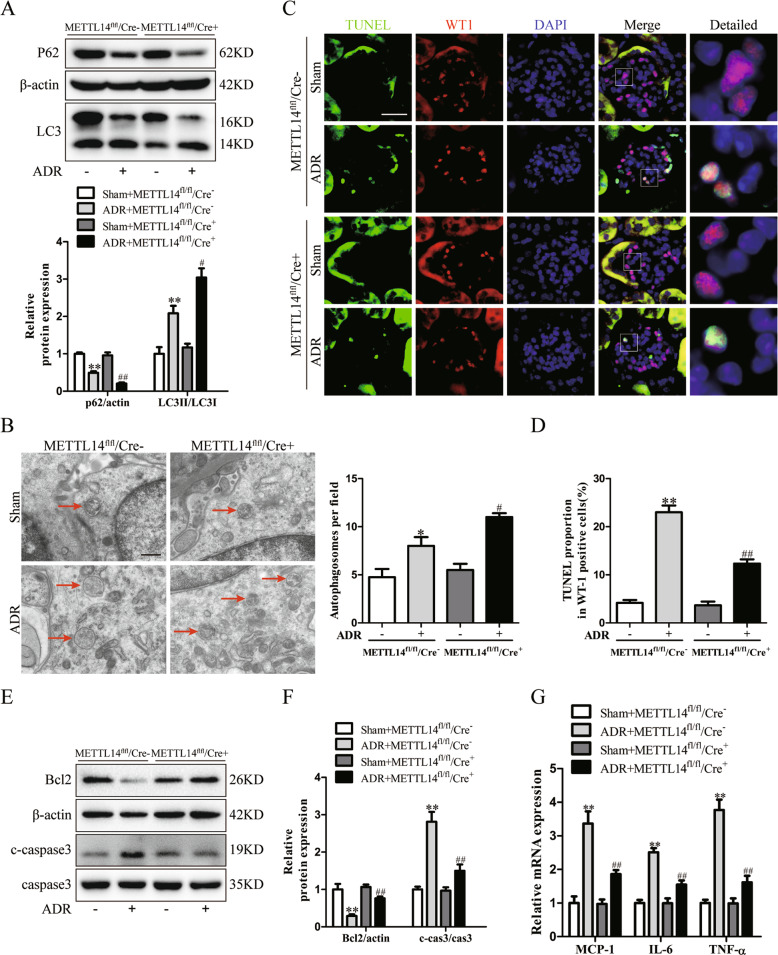
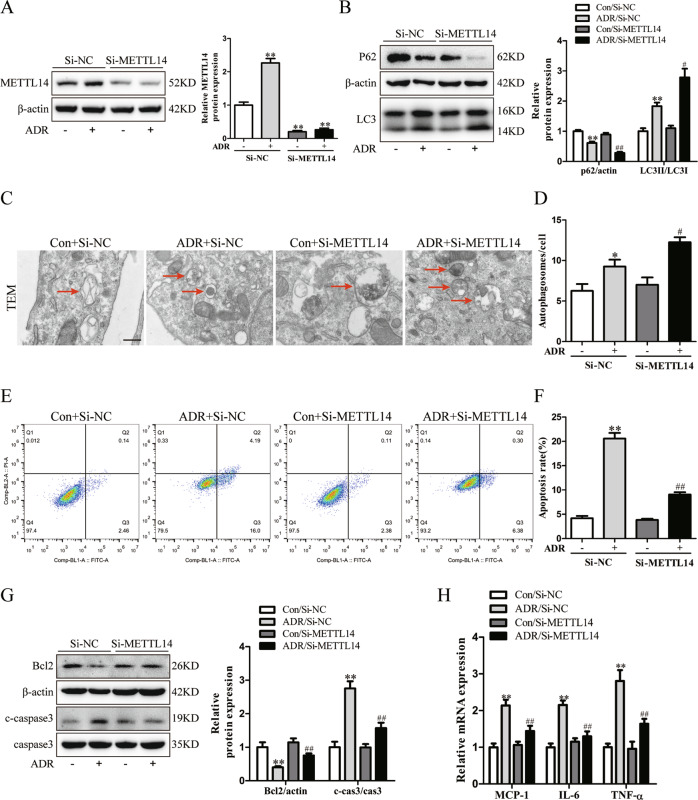
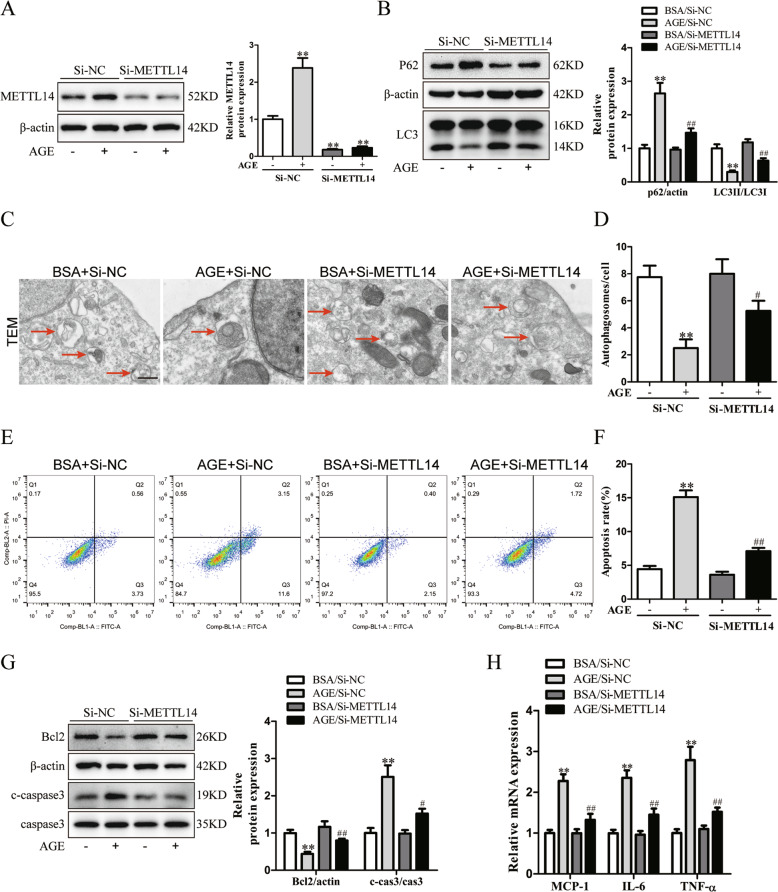
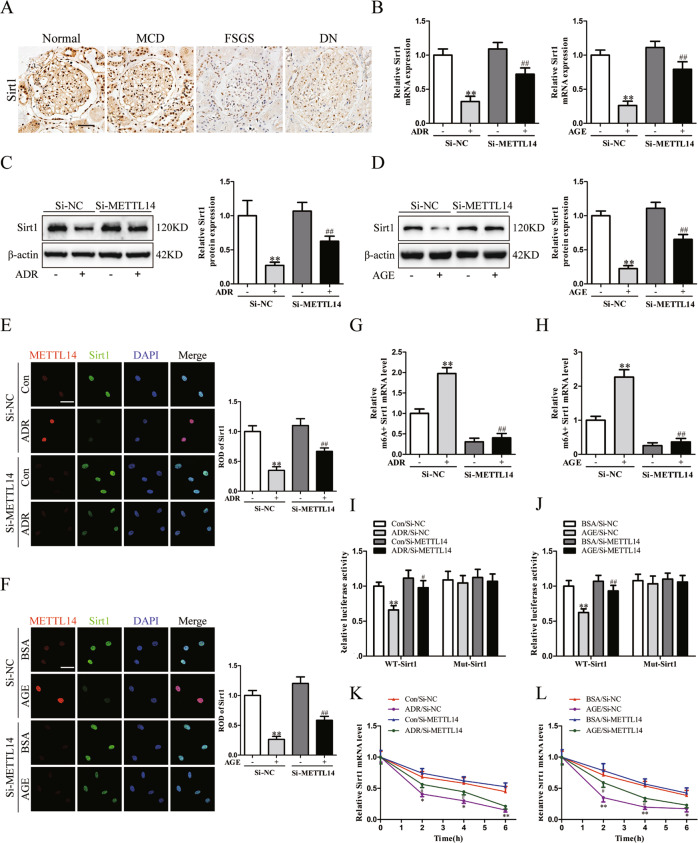
Podocytes are known to play a determining role in the progression of proteinuric kidney disease. N-methyladenosine (m6A), as the most abundant chemical modification in eukaryotic mRNA, has been reported to participate in various pathological processes. However, its role in podocyte injury remains unclear. In this study, we observed the elevated m6A RNA levels and the most upregulated METTL14 expression in kidneys of mice with adriamycin (ADR) and diabetic nephropathy. METTL14 was also evidently increased in renal biopsy samples from patients with focal segmental glomerulosclerosis (FSGS) and diabetic nephropathy and in cultured human podocytes with ADR or advanced glycation end product (AGE) treatment in vitro. Functionally, we generated mice with podocyte-specific METTL14 deletion, and identified METTL14 knockout in podocytes improved glomerular function and alleviated podocyte injury, characterized by activation of autophagy and inhibition of apoptosis and inflammation, in mice with ADR nephropathy. Similar to the results in vivo, knockdown of METTL14 facilitated autophagy and alleviated apoptosis and inflammation in podocytes under ADR or AGE condition in vitro. Mechanically, we identified METTL14 knockdown upregulated the level of Sirt1, a well-known protective deacetylase in proteinuric kidney diseases, in podocytes with ADR or AGE treatment. The results of MeRIP-qPCR and dual-luciferase reporter assay indicated METTL14 promoted Sirt1 mRNA m6A modification and degradation in injured podocytes. Our findings suggest METTL14-dependent RNA m6A modification contributes to podocyte injury through posttranscriptional regulation of Sirt1 mRNA, which provide a potential approach for the diagnosis and treatment of podocytopathies.
足细胞在蛋白尿性肾病的进展中起着决定性作用。N6-甲基腺苷(m6A)作为真核 mRNA 中最丰富的化学修饰,已被报道参与各种病理过程。然而,其在足细胞损伤中的作用尚不清楚。在这项研究中,我们观察到阿霉素(ADR)和糖尿病肾病小鼠肾脏中 m6A RNA 水平升高和 METTL14 表达上调。METTL14 在局灶节段性肾小球硬化(FSGS)和糖尿病肾病患者的肾活检样本以及体外用 ADR 或晚期糖基化终产物(AGE)处理的培养人足细胞中也明显增加。功能上,我们生成了足细胞特异性 METTL14 缺失的小鼠,并确定了足细胞中 METTL14 的缺失改善了 ADR 肾病小鼠的肾小球功能并减轻了足细胞损伤,其特征为自噬的激活和凋亡及炎症的抑制。在体内的结果类似,METTL14 的敲低促进了 ADR 或 AGE 条件下体外足细胞中的自噬并减轻了凋亡和炎症。在机制上,我们发现 METTL14 的敲低增加了 Sirt1 的水平,Sirt1 是蛋白尿性肾病中一种众所周知的保护性去乙酰化酶,在 ADR 或 AGE 处理的足细胞中。MeRIP-qPCR 和双荧光素酶报告基因测定的结果表明,METTL14 促进了受损足细胞中 Sirt1 mRNA m6A 修饰和降解。我们的研究结果表明,METTL14 依赖性 RNA m6A 修饰通过 Sirt1 mRNA 的转录后调节导致足细胞损伤,这为足细胞病的诊断和治疗提供了一种潜在的方法。