Epatocentro Ticino & Facoltà di Scienze Biomediche, Università della Svizzera Italiana, Lugano, Switzerland.
Institute for Research in Biomedicine, Bellinzona, Switzerland.
Cell Mol Immunol. 2022 Feb;19(2):158-176. doi: 10.1038/s41423-021-00768-8. Epub 2021 Sep 27.
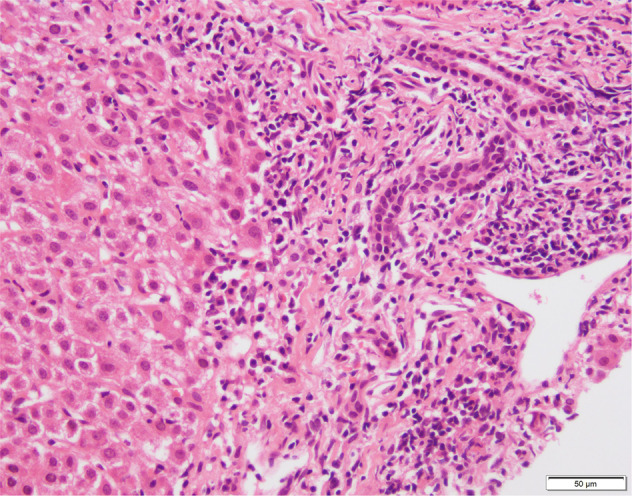
Autoimmune hepatitis (AIH) is a T-cell mediated, inflammatory liver disease affecting all ages and characterized by female preponderance, elevated serum transaminase and immunoglobulin G levels, positive circulating autoantibodies, and presence of interface hepatitis at liver histology. AIH type 1, affecting both adults and children, is defined by positive anti-nuclear and/or anti-smooth muscle antibodies, while type 2 AIH, affecting mostly children, is defined by positive anti-liver-kidney microsomal type 1 and/or anti-liver cytosol type 1 antibody. While the autoantigens of type 2 AIH are well defined, being the cytochrome P4502D6 (CYP2D6) and the formiminotransferase cyclodeaminase (FTCD), in type 1 AIH they remain to be identified. AIH-1 predisposition is conferred by possession of the MHC class II HLA DRB103 at all ages, while DRB104 predisposes to late onset disease; AIH-2 is associated with possession of DRB107 and DRB103. The majority of patients responds well to standard immunosuppressive treatment, based on steroid and azathioprine; second- and third-line drugs should be considered in case of intolerance or insufficient response. This review offers a comprehensive overview of pathophysiological and clinical aspects of AIH.
自身免疫性肝炎(AIH)是一种 T 细胞介导的炎症性肝病,影响所有年龄段,其特征是女性患病率较高、血清转氨酶和免疫球蛋白 G 水平升高、循环自身抗体阳性以及肝组织学存在界面肝炎。AIH 1 型影响成人和儿童,其特征是抗核和/或抗平滑肌抗体阳性,而 2 型 AIH 主要影响儿童,其特征是抗肝-肾微粒体 1 型(抗 LKM1)和/或抗肝胞质 1 型抗体阳性。虽然 2 型 AIH 的自身抗原已得到很好的定义,即细胞色素 P4502D6(CYP2D6)和氨基甲酰磷酸合成酶环化转移酶(FTCD),但 1 型 AIH 的自身抗原仍有待确定。AIH-1 的易感性由 MHC Ⅱ类 HLA-DRB103 基因在所有年龄段的存在所赋予,而 DRB104 则易患迟发性疾病;AIH-2 与 DRB107 和 DRB103 的存在相关。大多数患者对基于类固醇和硫唑嘌呤的标准免疫抑制治疗反应良好;如果出现不耐受或反应不足,应考虑使用二线和三线药物。本综述全面概述了 AIH 的病理生理和临床方面。