Developmental Genetics, Department of Biomedicine, University of Basel, CH-4058, Basel, Switzerland.
Swiss Institute for Bioinformatics, University of Basel, CH-4058, Basel, Switzerland.
Nat Commun. 2021 Sep 28;12(1):5685. doi: 10.1038/s41467-021-25935-3.
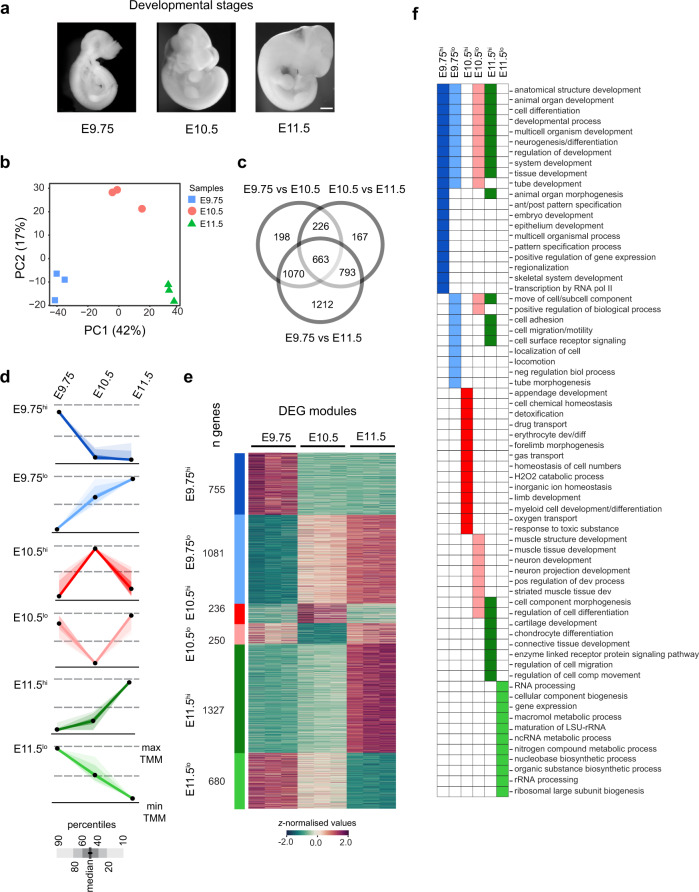
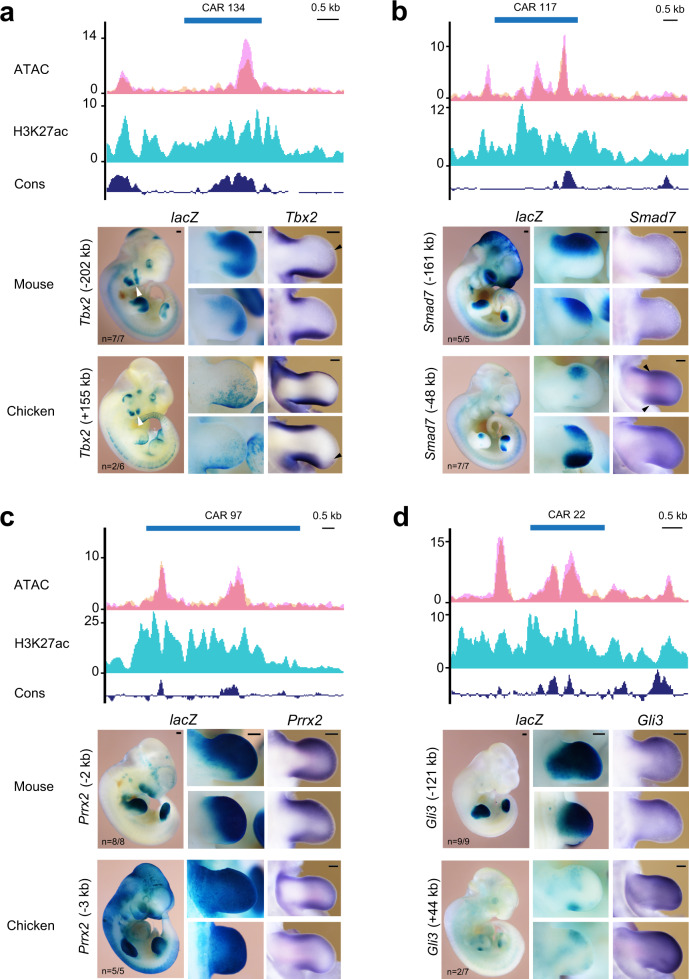
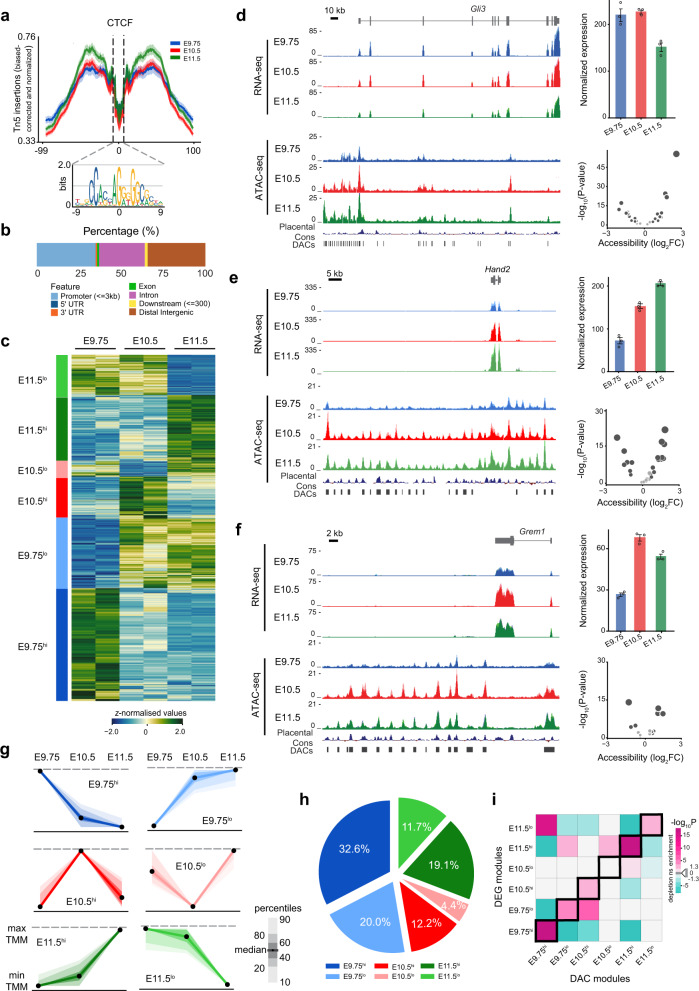
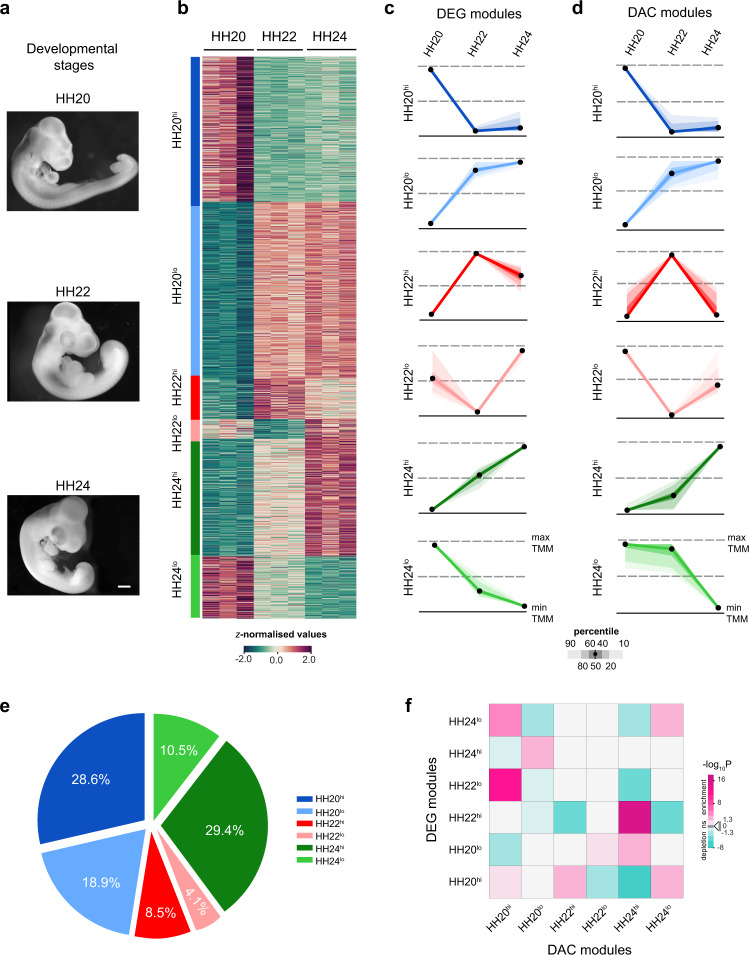
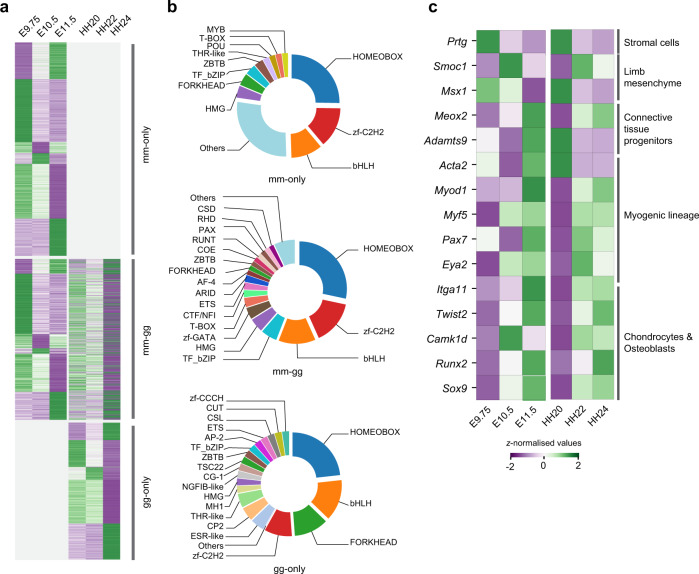
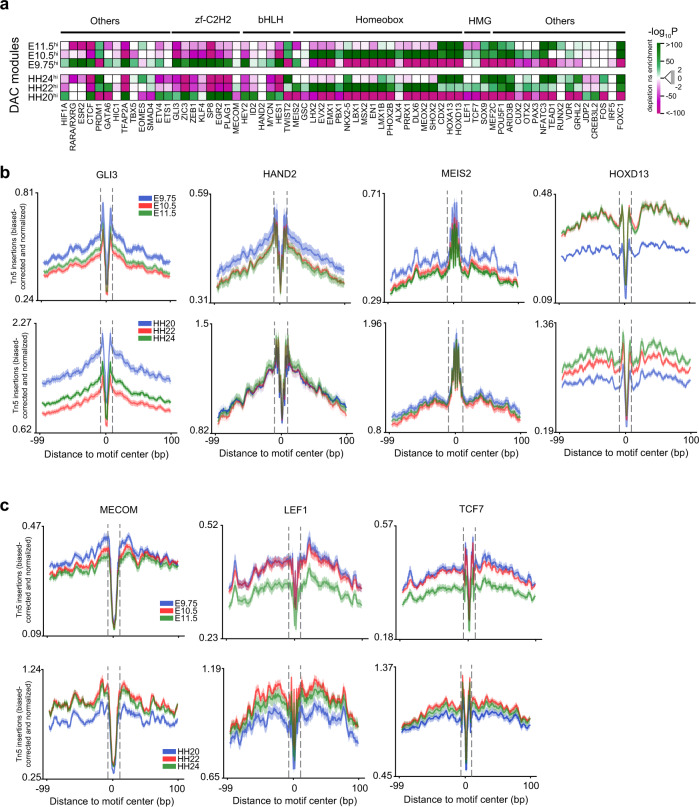
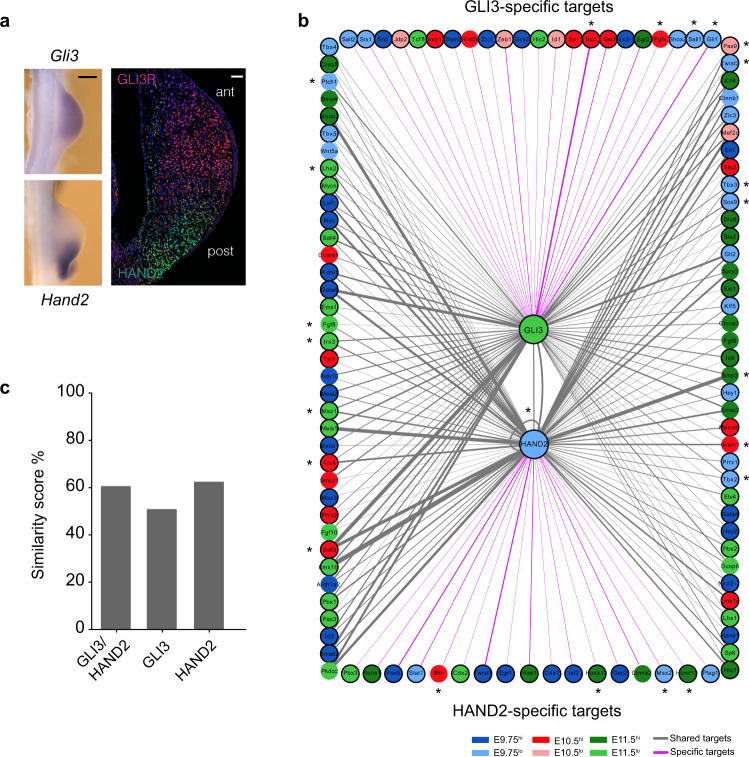
Chromatin remodeling and genomic alterations impact spatio-temporal regulation of gene expression, which is central to embryonic development. The analysis of mouse and chicken limb development provides important insights into the morphoregulatory mechanisms, however little is known about the regulatory differences underlying their morphological divergence. Here, we identify the underlying shared and species-specific epigenomic and genomic variations. In mouse forelimb buds, we observe striking synchrony between the temporal dynamics of chromatin accessibility and gene expression, while their divergence in chicken wing buds uncovers species-specific regulatory heterochrony. In silico mapping of transcription factor binding sites and computational footprinting establishes the developmental time-restricted transcription factor-DNA interactions. Finally, the construction of target gene networks for HAND2 and GLI3 transcriptional regulators reveals both conserved and species-specific interactions. Our analysis reveals the impact of genome evolution on the regulatory interactions orchestrating vertebrate limb bud morphogenesis and provides a molecular framework for comparative Evo-Devo studies.
染色质重塑和基因组改变影响基因表达的时空调节,这对胚胎发育至关重要。对小鼠和鸡肢发育的分析为形态调节机制提供了重要的见解,但对其形态分歧背后的调节差异知之甚少。在这里,我们确定了潜在的共享和物种特异性的表观基因组和基因组变异。在小鼠前肢芽中,我们观察到染色质可及性和基因表达的时间动态之间惊人的同步,而在鸡翅膀芽中的分化揭示了物种特异性的调节异时性。转录因子结合位点的计算机映射和计算足迹确定了发育时间限制的转录因子-DNA 相互作用。最后,HAND2 和 GLI3 转录调节因子的靶基因网络的构建揭示了保守和物种特异性的相互作用。我们的分析揭示了基因组进化对调节脊椎动物肢芽形态发生的相互作用的影响,并为比较进化发育研究提供了分子框架。