Quillen Ian A, Yen Melodie, Wilson Stephen M
Department of Hearing and Speech Sciences, Vanderbilt University Medical Center, Nashville, TN, USA.
Neurobiol Lang (Camb). 2021;2(2):202-225. doi: 10.1162/nol_a_00031. Epub 2021 Mar 29.
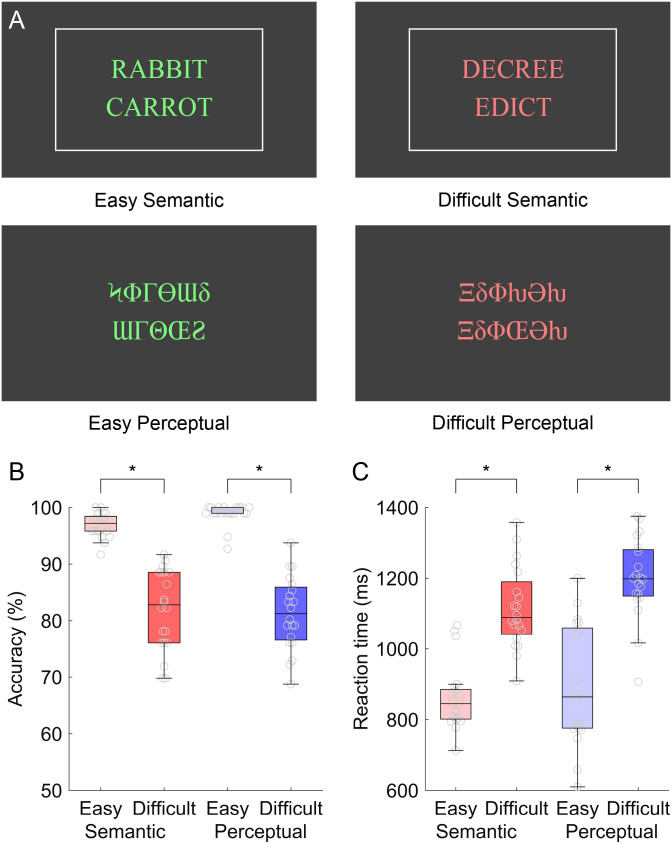
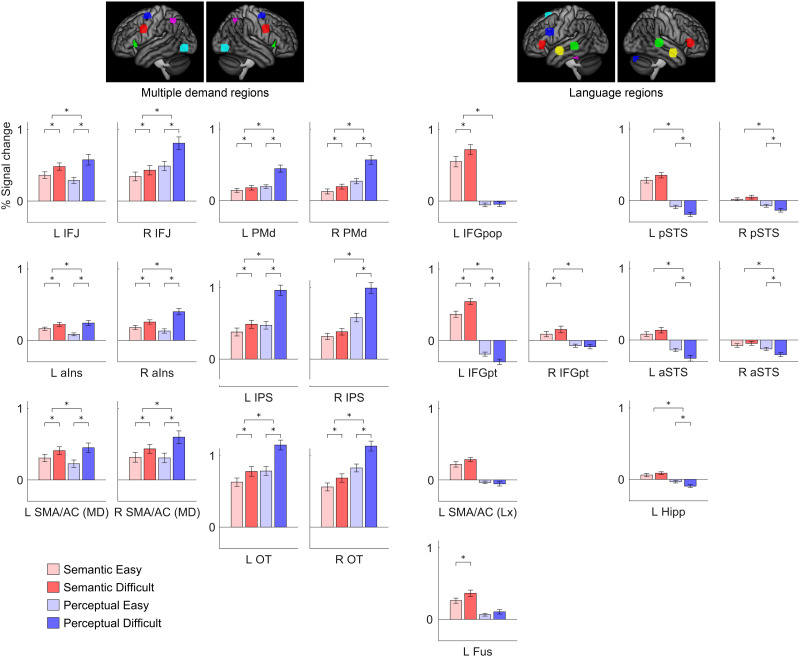
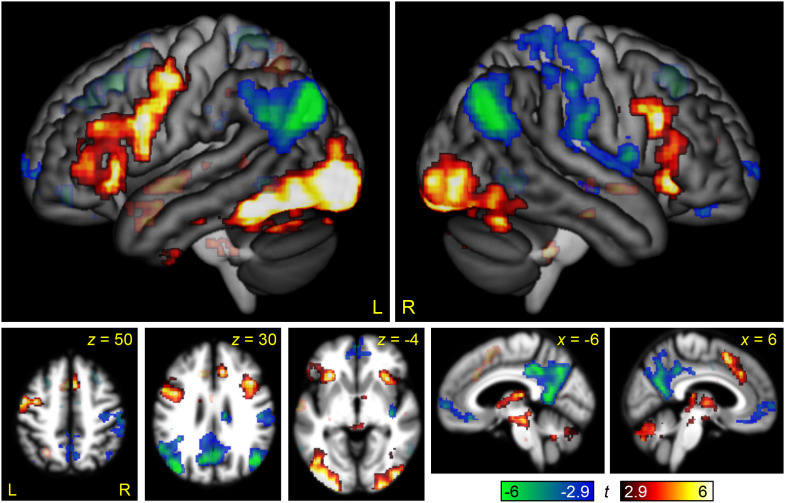
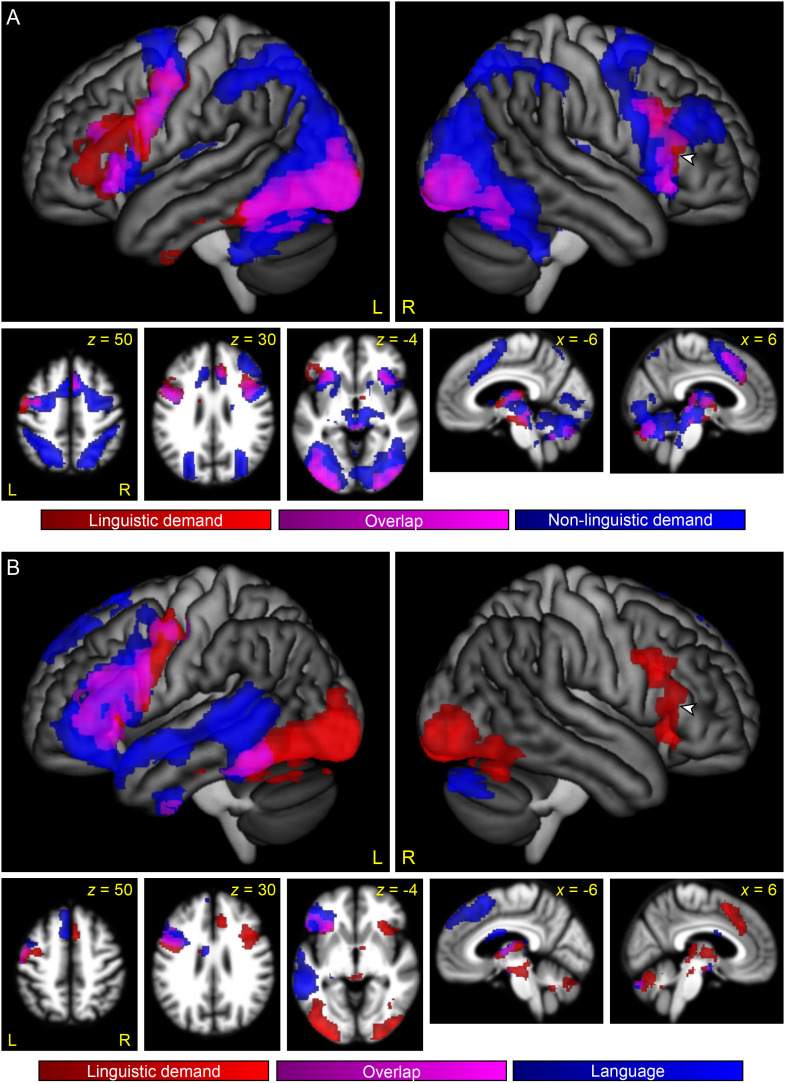
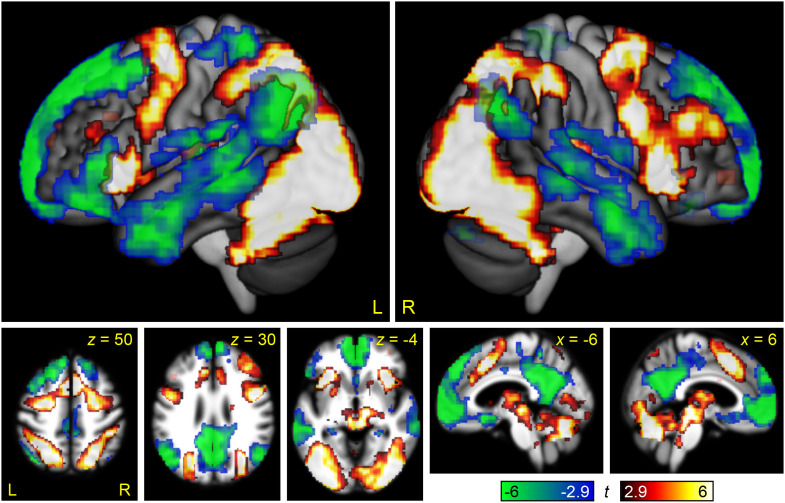
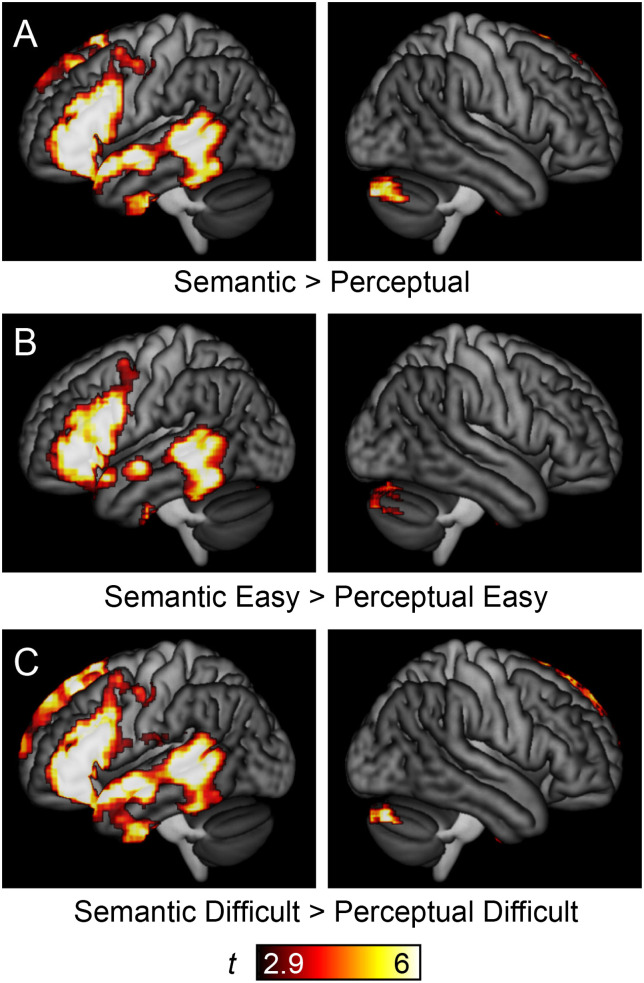
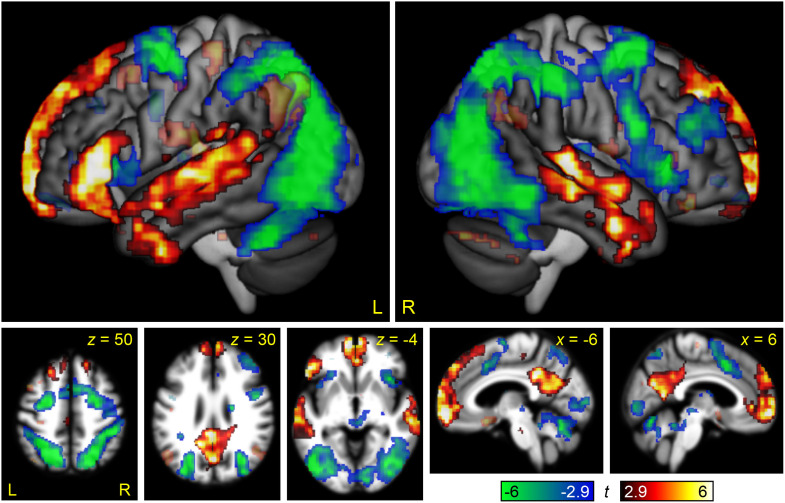
In this study, we investigated how the brain responds to task difficulty in linguistic and non-linguistic contexts. This is important for the interpretation of functional imaging studies of neuroplasticity in post-stroke aphasia, because of the inherent difficulty of matching or controlling task difficulty in studies with neurological populations. Twenty neurologically normal individuals were scanned with fMRI as they performed a linguistic task and a non-linguistic task, each of which had two levels of difficulty. Critically, the tasks were matched across domains (linguistic, non-linguistic) for accuracy and reaction time, such that the differences between the easy and difficult conditions were equivalent across domains. We found that non-linguistic demand modulated the same set of multiple demand (MD) regions that have been identified in many prior studies. In contrast, linguistic demand modulated MD regions to a much lesser extent, especially nodes belonging to the dorsal attention network. Linguistic demand modulated a subset of language regions, with the left inferior frontal gyrus most strongly modulated. The right hemisphere region homotopic to Broca's area was also modulated by linguistic but not non-linguistic demand. When linguistic demand was mapped relative to non-linguistic demand, we also observed domain by difficulty interactions in temporal language regions as well as a widespread bilateral semantic network. In sum, linguistic and non-linguistic demand have strikingly different neural correlates. These findings can be used to better interpret studies of patients recovering from aphasia. Some reported activations in these studies may reflect task performance differences, while others can be more confidently attributed to neuroplasticity.
在本研究中,我们调查了大脑在语言和非语言情境中如何应对任务难度。这对于解释中风后失语症神经可塑性的功能成像研究很重要,因为在对神经学人群的研究中匹配或控制任务难度存在内在困难。20名神经功能正常的个体在执行语言任务和非语言任务时接受了功能磁共振成像扫描,每个任务都有两个难度级别。关键的是,这些任务在准确性和反应时间方面在不同领域(语言、非语言)之间进行了匹配,使得简单和困难条件之间的差异在不同领域是等效的。我们发现,非语言需求调节了许多先前研究中已确定的同一组多重需求(MD)区域。相比之下,语言需求对MD区域的调节程度要小得多,尤其是属于背侧注意网络的节点。语言需求调节了一部分语言区域,其中左下额叶回的调节最为强烈。与布洛卡区同位的右半球区域也受到语言需求而非非语言需求的调节。当将语言需求相对于非语言需求进行映射时,我们还在颞叶语言区域以及广泛的双侧语义网络中观察到了领域与难度的交互作用。总之,语言和非语言需求具有截然不同的神经关联。这些发现可用于更好地解释失语症恢复患者的研究。这些研究中报告的一些激活可能反映了任务表现的差异,而其他一些则可以更有把握地归因于神经可塑性。