Departamento de Ciências Fisiológicas, Laboratório de Neurofisiologia, Instituto de Biologia Roberto Alcantara Gomes, Universidade do Estado do Rio de Janeiro (UERJ), Rio de Janeiro, RJ, Brazil.
Departamento de Ciências, Faculdade de Formação de Professores da Universidade do Estado do Rio de Janeiro, São Gonçalo, RJ, Brazil.
PLoS One. 2021 Sep 29;16(9):e0257986. doi: 10.1371/journal.pone.0257986. eCollection 2021.
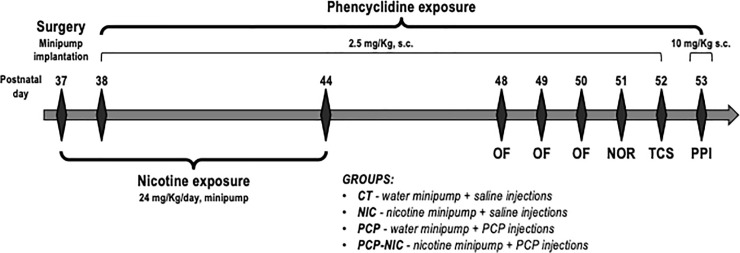
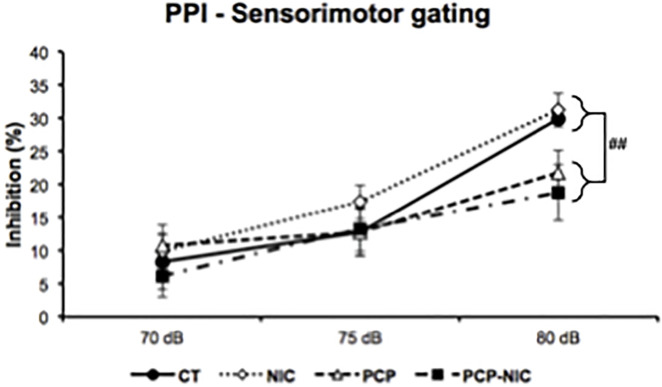
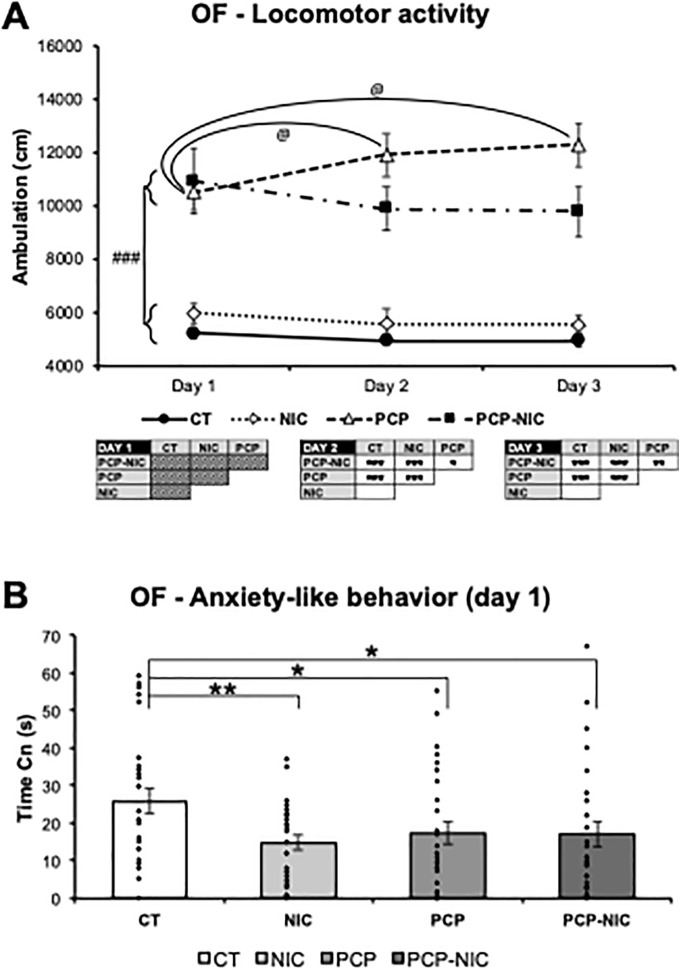
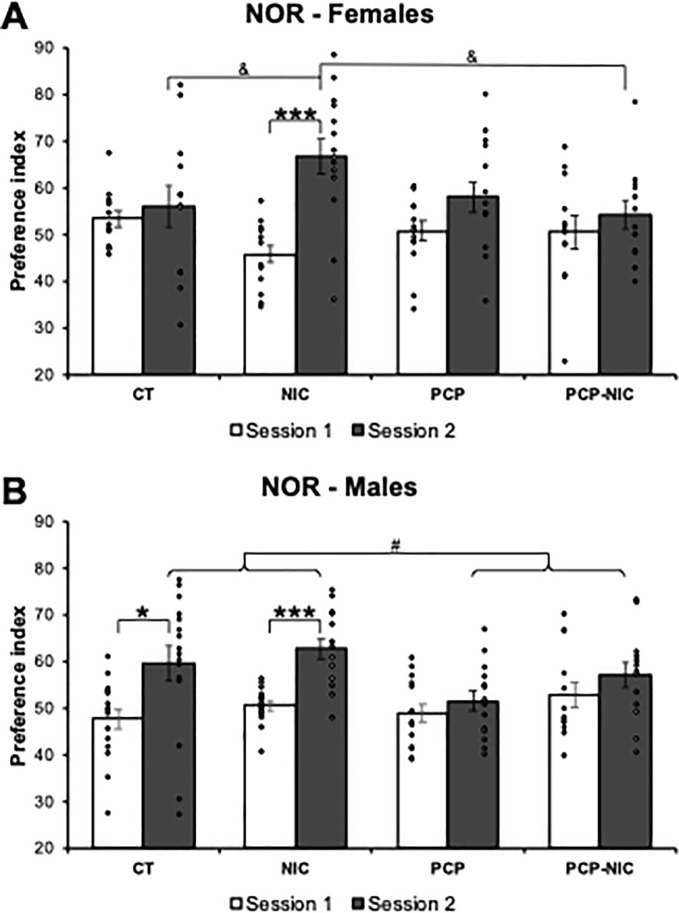
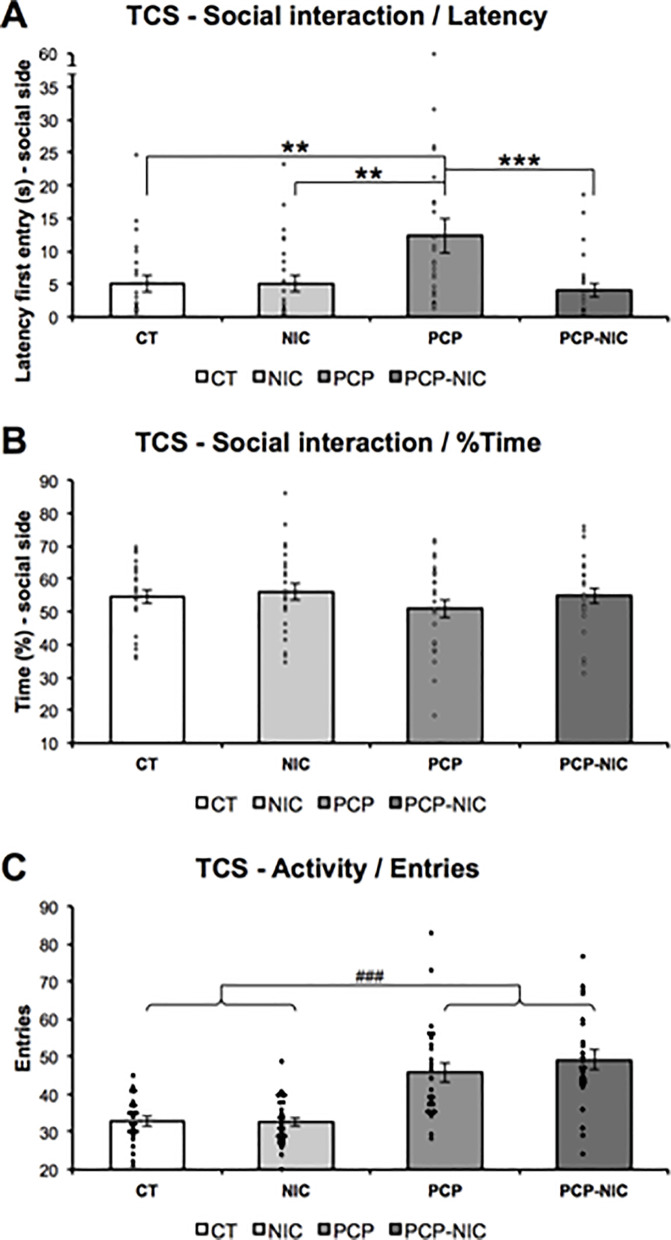
The first symptoms of schizophrenia (SCHZ) are usually observed during adolescence, a developmental period during which first exposure to psychoactive drugs also occurs. These epidemiological findings point to adolescence as critical for nicotine addiction and SCHZ comorbidity, however it is not clear whether exposure to nicotine during this period has a detrimental impact on the development of SCHZ symptoms since there is a lack of studies that investigate the interactions between these conditions during this period of development. To elucidate the impact of a short course of nicotine exposure across the spectrum of SCHZ-like symptoms, we used a phencyclidine-induced adolescent mice model of SCHZ (2.5mg/Kg, s.c., daily, postnatal day (PN) 38-PN52; 10mg/Kg on PN53), combined with an established model of nicotine minipump infusions (24mg/Kg/day, PN37-44). Behavioral assessment began 4 days after the end of nicotine exposure (PN48) using the following tests: open field to assess the hyperlocomotion phenotype; novel object recognition, a declarative memory task; three-chamber sociability, to verify social interaction and prepulse inhibition, a measure of sensorimotor gating. Phencyclidine exposure evoked deficits in all analyzed behaviors. Nicotine history reduced the magnitude of phencyclidine-evoked hyperlocomotion and impeded the development of locomotor sensitization. It also mitigated the deficient sociability elicited by phencyclidine. In contrast, memory and sensorimotor gating deficits evoked by phencyclidine were neither improved nor worsened by nicotine history. In conclusion, our results show for the first time that nicotine history, restricted to a short period during adolescence, does not worsen SCHZ-like symptoms evoked by a phencyclidine-induced mice model.
精神分裂症(SCHZ)的最初症状通常在青春期出现,这是一个发育时期,也是首次接触精神活性药物的时期。这些流行病学发现表明,青春期对于尼古丁成瘾和 SCHZ 共病至关重要,但目前尚不清楚在此期间接触尼古丁是否会对 SCHZ 症状的发展产生不利影响,因为缺乏研究调查在此期间这些情况之间的相互作用。为了阐明在 SCHZ 样症状范围内短时间接触尼古丁的影响,我们使用了一种苯环利定诱导的青春期 SCHZ 小鼠模型(2.5mg/Kg,皮下注射,每天一次,出生后第 38 天至第 52 天;第 53 天 10mg/Kg),结合了已建立的尼古丁微泵输注模型(24mg/Kg/天,第 37 天至第 44 天)。行为评估在尼古丁暴露结束后 4 天(第 48 天)开始,使用以下测试:旷场测试评估过度活跃表型;新物体识别,陈述性记忆任务;三箱社交性,以验证社交互动和预脉冲抑制,一种感觉运动门控的测量。苯环利定暴露引起了所有分析行为的缺陷。尼古丁史减少了苯环利定引起的过度活跃的幅度,并阻碍了运动敏化的发展。它还减轻了苯环利定引起的社交能力缺陷。相比之下,苯环利定引起的记忆和感觉运动门控缺陷既没有因尼古丁史而改善也没有恶化。总之,我们的结果首次表明,仅限于青春期短时间内的尼古丁史不会加重苯环利定诱导的小鼠模型引起的 SCHZ 样症状。