Department of Oncology, The First Affiliated Hospital of USTC, Division of Molecular Medicine, Hefei National Laboratory for Physical Sciences at Microscale, School of Basic Medical Sciences, Division of Life Sciences and Medicine, University of Science and Technology of China, 230021 Hefei, Anhui, China; CAS Center for Excellence in Molecular Cell Sciences, the CAS Key Laboratory of Innate Immunity and Chronic Disease, University of Science and Technology of China, 230027 Hefei, Anhui, China.
Department of Oncology, The First Affiliated Hospital of USTC, Division of Molecular Medicine, Hefei National Laboratory for Physical Sciences at Microscale, School of Basic Medical Sciences, Division of Life Sciences and Medicine, University of Science and Technology of China, 230021 Hefei, Anhui, China; School of Data Science, University of Science and Technology of China, 230026 Hefei, Anhui, China.
Cell Rep. 2021 Oct 5;37(1):109793. doi: 10.1016/j.celrep.2021.109793. Epub 2021 Sep 17.
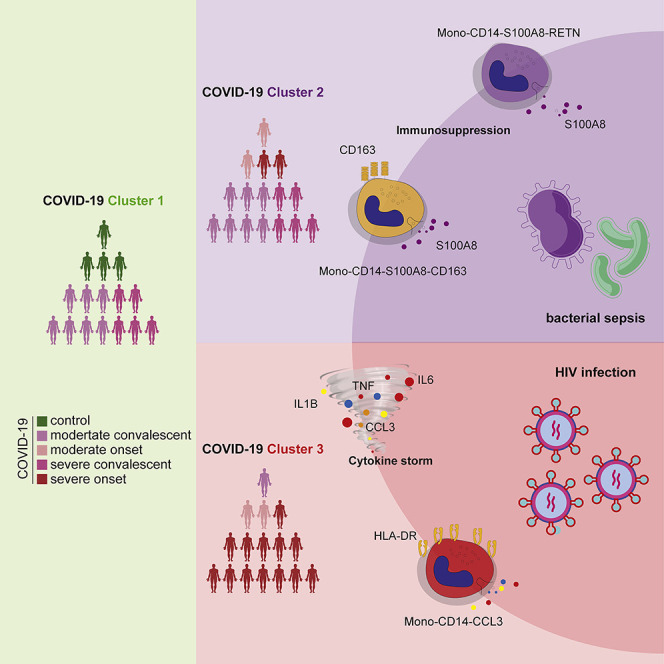
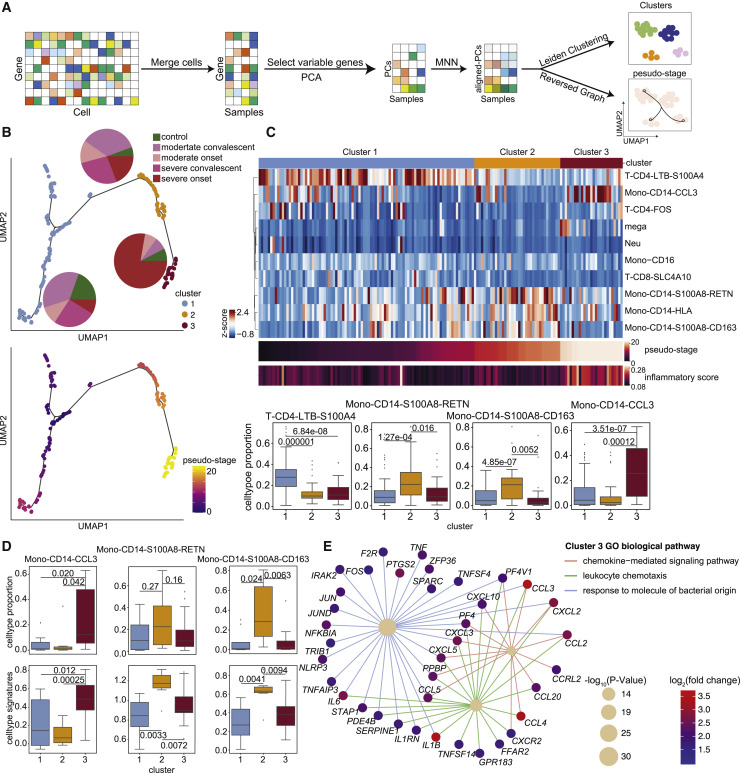
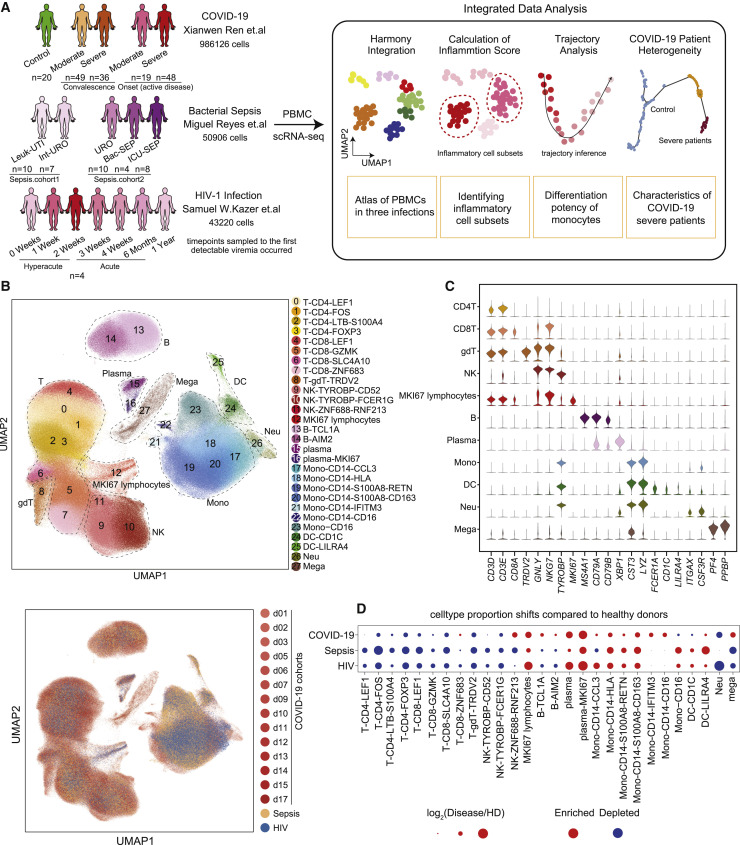
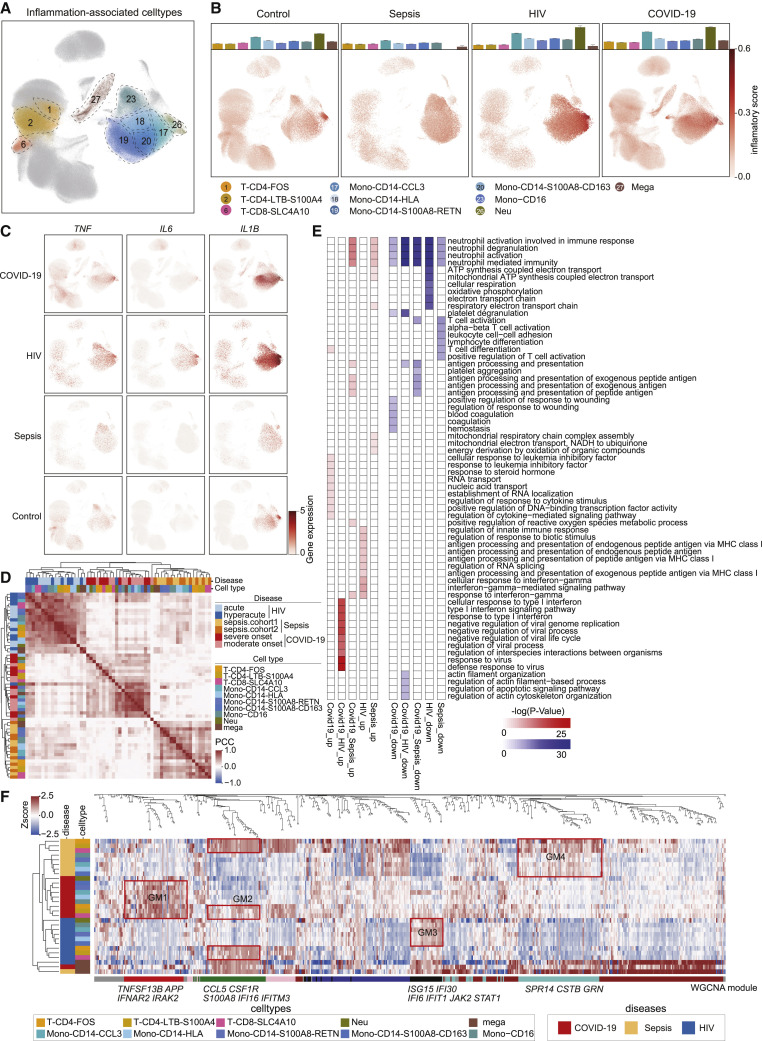
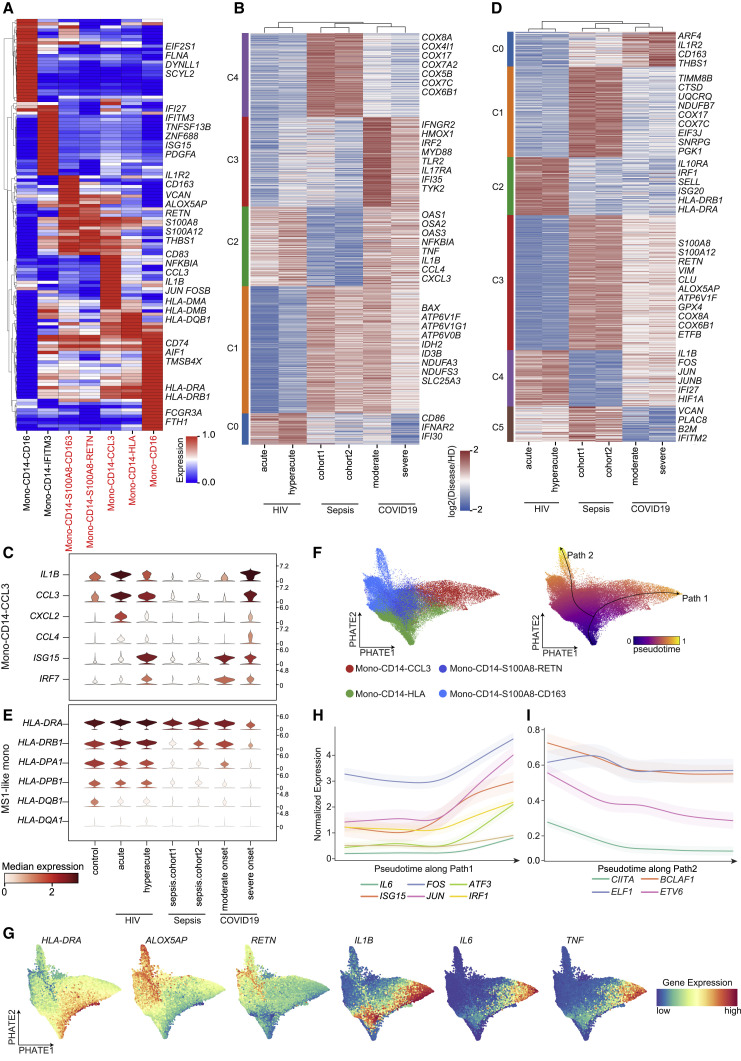
The mortality risk of coronavirus disease 2019 (COVID-19) patients has been linked to the cytokine storm caused by severe acute respiratory syndrome coronavirus 2 (SARS-CoV-2). Understanding the inflammatory responses shared between COVID-19 and other infectious diseases that feature cytokine storms may therefore help in developing improved therapeutic strategies. Here, we use integrative analysis of single-cell transcriptomes to characterize the inflammatory signatures of peripheral blood mononuclear cells from patients with COVID-19, sepsis, and HIV infection. We identify ten hyperinflammatory cell subtypes in which monocytes are the main contributors to the transcriptional differences in these infections. Monocytes from COVID-19 patients share hyperinflammatory signatures with HIV infection and immunosuppressive signatures with sepsis. Finally, we construct a "three-stage" model of heterogeneity among COVID-19 patients, related to the hyperinflammatory and immunosuppressive signatures in monocytes. Our study thus reveals cellular and molecular insights about inflammatory responses to SARS-CoV-2 infection and provides therapeutic guidance to improve treatments for subsets of COVID-19 patients.
新型冠状病毒病 2019(COVID-19)患者的死亡率与严重急性呼吸综合征冠状病毒 2(SARS-CoV-2)引起的细胞因子风暴有关。因此,了解 COVID-19 与其他具有细胞因子风暴特征的传染病之间的炎症反应共享情况,可能有助于开发改进的治疗策略。在这里,我们使用单细胞转录组的综合分析来描述 COVID-19、败血症和 HIV 感染患者外周血单核细胞的炎症特征。我们确定了十种高炎症细胞亚型,其中单核细胞是这些感染中转录差异的主要贡献者。COVID-19 患者的单核细胞与 HIV 感染具有高炎症特征,与败血症具有免疫抑制特征。最后,我们构建了 COVID-19 患者异质性的“三阶段”模型,与单核细胞中的高炎症和免疫抑制特征有关。因此,我们的研究揭示了 SARS-CoV-2 感染炎症反应的细胞和分子见解,并为改善 COVID-19 患者亚群的治疗提供了治疗指导。