Saiful Islam Md, Paul Anamika, Talukder Mithun, Roy Krishna, Abdus Sobur Md, Ievy Samina, Mehedi Hasan Nayeem Md, Rahman Saifur, Nazmul Hussain Nazir K H M, Tofazzal Hossain Muhammad, Tanvir Rahman Md
Department of Microbiology and Hygiene, Faculty of Veterinary Science, Bangladesh Agricultural University, Mymensingh 2202, Bangladesh.
Saudi J Biol Sci. 2021 Oct;28(10):5963-5970. doi: 10.1016/j.sjbs.2021.06.053. Epub 2021 Jun 24.
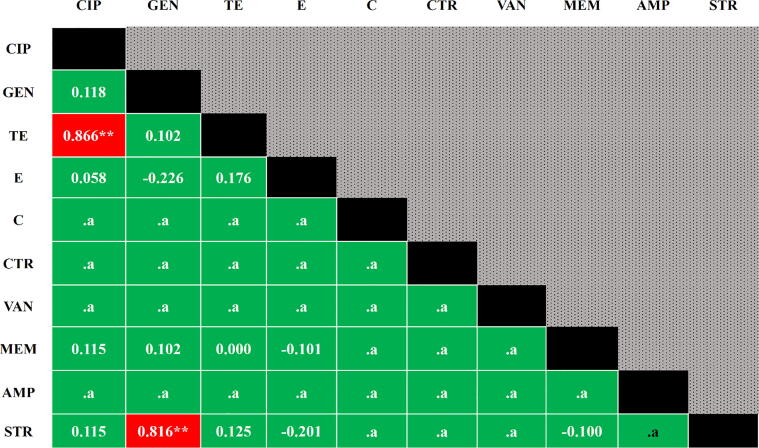
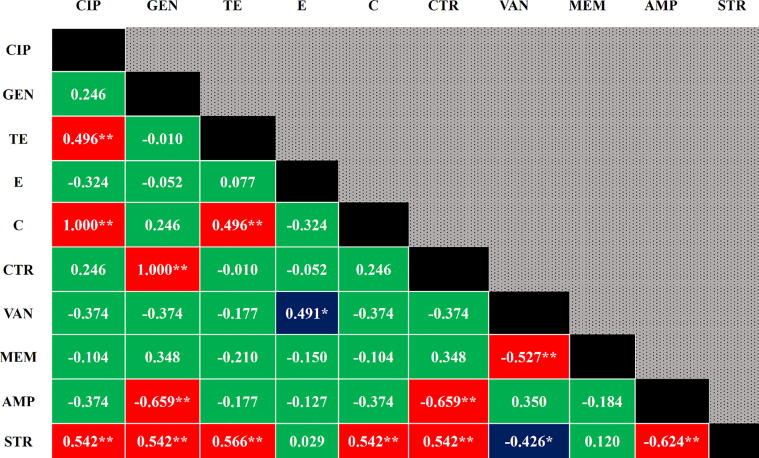
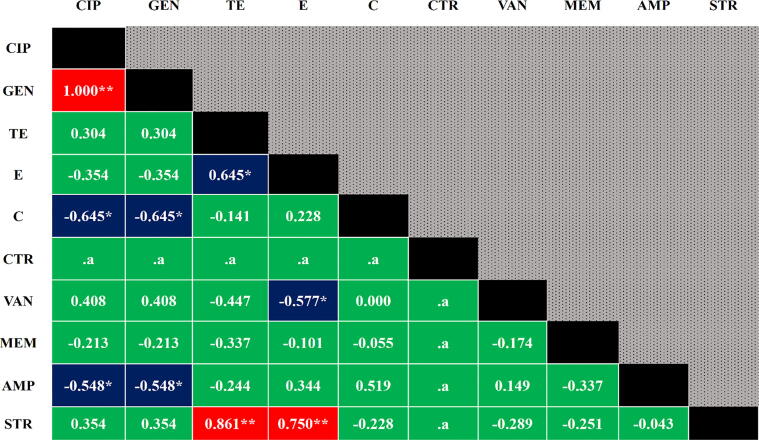
Antimicrobial resistance (AMR) is a major health crisis globally. Migratory birds could be a potential source for antibiotic resistant (ABR) bacteria. Not much is known about their role in the transmission of ABR in Bangladesh. In this study, a total of 66 freshly dropped fecal materials of migratory birds were analyzed. Bacterial isolation and identification were based on cultural properties, biochemical tests, and polymerase chain reaction (PCR). The disk diffusion method was employed to evaluate antibiogram profiles. By PCR, out of 66 samples, the detection rate of spp. (60.61%; 95% confidence interval: 48.55-71.50%) was found significantly higher than spp. (21.21%; 95% CI: 13.08-32.51%) and spp. (39.40%; 95% CI: 28.50-51.45%). isolates were frequently found resistant (100-40%) to ampicillin, streptomycin, meropenem, erythromycin, and gentamicin; isolates were frequently resistant (72-43%) to chloramphenicol, tetracycline, ampicillin, streptomycin, and erythromycin; and spp. isolates were frequently resistant (77-31%) to vancomycin, ampicillin, erythromycin, tetracycline, and streptomycin. In addition, 60% (95% CI: 44.60-73.65%) spp., 85.71% (95% CI: 60.06-97.46%) spp., and 76.92% (95% CI: 57.95-88.97%) spp. isolates were multi-drug resistant (MDR) in nature. Three isolates (one from each bacterium) were found resistant against six classes of antibiotics. The bivariate analysis revealed strong associations (both positive and negative) between several antibiotic pairs which were resistant to isolated organisms. To the best of our knowledge, this is the first study in detecting MDR spp., spp., and spp. from migratory birds travelling to Bangladesh. Frequent detection of MDR bacteria from migratory birds travelling to Bangladesh suggests that these birds have the potential to carry and spread ABR bacteria and could implicate potential risks to public health. We recommend that these birds should be kept under an AMR surveillance program to minimize the potential risk of contamination of the environment with ABR as well as to reduce their hazardous impacts on health.
抗菌药物耐药性(AMR)是全球主要的健康危机。候鸟可能是抗生素耐药(ABR)细菌的一个潜在来源。关于它们在孟加拉国ABR传播中的作用,人们了解得并不多。在本研究中,共分析了66份候鸟新鲜粪便样本。细菌的分离和鉴定基于培养特性、生化试验和聚合酶链反应(PCR)。采用纸片扩散法评估抗菌谱。通过PCR检测,在66份样本中,某菌属的检出率(60.6%;95%置信区间:48.55 - 71.50%)显著高于另一菌属(21.21%;95%置信区间:13.08 - 32.51%)和又一菌属(39.40%;95%置信区间:28.50 - 51.45%)。某菌属分离株对氨苄西林、链霉素、美罗培南、红霉素和庆大霉素耐药率较高(100 - 40%);另一菌属分离株对氯霉素、四环素、氨苄西林、链霉素和红霉素耐药率较高(72 - 43%);又一菌属分离株对万古霉素、氨苄西林、红霉素、四环素和链霉素耐药率较高(77 - 31%)。此外,60%(95%置信区间:44.60 - 73.65%)的某菌属、85.71%(95%置信区间:60.06 - 97.46%)的另一菌属和76.92%(95%置信区间:57.95 - 88.97%)的又一菌属分离株具有多重耐药(MDR)特性。发现三株分离株(每种细菌各一株)对六类抗生素耐药。双变量分析显示,对分离出的生物体耐药的几种抗生素对之间存在强关联(包括正相关和负相关)。据我们所知,这是首次在前往孟加拉国的候鸟中检测到MDR某菌属、另一菌属和又一菌属的研究。在前往孟加拉国的候鸟中频繁检测到MDR细菌表明,这些鸟类有可能携带和传播ABR细菌,并可能对公众健康构成潜在风险。我们建议应对这些鸟类实施AMR监测计划,以尽量减少ABR对环境造成污染的潜在风险,并降低其对健康的有害影响。