Department of Biochemistry, Government College University, Faisalabad 38000, Pakistan.
Department of Health and Biological Sciences, Abasyn University, Peshawar, Pakistan.
Biomed Res Int. 2021 Sep 17;2021:5561129. doi: 10.1155/2021/5561129. eCollection 2021.
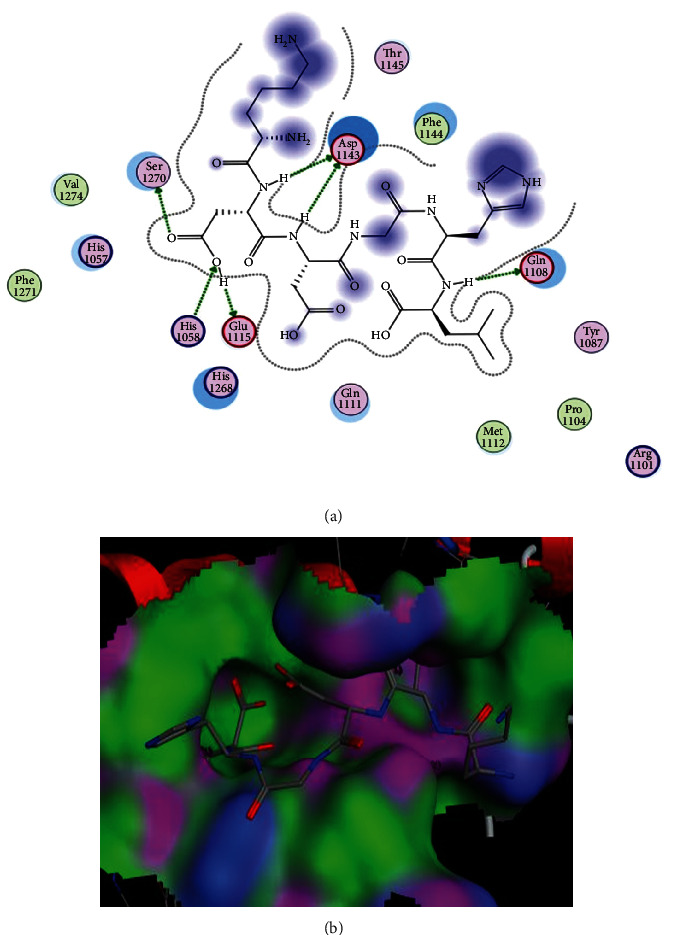
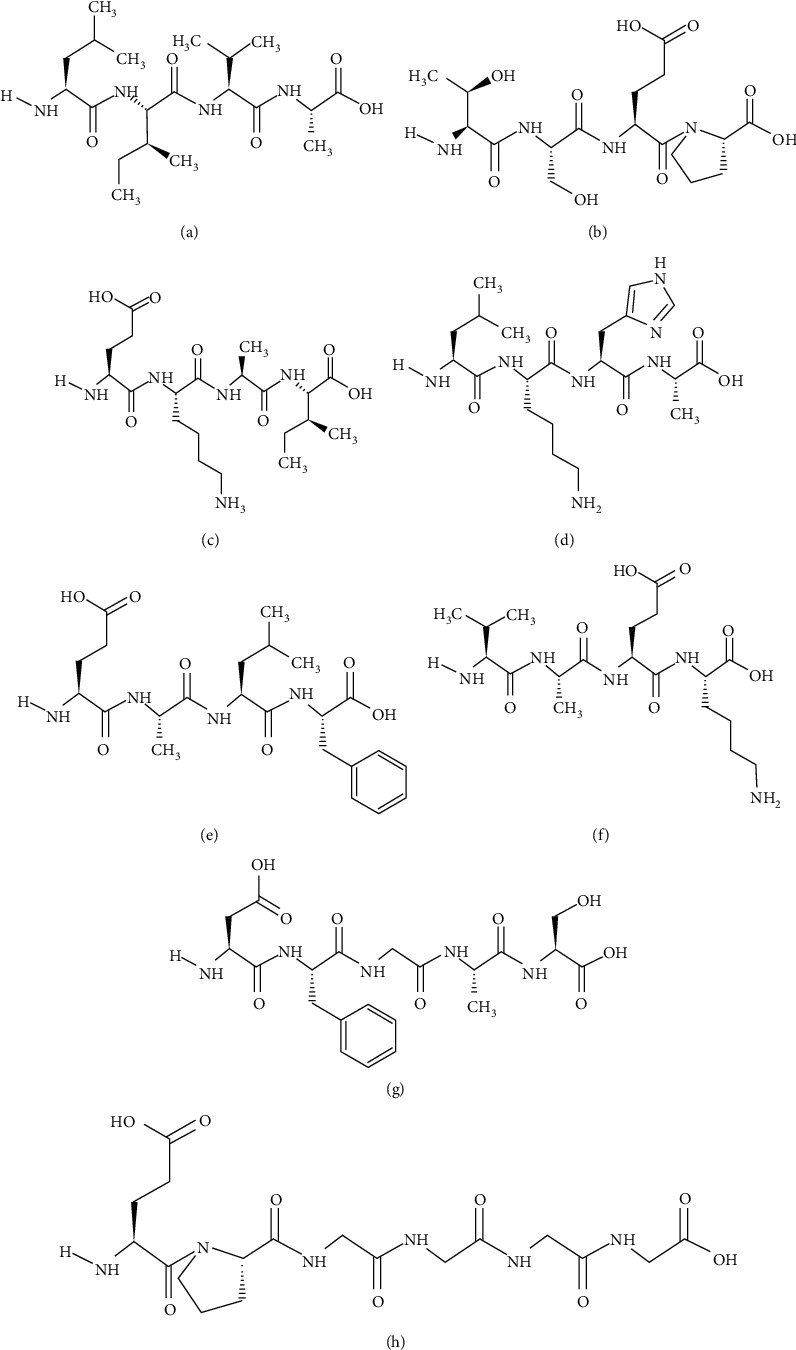
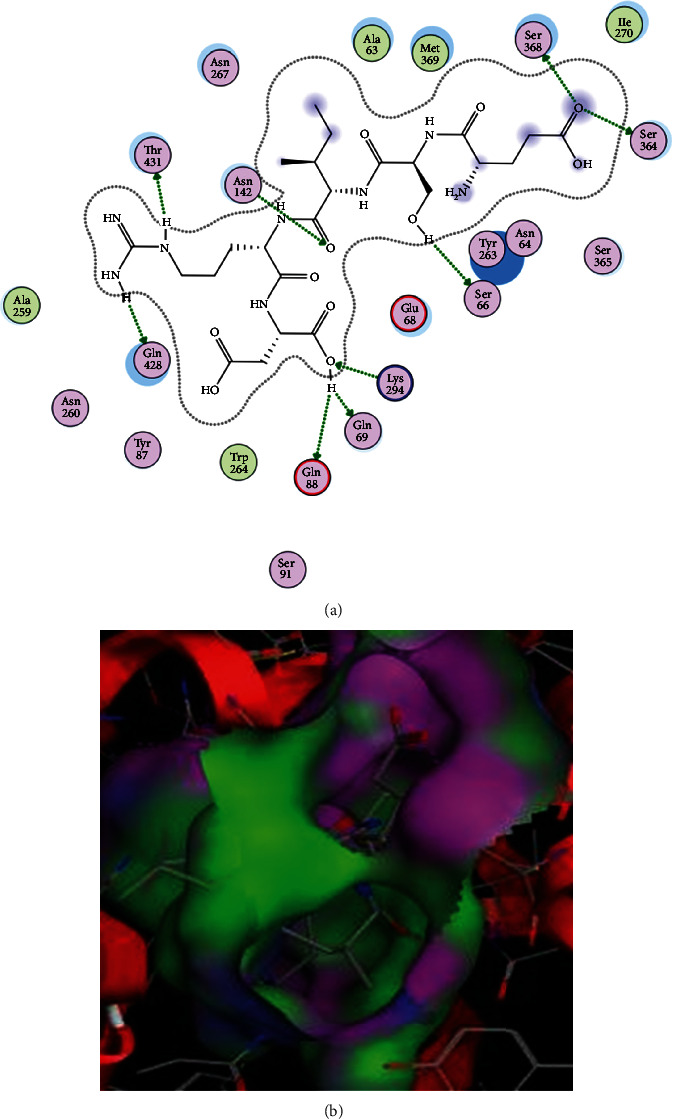
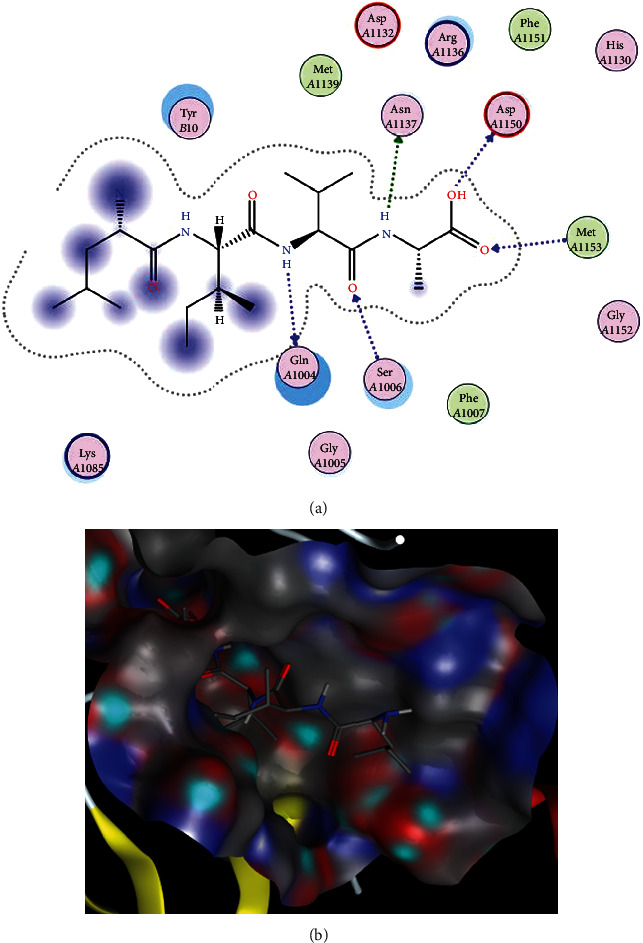
Diabetes mellitus termed as metabolic disorder is a collection of interlinked diseases and mainly body's inability to manage glucose level which leads to cardiovascular diseases, renal failure, neurological disorders, and many others. The drugs contemporarily used for diabetes have many inevitable side effects, and many of them have become less responsive to this multifactorial disorder. commonly known as bitter gourd has many bioactive compounds with antidiabetic properties. The current study was designed to use computational methods to discover the best antidiabetic peptides devised from hypoglycemic polypeptide-P of . The binding affinity and interaction patterns of peptides were evaluated against four receptor proteins (i.e., as agonists of insulin receptor and inhibitors of sodium-glucose cotransporter 1, dipeptidyl peptidase-IV, and glucose transporter 2) using molecular docking approach. A total of thirty-seven peptides were docked against these receptors. Out of which, top five peptides against each receptor were shortlisted based on their S-scores and binding affinities. Finally, the eight best ligands (i.e., LIVA, TSEP, EKAI, LKHA, EALF, VAEK, DFGAS, and EPGGGG) were selected as these ligands strictly followed Lipinski's rule of five and exhibited good ADMET profiling. One peptide EPGGGG showed activity towards insulin and SGLT1 receptor proteins. The top complex for both these targets was subjected to 50 ns of molecular dynamics simulations and MM-GBSA binding energy test that concluded both complexes as highly stable, and the intermolecular interactions were dominated by van der Waals and electrostatic energies. Overall, the selected ligands strongly fulfilled the drug-like evaluation criterion and proved to have good antidiabetic properties.
糖尿病被称为代谢紊乱,是一组相互关联的疾病,主要是由于身体无法控制血糖水平,导致心血管疾病、肾衰竭、神经紊乱等多种疾病。目前用于治疗糖尿病的药物有许多不可避免的副作用,而且许多药物对这种多因素疾病的反应性降低。苦瓜通常被称为苦瓜,它含有许多具有降血糖作用的生物活性化合物。本研究旨在使用计算方法从 低血糖多肽-P 中发现最佳的抗糖尿病肽。使用分子对接方法评估肽对四个受体蛋白(即胰岛素受体激动剂和钠-葡萄糖共转运蛋白 1、二肽基肽酶-IV 和葡萄糖转运蛋白 2 的抑制剂)的结合亲和力和相互作用模式。总共 37 个肽与这些受体对接。其中,根据 S 评分和结合亲和力,从每个受体中选择前五名肽。最后,选择了 8 个最佳配体(即 LIVA、TSEP、EKAI、LKHA、EALF、VAEK、DFGAS 和 EPGGGG),因为这些配体严格遵循了 Lipinski 的五规则,并表现出良好的 ADMET 特性。一种肽 EPGGGG 对胰岛素和 SGLT1 受体蛋白表现出活性。这两个靶标的顶级复合物都进行了 50 ns 的分子动力学模拟和 MM-GBSA 结合能测试,得出这两个复合物都是高度稳定的,分子间相互作用主要由范德华力和静电力控制。总体而言,所选配体强烈满足药物样评价标准,并证明具有良好的抗糖尿病特性。