Bernal-Chico Ana, Manterola Andrea, Cipriani Raffaela, Katona István, Matute Carlos, Mato Susana
Department of Neurosciences, School of Medicine, University of the Basque Country UPV/EHU, 48940, Leioa, Spain.
Achucarro Basque Center for Neuroscience, 48940, Leioa, Spain.
Brain Behav Immun Health. 2020 Mar 28;4:100062. doi: 10.1016/j.bbih.2020.100062. eCollection 2020 Apr.
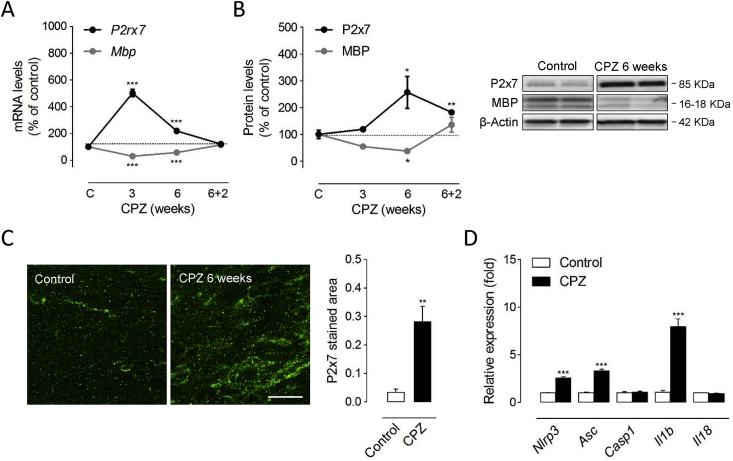
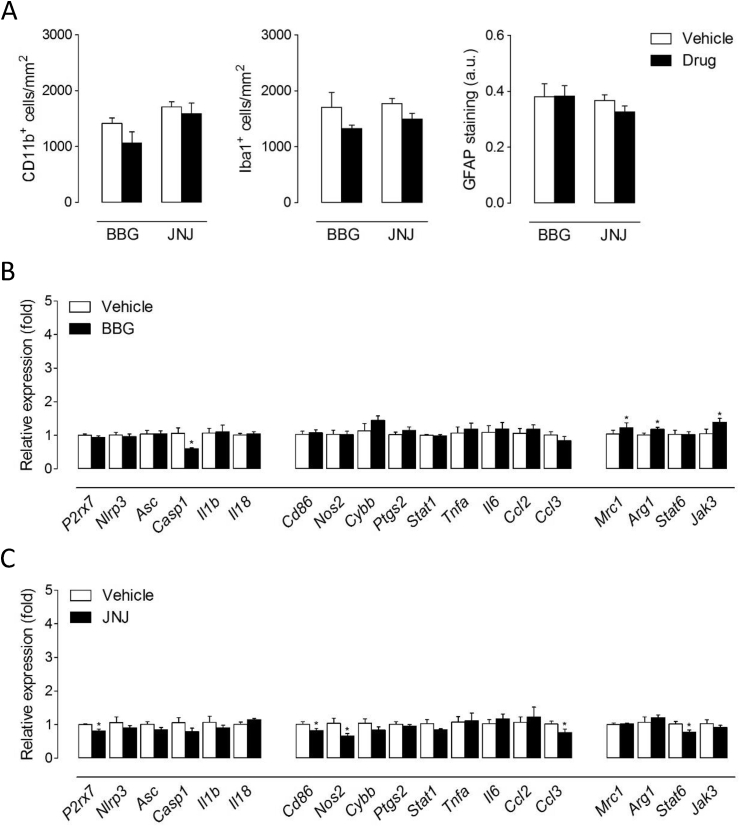
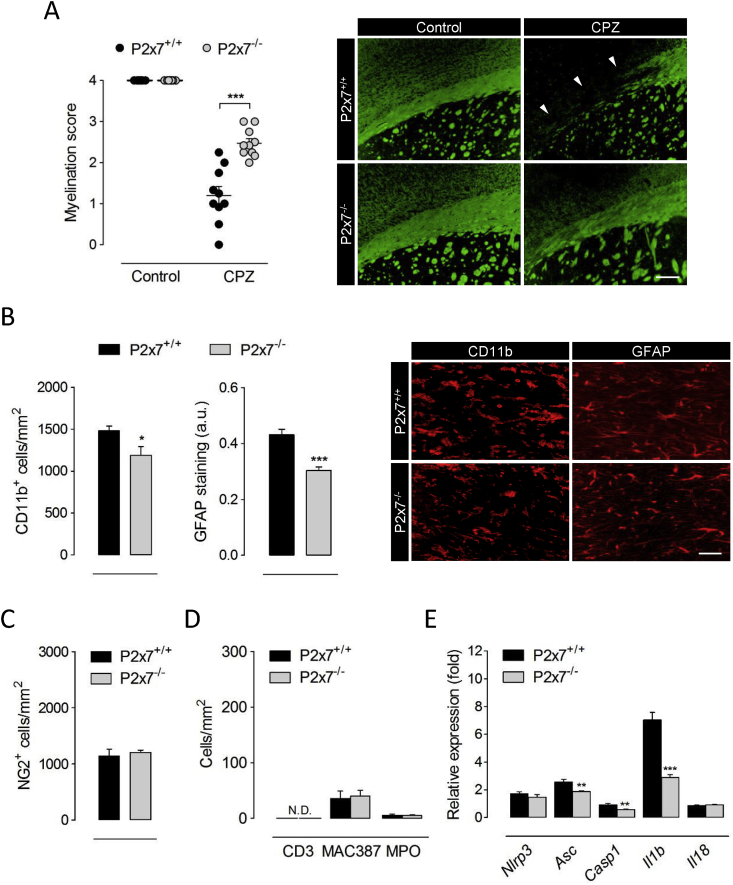
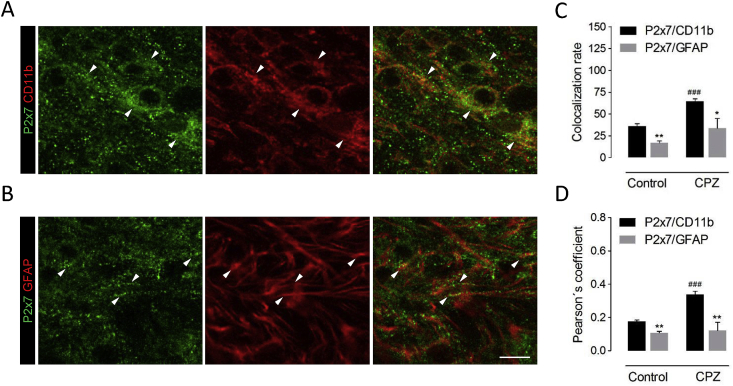
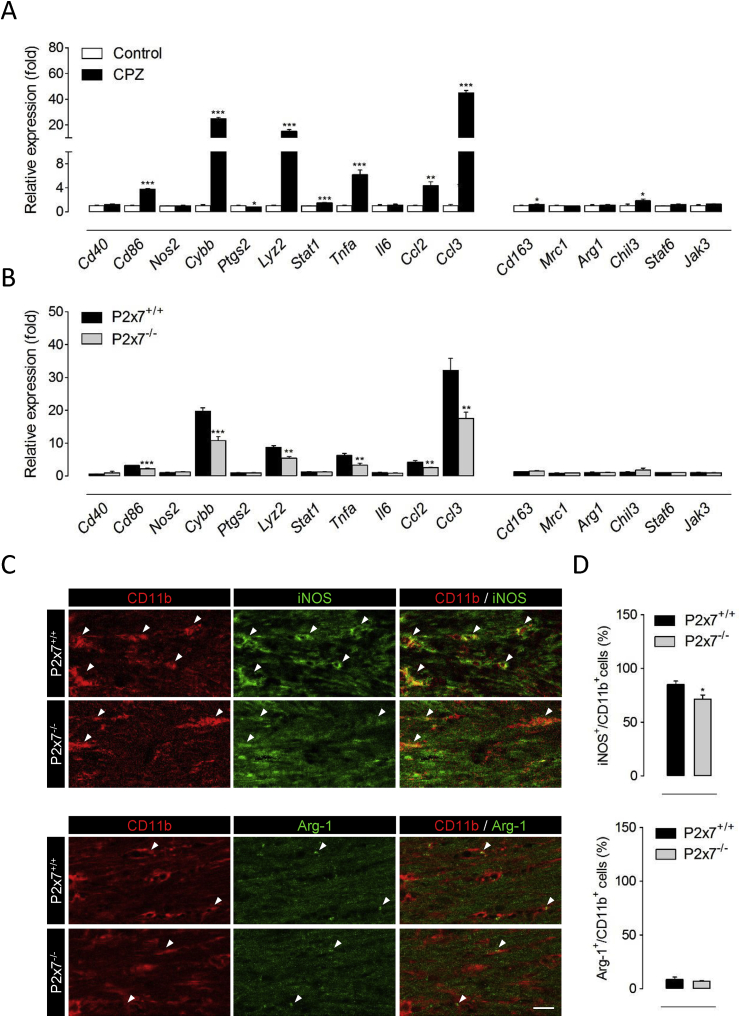
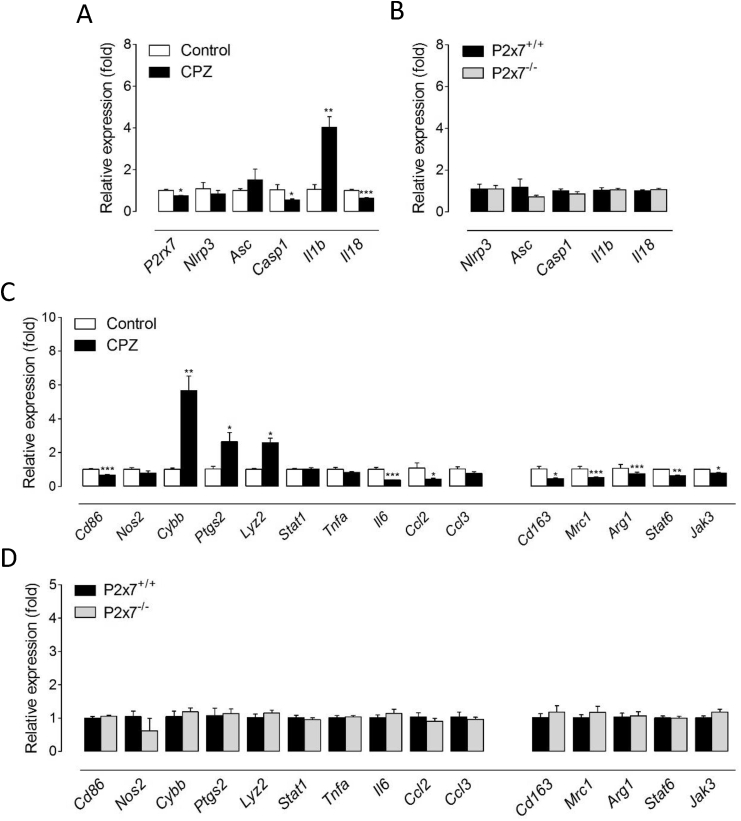
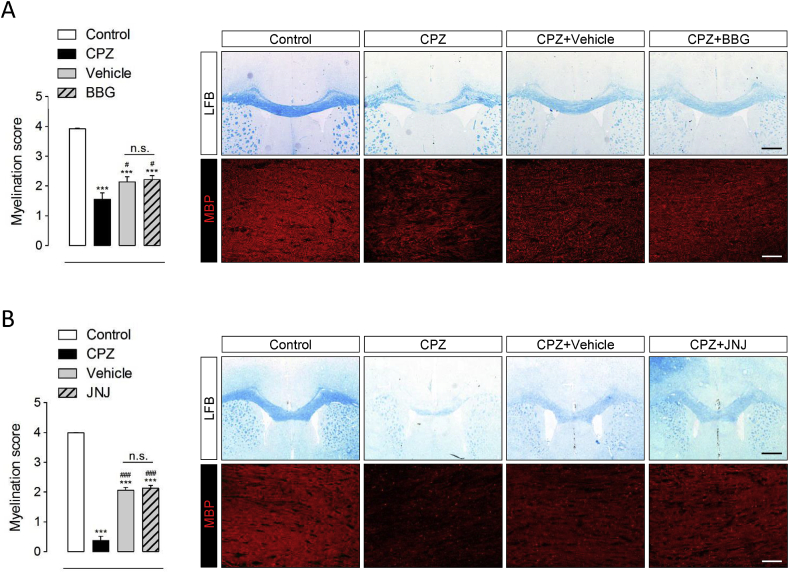
The contribution of P2x7 receptors to multiple sclerosis remains controversial, as both detrimental and beneficial effects resulting from P2x7 receptor loss-of-function have been reported in autoimmune models of the disease. Here we investigated the relevance of P2x7 receptors to de- and remyelination in the cuprizone model of T cell-independent myelin degeneration. Primary demyelination was induced by administration of 0.3% cuprizone in the diet for 3 and 6 weeks. Remyelination was studied in mice treated with the P2x7 receptor antagonists Brilliant Blue G (BBG, 50 mg/Kg) and JNJ-47965567 (30 mg/Kg) for 2 weeks following 6 weeks of cuprizone challenge. Toxic demyelination induced a robust up-regulation of P2x7 receptors mainly localized on microglial cells. In parallel, we measured increased expression of several NLPR3-inflammasome and M1 polarization-associated genes in demyelinated tissue. Notably, mice deficient in P2x7 receptors exhibited attenuated demyelination, reduced presence of M1 microglia and reactive astrocytes as well as blunted expression of pro-inflammatory genes in response to cuprizone feeding. Nevertheless, blockade of P2x7 receptors during the remyelination phase did not improve the extent of myelin recovery nor attenuated glial reaction and inflammation in damaged white matter. These findings suggest that P2x7 receptors drive T cell-independent inflammation and demyelination, but are not relevant to regenerative responses involved in myelin repair.
P2X7受体在多发性硬化症中的作用仍存在争议,因为在该疾病的自身免疫模型中,已报道了P2X7受体功能丧失所产生的有害和有益影响。在此,我们研究了P2X7受体在铜螯合剂诱导的非T细胞依赖性髓鞘变性模型中对脱髓鞘和髓鞘再生的相关性。通过在饮食中给予0.3%的铜螯合剂3周和6周来诱导原发性脱髓鞘。在铜螯合剂攻击6周后,用P2X7受体拮抗剂亮蓝G(BBG,50mg/Kg)和JNJ-47965567(30mg/Kg)处理小鼠2周,研究髓鞘再生情况。毒性脱髓鞘导致主要定位于小胶质细胞上的P2X7受体强烈上调。同时,我们测量了脱髓鞘组织中几种NLRP3炎性小体和M1极化相关基因表达的增加。值得注意的是,缺乏P2X7受体的小鼠表现出脱髓鞘减弱、M1小胶质细胞和反应性星形胶质细胞的存在减少,以及对铜螯合剂喂养的促炎基因表达减弱。然而,在髓鞘再生阶段阻断P2X7受体并没有改善髓鞘恢复的程度,也没有减轻受损白质中的胶质反应和炎症。这些发现表明,P2X7受体驱动非T细胞依赖性炎症和脱髓鞘,但与髓鞘修复中的再生反应无关。