Criado-Marrero Marangelie, Smith Taylor M, Gould Lauren A, Kim Sojeong, Penny Hannah J, Sun Zheying, Gulick Danielle, Dickey Chad A, Blair Laura J
Department of Molecular Medicine, Morsani College of Medicine, USF Health Byrd Alzheimer's Institute, University of South Florida, Tampa, FL, 33613, USA.
Research Service, James A Haley Veterans Hospital, 13000 Bruce B Downs Blvd, Tampa, FL, 33612, USA.
Brain Behav Immun Health. 2020 Sep 17;9:100143. doi: 10.1016/j.bbih.2020.100143. eCollection 2020 Dec.
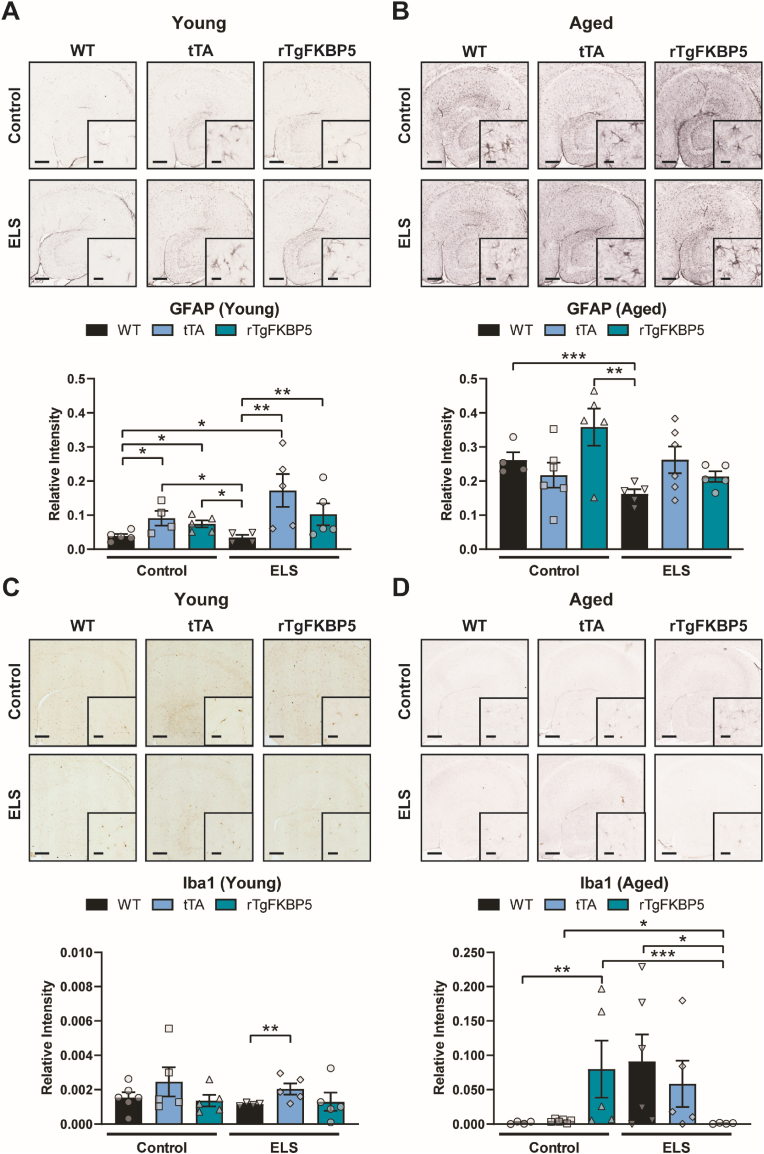
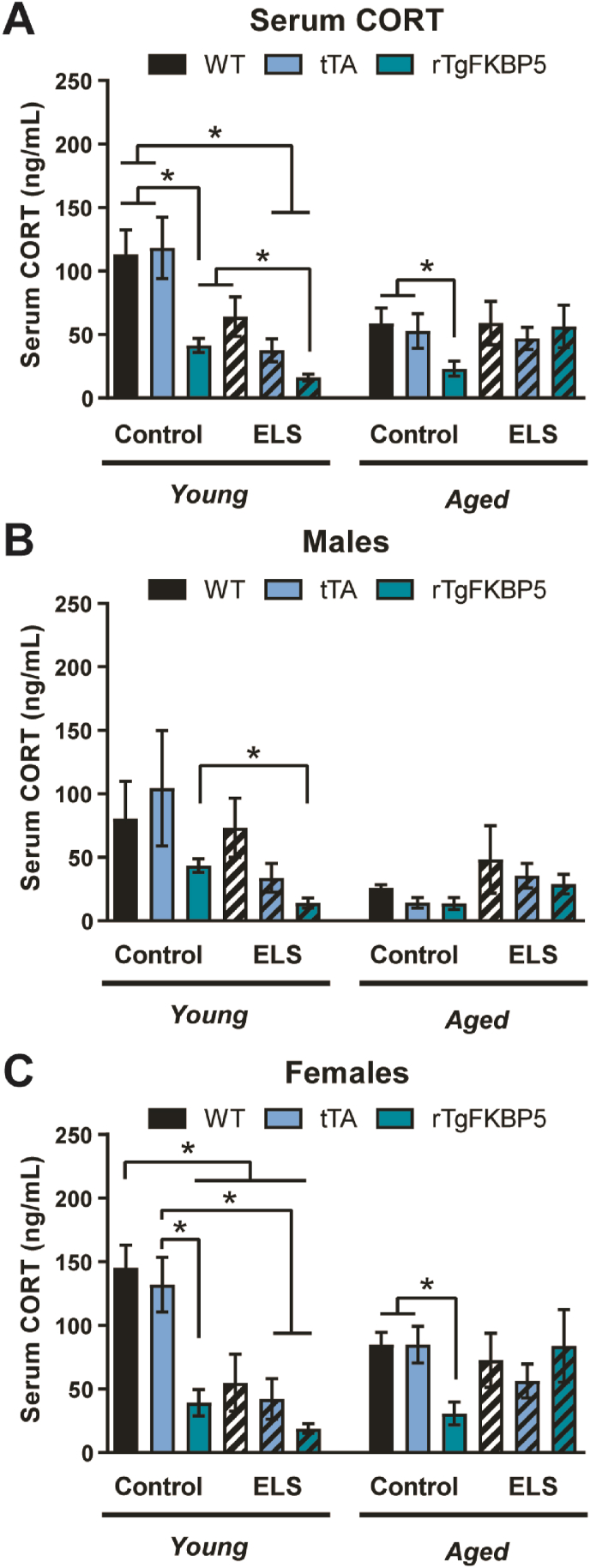
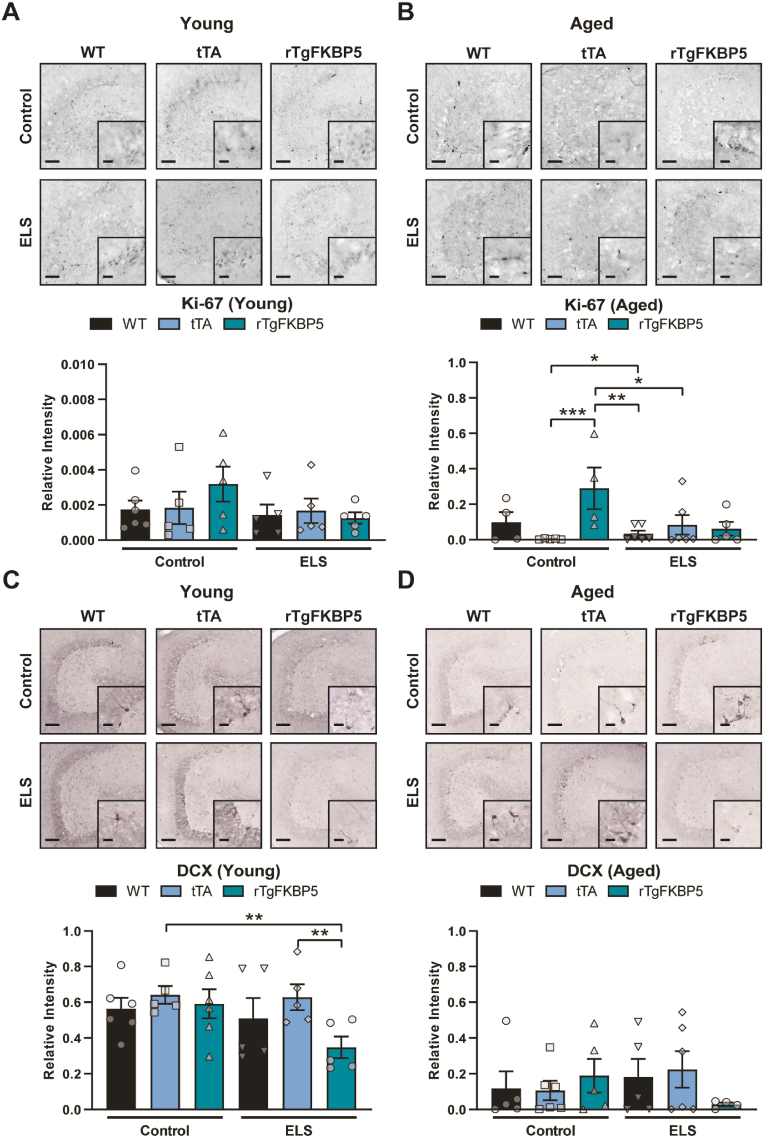
Early life stress (ELS) adversely affects the brain and is commonly associated with the etiology of mental health disorders, like depression. In addition to the mood-related symptoms, patients with depression show dysregulation of the hypothalamic-pituitary-adrenal (HPA) axis, increased peripheral inflammation, and structural brain alterations. Although the underlying causes are unknown, polymorphisms in the FK506-binding protein 5 (FKBP5) gene, a regulator of glucocorticoid receptor (GR) activity, interact with childhood adversities to increase vulnerability to depressive disorders. We hypothesized that high FKBP5 protein levels combined with early life stress (ELS) would alter the HPA axis and brain, promoting depressive-like behaviors. To test this, we exposed males and females of a mouse model overexpressing FKBP5 in the brain (rTgFKBP5 mice), or littermate controls, to maternal separation for 14 days after birth. Then, we evaluated neuroendocrine, behavioral, and brain changes in young adult and aged mice. We observed lower basal corticosterone (CORT) levels in rTgFKBP5 mice, which was exacerbated in females. Aged, but not young, rTgFKBP5 mice showed increased depressive-like behaviors. Moreover, FKBP5 overexpression reduced hippocampal neuron density in aged mice, while promoting markers of microglia expression, but these effects were reversed by ELS. Together, these results demonstrate that high FKBP5 affects basal CORT levels, depressive-like symptoms, and numbers of neurons and microglia in the hippocampus in an age-dependent manner.
早年生活应激(ELS)会对大脑产生不利影响,并且通常与心理健康障碍(如抑郁症)的病因相关。除了与情绪相关的症状外,抑郁症患者还表现出下丘脑 - 垂体 - 肾上腺(HPA)轴功能失调、外周炎症增加以及大脑结构改变。尽管潜在原因尚不清楚,但FK506结合蛋白5(FKBP5)基因(一种糖皮质激素受体(GR)活性调节剂)的多态性与童年逆境相互作用,增加了患抑郁症的易感性。我们假设高FKBP5蛋白水平与早年生活应激(ELS)相结合会改变HPA轴和大脑,促进类似抑郁的行为。为了验证这一点,我们将大脑中过表达FKBP5的小鼠模型(rTgFKBP5小鼠)的雄性和雌性,或同窝对照,在出生后14天进行母婴分离。然后,我们评估了年轻成年和老年小鼠的神经内分泌、行为和大脑变化。我们观察到rTgFKBP5小鼠的基础皮质酮(CORT)水平较低,在雌性中更为明显。老年而非年轻的rTgFKBP5小鼠表现出类似抑郁的行为增加。此外,FKBP5过表达降低了老年小鼠海马神经元密度,同时促进了小胶质细胞表达标志物,但这些影响被ELS逆转。总之,这些结果表明,高FKBP5以年龄依赖性方式影响基础CORT水平、类似抑郁的症状以及海马中神经元和小胶质细胞的数量。