Department of Spine Surgery, Zhujiang Hospital, Southern Medical University, Guangzhou, 510280, China.
Department of Neurosurgery, Zhujiang Hospital, Southern Medical University, Guangzhou, 510280, China.
Arthritis Res Ther. 2021 Sep 30;23(1):251. doi: 10.1186/s13075-021-02625-5.
Hypertrophy of ligamentum flavum (HLF) is a common lumbar degeneration disease (LDD) with typical symptoms of low back pain and limb numbness owing to an abnormal pressure on spinal nerves. Previous studies revealed HLF might be caused by fibrosis, inflammatory, and other bio-pathways. However, a global analysis of HLF is needed severely.
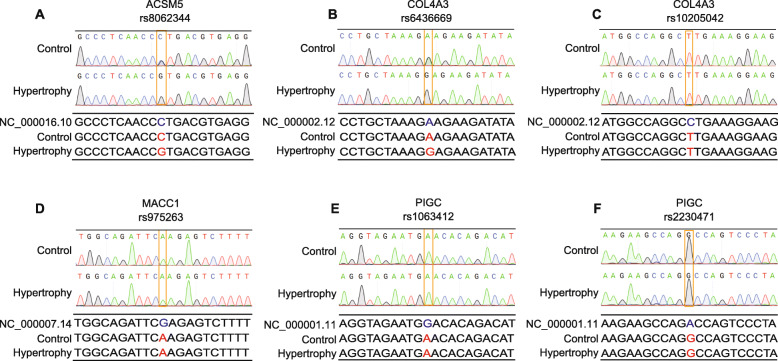
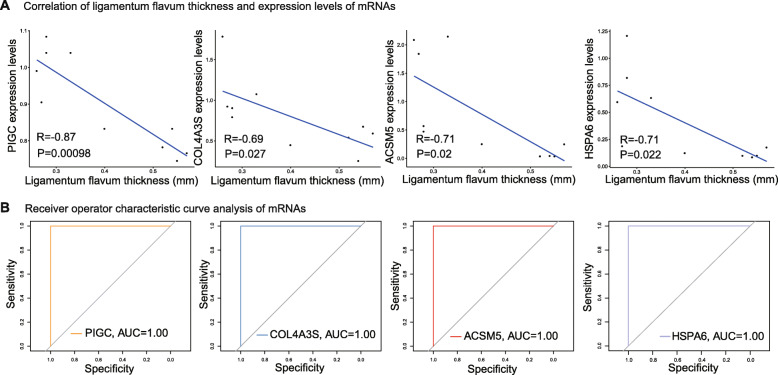
A genome-wide DNA methylation and single-nucleotide polymorphism analysis were performed from five LDD patients with HLF and five LDD patients without HLF. Comprehensive integrated analysis was performed using bioinformatics analysis and the validated experiments including Sanger sequencing, methylation-specific PCR, qPCR and ROC analysis. Furthermore, the function of novel genes in ligamentum flavum cells (LFCs) was detected to explore the molecular mechanism in HLF through knock down experiment, overexpression experiment, CCK8 assay, apoptosis assay, and so on.
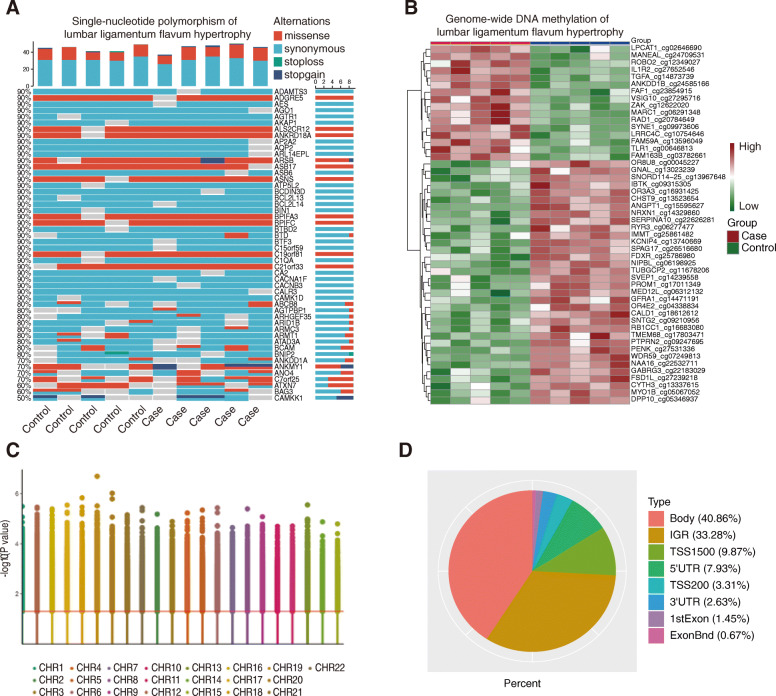
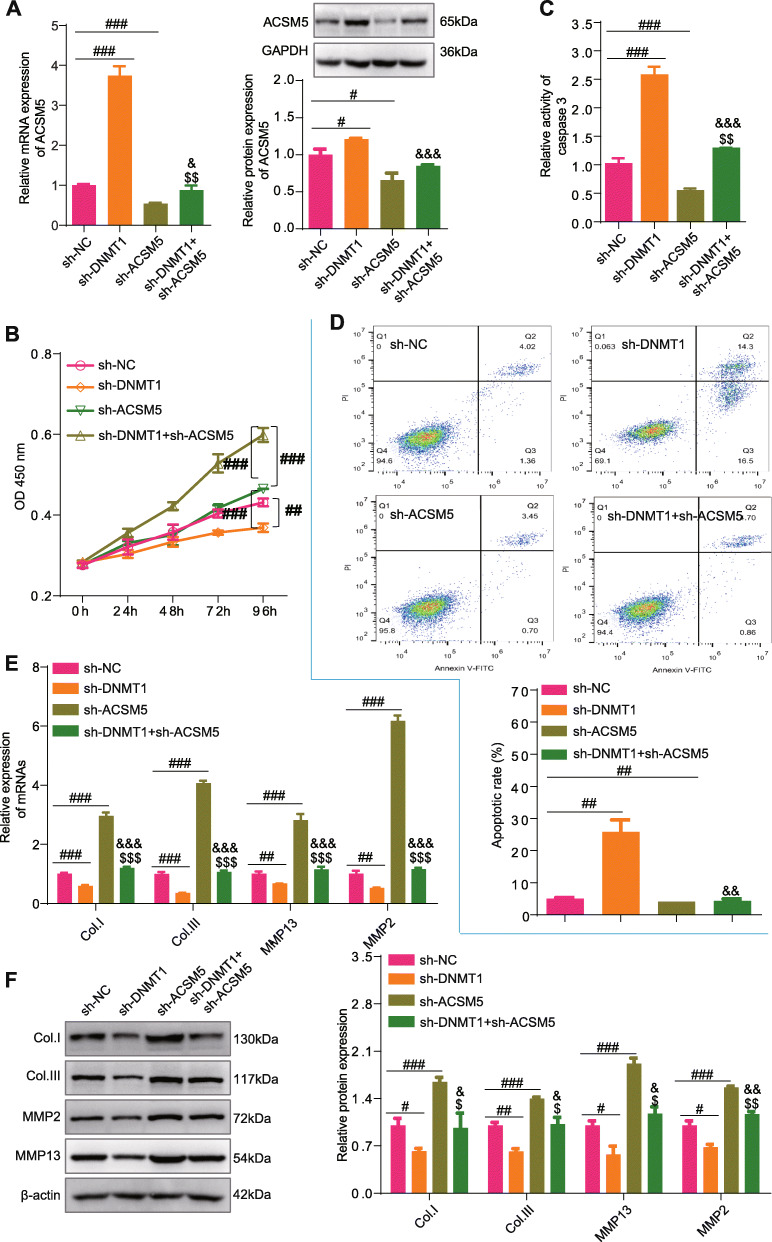
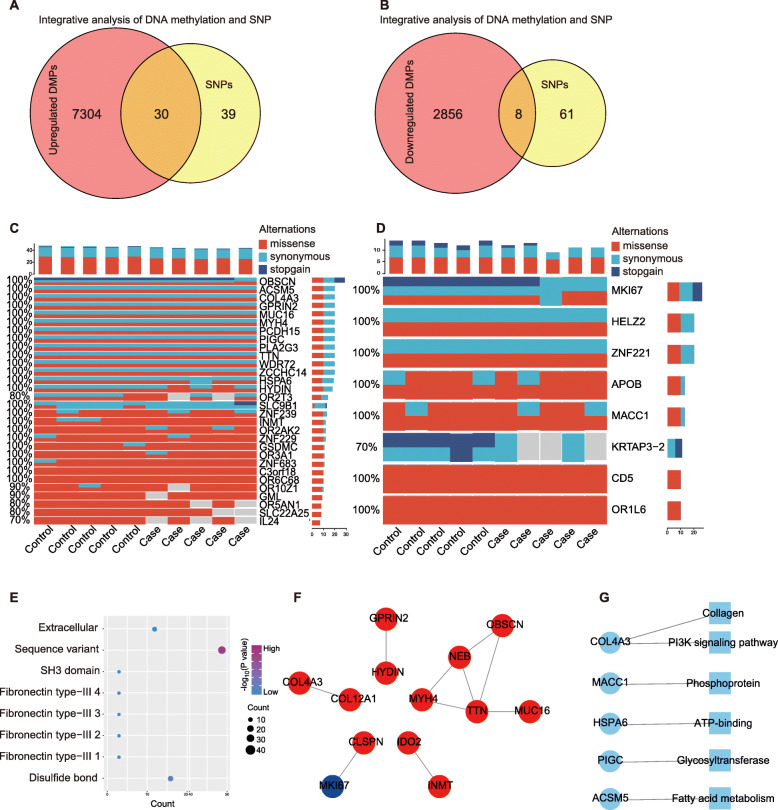
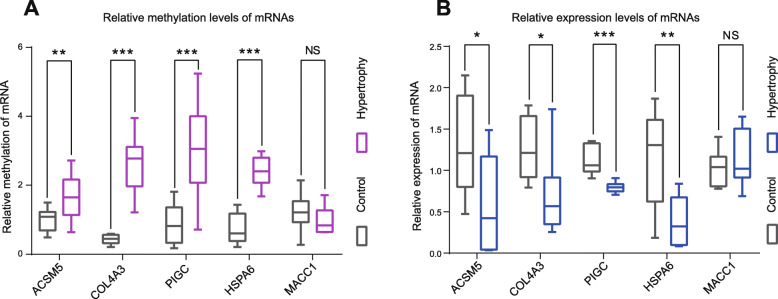
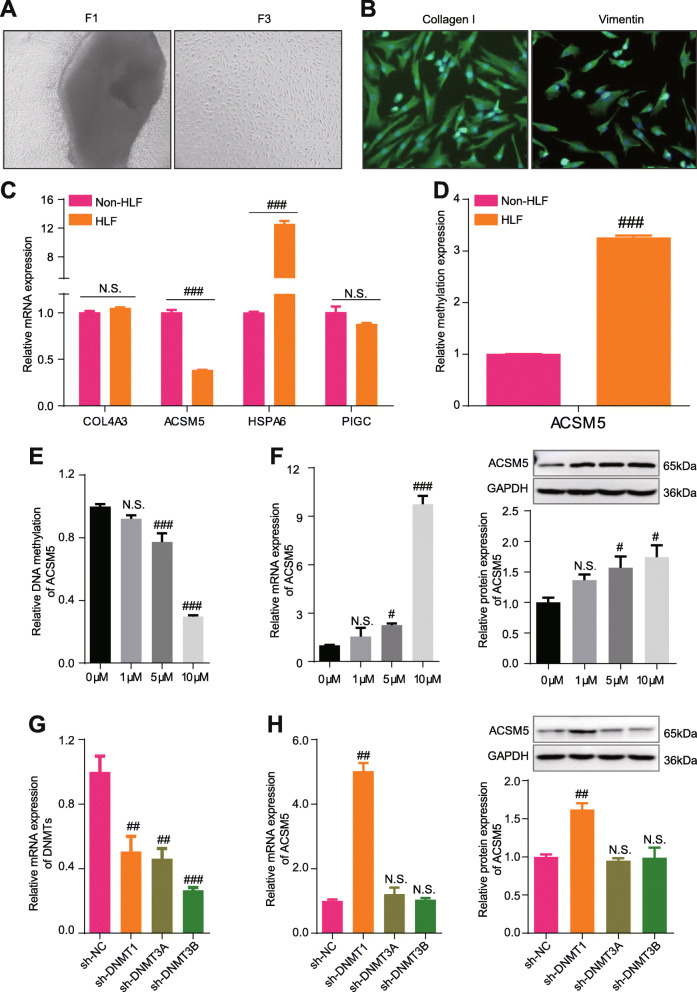
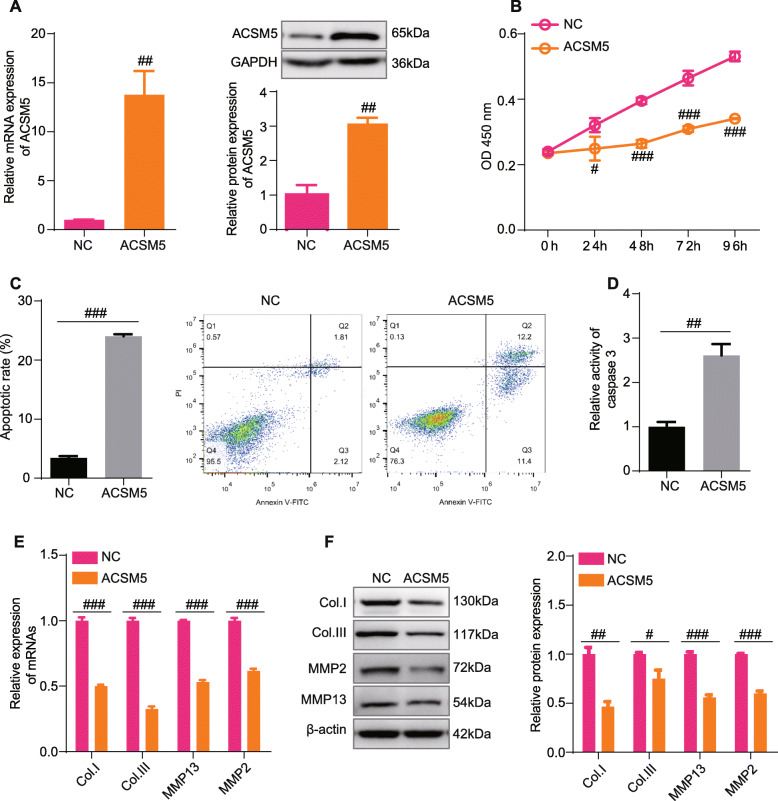
We identified 69 SNP genes and 735 661 differentially methylated sites that were enriched in extracellular matrix, inflammatory, and cell proliferation. A comprehensive analysis demonstrated key genes in regulating the development of HLF including ACSM5. Furthermore, the hypermethylation of ACSM5 that was mediated by DNMT1 led to downregulation of ACSM5 expression, promoted the proliferation and fibrosis, and inhibited the apoptosis of LFCs.
This study revealed that DNMT1/ACSM5 signaling could enhance HLF properties in vitro as a potential therapeutic strategy for HLF.
黄韧带肥厚(HLF)是一种常见的腰椎退行性疾病(LDD),其典型症状为腰痛和肢体麻木,这是由于对脊神经的异常压迫所致。先前的研究表明,HLF 可能是由纤维化、炎症和其他生物途径引起的。然而,严重需要对 HLF 进行全面分析。
对 5 例 HLF 腰椎病患者和 5 例无 HLF 腰椎病患者进行全基因组 DNA 甲基化和单核苷酸多态性分析。通过生物信息学分析和验证实验(包括 Sanger 测序、甲基化特异性 PCR、qPCR 和 ROC 分析)进行综合整合分析。此外,通过敲低实验、过表达实验、CCK8 测定、凋亡测定等方法,检测新基因在黄韧带细胞(LFC)中的功能,以探讨 HLF 中的分子机制。
我们鉴定了 69 个 SNP 基因和 735661 个差异甲基化位点,这些基因和位点富集在细胞外基质、炎症和细胞增殖中。综合分析表明,ACS M5 等关键基因在调节 HLF 发育中起重要作用。此外,DNMT1 介导的 ACSM5 高甲基化导致 ACSM5 表达下调,促进 LFC 的增殖和纤维化,并抑制其凋亡。
本研究表明,DNMT1/ACSM5 信号通路可增强体外 HLF 的特性,为 HLF 的潜在治疗策略提供了依据。