Centers for Disease Control and Prevention Global Immunization Division, Atlanta, GA, USA.
African Field Epidemiology Network, Accra, Ghana.
Glob Health Sci Pract. 2021 Sep 30;9(3):487-497. doi: 10.9745/GHSP-D-21-00090.
A 2016 assessment of frontline health care workers (HCWs) in Ghana identified knowledge, skill, and attitude gaps related to immunization during the second year of life (2YL). The U.S. Centers for Disease Control and Prevention subsequently supported the Ghana Health Service Immunization Program to apply best practices of adult learning and training of trainers (TOT) for a cascade training program for 2YL.
Five districts from each of the 3 regions (Greater Accra, Northern, and Volta) were selected for the TOT based on key measles and rubella vaccination coverage indicators. The design incorporated best practices of adult learning and TOT. The curriculum integrated 3 major topical themes: technical (immunization topics), operational, and training adults. The technical and operational content was based on HCW tasks most directly affecting 2YL objectives. A cross-functional team developed all classroom, field activity, and training evaluation materials.
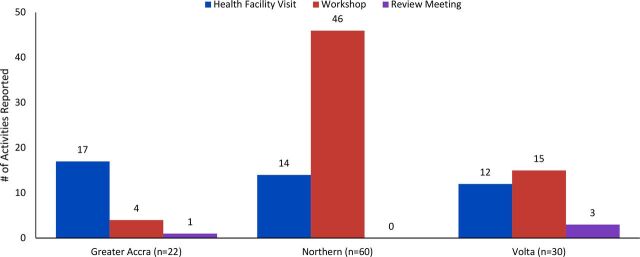
Seventy-four participants attended TOT workshops in 2017. Based on a rubric defined by the course designers, 99% of the participants reported an acceptable level of confidence to apply and teach the course content. After the TOTs, participants conducted 65 workshops, 43 field visits, and 4 review meetings, reaching 1,378 HCWs within 7 months. Fifty-four percent of HCWs who received training from TOT participants reported an acceptable level of confidence in using the skills, and 92% reported they would prioritize applying the skills acquired during the training.
The success factors for effective adult learning and TOT can be applied to design and implement high-quality TOT even in resource-limited settings. The factors include using a variety of approaches, spending enough class time to prepare TOT participants for their training role, setting specific expectations for cascading the training, and following up through mentorship and reporting. Strong collaboration across the administrative levels of the Ghana Health Service enabled cascade training.
2016 年对加纳一线卫生保健工作者(HCW)的评估发现,在生命第二年(2YL)期间,他们在免疫方面存在知识、技能和态度方面的差距。美国疾病控制与预防中心随后支持加纳卫生服务免疫项目,为 2YL 级别的级联培训计划应用成人学习和培训师培训(TOT)的最佳实践。
根据关键的麻疹和风疹疫苗接种覆盖率指标,从每个地区(大阿克拉、北部和沃尔特)选择五个地区参加 TOT。该设计结合了成人学习和 TOT 的最佳实践。课程整合了三个主要主题:技术(免疫主题)、运营和培训成人。技术和运营内容基于最直接影响 2YL 目标的 HCW 任务。一个跨职能团队开发了所有课堂、实地活动和培训评估材料。
2017 年有 74 名参与者参加了 TOT 研讨会。根据课程设计者定义的标准,99%的参与者报告说,他们有信心应用和教授课程内容。在 TOT 之后,参与者进行了 65 次研讨会、43 次实地访问和 4 次审查会议,在 7 个月内培训了 1378 名 HCW。接受 TOT 参与者培训的 HCW 中有 54%报告说,他们有信心使用这些技能,92%的人报告说,他们将优先应用培训中获得的技能。
有效的成人学习和 TOT 的成功因素可以应用于设计和实施高质量的 TOT,即使在资源有限的环境中也是如此。这些因素包括使用多种方法、花费足够的课堂时间让 TOT 参与者为他们的培训角色做好准备、为级联培训设定具体期望以及通过指导和报告跟进。加纳卫生服务各级之间的强有力合作使级联培训成为可能。