State Key Laboratory of Cell Biology, Shanghai Institute of Biochemistry and Cell Biology, Center for Excellence in Molecular Cell Science, Chinese Academy of Sciences, University of Chinese Academy of Sciences, Shanghai, 200031, China.
School of Life Science, Hangzhou Institute for Advanced Study, University of Chinese Academy of Sciences, Hangzhou, 310024, China.
Nat Commun. 2021 Oct 1;12(1):5784. doi: 10.1038/s41467-021-25933-5.
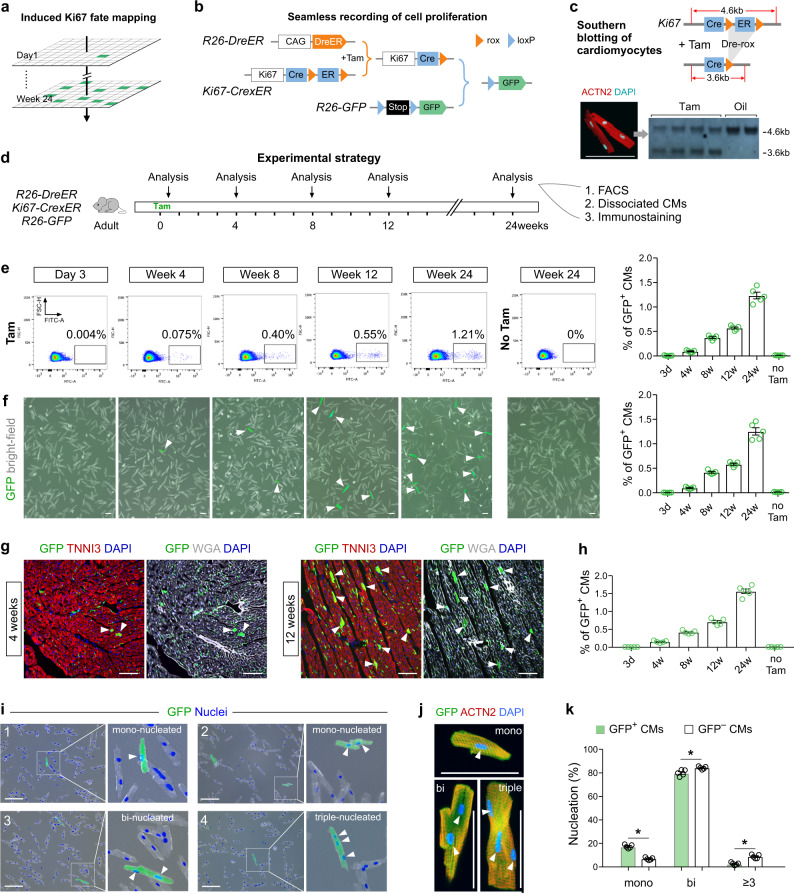
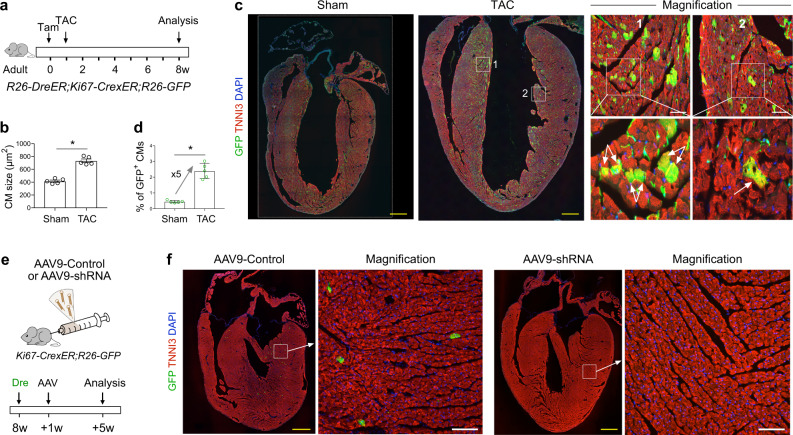
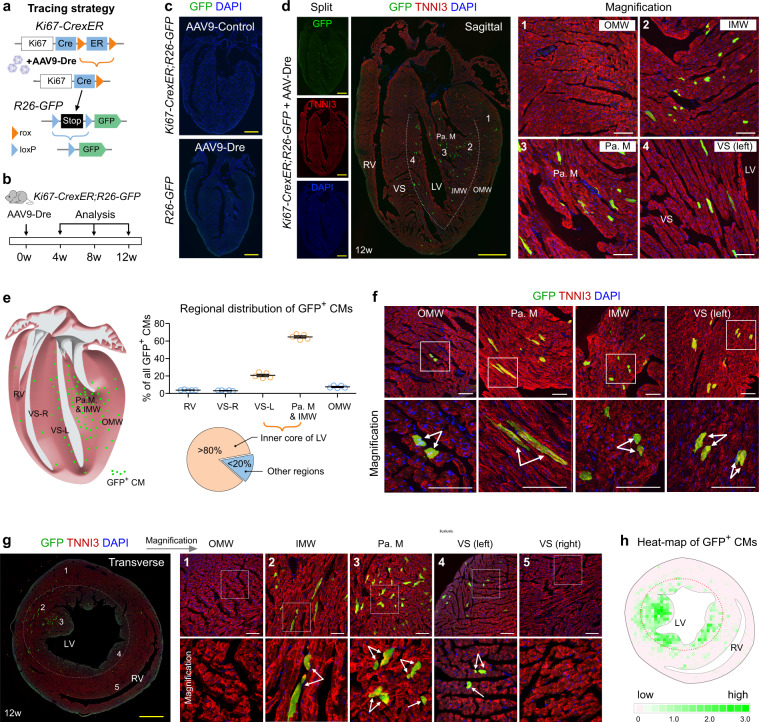
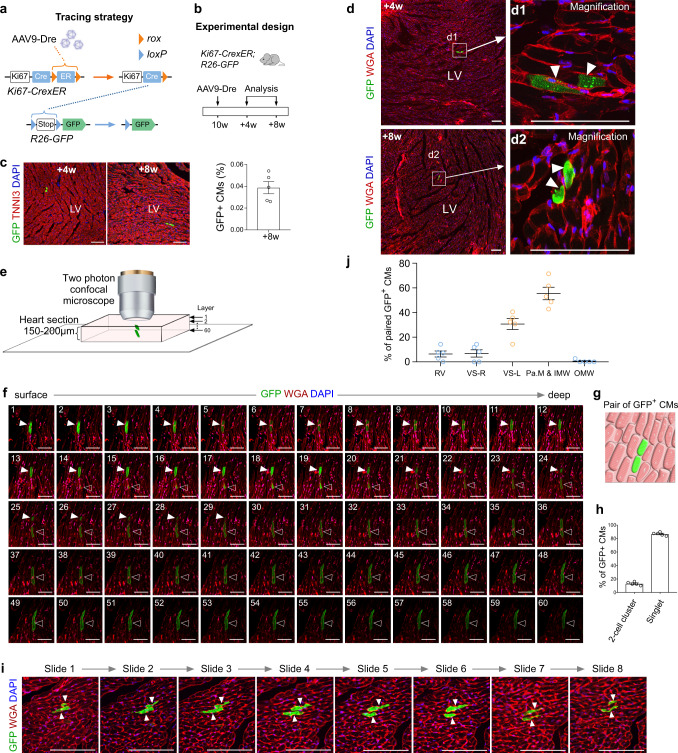
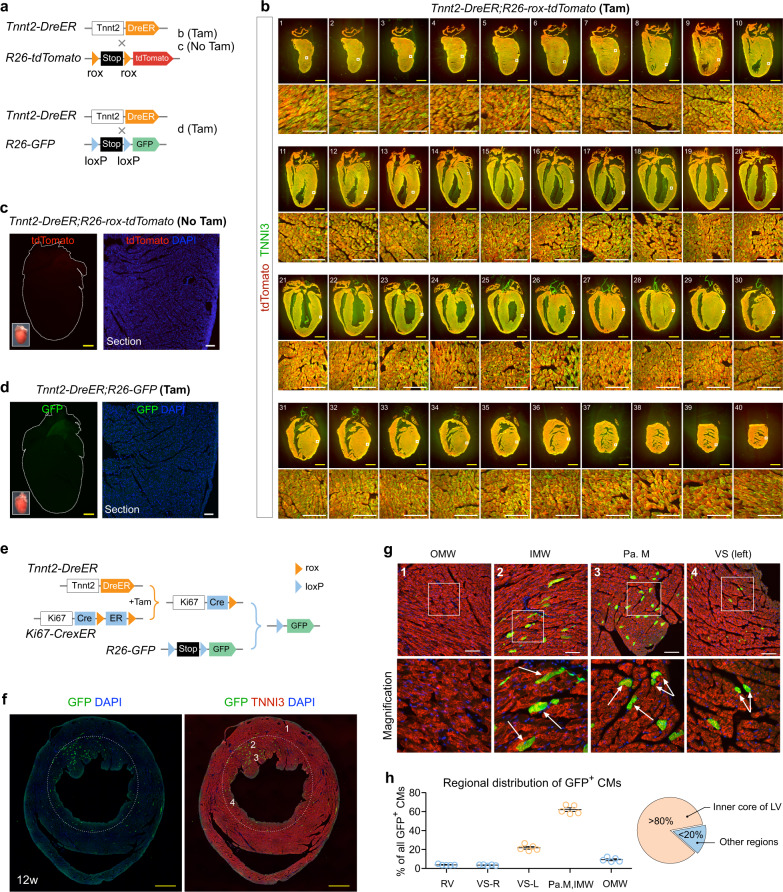
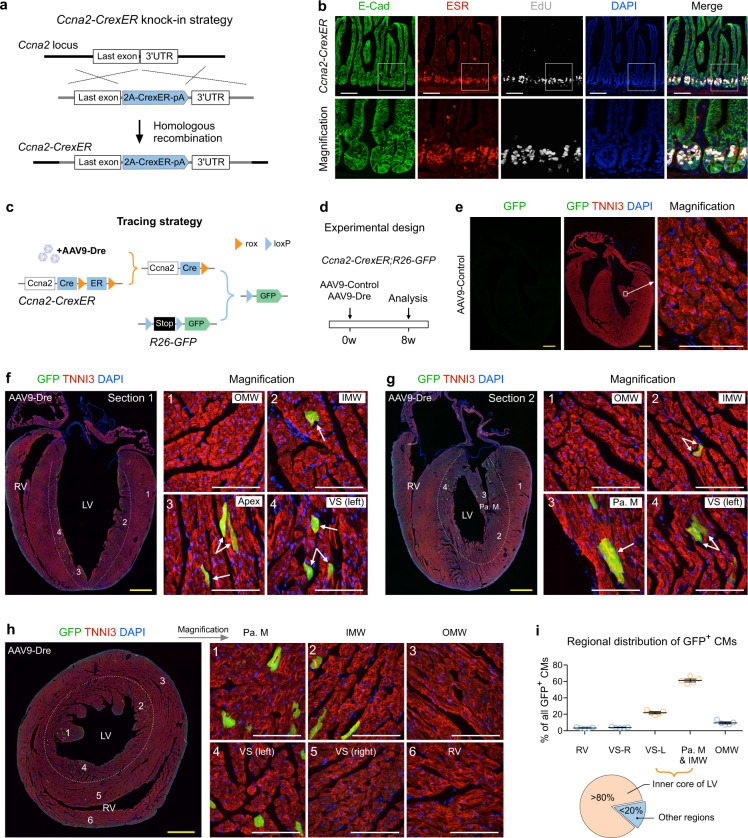
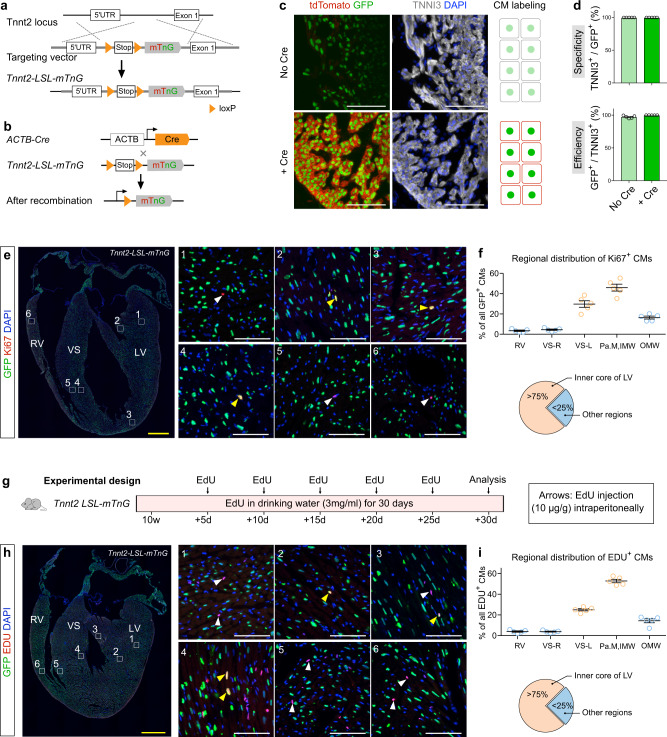
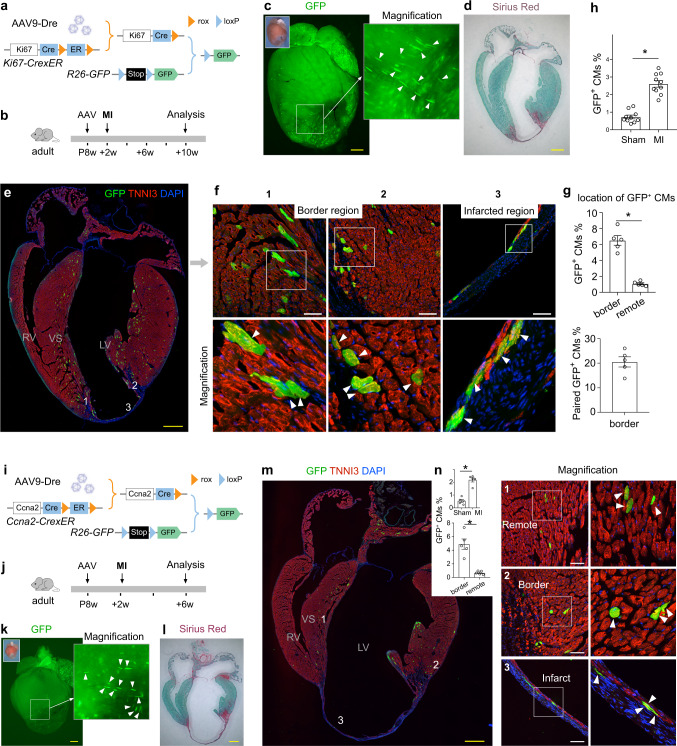
Cardiac regeneration involves the generation of new cardiomyocytes from cycling cardiomyocytes. Understanding cell-cycle activity of pre-existing cardiomyocytes provides valuable information to heart repair and regeneration. However, the anatomical locations and in situ dynamics of cycling cardiomyocytes remain unclear. Here we develop a genetic approach for a temporally seamless recording of cardiomyocyte-specific cell-cycle activity in vivo. We find that the majority of cycling cardiomyocytes are positioned in the subendocardial muscle of the left ventricle, especially in the papillary muscles. Clonal analysis revealed that a subset of cycling cardiomyocytes have undergone cell division. Myocardial infarction and cardiac pressure overload induce regional patterns of cycling cardiomyocytes. Mechanistically, cardiomyocyte cell cycle activity requires the Hippo pathway effector YAP. These genetic fate-mapping studies advance our basic understanding of cardiomyocyte cell cycle activity and generation in cardiac homeostasis, repair, and regeneration.
心脏再生涉及从循环心肌细胞中产生新的心肌细胞。了解现有心肌细胞的细胞周期活性为心脏修复和再生提供了有价值的信息。然而,循环心肌细胞的解剖位置和原位动力学仍不清楚。在这里,我们开发了一种用于在体内进行心肌细胞特异性细胞周期活性的时间无缝记录的遗传方法。我们发现,大多数循环心肌细胞位于左心室的心内膜下肌肉中,尤其是乳头肌中。克隆分析表明,一部分循环心肌细胞已经经历了细胞分裂。心肌梗死和心脏压力超负荷诱导循环心肌细胞的区域性模式。从机制上讲,心肌细胞细胞周期活性需要 Hippo 通路效应物 YAP。这些遗传命运图谱研究促进了我们对心脏稳态、修复和再生中心肌细胞细胞周期活性和产生的基本理解。