Gothenburg Global Biodiversity Centre, Gothenburg, Sweden.
Hematology, Oncology and Transfusion Medicine Center, Vilnius University Hospital Santaros Klinikos, Vilnius, Lithuania.
Nat Commun. 2021 Oct 1;12(1):5769. doi: 10.1038/s41467-021-26055-8.
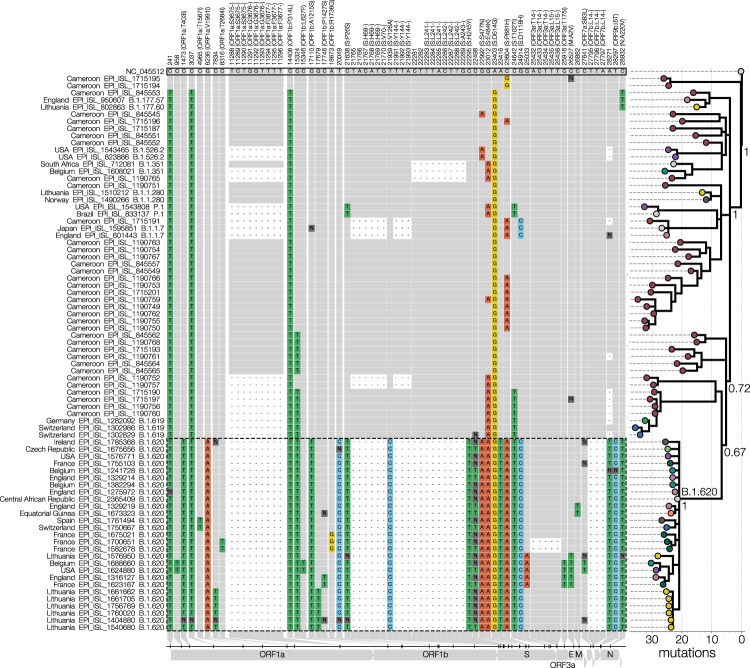
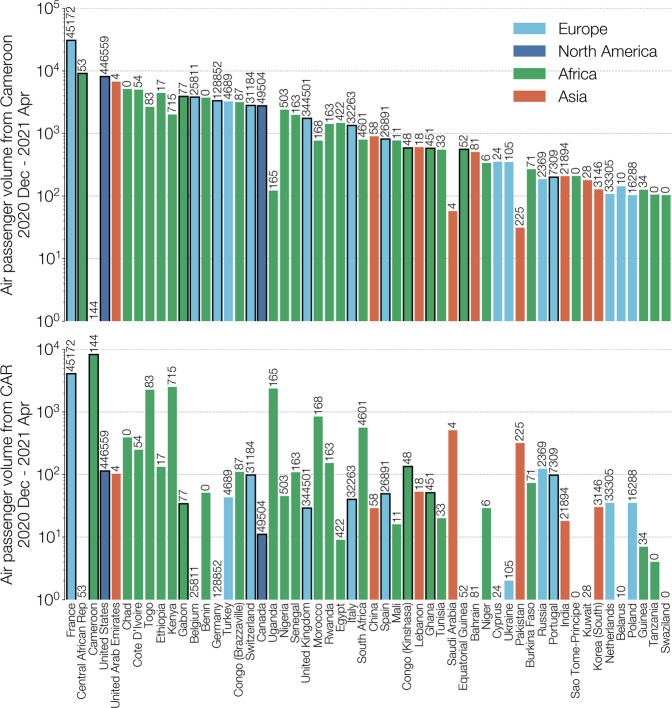
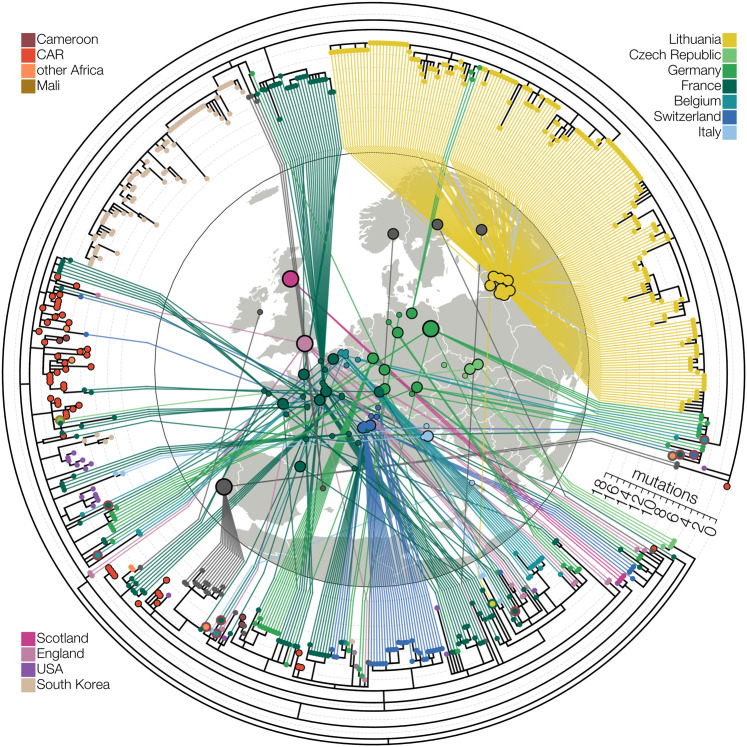
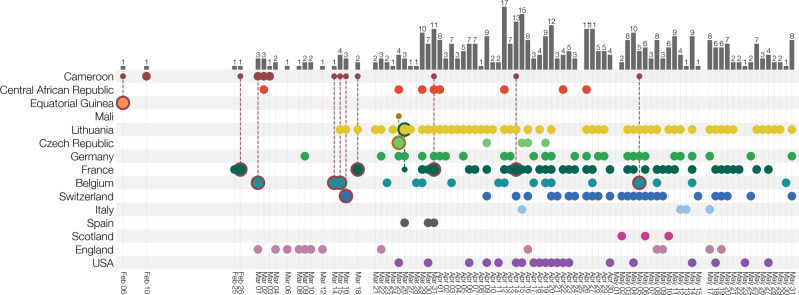
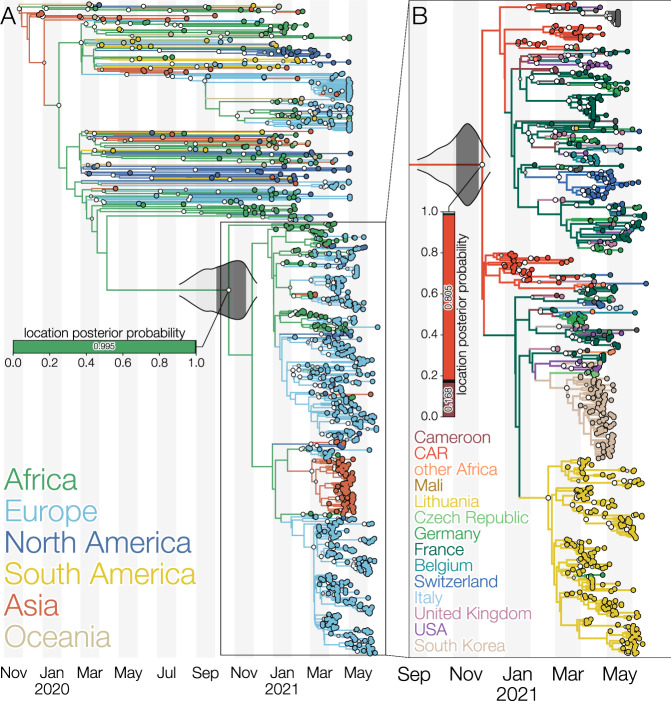
Distinct SARS-CoV-2 lineages, discovered through various genomic surveillance initiatives, have emerged during the pandemic following unprecedented reductions in worldwide human mobility. We here describe a SARS-CoV-2 lineage - designated B.1.620 - discovered in Lithuania and carrying many mutations and deletions in the spike protein shared with widespread variants of concern (VOCs), including E484K, S477N and deletions HV69Δ, Y144Δ, and LLA241/243Δ. As well as documenting the suite of mutations this lineage carries, we also describe its potential to be resistant to neutralising antibodies, accompanying travel histories for a subset of European cases, evidence of local B.1.620 transmission in Europe with a focus on Lithuania, and significance of its prevalence in Central Africa owing to recent genome sequencing efforts there. We make a case for its likely Central African origin using advanced phylogeographic inference methodologies incorporating recorded travel histories of infected travellers.
在全球人类流动性空前减少之后,大流行期间通过各种基因组监测计划发现了不同的 SARS-CoV-2 谱系。我们在此描述了一种在立陶宛发现的 SARS-CoV-2 谱系 - 命名为 B.1.620 - 它在刺突蛋白中携带许多与广泛关注的变异株(VOCs)共享的突变和缺失,包括 E484K、S477N 和缺失 HV69Δ、Y144Δ 和 LLA241/243Δ。除了记录该谱系携带的突变套件外,我们还描述了它对中和抗体的潜在抗性,以及伴随的一组欧洲病例的旅行史,欧洲局部 B.1.620 传播的证据,以及由于最近在那里进行的基因组测序工作,其在中非的流行程度的意义。我们使用包含受感染旅行者记录旅行史的先进系统发育推断方法,为其可能的中非起源提供了依据。