Laboratory of Protein Design and Immunoengineering (LPDI) - STI - EPFL, Lausanne, Switzerland.
Swiss Institute of Bioinformatics (SIB), Lausanne, CH-1015, Switzerland.
Nat Commun. 2021 Oct 1;12(1):5754. doi: 10.1038/s41467-021-25735-9.
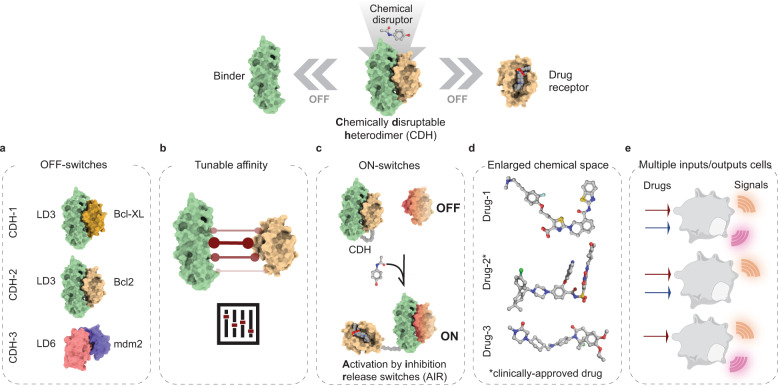
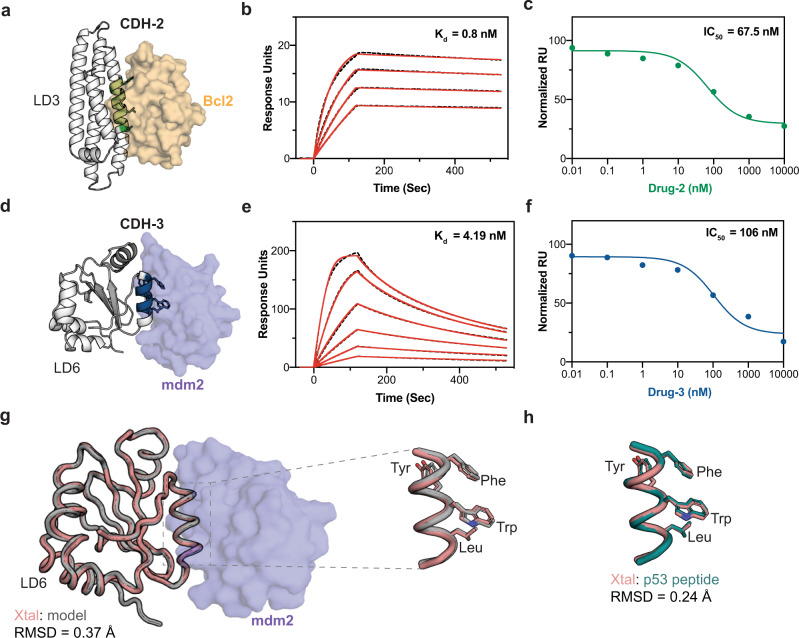
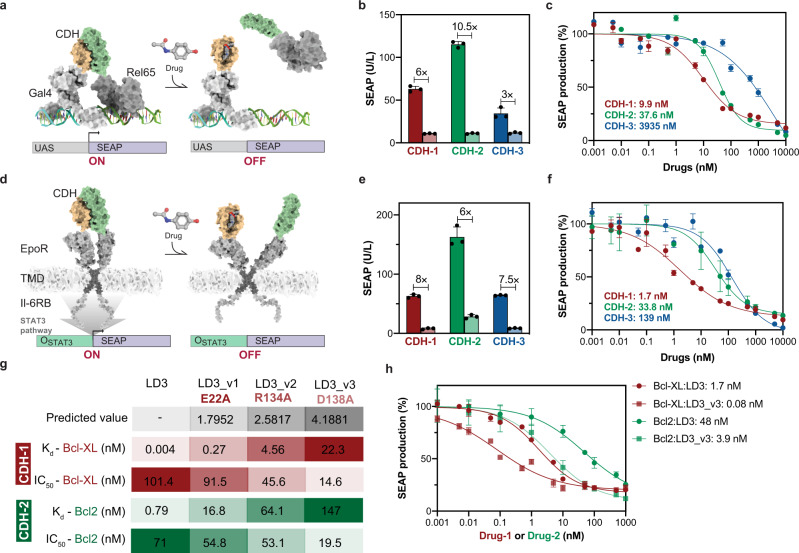
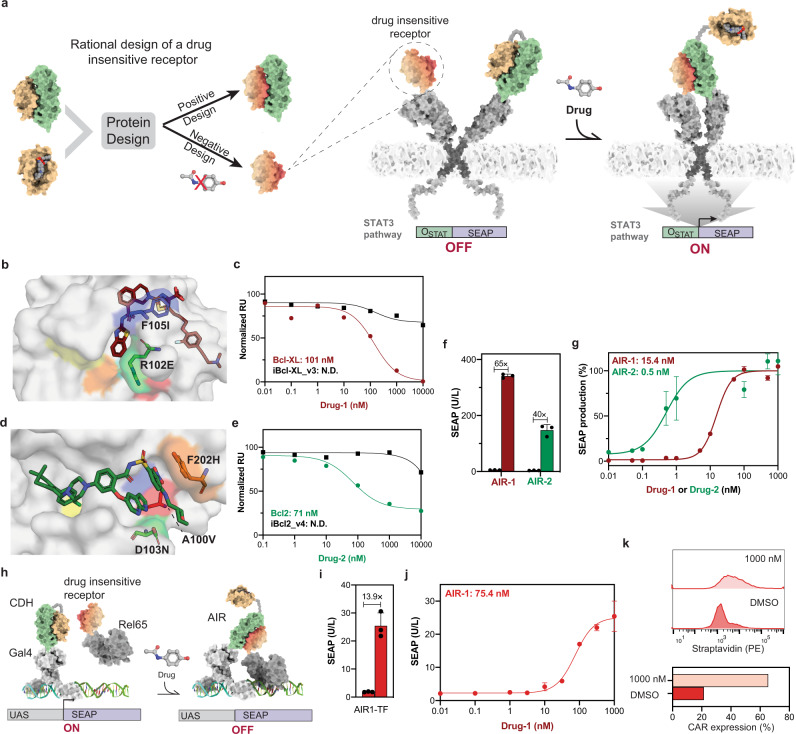
Small-molecule responsive protein switches are crucial components to control synthetic cellular activities. However, the repertoire of small-molecule protein switches is insufficient for many applications, including those in the translational spaces, where properties such as safety, immunogenicity, drug half-life, and drug side-effects are critical. Here, we present a computational protein design strategy to repurpose drug-inhibited protein-protein interactions as OFF- and ON-switches. The designed binders and drug-receptors form chemically-disruptable heterodimers (CDH) which dissociate in the presence of small molecules. To design ON-switches, we converted the CDHs into a multi-domain architecture which we refer to as activation by inhibitor release switches (AIR) that incorporate a rationally designed drug-insensitive receptor protein. CDHs and AIRs showed excellent performance as drug responsive switches to control combinations of synthetic circuits in mammalian cells. This approach effectively expands the chemical space and logic responses in living cells and provides a blueprint to develop new ON- and OFF-switches.
小分子响应蛋白开关是控制合成细胞活动的关键组成部分。然而,小分子蛋白开关的种类对于许多应用来说还不够,包括那些在转化空间中的应用,在这些应用中,安全性、免疫原性、药物半衰期和药物副作用等特性至关重要。在这里,我们提出了一种计算蛋白设计策略,将药物抑制的蛋白-蛋白相互作用重新设计为 OFF 和 ON 开关。设计的配体和药物受体形成化学可断裂的异二聚体(CDH),在小分子存在的情况下解离。为了设计 ON 开关,我们将 CDH 转化为一种多结构域架构,我们称之为通过抑制剂释放开关激活(AIR),该架构包含一个经过合理设计的对药物不敏感的受体蛋白。CDH 和 AIR 作为药物响应开关在哺乳动物细胞中控制合成回路的组合时表现出优异的性能。这种方法有效地扩展了细胞内的化学空间和逻辑响应,并为开发新的 ON 和 OFF 开关提供了蓝图。