Sector of Molecular Evolution, Institute for Information Transmission Problems (Kharkevich Institute) of the Russian Academy of Sciences, Moscow, Russian Federation.
Population Health Sciences Institute, Newcastle University, Newcastle upon Tyne, UK.
Sci Rep. 2021 Oct 1;11(1):19578. doi: 10.1038/s41598-021-98360-7.
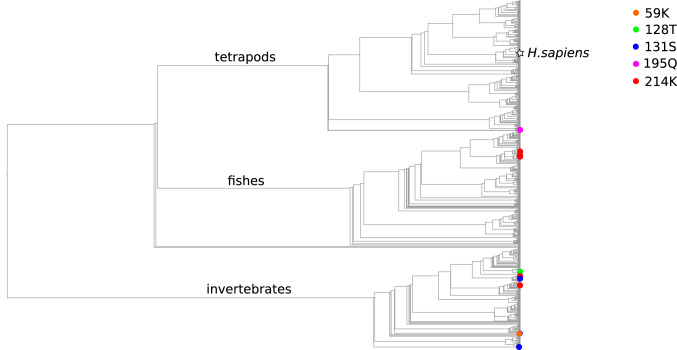
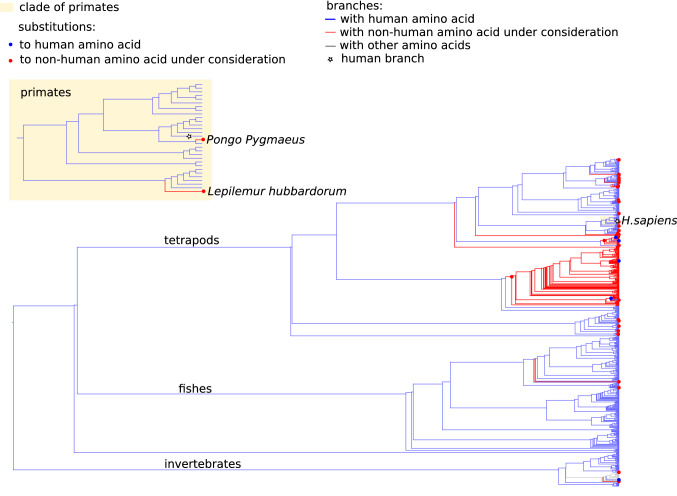
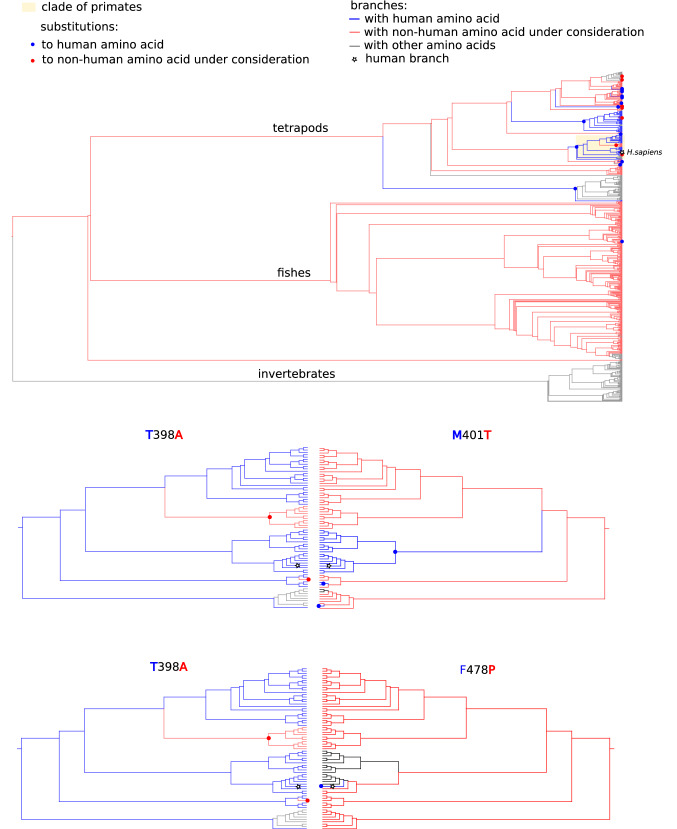
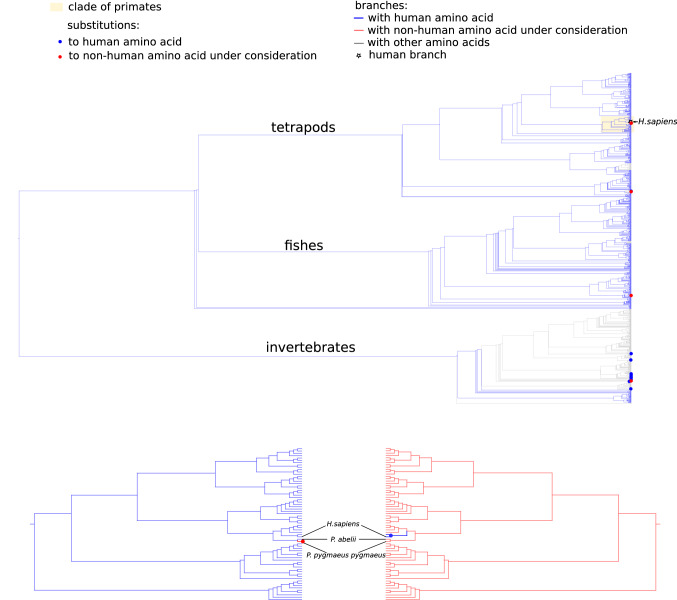
Disease caused by mutations of mitochondrial DNA (mtDNA) are highly variable in both presentation and penetrance. Over the last 30 years, clinical recognition of this group of diseases has increased. It has been suggested that haplogroup background could influence the penetrance and presentation of disease-causing mutations; however, to date there is only one well-established example of such an effect: the increased penetrance of two Complex I Leber's hereditary optic neuropathy mutations on a haplogroup J background. This paper conducts the most extensive investigation to date into the importance of haplogroup context in the pathogenicity of mtDNA mutations in Complex I. We searched for proven human point mutations across more than 900 metazoans finding human disease-causing mutations and potential masking variants. We found more than a half of human pathogenic variants as compensated pathogenic deviations (CPD) in at least in one animal species from our multiple sequence alignments. Some variants were found in many species, and some were even the most prevalent amino acids across our dataset. Variants were also found in other primates, and in such cases, we looked for non-human amino acids in sites with high probability to interact with the CPD in folded protein. Using this "local interactions" approach allowed us to find potential masking substitutions in other amino acid sites. We suggest that the masking variants might arise in humans, resulting in variability of mutation effect in our species.
由线粒体 DNA(mtDNA)突变引起的疾病在表现和外显率方面都高度可变。在过去的 30 年中,对这组疾病的临床认识有所增加。有人认为单倍型背景可能会影响致病突变的外显率和表现;然而,迄今为止,只有一个这样影响的既定例子:在单倍型 J 背景下,两种复合物 I 莱伯遗传性视神经病变突变的外显率增加。本文对单倍型背景在复合物 I 的 mtDNA 突变致病性中的重要性进行了迄今为止最广泛的研究。我们在超过 900 种后生动物中搜索了已证实的人类点突变,发现了人类疾病相关突变和潜在的掩蔽变体。我们发现,在我们的多序列比对中,超过一半的人类致病性变体至少在一种动物物种中是补偿性致病性偏差(CPD)。有些变体在许多物种中都有发现,有些甚至是我们数据集内最常见的氨基酸。在其他灵长类动物中也发现了变体,在这种情况下,我们在与折叠蛋白中的 CPD 高度相互作用的位点寻找非人类氨基酸。使用这种“局部相互作用”方法,我们能够在其他氨基酸位点找到潜在的掩蔽替代物。我们认为掩蔽变体可能在人类中出现,从而导致我们物种中突变效应的可变性。