Department of Pharmacy, Zhujiang Hospital, Southern Medical University, Guangzhou, 510282, China.
Faculty of Medicinal Plants and Pharmacognosy, School of Traditional Chinese Medicine, Southern Medical University, Guangzhou, 510515, China.
BMC Genomics. 2021 Oct 2;22(1):714. doi: 10.1186/s12864-021-08008-z.
As one of the largest genera in Apiaceae, Bupleurum L. is well known for its high medicinal value. The genus has frequently attracted the attention of evolutionary biologist and taxonomist for its distinctive characteristics in the Apiaceae family. Although some chloroplast genomes data have been now available, the changes in the structure of chloroplast genomes and selective pressure in the genus have not been fully understood. In addition, few of the species are endemic to Southwest China, a distribution and diversity center of Chinese Bupleurum. Endemic species are key components of biodiversity and ecosystems, and investigation of the chloroplast genomes features of endemic species in Bupleurum will be helpful to develop a better understanding of evolutionary process and phylogeny of the genus. In this study, we analyzed the sequences of whole chloroplast genomes of 4 Southwest China endemic Bupleurum species in comparison with the published data of 17 Bupleurum species to determine the evolutionary characteristics of the genus and the phylogenetic relationships of Asian Bupleurum.
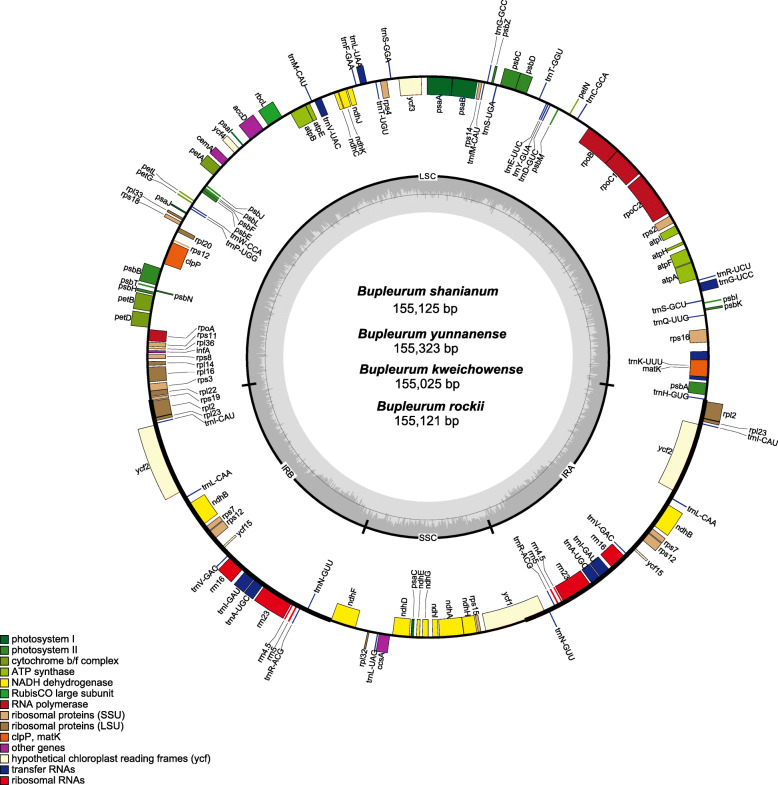
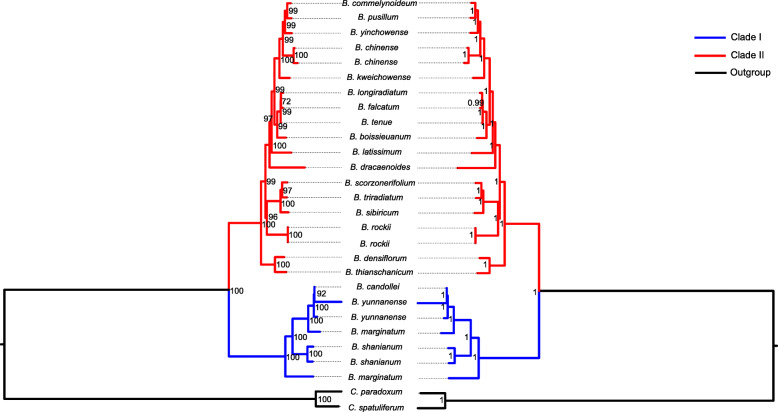
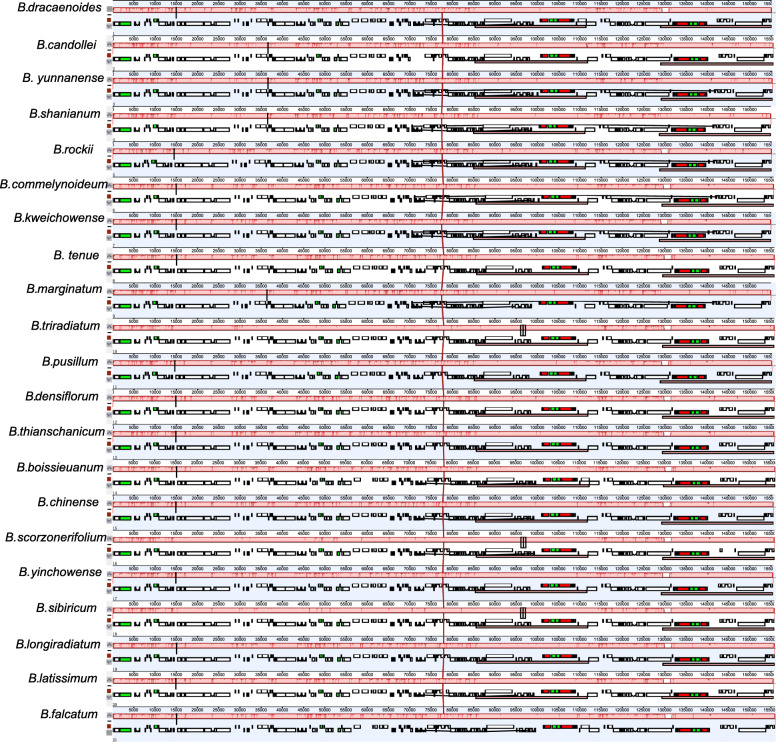
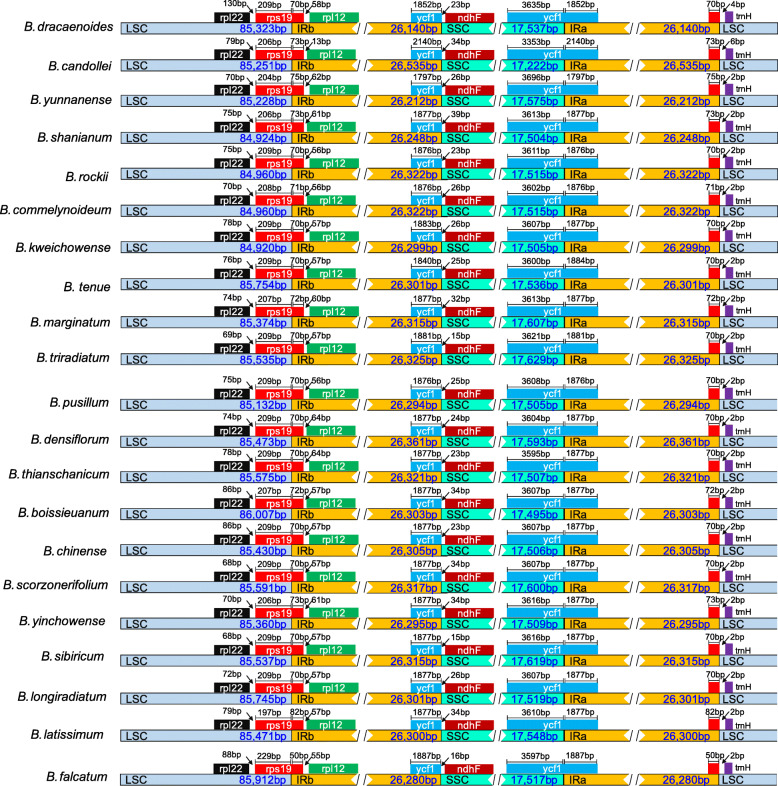
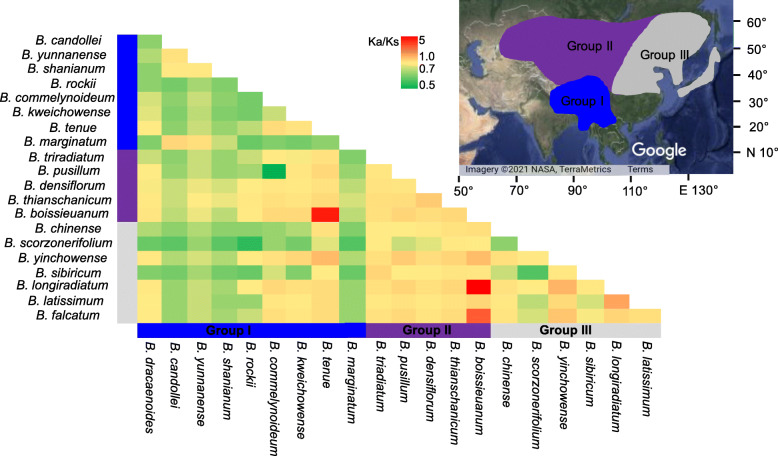
The complete chloroplast genome sequences of the 4 endemic Bupleurum species are 155,025 bp to 155,323 bp in length including a SSC and a LSC region separated by a pair of IRs. Comparative analysis revealed an identical chloroplast gene content across the 21 Bupleurum species, including a total of 114 unique genes (30 tRNA genes, 4 rRNA genes and 80 protein-coding genes). Chloroplast genomes of the 21 Bupleurum species showed no rearrangements and a high sequence identity (96.4-99.2%). They also shared a similar tendency of SDRs and SSRs, but differed in number (59-83). In spite of their high conservation, they contained some mutational hotspots, which can be potentially exploited as high-resolution DNA barcodes for species discrimination. Selective pressure analysis showed that four genes were under positive selection. Phylogenetic analysis revealed that the 21 Bupleurum formed two major clades, which are likely to correspond to their geographical distribution.
The chloroplast genome data of the four endemic Bupleurum species provide important insights into the characteristics and evolution of chloroplast genomes of this genu, and the phylogeny of Bupleurum.
作为伞形科最大的属之一,柴胡属因其具有很高的药用价值而广为人知。该属因其在伞形科家族中的独特特征而经常引起进化生物学家和分类学家的关注。尽管现在已经有一些叶绿体基因组数据,但叶绿体基因组结构的变化和该属的选择压力还没有得到充分的了解。此外,该属的少数物种是中国西南地区的特有种,是中国柴胡属的分布和多样性中心。特有种是生物多样性和生态系统的关键组成部分,研究柴胡属特有种的叶绿体基因组特征将有助于更好地了解该属的进化过程和系统发育。在这项研究中,我们分析了 4 种中国西南特有种柴胡的全叶绿体基因组序列,并与已发表的 17 种柴胡属物种的数据进行比较,以确定该属的进化特征和亚洲柴胡属的系统发育关系。
4 种中国西南特有种柴胡的完整叶绿体基因组序列长度为 155025bp 至 155323bp,包括一个 SSC 和一个 LSC 区,由一对 IRs隔开。比较分析显示,21 种柴胡属植物的叶绿体基因含量完全相同,包括总共 114 个独特基因(30 个 tRNA 基因、4 个 rRNA 基因和 80 个蛋白质编码基因)。21 种柴胡属植物的叶绿体基因组没有发生重排,序列同一性很高(96.4%-99.2%)。它们也表现出相似的 SDR 和 SSR 趋势,但数量不同(59-83)。尽管它们高度保守,但它们包含一些突变热点,可以作为物种鉴别高分辨率 DNA 条形码。选择压力分析显示,有 4 个基因受到正选择。系统发育分析表明,21 种柴胡属形成了两个主要分支,这可能与它们的地理分布相对应。
4 种中国西南特有种柴胡的叶绿体基因组数据为该属叶绿体基因组的特征和进化以及柴胡属的系统发育提供了重要的见解。