School of Health Sciences, College of Health and Human Sciences, Purdue University, West Lafayette, IN, United States; National Center for Pharmaceuticals, Life Science and Environment Research Institute, King Abdulaziz City for Science and Technology (KACST), Riyadh, Saudi Arabia.
School of Health Sciences, College of Health and Human Sciences, Purdue University, West Lafayette, IN, United States.
Toxicol Appl Pharmacol. 2021 Nov 15;431:115730. doi: 10.1016/j.taap.2021.115730. Epub 2021 Sep 30.
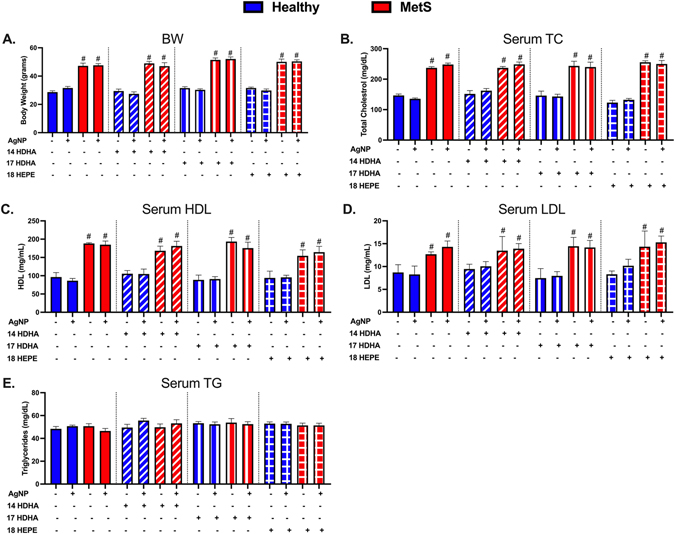
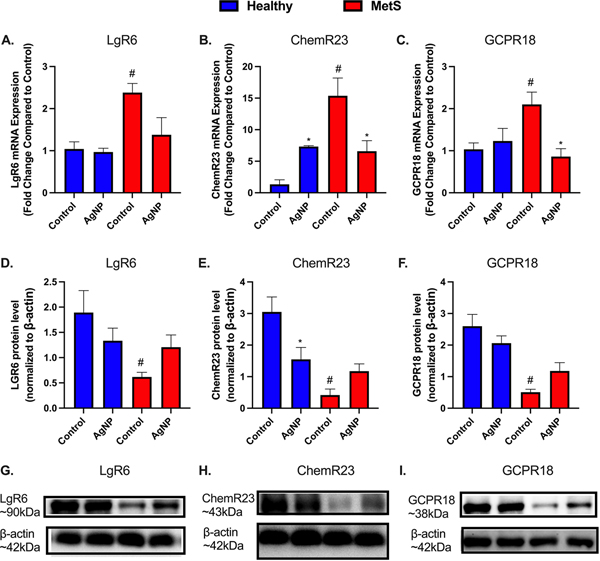
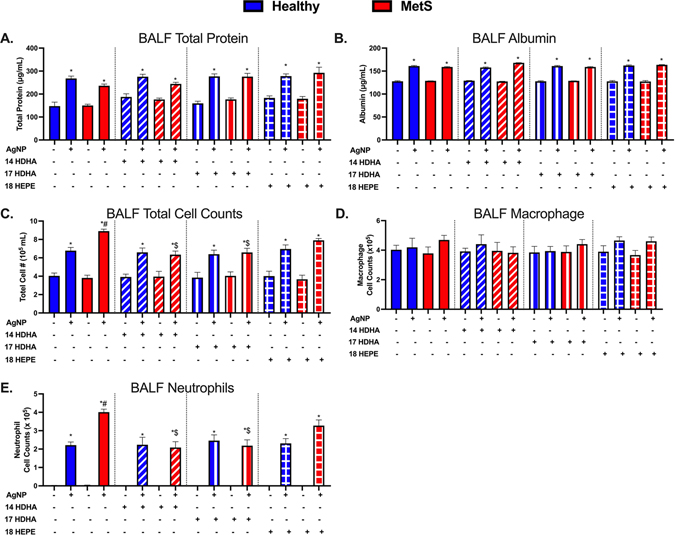
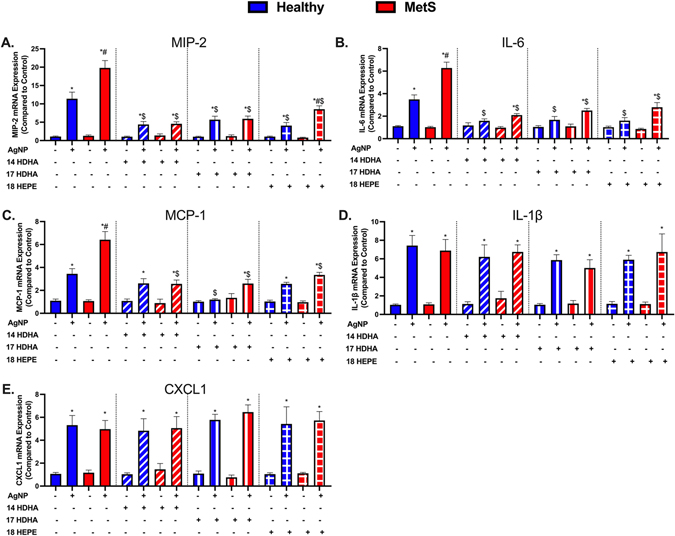
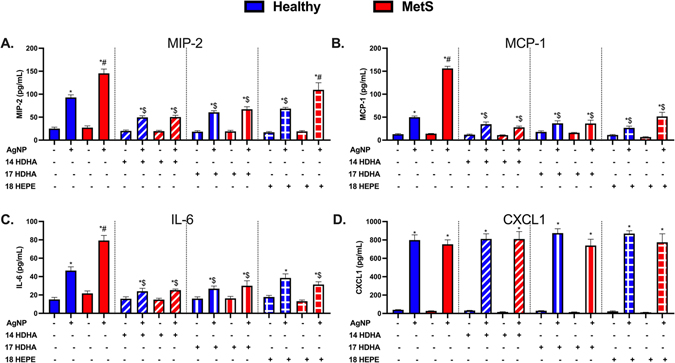
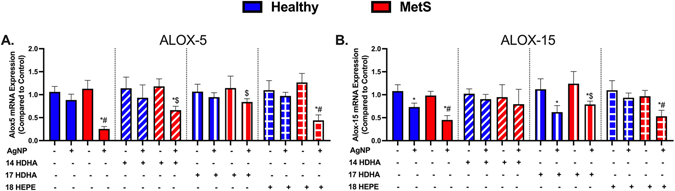
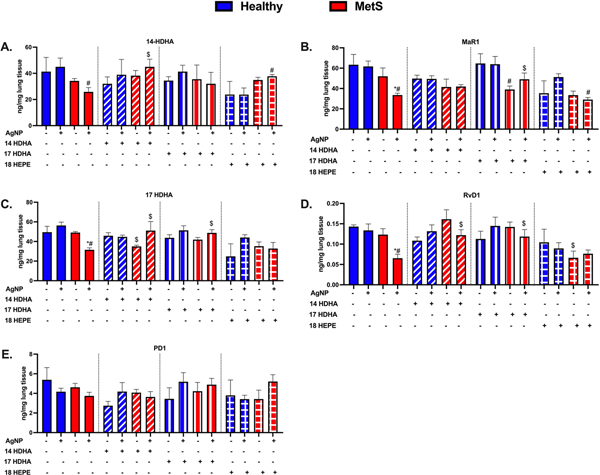
Pre-existing conditions modulate sensitivity to numerous xenobiotic exposures such as air pollution. Specifically, individuals suffering from metabolic syndrome (MetS) demonstrate enhanced acute inflammatory responses following particulate matter inhalation. The mechanisms associated with these exacerbated inflammatory responses are unknown, impairing interventional strategies and our understanding of susceptible populations. We hypothesize MetS-associated lipid dysregulation influences mediators of inflammatory resolution signaling contributing to increased acute pulmonary toxicity. To evaluate this hypothesis, healthy and MetS mouse models were treated with either 18-hydroxy eicosapentaenoic acid (18-HEPE), 14-hydroxy docosahexaenoic acid (14-HDHA), 17-hydroxy docosahexaenoic acid (17-HDHA), or saline (control) via intraperitoneal injection prior to oropharyngeal aspiration of silver nanoparticles (AgNP). In mice receiving saline treatment, AgNP exposure resulted in an acute pulmonary inflammatory response that was exacerbated in MetS mice. A targeted lipid assessment demonstrated 18-HEPE, 14-HDHA, and 17-HDHA treatments altered lung levels of specialized pro-resolving lipid mediators (SPMs). 14-HDHA and 17-HDHA treatments more efficiently reduced the exacerbated acute inflammatory response in AgNP exposed MetS mice as compared to 18-HEPE. This included decreased neutrophilic influx, diminished induction of inflammatory cytokines/chemokines, and reduced alterations in SPMs. Examination of SPM receptors determined baseline reductions in MetS mice compared to healthy as well as decreases due to AgNP exposure. Overall, these results demonstrate AgNP exposure disrupts inflammatory resolution, specifically 14-HDHA and 17-HDHA derived SPMs, in MetS contributing to exacerbated acute inflammatory responses. Our findings identify a potential mechanism responsible for enhanced susceptibility in MetS that can be targeted for interventional therapeutic approaches.
先前存在的条件会影响对许多异源生物暴露的敏感性,例如空气污染。具体来说,患有代谢综合征 (MetS) 的个体在吸入颗粒物后表现出增强的急性炎症反应。与这些加剧的炎症反应相关的机制尚不清楚,这妨碍了干预策略和我们对易感人群的理解。我们假设 MetS 相关的脂质失调会影响炎症消退信号的介质,从而导致急性肺毒性增加。为了验证这一假设,健康和 MetS 小鼠模型通过腹腔内注射 18-羟基二十碳五烯酸 (18-HEPE)、14-羟基二十二碳六烯酸 (14-HDHA)、17-羟基二十二碳六烯酸 (17-HDHA) 或生理盐水 (对照) 进行预处理,然后通过口咽吸入银纳米颗粒 (AgNP)。在接受生理盐水治疗的小鼠中,AgNP 暴露会导致急性肺部炎症反应,而在 MetS 小鼠中则会加剧。靶向脂质评估表明,18-HEPE、14-HDHA 和 17-HDHA 治疗改变了肺部特殊的促解决脂质介质 (SPM) 的水平。与 18-HEPE 相比,14-HDHA 和 17-HDHA 治疗更有效地降低了 AgNP 暴露的 MetS 小鼠中加剧的急性炎症反应。这包括减少中性粒细胞浸润、减少炎症细胞因子/趋化因子的诱导以及减少 SPM 的改变。SPM 受体的检查确定了与健康小鼠相比,MetS 小鼠的基线减少以及由于 AgNP 暴露而减少。总体而言,这些结果表明,AgNP 暴露会破坏炎症消退,特别是在 MetS 中,AgNP 暴露会破坏 14-HDHA 和 17-HDHA 衍生的 SPM,从而导致加剧的急性炎症反应。我们的发现确定了增强 MetS 易感性的潜在机制,这可以作为干预治疗方法的目标。