• 文献检索
  • 文档翻译
  • 深度研究
  • 学术资讯
  • Suppr Zotero 插件Zotero 插件
  • 邀请有礼
  • 套餐&价格
  • 历史记录
应用&插件
Suppr Zotero 插件Zotero 插件浏览器插件Mac 客户端Windows 客户端微信小程序
定价
高级版会员购买积分包购买API积分包
服务
文献检索文档翻译深度研究API 文档MCP 服务
关于我们
关于 Suppr公司介绍联系我们用户协议隐私条款
关注我们

Suppr 超能文献

核心技术专利:CN118964589B侵权必究
粤ICP备2023148730 号-1Suppr @ 2026

文献检索

告别复杂PubMed语法,用中文像聊天一样搜索,搜遍4000万医学文献。AI智能推荐,让科研检索更轻松。

立即免费搜索

文件翻译

保留排版,准确专业,支持PDF/Word/PPT等文件格式,支持 12+语言互译。

免费翻译文档

深度研究

AI帮你快速写综述,25分钟生成高质量综述,智能提取关键信息,辅助科研写作。

立即免费体验

基于深度学习的血流导向支架多孔介质模型对脑动脉瘤血流动力学的预测

Prediction of Cerebral Aneurysm Hemodynamics With Porous-Medium Models of Flow-Diverting Stents via Deep Learning.

作者信息

Li Gaoyang, Song Xiaorui, Wang Haoran, Liu Siwei, Ji Jiayuan, Guo Yuting, Qiao Aike, Liu Youjun, Wang Xuezheng

机构信息

Institute of Fluid Science, Tohoku University, Sendai, Japan.

Department of Radiology, Shandong First Medical University and Shandong Academy of Medical Sciences, Tai'an, China.

出版信息

Front Physiol. 2021 Sep 17;12:733444. doi: 10.3389/fphys.2021.733444. eCollection 2021.

DOI:10.3389/fphys.2021.733444
PMID:34603085
原文链接:https://pmc.ncbi.nlm.nih.gov/articles/PMC8484706/
Abstract

The interventional treatment of cerebral aneurysm requires hemodynamics to provide proper guidance. Computational fluid dynamics (CFD) is gradually used in calculating cerebral aneurysm hemodynamics before and after flow-diverting (FD) stent placement. However, the complex operation (such as the construction and placement simulation of fully resolved or porous-medium FD stent) and high computational cost of CFD hinder its application. To solve these problems, we applied aneurysm hemodynamics point cloud data sets and a deep learning network with double input and sampling channels. The flexible point cloud format can represent the geometry and flow distribution of different aneurysms before and after FD stent (represented by porous medium layer) placement with high resolution. The proposed network can directly analyze the relationship between aneurysm geometry and internal hemodynamics, to further realize the flow field prediction and avoid the complex operation of CFD. Statistical analysis shows that the prediction results of hemodynamics by our deep learning method are consistent with the CFD method (error function <13%), but the calculation time is significantly reduced 1,800 times. This study develops a novel deep learning method that can accurately predict the hemodynamics of different cerebral aneurysms before and after FD stent placement with low computational cost and simple operation processes.

摘要

脑动脉瘤的介入治疗需要血流动力学提供适当的指导。计算流体动力学(CFD)逐渐用于计算血流导向(FD)支架置入前后的脑动脉瘤血流动力学。然而,CFD复杂的操作(如全分辨率或多孔介质FD支架的构建和放置模拟)和高计算成本阻碍了其应用。为了解决这些问题,我们应用了动脉瘤血流动力学点云数据集和具有双输入和采样通道的深度学习网络。灵活的点云格式可以高分辨率地表示FD支架(以多孔介质层表示)置入前后不同动脉瘤的几何形状和血流分布。所提出的网络可以直接分析动脉瘤几何形状与内部血流动力学之间的关系,以进一步实现流场预测并避免CFD的复杂操作。统计分析表明,我们的深度学习方法对血流动力学的预测结果与CFD方法一致(误差函数<13%),但计算时间显著减少了1800倍。本研究开发了一种新颖的深度学习方法,该方法能够以低计算成本和简单的操作流程准确预测不同脑动脉瘤在FD支架置入前后的血流动力学。
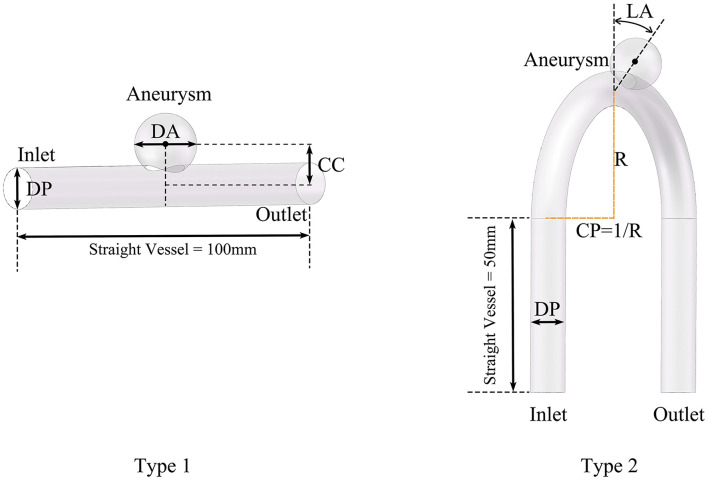
https://cdn.ncbi.nlm.nih.gov/pmc/blobs/9b93/8484706/7dd64265a2c5/fphys-12-733444-g006.jpg
https://cdn.ncbi.nlm.nih.gov/pmc/blobs/9b93/8484706/59c10e4e7221/fphys-12-733444-g001.jpg
https://cdn.ncbi.nlm.nih.gov/pmc/blobs/9b93/8484706/87aa701e99a1/fphys-12-733444-g002.jpg
https://cdn.ncbi.nlm.nih.gov/pmc/blobs/9b93/8484706/478d61e17aff/fphys-12-733444-g003.jpg
https://cdn.ncbi.nlm.nih.gov/pmc/blobs/9b93/8484706/d5f73b345eef/fphys-12-733444-g004.jpg
https://cdn.ncbi.nlm.nih.gov/pmc/blobs/9b93/8484706/68ee836a7288/fphys-12-733444-g005.jpg
https://cdn.ncbi.nlm.nih.gov/pmc/blobs/9b93/8484706/7dd64265a2c5/fphys-12-733444-g006.jpg
https://cdn.ncbi.nlm.nih.gov/pmc/blobs/9b93/8484706/59c10e4e7221/fphys-12-733444-g001.jpg
https://cdn.ncbi.nlm.nih.gov/pmc/blobs/9b93/8484706/87aa701e99a1/fphys-12-733444-g002.jpg
https://cdn.ncbi.nlm.nih.gov/pmc/blobs/9b93/8484706/478d61e17aff/fphys-12-733444-g003.jpg
https://cdn.ncbi.nlm.nih.gov/pmc/blobs/9b93/8484706/d5f73b345eef/fphys-12-733444-g004.jpg
https://cdn.ncbi.nlm.nih.gov/pmc/blobs/9b93/8484706/68ee836a7288/fphys-12-733444-g005.jpg
https://cdn.ncbi.nlm.nih.gov/pmc/blobs/9b93/8484706/7dd64265a2c5/fphys-12-733444-g006.jpg

相似文献

1
Prediction of Cerebral Aneurysm Hemodynamics With Porous-Medium Models of Flow-Diverting Stents via Deep Learning.基于深度学习的血流导向支架多孔介质模型对脑动脉瘤血流动力学的预测
Front Physiol. 2021 Sep 17;12:733444. doi: 10.3389/fphys.2021.733444. eCollection 2021.
2
A pilot validation of CFD model results against PIV observations of haemodynamics in intracranial aneurysms treated with flow-diverting stents.血流导向支架治疗颅内动脉瘤血流动力学的 CFD 模型结果与 PIV 观测的初步验证。
J Biomech. 2020 Feb 13;100:109590. doi: 10.1016/j.jbiomech.2019.109590. Epub 2019 Dec 24.
3
Sensitivity study on modelling a flow-diverting stent as a porous medium using computational fluid dynamics.使用计算流体动力学将血流导向支架建模为多孔介质的敏感性研究。
Annu Int Conf IEEE Eng Med Biol Soc. 2017 Jul;2017:3389-3392. doi: 10.1109/EMBC.2017.8037583.
4
Numerical simulation of aneurysmal haemodynamics with calibrated porous-medium models of flow-diverting stents.采用血流分流支架校准多孔介质模型对动脉瘤血流动力学进行数值模拟。
J Biomech. 2018 Oct 26;80:88-94. doi: 10.1016/j.jbiomech.2018.08.026. Epub 2018 Aug 29.
5
Cerebral aneurysm flow diverter modeled as a thin inhomogeneous porous medium in hemodynamic simulations.在血流动力学模拟中,将脑动脉瘤血流分流器建模为一个薄的非均匀多孔介质。
Comput Biol Med. 2021 Dec;139:104988. doi: 10.1016/j.compbiomed.2021.104988. Epub 2021 Oct 28.
6
Numerical simulation of flow-diverting stent: comparison between branches in bifurcation brain aneurysm.血流导向支架的数值模拟:分叉脑动脉瘤分支间的比较。
Biomech Model Mechanobiol. 2023 Dec;22(6):1801-1814. doi: 10.1007/s10237-023-01733-2. Epub 2023 Jun 19.
7
Prediction of 3D Cardiovascular hemodynamics before and after coronary artery bypass surgery via deep learning.通过深度学习预测冠状动脉旁路手术后的 3D 心血管血液动力学。
Commun Biol. 2021 Jan 22;4(1):99. doi: 10.1038/s42003-020-01638-1.
8
Evaluation of Two Fast Virtual Stenting Algorithms for Intracranial Aneurysm Flow Diversion.评价两种用于颅内动脉瘤血流导向装置的快速虚拟支架置入算法。
Curr Neurovasc Res. 2020;17(1):58-70. doi: 10.2174/1567202617666200120141608.
9
Hemodynamics at the ostium of cerebral aneurysms with relation to post-treatment changes by a virtual flow diverter: a computational fluid dynamics study.脑动脉瘤瘤口处的血流动力学与虚拟血流导向装置治疗后变化的关系:一项计算流体动力学研究
Annu Int Conf IEEE Eng Med Biol Soc. 2013;2013:1895-8. doi: 10.1109/EMBC.2013.6609895.
10
Outcome prediction of intracranial aneurysm treatment by flow diverters using machine learning.使用机器学习对颅内动脉瘤血管内治疗的结果预测。
Neurosurg Focus. 2018 Nov 1;45(5):E7. doi: 10.3171/2018.8.FOCUS18332.

引用本文的文献

1
Fluid dynamics in intracranial aneurysms treated with flow-diverting stents: effect of multiple geometrical parameters.血流导向支架治疗颅内动脉瘤的流体动力学:多个几何参数的影响
J Fluid Mech. 2023 Oct 23;973. doi: 10.1017/jfm.2023.763.
2
Prediction of time averaged wall shear stress distribution in coronary arteries' bifurcation varying in morphological features via deep learning.通过深度学习预测形态特征各异的冠状动脉分叉处的时间平均壁面剪应力分布
Front Physiol. 2025 Mar 4;16:1518732. doi: 10.3389/fphys.2025.1518732. eCollection 2025.
3
Systematic Review of Radiomics and Artificial Intelligence in Intracranial Aneurysm Management.

本文引用的文献

1
Prediction of 3D Cardiovascular hemodynamics before and after coronary artery bypass surgery via deep learning.通过深度学习预测冠状动脉旁路手术后的 3D 心血管血液动力学。
Commun Biol. 2021 Jan 22;4(1):99. doi: 10.1038/s42003-020-01638-1.
2
Deep learning identifies partially overlapping subnetworks in the human social brain.深度学习在人类社会大脑中识别出部分重叠的子网。
Commun Biol. 2021 Jan 14;4(1):65. doi: 10.1038/s42003-020-01559-z.
3
Stenting as porous media in anatomically accurate geometries. A comparison of models and spatial heterogeneity.
颅内动脉瘤管理中放射组学和人工智能的系统评价
J Neuroimaging. 2025 Mar-Apr;35(2):e70037. doi: 10.1111/jon.70037.
4
Improving rupture status prediction for intracranial aneurysms using wall shear stress informatics.利用壁面剪应力信息学改善颅内动脉瘤破裂状态预测
Acta Neurochir (Wien). 2025 Jan 15;167(1):15. doi: 10.1007/s00701-024-06404-4.
5
Symptom clusters and unplanned hospital readmission in Chinese patients with acute myocardial infarction on admission.中国急性心肌梗死患者入院时的症状群与非计划再次入院情况
Front Cardiovasc Med. 2024 May 20;11:1388648. doi: 10.3389/fcvm.2024.1388648. eCollection 2024.
6
Assessment of intracranial aneurysm rupture risk using a point cloud-based deep learning model.使用基于点云的深度学习模型评估颅内动脉瘤破裂风险。
Front Physiol. 2024 Feb 15;15:1293380. doi: 10.3389/fphys.2024.1293380. eCollection 2024.
7
Accelerated simulation methodologies for computational vascular flow modelling.加速计算血管流动建模的模拟方法。
J R Soc Interface. 2024 Feb;21(211):20230565. doi: 10.1098/rsif.2023.0565. Epub 2024 Feb 14.
8
Pulse wave-based evaluation of the blood-supply capability of patients with heart failure via machine learning.基于脉搏波的机器学习评估心力衰竭患者的血液供应能力。
Biomed Eng Online. 2024 Jan 19;23(1):7. doi: 10.1186/s12938-024-01201-7.
9
An artificial intelligence-based platform for automatically estimating time-averaged wall shear stress in the ascending aorta.一种基于人工智能的平台,用于自动估计升主动脉的时间平均壁面切应力。
Eur Heart J Digit Health. 2022 Oct 14;3(4):525-534. doi: 10.1093/ehjdh/ztac058. eCollection 2022 Dec.
10
Deep learning-based hemodynamic prediction of carotid artery stenosis before and after surgical treatments.基于深度学习的颈动脉狭窄手术治疗前后血流动力学预测
Front Physiol. 2023 Jan 10;13:1094743. doi: 10.3389/fphys.2022.1094743. eCollection 2022.
支架作为多孔介质在解剖精确的几何形状。模型和空间异质性的比较。
J Biomech. 2020 Sep 18;110:109945. doi: 10.1016/j.jbiomech.2020.109945. Epub 2020 Jul 19.
4
Promoting endothelialization of flow-diverting stents: a review.促进血流导向支架内皮化:综述。
J Neurointerv Surg. 2021 Jan;13(1):86-90. doi: 10.1136/neurintsurg-2020-015874. Epub 2020 Jun 2.
5
A feasibility study of deep learning for predicting hemodynamics of human thoracic aorta.深度学习预测人体胸主动脉血流动力学的可行性研究。
J Biomech. 2020 Jan 23;99:109544. doi: 10.1016/j.jbiomech.2019.109544. Epub 2019 Nov 26.
6
Pulse-Wave-Pattern Classification with a Convolutional Neural Network.基于卷积神经网络的脉搏波模式分类。
Sci Rep. 2019 Oct 17;9(1):14930. doi: 10.1038/s41598-019-51334-2.
7
Reconstructing faces from fMRI patterns using deep generative neural networks.利用深度生成式神经网络从 fMRI 模式中重建人脸。
Commun Biol. 2019 May 21;2:193. doi: 10.1038/s42003-019-0438-y. eCollection 2019.
8
Numerical simulation of aneurysmal haemodynamics with calibrated porous-medium models of flow-diverting stents.采用血流分流支架校准多孔介质模型对动脉瘤血流动力学进行数值模拟。
J Biomech. 2018 Oct 26;80:88-94. doi: 10.1016/j.jbiomech.2018.08.026. Epub 2018 Aug 29.
9
Identification of Hostile Hemodynamics and Geometries of Cerebral Aneurysms: A Case-Control Study.颅内动脉瘤敌对血流动力学和形态学特征的鉴定:一项病例对照研究。
AJNR Am J Neuroradiol. 2018 Oct;39(10):1860-1866. doi: 10.3174/ajnr.A5764. Epub 2018 Aug 30.
10
Development and internal validation of an aneurysm rupture probability model based on patient characteristics and aneurysm location, morphology, and hemodynamics.基于患者特征以及动脉瘤位置、形态和血流动力学的动脉瘤破裂概率模型的建立与内部验证。
Int J Comput Assist Radiol Surg. 2018 Nov;13(11):1767-1779. doi: 10.1007/s11548-018-1837-0. Epub 2018 Aug 9.