Escuela de Nutrición y Dietética. Facultad de Ciencias para el Cuidado de la Salud, Universidad San Sebastián, Chile.
Universidad Autónoma de Chile, Carrera Nutrición y Dietética, Chile.
J Prev Med Hyg. 2021 Jul 30;62(2):E430-E438. doi: 10.15167/2421-4248/jpmh2021.62.2.1868. eCollection 2021 Jun.
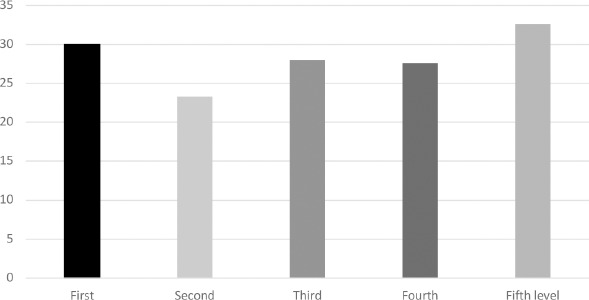
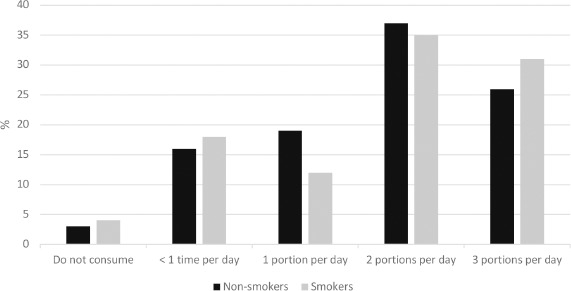
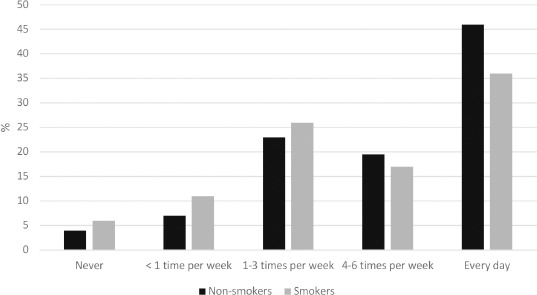
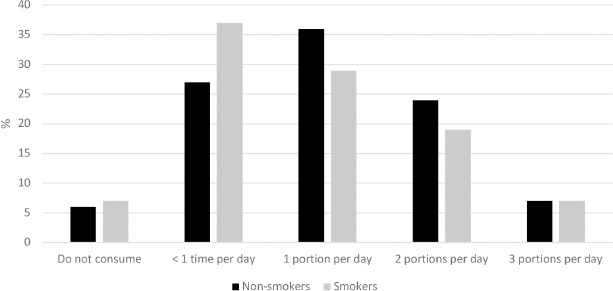
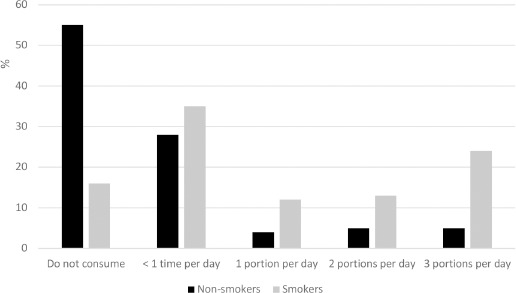
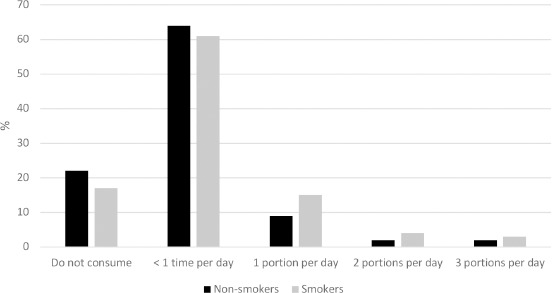
Tobacco Consumption (TC) is one of the main causes of the deterioration of health; however, there are few studies linking its consumption with diet and nutrition among university students. The objective of this study is to test the association of smoking with anthropometry, diet and sleep quality among Chilean university students. Cross-sectional study. University students (n = 1454) from the North, South and Central parts of Chile were evaluated. A self-assessment survey was used to evaluate healthy and unhealthy eating habits. Nutritional status was evaluated by Body Mass Index (BMI). Two surveys were used to assess sleep quality: the Questionnaire of Insomnia and the Epworth Scale. Finally, participants were consulted about Tobacco Consumption: 30% of the students consume tobacco and have a higher score in unhealthy food consumption, less frequent weekly breakfast consumption (< 0.01), lower daily fruit (< 0.01) and vegetables (< 0.05) consumption, higher alcohol consumption (< 0.05) and daily junk food consumption (< 0.05) compared to non-consuming students. Men who consume tobacco present greater insomnia (< 0.001), sleep latency (< 0.001) and daytime sleepiness (< 0.05) compared to non-consumers; and women who consume tobacco have a higher weight (< 0.001) and BMI (< 0.01). When performing logistic regression, tobacco consumption is positively associated with major alcohol consumption (< 0.001), whereas fish (< 0.05) and vegetable (< 0.05) consumption was negatively associated. In conclusion, students of both sexes who smoke have more unfavorable health factors and a poorer quality of life.
烟草消费(TC)是健康恶化的主要原因之一;然而,很少有研究将其消费与大学生的饮食和营养联系起来。本研究的目的是检验吸烟与智利大学生的人体测量、饮食和睡眠质量之间的关系。横断面研究。评估了来自智利北部、南部和中部的 1454 名大学生。使用自我评估问卷评估健康和不健康的饮食习惯。通过体重指数(BMI)评估营养状况。使用两个调查评估睡眠质量:失眠问卷和 Epworth 量表。最后,向参与者咨询烟草消费情况:30%的学生吸烟,并且在不健康食物消费方面得分更高,每周早餐消费频率较低(<0.01),每日水果(<0.01)和蔬菜(<0.05)摄入量较低,酒精摄入量较高(<0.05),每日垃圾食品摄入量较高(<0.05)与不吸烟的学生相比。吸烟的男性比不吸烟的男性表现出更严重的失眠(<0.001)、睡眠潜伏期(<0.001)和日间嗜睡(<0.05);而吸烟的女性体重(<0.001)和 BMI(<0.01)更高。进行逻辑回归时,烟草消费与大量饮酒呈正相关(<0.001),而鱼类(<0.05)和蔬菜(<0.05)的消费呈负相关。结论是,吸烟的男女学生有更多不利的健康因素和较差的生活质量。