Department of Advanced Material Technologies, Faculty of Chemistry, Wrocław University of Science and Technology, Smoluchowskiego 25, 50-372 Wroclaw, Poland.
Department of Advanced Material Technologies, Faculty of Chemistry, Wrocław University of Science and Technology, Smoluchowskiego 25, 50-372 Wroclaw, Poland.
Poult Sci. 2021 Nov;100(11):101416. doi: 10.1016/j.psj.2021.101416. Epub 2021 Aug 8.
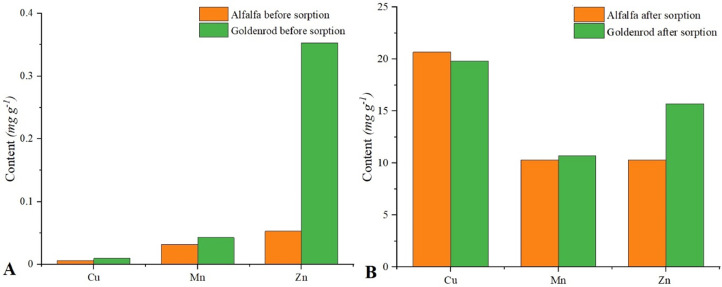
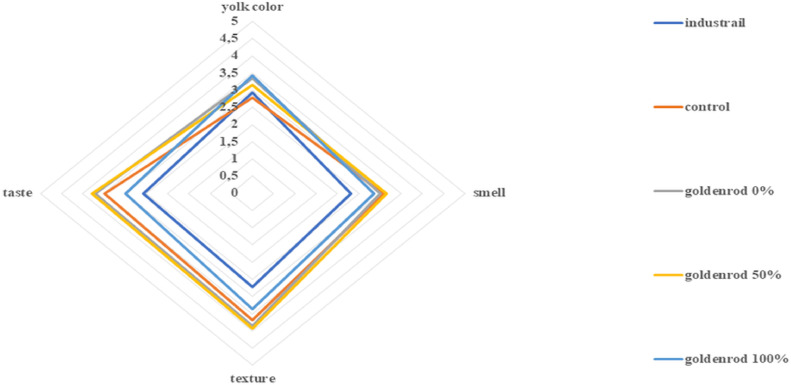
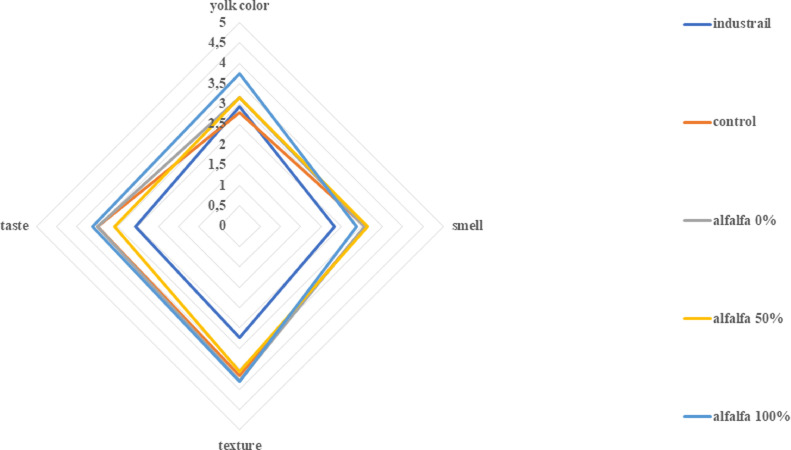
This paper presents attempts to enrich hens eggs with ions of copper, manganese, and zinc through the use of new feed additives (19 mg Cu; 124 mg Mn and 85 mg Zn) such as biomass of alfalfa and goldenrod after extraction with supercritical carbon dioxide enriched with microelements via biosorption. Mechanical parameters of eggs (shell thickness and strength, Haugh unite), hen's laying performance, microelements content in albumen and yolk were examined and the transfer factor from feed to eggs was determined. The highest transfer of microelements content in albumen occurred in the group of hens fed with enriched goldenrod in a 100% dose (daily dose of microelements from biomass; Cu 106%; Mn 104%; Zn 104% more in comparison to the inorganic salt group), while the highest yolk enrichment with microelements manifested itself for hens fed with enriched goldenrod in a 50% dose (daily dose of microelements from biomass; Cu 32%; Zn 22% more in comparison to the inorganic salt group). These groups also had the highest total microelements concentration. Mechanical properties of eggs varied insignificantly during the trial. Production parameters did not differ statistically among all experimental group. Eggs produced with need additives had better organoleptic parameters than fed with conventional premixes, which is why they were preferred by the respondents. The presented technology allows obtaining low-cost feed materials characterized by high bioavailability of components. The produced feed additives can serve as potential material for biofortification of eggs with nutrients.
本文旨在通过使用新型饲料添加剂(19mgCu、124mgMn 和 85mgZn,如经超临界二氧化碳提取后的紫花苜蓿和一枝黄花生物质),经生物吸附将微量元素富集到超临界二氧化碳中,从而实现为母鸡鸡蛋富集铜、锰和锌离子。研究了鸡蛋的机械参数(蛋壳厚度和强度、哈夫单位)、母鸡产蛋性能、蛋清和蛋黄中微量元素含量,并确定了从饲料到鸡蛋的转移因子。在 100%剂量(从生物质中获得的微量元素的每日剂量;与无机盐组相比,Cu 增加 106%,Mn 增加 104%,Zn 增加 104%)下,用富集的一枝黄花喂养的母鸡组中,蛋清中微量元素的转移量最高,而在 50%剂量(从生物质中获得的微量元素的每日剂量;与无机盐组相比,Cu 增加 32%,Zn 增加 22%)下,用富集的一枝黄花喂养的母鸡组中,蛋黄中微量元素的富集量最高。这些组的总微量元素浓度也最高。试验过程中鸡蛋的机械性能变化不大。所有实验组的生产参数均无统计学差异。添加了所需添加剂的鸡蛋比使用常规预混料的鸡蛋具有更好的感官参数,这也是受访者更喜欢前者的原因。本研究提供的技术可获得具有高生物利用度的低成本饲料原料。所生产的饲料添加剂可作为营养生物强化鸡蛋的潜在材料。