Schunk Fabian, Zeh Franziska, Trommsdorff Gisela
Department of Psychology, University of Konstanz, Germany.
Comput Human Behav. 2022 Jan;126:107035. doi: 10.1016/j.chb.2021.107035. Epub 2021 Sep 30.
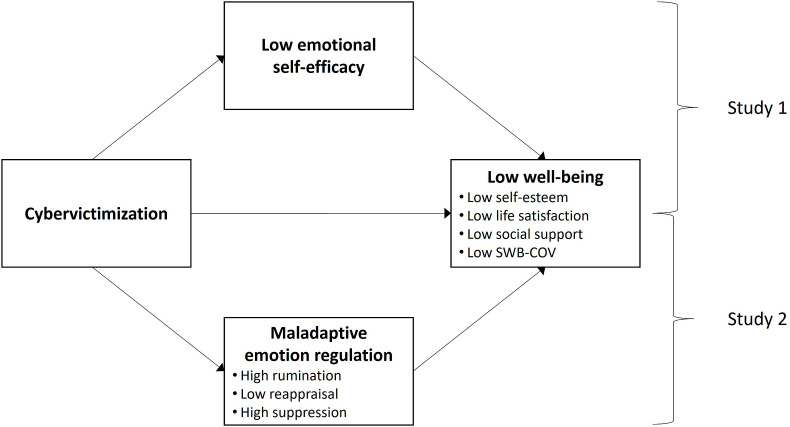
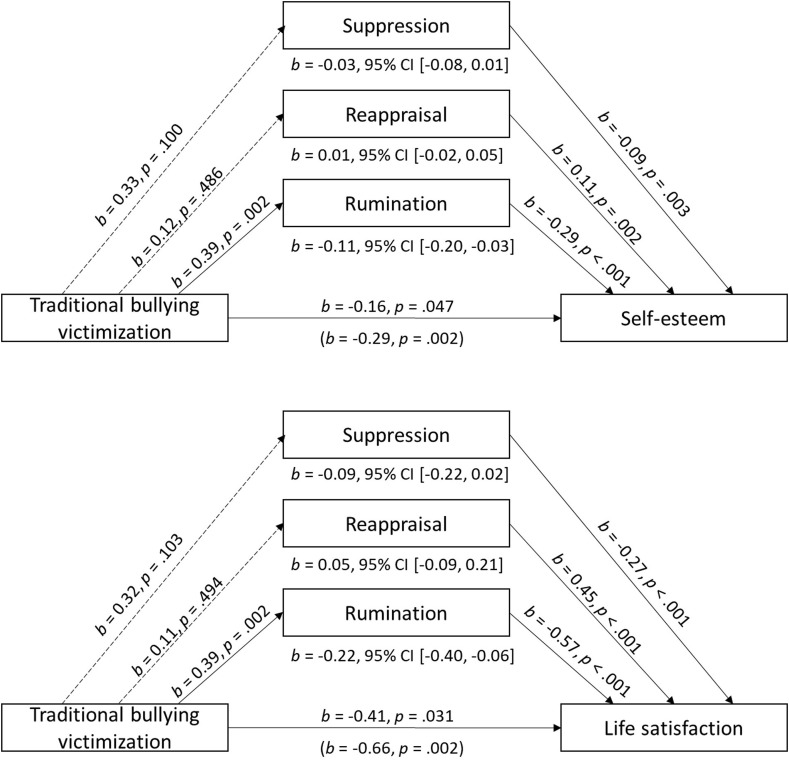
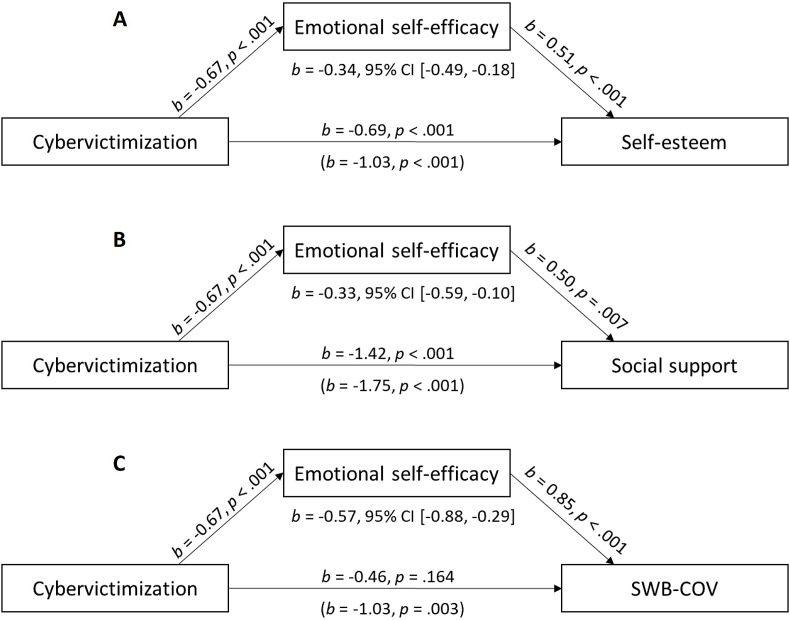
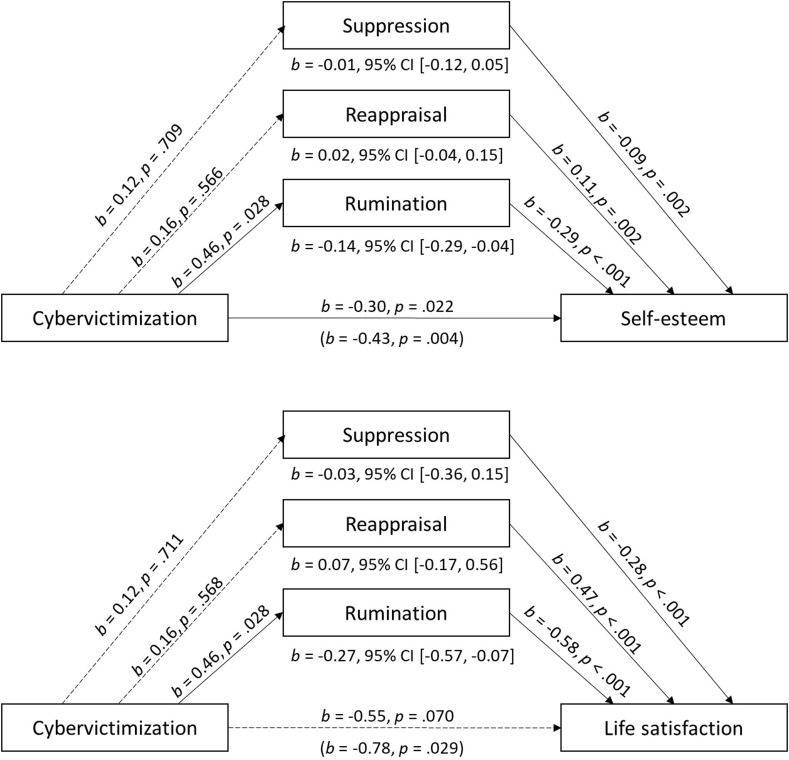
Cybervictimization has been linked to adverse psychological consequences but little is known about the mechanisms linking cybervictimization to lower well-being. We conducted two studies to examine emotional self-efficacy and distinct emotion regulation strategies as potential mediators in the relationship between cybervictimization and lower well-being among German adolescents during the school closures due to the COVID-19 pandemic in early 2020. In Study 1, 107 adolescents ( = 15.76) reported their cybervictimization frequency, emotional self-efficacy beliefs, and aspects of well-being (i.e., self-esteem, perceived social support, and subjective well-being during the COVID-19 related school closures). Emotional self-efficacy mediated the link between cybervictimization and all well-being measures. Specifically, cybervictimization was related to lower well-being through lower self-efficacy for managing negative emotions. For further examination, in Study 2, 205 adolescents ( = 15.45) were asked to report their cybervictimization experiences, use of specific emotion regulation strategies (rumination, reappraisal, and suppression), and well-being (i.e., self-esteem and life satisfaction). Cybervictimization was related to lower well-being through more rumination, but not through reappraisal or suppression. Taken together, our findings suggest that cybervictims may have lower emotional self-efficacy beliefs and engage in more rumination, a maladaptive emotion regulation strategy. These deficits in adolescents' beliefs and capabilities for effectively managing negative emotions may be accountable for the adverse psychological consequences of cybervictimization. Notably, exploratory analyses suggest that cybervictimization frequency did not increase among adolescents during the lockdown (e.g., homeschooling, social distancing) due to the COVID-19 pandemic.
网络受害与不良心理后果有关,但对于将网络受害与幸福感降低联系起来的机制却知之甚少。我们进行了两项研究,以检验情绪自我效能感和不同的情绪调节策略,作为2020年初因新冠疫情学校停课期间德国青少年网络受害与幸福感降低之间关系的潜在中介因素。在研究1中,107名青少年(平均年龄=15.76岁)报告了他们的网络受害频率、情绪自我效能感信念以及幸福感的各个方面(即自尊、感知到的社会支持以及与新冠疫情相关的学校停课期间的主观幸福感)。情绪自我效能感在网络受害与所有幸福感指标之间起中介作用。具体而言,网络受害通过较低的负面情绪管理自我效能感与较低的幸福感相关。为了进一步研究,在研究2中,205名青少年(平均年龄=15.45岁)被要求报告他们的网络受害经历、特定情绪调节策略(沉思、重新评价和抑制)的使用情况以及幸福感(即自尊和生活满意度)。网络受害通过更多的沉思与较低的幸福感相关,但与重新评价或抑制无关。综合来看,我们的研究结果表明,网络受害者可能具有较低的情绪自我效能感信念,并更多地进行沉思,这是一种适应不良的情绪调节策略。青少年在有效管理负面情绪方面的信念和能力不足,可能是网络受害产生不良心理后果的原因。值得注意的是,探索性分析表明,在因新冠疫情而实施的封锁(如在家上学、保持社交距离)期间,青少年的网络受害频率并未增加。