Paul G. Allen School of Global Health, College of Veterinary Medicine, Washington State University, Pullman, WA, USA.
Hum Vaccin Immunother. 2021 Nov 2;17(11):4328-4344. doi: 10.1080/21645515.2021.1976580. Epub 2021 Oct 6.
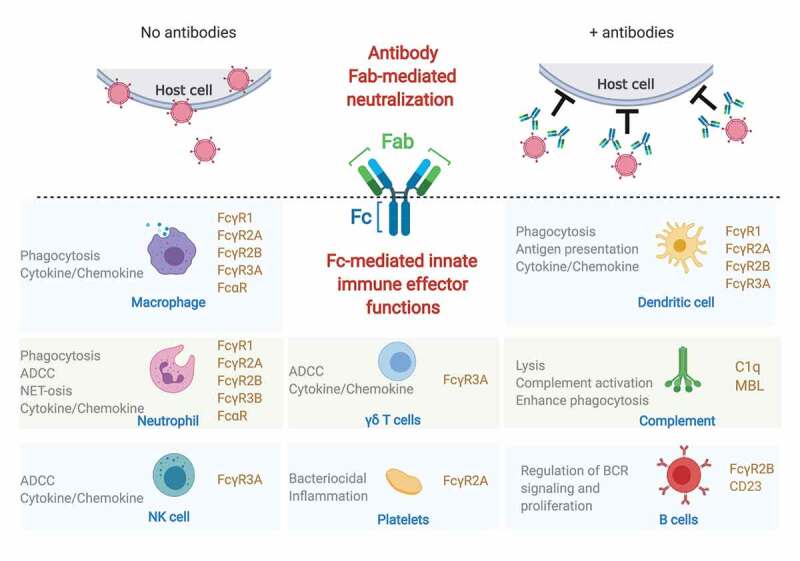
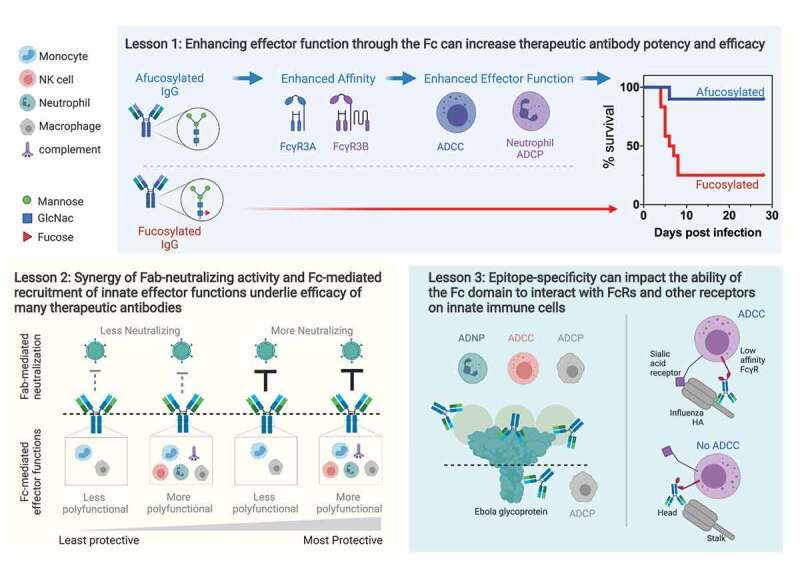
Antibodies can provide antiviral protection through neutralization and recruitment of innate effector functions through the Fc domain. While neutralization has long been appreciated for its role in antibody-mediated protection, a growing body of work indicates that the antibody Fc domain also significantly contributes to antiviral protection. Recruitment of innate immune cells such as natural killer cells, neutrophils, monocytes, macrophages, dendritic cells and the complement system by antibodies can lead to direct restriction of viral infection as well as promoting long-term antiviral immunity. Monoclonal antibody therapeutics against viruses are increasingly incorporating Fc-enhancing features to take advantage of the Fc domain, uncovering a surprising breadth of mechanisms through which antibodies can control viral infection. Here, we review the recent advances in our understanding of antibody-mediated innate immune effector functions in protection from viral infection and review the current approaches and challenges to effectively leverage innate immune cells via antibodies.
抗体可以通过中和作用和 Fc 结构域募集先天效应功能来提供抗病毒保护。虽然中和作用长期以来一直因其在抗体介导的保护中的作用而受到重视,但越来越多的研究表明,抗体的 Fc 结构域也显著有助于抗病毒保护。抗体可以招募自然杀伤细胞、中性粒细胞、单核细胞、巨噬细胞、树突状细胞和补体系统等先天免疫细胞,从而直接限制病毒感染,并促进长期抗病毒免疫。针对病毒的单克隆抗体治疗越来越多地采用 Fc 增强特性来利用 Fc 结构域,揭示了抗体控制病毒感染的惊人广泛的机制。在这里,我们综述了我们对抗体介导的先天免疫效应功能在抗病毒感染中的保护作用的最新理解,并综述了通过抗体有效利用先天免疫细胞的当前方法和挑战。