Madan Jaya, Singh Karanveer, Pandey Rahul
VLSI Centre of Excellence, Chitkara University Institute of Engineering and Technology, Chitkara University, Rajpura, Punjab, India.
Chitkara College of Applied Engineering, Chitkara University, Rajpura, Punjab, India.
Sci Rep. 2021 Oct 6;11(1):19829. doi: 10.1038/s41598-021-99098-y.
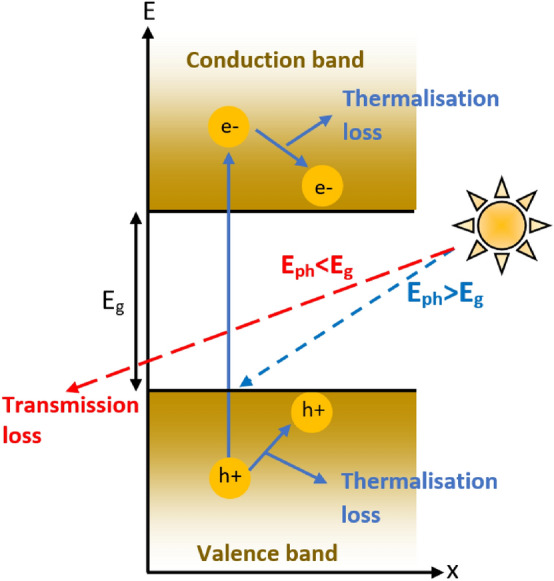
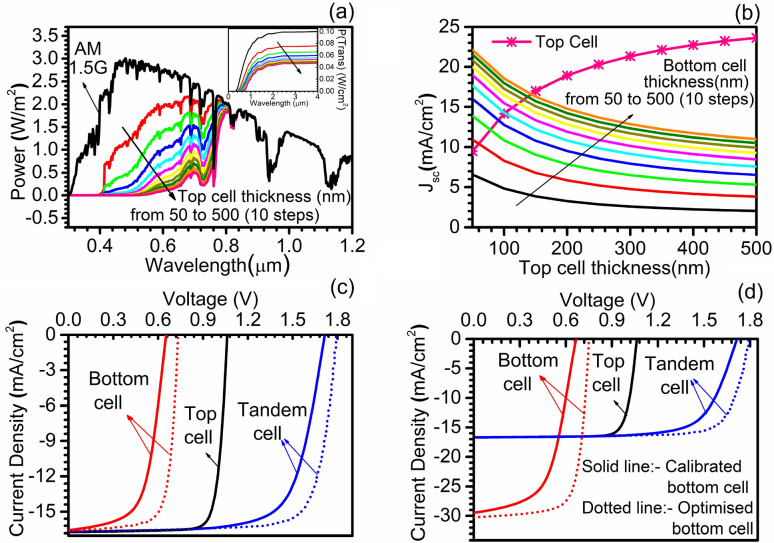
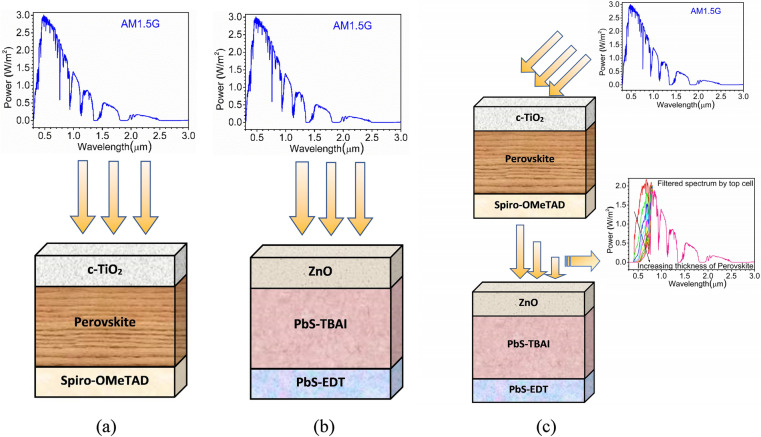
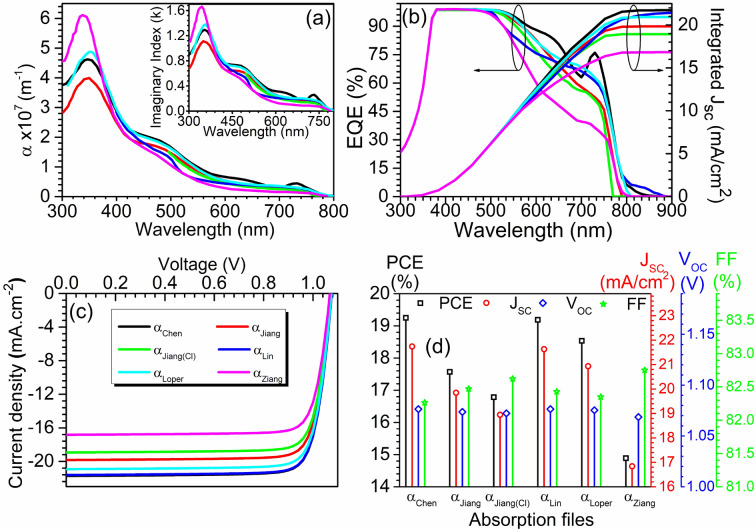
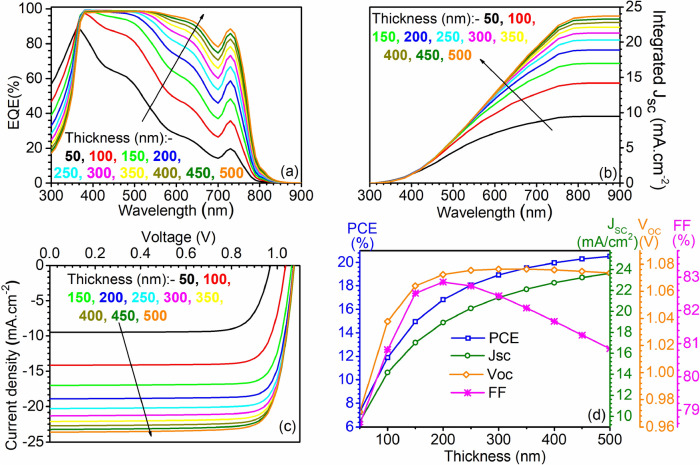
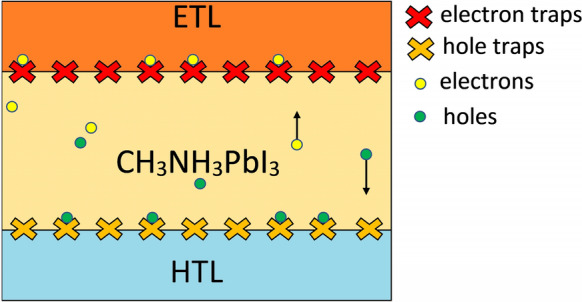
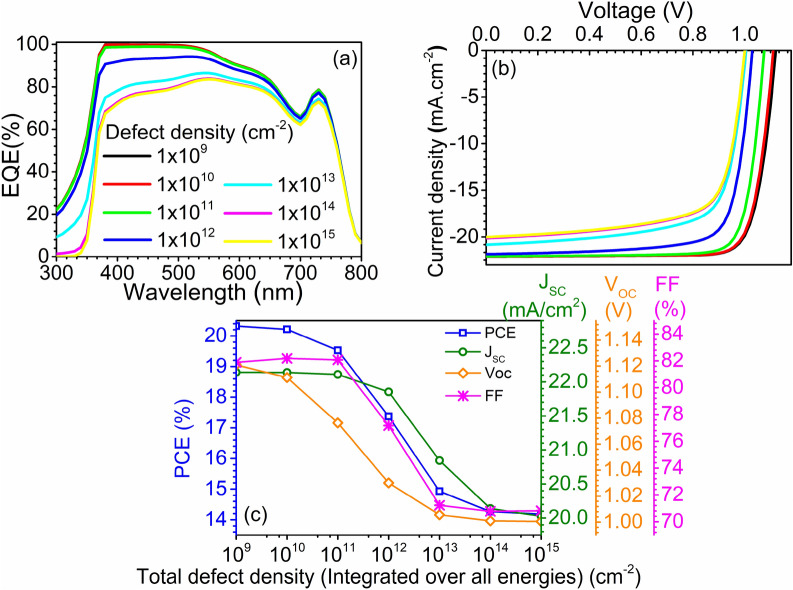
The major losses that limit the efficiency of a single-junction solar cell are thermalization loss and transmission loss. Thus, to efficiently utilize the full solar spectrum and to mitigate these losses, tandem solar cells (TSC) have significantly impacted the photovoltaic (PV) landscape. In this context, the research on perovskite/silicon tandems is currently dominating the research community. The stability improvements of perovskite materials and mature fabrication techniques of silicon have underpinned the rapid progress of perovskite/silicon TSC. However, the low absorption coefficient and high module cost of the silicon are the tailbacks for the mass production of perovskite/silicon TSCs. Therefore, PV technology demands to explore some new materials other than Si to be used as absorber layer in the bottom cell. Thus, here in this work, to mitigate the aforementioned losses and to reduce cost, a 23.36% efficient two-terminal perovskite-PbS CQD monolithic tandem solar cell has been designed through comprehensive device simulations. Before analyzing the performance of the proposed TSC, the performance of perovskite top cells has been optimized in terms of variation in optical properties, thickness, and interface defect density under standalone conditions. Thereafter, filtered spectrum and associated integrated filtered power by the top cell at different perovskite thickness from 50 to 500 nm is obtained to conceive the presence of the top cell above the bottom cell with different perovskite thickness. The current matching by concurrently varying the thickness of both the top and bottom subcell has also been done to obtain the maximum deliverable tandem J for the device under consideration. The top/bottom subcell with current matched J of 16.68 mA cm/16.62 mA cm showed the conversion efficiency of 14.60%/9.07% under tandem configuration with an optimized thickness of 143 nm/470 nm, where the top cell is simulated under AM1.5G spectrum, and bottom cell is exposed to the spectrum filtered by 143 nm thick top cell. Further, the voltages at equal current points are added together to generate tandem J-V characteristics. This work concludes a 23.36% efficient perovskite-PbS CQD tandem design with 1.79 V (V), 16.67 mA cm (J) and 78.3% (FF). The perovskite-PbS CQD tandem device proposed in this work may pave the way for the development of high-efficiency tandem solar cells for low-cost applications.
限制单结太阳能电池效率的主要损失是热化损失和传输损失。因此,为了有效利用整个太阳光谱并减轻这些损失,串联太阳能电池(TSC)对光伏(PV)领域产生了重大影响。在这种背景下,钙钛矿/硅串联电池的研究目前在研究界占据主导地位。钙钛矿材料稳定性的提高和硅成熟的制造技术为钙钛矿/硅TSC的快速发展奠定了基础。然而,硅的低吸收系数和高组件成本是钙钛矿/硅TSC大规模生产的阻碍。因此,光伏技术需要探索除硅之外的一些新材料用作底部电池的吸收层。因此,在这项工作中,为了减轻上述损失并降低成本,通过全面的器件模拟设计了一种效率为23.36%的双端钙钛矿-PbS CQD单片串联太阳能电池。在分析所提出的TSC的性能之前,在独立条件下,针对光学性质、厚度和界面缺陷密度的变化对钙钛矿顶电池的性能进行了优化。此后,获得了顶部电池在50至500nm不同钙钛矿厚度下的滤波光谱和相关的积分滤波功率,以设想不同钙钛矿厚度的顶部电池在底部电池上方的情况。还通过同时改变顶部和底部子电池的厚度进行了电流匹配,以获得所考虑器件的最大可输出串联电流密度。电流匹配的顶部/底部子电池,电流密度为16.68mA/cm²/16.62mA/cm²,在串联配置下,优化厚度为143nm/470nm时,转换效率分别为14.60%/9.07%,其中顶部电池在AM1.5G光谱下模拟,底部电池暴露于由143nm厚的顶部电池滤波后的光谱。此外,将等电流点处的电压相加,以生成串联电流-电压特性。这项工作得出了一种效率为23.36%的钙钛矿-PbS CQD串联设计,其电压为1.79V(V),电流密度为16.67mA/cm²(J),填充因子为78.3%(FF)。这项工作中提出的钙钛矿-PbS CQD串联器件可能为低成本应用的高效串联太阳能电池的开发铺平道路。