Jing Runyu, Wen Tingke, Liao Chengxiang, Xue Li, Liu Fengjuan, Yu Lezheng, Luo Jiesi
School of Cyber Science and Engineering, Sichuan University, Chengdu 610065, China.
School of Public Health, Southwest Medical University, Luzhou 646000, China.
NAR Genom Bioinform. 2021 Oct 4;3(4):lqab086. doi: 10.1093/nargab/lqab086. eCollection 2021 Dec.
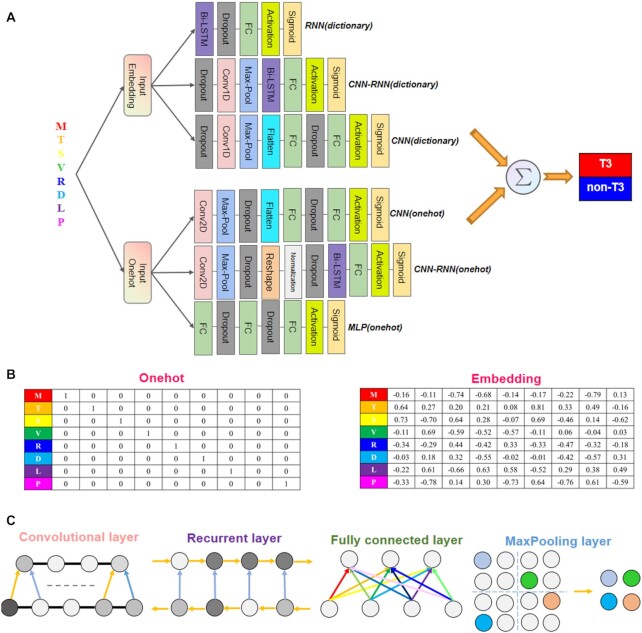
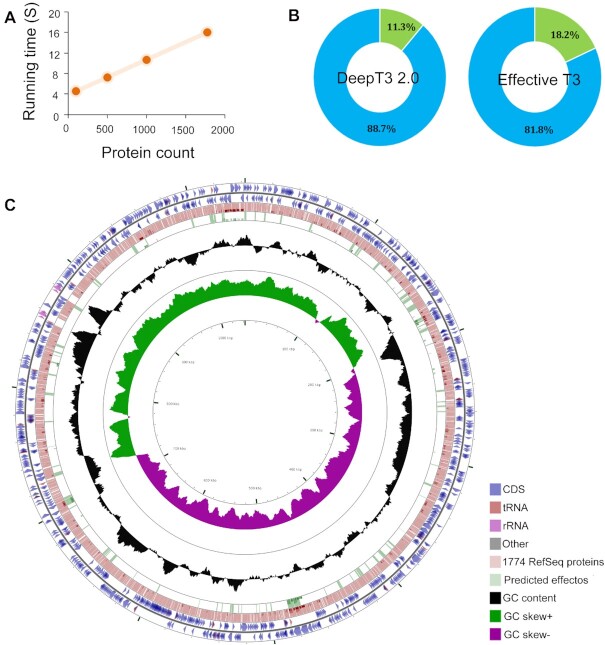
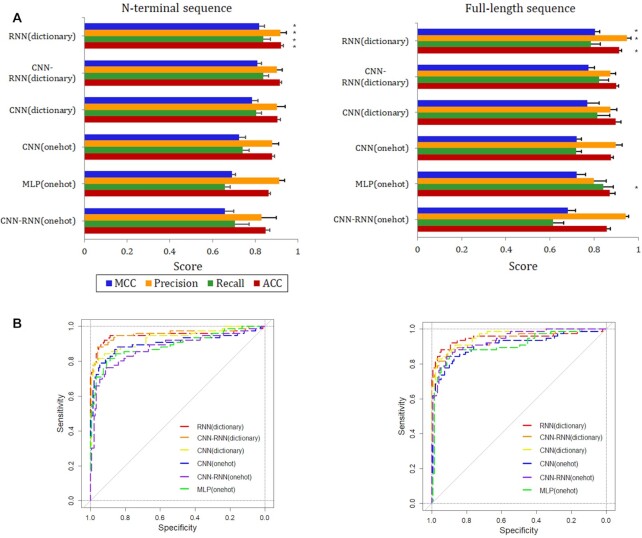
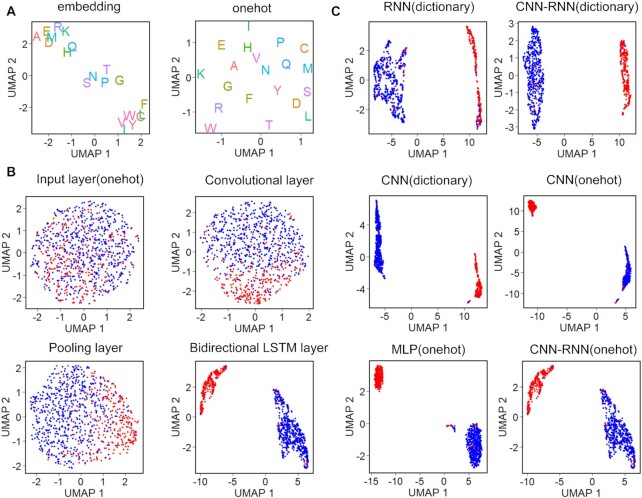
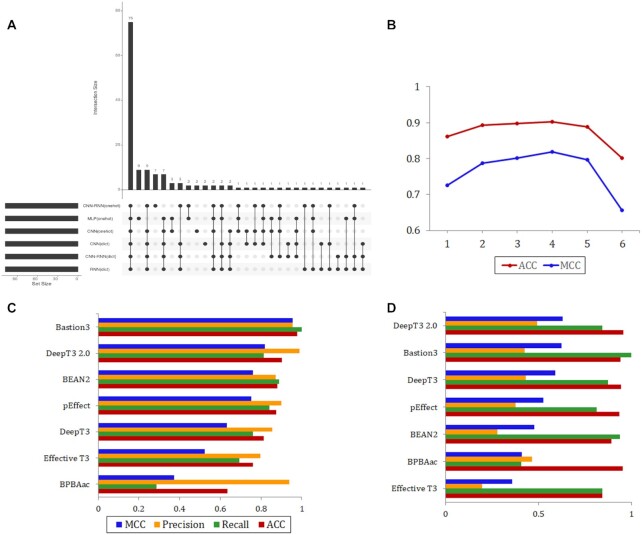
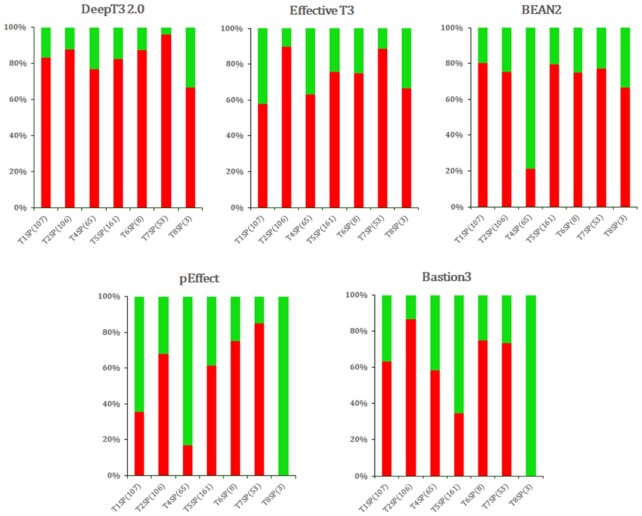
Type III secretion systems (T3SSs) are bacterial membrane-embedded nanomachines that allow a number of humans, plant and animal pathogens to inject virulence factors directly into the cytoplasm of eukaryotic cells. Export of effectors through T3SSs is critical for motility and virulence of most Gram-negative pathogens. Current computational methods can predict type III secreted effectors (T3SEs) from amino acid sequences, but due to algorithmic constraints, reliable and large-scale prediction of T3SEs in Gram-negative bacteria remains a challenge. Here, we present DeepT3 2.0 (http://advintbioinforlab.com/deept3/), a novel web server that integrates different deep learning models for genome-wide predicting T3SEs from a bacterium of interest. DeepT3 2.0 combines various deep learning architectures including convolutional, recurrent, convolutional-recurrent and multilayer neural networks to learn N-terminal representations of proteins specifically for T3SE prediction. Outcomes from the different models are processed and integrated for discriminating T3SEs and non-T3SEs. Because it leverages diverse models and an integrative deep learning framework, DeepT3 2.0 outperforms existing methods in validation datasets. In addition, the features learned from networks are analyzed and visualized to explain how models make their predictions. We propose DeepT3 2.0 as an integrated and accurate tool for the discovery of T3SEs.
III型分泌系统(T3SSs)是嵌入细菌膜的纳米机器,它使许多人类、植物和动物病原体能够将毒力因子直接注入真核细胞的细胞质中。通过T3SSs输出效应蛋白对于大多数革兰氏阴性病原体的运动性和毒力至关重要。目前的计算方法可以从氨基酸序列预测III型分泌效应蛋白(T3SEs),但由于算法限制,在革兰氏阴性细菌中可靠且大规模地预测T3SEs仍然是一个挑战。在此,我们展示了DeepT3 2.0(http://advintbioinforlab.com/deept3/),这是一个新型的网络服务器,它整合了不同的深度学习模型,用于从感兴趣的细菌的全基因组预测T3SEs。DeepT3 2.0结合了各种深度学习架构,包括卷积、循环、卷积循环和多层神经网络,以专门学习用于T3SE预测的蛋白质的N端表示。对不同模型的结果进行处理和整合,以区分T3SEs和非T3SEs。由于它利用了多种模型和一个综合的深度学习框架,DeepT3 2.0在验证数据集中优于现有方法。此外,还对从网络中学习到的特征进行了分析和可视化,以解释模型是如何进行预测的。我们提出将DeepT3 2.0作为一种用于发现T3SEs的综合且准确的工具。