Department of Psychiatry, Faculty of Medicine, University of Geneva, Switzerland.
MGH/HST Athinoula A. Martinos Center for Biomedical Imaging, Massachusetts General Hospital, USA; Department of Radiology, Harvard Medical School, MA, USA.
Neuroimage Clin. 2021;32:102833. doi: 10.1016/j.nicl.2021.102833. Epub 2021 Sep 30.
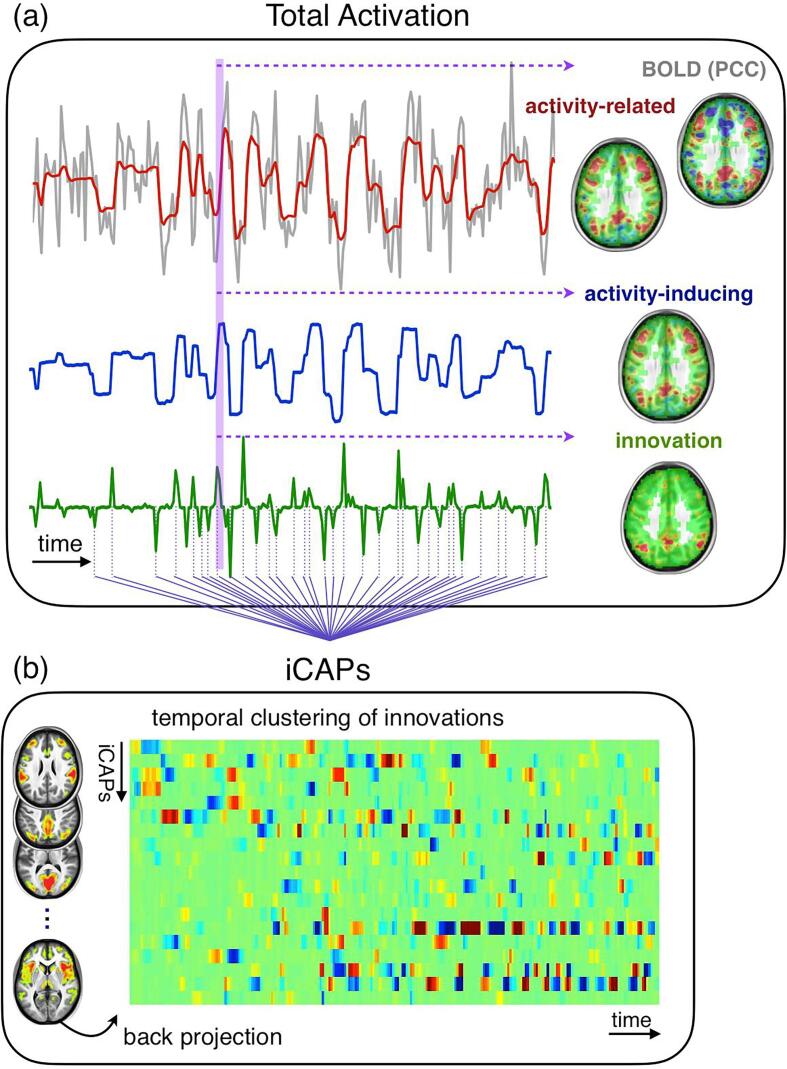
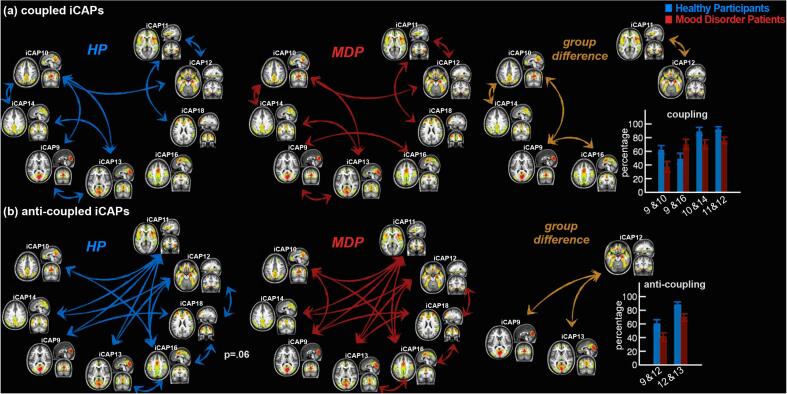
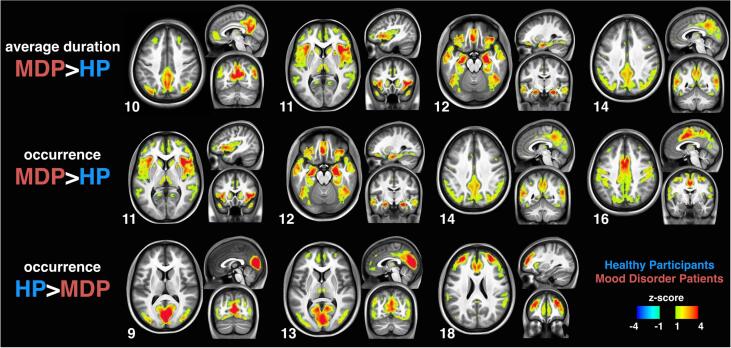
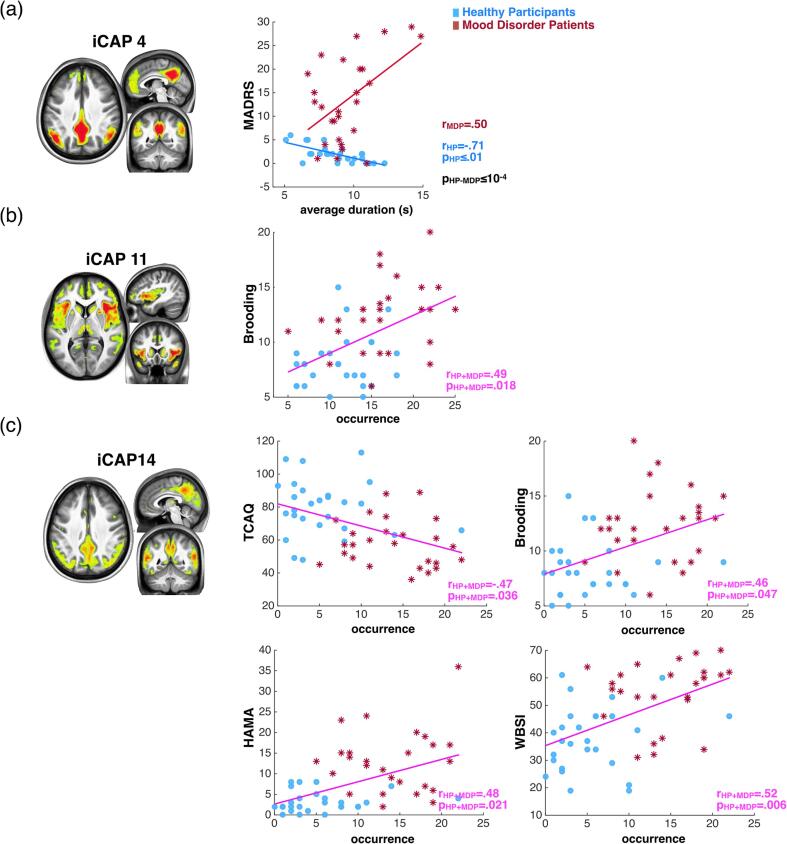
Spontaneous fluctuations in the blood oxygenation level dependent signal measured through resting-state functional magnetic resonance imaging have been corroborated to aggregate into multiple functional networks. Abnormal resting brain activity is observed in mood disorder patients, however with inconsistent results. How do such alterations relate to clinical symptoms; e.g., level of depression and rumination tendencies? Here we recovered spatially and temporally overlapping functional networks from 31 mood disorder patients and healthy controls during rest, by applying novel methods that identify transient changes in spontaneous brain activity. Our unique approach disentangles the dynamic engagement of resting-state networks unconstrained by the slow hemodynamic response. This time-varying characterization provides moment-to-moment information about functional networks in terms of their durations and dynamic coupling, and offers novel evidence for selective contributionsto particular clinical symptoms. Patients showed increased duration of default-mode network (DMN), increased duration and occurrence of posterior DMN as well as insula- and amygdala-centered networks, but decreased occurrence of visual and anterior salience networks. Coupling between limbic (insula and amygdala) networks was also reduced. Depression level modulated DMN duration, whereas intrusive thoughts correlated with occurrence of insula and posterior DMN. Anatomical network organization was similar to controls. In sum, altered brain dynamics in mood disorder patients appear to mediate distinct clinical dimensions including increased self-processing, and decreased attention to external world.
静息态功能磁共振成像测量的血氧水平依赖信号的自发波动已被证实可聚集为多个功能网络。情绪障碍患者的静息脑活动异常,但结果不一致。这些改变与临床症状(例如抑郁程度和反刍倾向)有何关系?在这里,我们通过应用新的方法,从 31 名情绪障碍患者和健康对照者的休息期间恢复了空间和时间重叠的功能网络,该方法可以识别自发脑活动的瞬时变化。我们独特的方法可以分离不受缓慢血液动力学反应约束的静息状态网络的动态参与。这种时变特征提供了关于功能网络的持续时间和动态耦合的功能网络的即时信息,并为特定临床症状的选择性贡献提供了新的证据。患者表现出默认模式网络 (DMN) 的持续时间增加,后 DMN 的持续时间和出现增加,以及岛叶和杏仁核为中心的网络,但视觉和前突显网络的出现减少。边缘网络(岛叶和杏仁核)之间的耦合也减少了。抑郁程度调节 DMN 的持续时间,而侵入性思维与岛叶和后 DMN 的出现相关。解剖网络组织与对照组相似。总之,情绪障碍患者的大脑动力学改变似乎介导了不同的临床维度,包括自我处理增加和对外界注意力减少。