Weng Yu-Chieh, Chen Wei-Ting, Lee Jung-Chieh, Huang Yung-Ning, Yang Chih-Kai, Hsieh Hui-Shan, Chang Chih-Jung, Lu Yang-Bor
Department of Digestive Disease Xiamen Chang Gung Hospital Xiamen China.
Department of Gastroenterology and Hepatology Chang Gung Memorial Hospital, Linkou Medical Center Taoyuan City Taiwan.
JGH Open. 2021 Aug 20;5(10):1160-1165. doi: 10.1002/jgh3.12644. eCollection 2021 Oct.
Biliary tract infection (BTI) is an inflammatory disease and commonly associated with bacteremia. Delays in diagnosis or treatment of BTI cause high morbidity and mortality. However, an early diagnosis depends on appropriate clinical investigations. Appropriate biomarkers are urgently needed to improve the BTI diagnostic rate. We hypothesized that intestinal fatty acid-binding protein (I-FABP) might be a potential biomarker for BTI diagnosis.
We examined data from subjects aged ≥18 years diagnosed with BTI, including cholangitis and cholecystitis, whose blood samples were adequate for I-FABP and zonulin assessment. We also collected blood samples from healthy volunteers as the control group. We excluded subjects in both groups who received steroids, antibiotics, or probiotics within 1 month before hospital admission (BTI cohort) or participation in this research (controls). The main study endpoint was to compare the diagnostic ability of I-FABP to detect BTI in comparison with high-sensitivity C-reactive protein (hs-CRP) and zonulin.
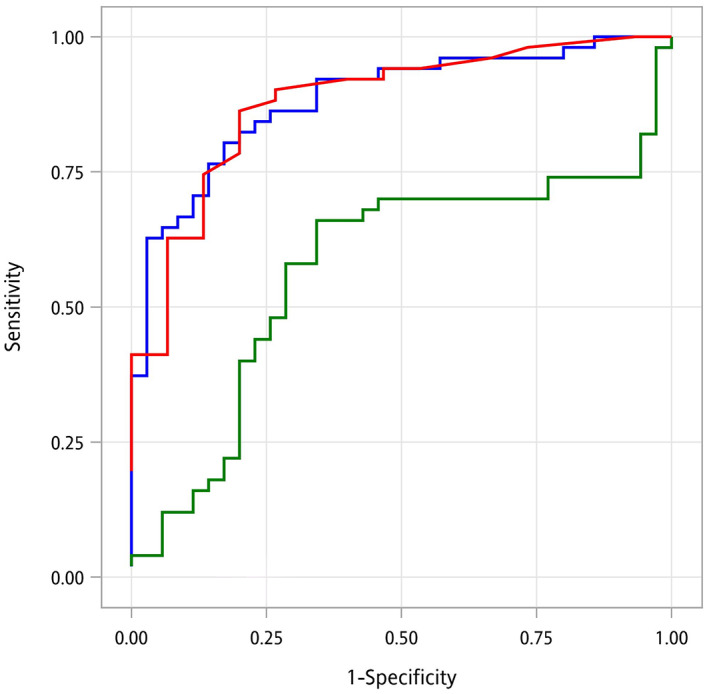
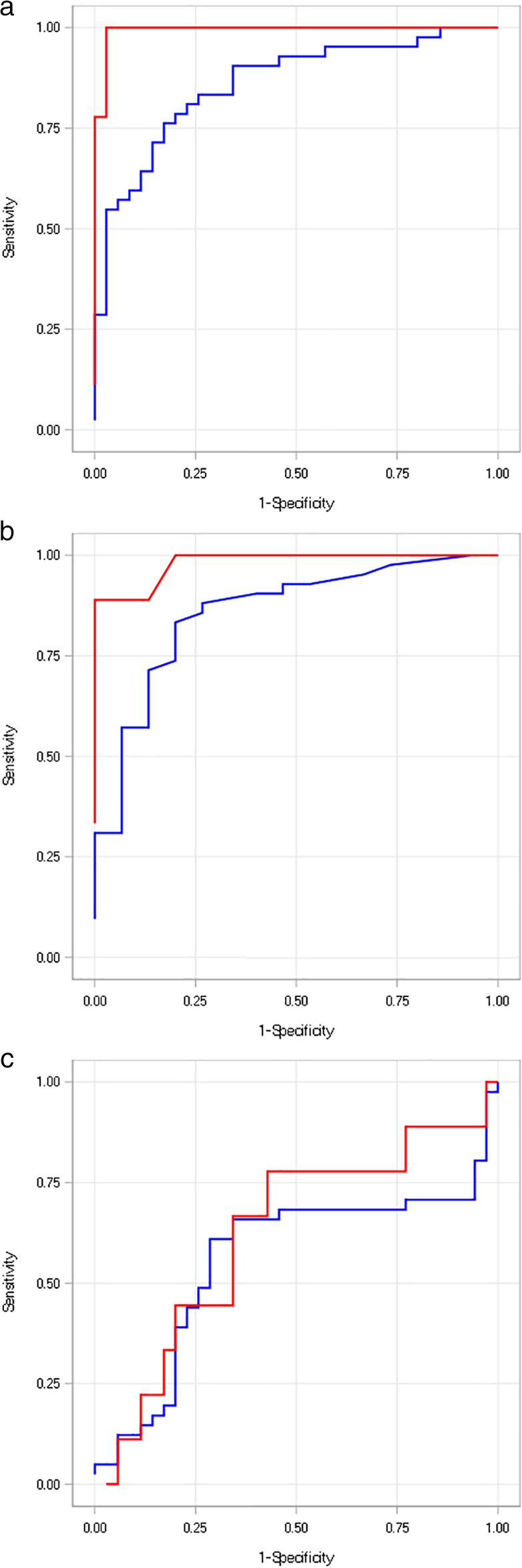
The study collected the data of 51 patients with BTI and 35 healthy subjects. The receiver operating characteristic (ROC) area under the curve (AUC) for I-FABP was 0.884 (95% confidence interval [CI]: 0.814-0.954), numerically higher than that for hs-CRP (0.880; 0.785-0.976) and zonulin (0.570; 0.444-0.697). We estimated that the optimal cutoff value of I-FABP was 2.1 ng/mL (sensitivity: 0.804; specificity: 0.829) for the diagnosis of BTI.
In summary, this study suggests that I-FABP may be a potential alternative biomarker to hs-CRP for diagnosing BTI. Further research should verify the use of I-FABP as a marker for BTI diagnosis, but also for other inflammatory diseases.
胆道感染(BTI)是一种炎症性疾病,常伴有菌血症。BTI诊断或治疗的延迟会导致高发病率和死亡率。然而,早期诊断依赖于适当的临床检查。迫切需要合适的生物标志物来提高BTI的诊断率。我们假设肠道脂肪酸结合蛋白(I-FABP)可能是BTI诊断的潜在生物标志物。
我们检查了年龄≥18岁、被诊断为BTI(包括胆管炎和胆囊炎)的受试者的数据,这些受试者的血样足以进行I-FABP和闭合蛋白评估。我们还收集了健康志愿者的血样作为对照组。我们排除了两组中在入院前1个月内(BTI队列)或参与本研究(对照组)接受过类固醇、抗生素或益生菌治疗的受试者。主要研究终点是比较I-FABP与高敏C反应蛋白(hs-CRP)和闭合蛋白检测BTI的诊断能力。
该研究收集了51例BTI患者和35名健康受试者的数据。I-FABP的受试者工作特征(ROC)曲线下面积(AUC)为0.884(95%置信区间[CI]:0.814 - 0.954),在数值上高于hs-CRP(0.880;0.785 - 0.976)和闭合蛋白(0.570;0.444 - 0.697)。我们估计I-FABP诊断BTI的最佳截断值为2.1 ng/mL(敏感性:0.804;特异性:0.829)。
总之,本研究表明I-FABP可能是hs-CRP诊断BTI的潜在替代生物标志物。进一步的研究应验证I-FABP作为BTI诊断标志物的用途,同时也应验证其在其他炎症性疾病中的用途。